
How Long Do Vegetables Take to Grow? Days to Harvest Chart
Updated November 2026
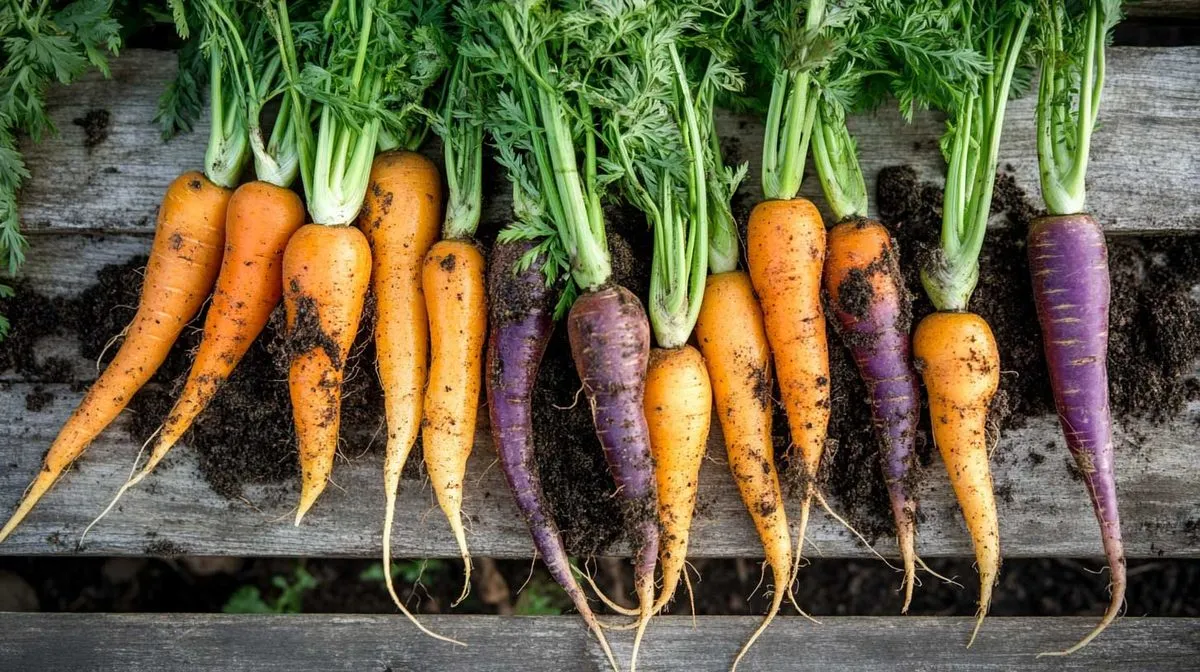
Days to harvest for potatoes, garlic, carrots and about 60 more crops, with notes on when each one is ready.
How long vegetables take to grow depends on the crop: radishes are ready in about a month, tomatoes and potatoes in roughly three months, and garlic takes most of a year. The table below lists the days to harvest for about 60 common crops, grouped from fastest to slowest.
Quick answers, in days to harvest:
- Potatoes: 90 days to harvest.
- Garlic: 210 days to harvest.
- Carrots: 85 days to harvest.
- Tomatoes: 85 days to harvest.
- Pineapple: 540 days to harvest.
These figures run from sowing seed or planting out to the first harvest. Cold weather makes every one of them longer.
Where these numbers come from
Days to harvest come from the Planting Season plant library, the same figures the app uses. Each figure is an average for one crop: the number of days from sowing the seed, or from planting out a seedling, crown or sett, to the first harvest. It is the time to the first pick, not to the end of the crop, so a zucchini plant keeps producing long after its number is up.
An average is only a guide. Warm soil and long days shorten the wait, and cool weather stretches it, sometimes by several weeks. Varieties matter too, because an early potato and a main crop potato are different plants with different timelines. Treat the number as the point to start checking your crop, then use the signs in the notes column to judge when it is actually ready. Our guide to when to start seeds shows how to work backwards from a harvest you want.
Days to harvest chart
Every crop below links to its growing guide or plant page, which has the sowing months for your region. Crops are sorted from quickest to slowest within each group.
Fast crops, under 60 days
| Crop | Days to harvest | How you know, or a tip |
|---|---|---|
| Radish | 30 | Ready when the shoulders push above the soil; leave them in too long and they turn woody and hot. |
| Mizuna | 40 | Cut the whole head or take leaves as needed; it regrows well after a first cut. |
| Mustard greens | 40 | Pick leaves while they are still small and mild, and cut the plant back to let it regrow. |
| Rocket | 40 | Pick the outer leaves young, because the flavour sharpens fast once plants start to flower. |
| Endive | 45 | Blanch the centre for a milder heart by tying the outer leaves loosely for a week before cutting. |
| Tatsoi | 45 | Harvest when the rosette is about the size of a saucer, or take single leaves earlier. |
| Bok choy | 50 | Cut at the base when the stems are plump and the leaves still glossy; heat sends it to seed quickly. |
| Coriander | 50 | Cut stems from the outside while plants are leafy, as warm weather makes it bolt. |
| Gai lan | 55 | Cut the central flower stalk when buds are still tight, and side shoots will follow. |
| Lettuce | 55 | Cut loose leaf lettuce any time from half size, or take the whole head before it stretches. |
| Spinach | 55 | Pick outer leaves regularly; the plant bolts in warm weather, so sow often. |
| Turnip | 55 | Pull when the roots are about the size of a golf ball for the best texture. |
Medium crops, 60 to 100 days
| Crop | Days to harvest | How you know, or a tip |
|---|---|---|
| Cucumber | 60 | Pick regularly while the skin is firm and evenly coloured, because overgrown fruit slows new ones. |
| Daikon | 60 | Lift when the root shoulders show above the soil and before the weather turns hot. |
| Dill | 60 | Snip fronds as needed, and let some plants run to seed if you want the seed heads. |
| Kohlrabi | 60 | Harvest when the swollen stem is about the size of a tennis ball, before it gets tough. |
| Silverbeet | 60 | Twist off outer leaves, leaving the centre to keep producing for months. |
| Snow peas | 60 | Pick flat pods before the peas inside swell, and check the vines every couple of days. |
| Spring onion | 60 | Pull when the stems are about as thick as a pencil; they can be pulled much earlier if you like them thin. |
| Zucchini | 60 | Pick fruit while it is small and glossy, as a few days can turn them into marrows. |
| Basil | 65 | Pinch the tops often to delay flowering, and pick before nights turn cold. |
| Beetroot | 65 | Lift when the roots are about the size of a golf ball for tender flesh, or leave them a little longer for bigger roots. |
| Bush beans | 65 | Pick pods while they are slim and snap cleanly, and keep picking to extend the crop. |
| Squash | 65 | Pick summer squash young; for winter types, wait for a hard skin and a dried stem. |
| Broccolini | 70 | Cut the main head when buds are tight, then harvest the side shoots that follow. |
| Kale | 70 | Take lower leaves first and leave the growing tip; plants keep going for months. |
| Peas | 75 | Harvest when pods are plump but still bright green, and eat soon after picking for the sweetest flavour. |
| Carrot | 85 | Check by brushing soil from the top of a root; shoulders about as wide as a thumb mean it is ready. |
| Rockmelon | 85 | The stem slips from the fruit with a gentle tug, and the skin smells sweet near the stalk. |
| Tomato | 85 | Pick when fruit is fully coloured and gives slightly under a gentle squeeze; our figure is for the first ripe fruit. |
| Broad beans | 90 | Harvest when pods are plump but before the scar on each bean turns dark. |
| Broccoli | 90 | Cut the main head while the buds are tight and dark, before any yellow shows. |
| Cabbage | 90 | Squeeze the head; it should feel firm and solid before you cut it at the base. |
| Chilli | 90 | Pick when the fruit has reached its mature colour, and check the variety for what that colour is. |
| Potato | 90 | Early potatoes are ready around flowering, and main crops once the tops die back and the skins set. |
| Strawberry | 90 | Pick when berries are fully red right to the shoulder, and keep fruit picked to prolong cropping. |
| Swede | 90 | Lift when roots are about the size of a large fist, as bigger roots can turn woody. |
| Sweet corn | 90 | Check that the silks are brown and a kernel squirts milky juice when pressed with a thumbnail. |
| Watermelon | 90 | Look for a dried curly tendril near the stem and a creamy yellow patch where the fruit sat on the soil. |
| Capsicum | 100 | Green fruit can be picked early, but waiting for full colour gives sweeter fruit and a slower harvest. |
| Cauliflower | 100 | Cut when the curd is firm and white, before the florets start to separate. |
| Eggplant | 100 | The skin should be glossy and spring back when pressed; dull, soft fruit is overripe. |
Slow crops, over 100 days
| Crop | Days to harvest | How you know, or a tip |
|---|---|---|
| Shallot | 110 | Lift when the tops yellow and fall over, then dry the bulbs in an airy spot. |
| Brussels sprouts | 120 | Pick sprouts from the bottom of the stem upward once they are firm and about walnut sized. |
| Celery | 120 | Cut whole plants when stalks are thick, or take outer stalks as they reach a usable size. |
| Leek | 120 | Lift when the shafts are as thick as a thumb or larger; they hold well in the ground. |
| Parsnip | 120 | Lift after the tops die back, as cool weather improves their sweetness. |
| Pumpkin | 120 | Wait for a hard rind that resists a fingernail and a dry, corky stem before cutting. |
| Celeriac | 150 | Lift when the knob is about the size of a tennis ball or larger, before hard frosts. |
| Jerusalem artichoke | 150 | Dig after the tops have died back, and take only what you need as tubers store best in the soil. |
| Sweet potato | 150 | Dig when the vine tips start to yellow, and handle the tubers gently as the skin bruises easily. |
| Onion | 180 | Harvest when most tops have fallen over, then cure the bulbs in a dry airy spot before storing. |
| Garlic | 210 | Lift when about half the lower leaves have browned, then dry the bulbs somewhere airy and shaded. |
| Ginger | 270 | Dig when the leaves yellow, or take a small piece earlier as young ginger. |
Perennials and fruit
| Crop | Days to harvest | How you know, or a tip |
|---|---|---|
| Fig | 365 | Wait until the fruit droops on the stem and feels soft, as figs do not ripen after picking. |
| Globe artichoke | 365 | Cut buds while they are tight and plump, before the scales open. |
| Rhubarb | 365 | Go easy in the first season, then pull stalks that are thick and well coloured; never eat the leaves. |
| Passionfruit | 400 | Fruit is ripe when the skin is deeply coloured and wrinkles slightly, and it often falls from the vine. |
| Banana | 450 | Harvest the bunch when the fingers fill out and the ridges round off, then ripen it indoors. |
| Pineapple | 540 | The fruit smells sweet at the base and the skin turns from green towards gold. |
| Asparagus | 730 | Leave spears alone in the first seasons while the crowns build up, then pick spears when they reach about a hand span. |
| Blueberry | 730 | Berries need to be fully blue for a few days before they sweeten, so test one first. |
| Lemon | 730 | Pick when the skin has coloured fully and the fruit comes away with a gentle twist. |
| Apple | 1460 | Ripe fruit lifts off with a slight twist and the seeds have turned brown. |
Perennials and fruit follow a different pattern from annual vegetables. Their figures count from planting a young plant or tree to the first harvest, so they are measured in seasons rather than weeks, and the first crop is usually small.
Fast crops for impatient gardeners
If you want something on the plate quickly, start with the first group in the chart. Radish is the fastest at 30 days, followed by rocket and mizuna at 40 days each. Asian greens such as bok choy and tatsoi are ready in under two months, and lettuce and spinach can be picked leaf by leaf even sooner than their listed time.
The best fast crops share a few traits. They are small, they tolerate being sown close together, and they can be cut young. You can read more in our guide to fast growing vegetables. A simple plan for a beginner is to sow radish, rocket and a loose leaf lettuce in the same week, then follow them with beans or zucchini once the soil warms.
- Sow thinly and thin early, because crowded seedlings grow slowly.
- Keep the soil evenly moist, as fast crops stop growing quickly when they dry out.
- Pick often, since leaves taken young encourage more growth.
- Plant a new row every couple of weeks instead of one big sowing.
Why days to harvest vary by region and season
The same crop can take noticeably different times in different places. Plants grow with heat, so a tomato planted into warm spring soil races ahead of one planted when nights are still cold. The same goes for a cool season crop such as lettuce, which grows quickly in mild weather but slows to a crawl in midwinter and bolts in a heatwave.
Local frost sets the safe planting date for tender crops, so it shapes the whole season. Check the frost dates page for your postcode, then read your regional hub for the months that suit your climate: South East Queensland, Sydney and Coastal NSW, Melbourne and Victoria, Adelaide and SA and Perth and WA. Planting at the right time of year often matters more than any other factor in how soon you harvest.
A few things that change the wait:
- Soil temperature. Seeds germinate slowly in cold soil, which adds days before the clock really starts.
- Day length. Some crops, including onions and garlic, respond to the season as much as to the calendar.
- Variety. Seed packets list an expected time for the variety, and it can differ from our average.
- Water and feeding. Stressed plants stall, and a stalled plant takes longer to crop.
Succession sowing so the harvest never stops
Because the days figure tells you how long a crop occupies the bed, it also tells you how often to sow. Fast crops such as radish and lettuce are best sown every two to three weeks, so that a new batch comes ready as the last one finishes. Slow crops such as onions and pumpkins are sown once and left to get on with it.
You can also fit a fast crop between slow ones. Radishes sown between rows of parsnips are gone long before the parsnips need the space. Our succession planting guide covers the timing in more detail, and the crop rotation guide explains what to plant in a bed once a crop comes out.
Potatoes in detail
Potatoes are listed at 90 days, which suits an early or mid season crop. Late varieties can take noticeably longer, and the time is counted from planting seed potatoes, not from when shoots appear. Small new potatoes can be lifted around the time the plants flower, while a storage crop should wait until the tops have died back and the skins are firm.
Read the guide to when to harvest potatoes for the signs to look for, and the potato growing guide for sowing months by region. If you grow potatoes in a bin or bag, the container guide has the details.
Garlic in detail
Garlic is one of the slowest vegetables in the home garden, at 210 days. It is planted in autumn and harvested the following summer, so it occupies the bed through winter. In Sydney and Coastal NSW the planting window is Mar to May, and the bulbs size up as the days lengthen.
Harvest when about half of the lower leaves have turned brown, then cure the bulbs somewhere dry and airy. Our garlic harvest guide explains the signs in more detail, and the garlic growing guide covers planting. Garlic suits containers too, as the garlic in containers guide shows.
Carrots in detail
Carrots take 85 days on average, and a lot of that time is spent getting started. Seed can take a couple of weeks to germinate and needs the surface kept moist, so patchy watering in the first fortnight is the most common reason a row looks late. After the tops are up, growth is steady.
You can start pulling baby carrots well before the full time, which is a good way to thin a row. Leave the rest to reach full size. If roots fork or split, the cause is usually stony or freshly manured soil, and our forked carrots guide explains the fix. The full carrot growing guide covers sowing months for each region.
Using the chart to plan your garden
Add the days figure to your planting date to estimate the first harvest. For example, a bush bean sown on a warm day with a 65 day figure will be ready in a little over two months. Then add some slack for cold weather if you plant late in the season. If the estimate lands after your first frost, choose a faster crop or a faster variety.
The same arithmetic works backwards. If you want ripe tomatoes by a certain date, count back 85 days from it, then add the weeks needed to raise seedlings indoors. The tomato growing guide has planting dates for each region. For a wider overview, our guide to planning a vegetable garden shows how to fit it all together.
Questions
How long do vegetables take to grow?
Fast crops such as radish and rocket take a month or two, most summer vegetables take two to four months, and slow crops such as garlic and onions take much of a year. The chart above lists days to harvest for about 60 crops.
How long do potatoes take to grow?
Potatoes take about as long as the average listed for them in the days to harvest chart above, counted from planting seed potatoes to the first harvest. Early varieties are quicker and late storage varieties take longer.
How long does garlic take to grow?
Garlic is one of the slowest crops in the chart above, so it is planted in autumn and lifted the following summer. The chart gives the average days from planting a clove to harvest.
How long do carrots take to grow?
The chart above gives the average days from sowing carrot seed to harvest, and baby carrots can be pulled earlier. Slow germination in the first fortnight is the usual cause of a late crop.
How long do pineapples take to grow?
A pineapple plant is one of the slowest entries in the chart above, counted from planting a crown or sucker to the first fruit. It is a long term plant that needs a warm, frost free spot.
Why does my crop take longer than the days listed?
Days to harvest are averages, so cold weather, poor soil, dry spells and slow varieties all add time. Planting at the right season for your region is the best fix.