🐝 Backyard Beekeeping in Australia
Honey bees, native stingless bees, and the rules that come with them.
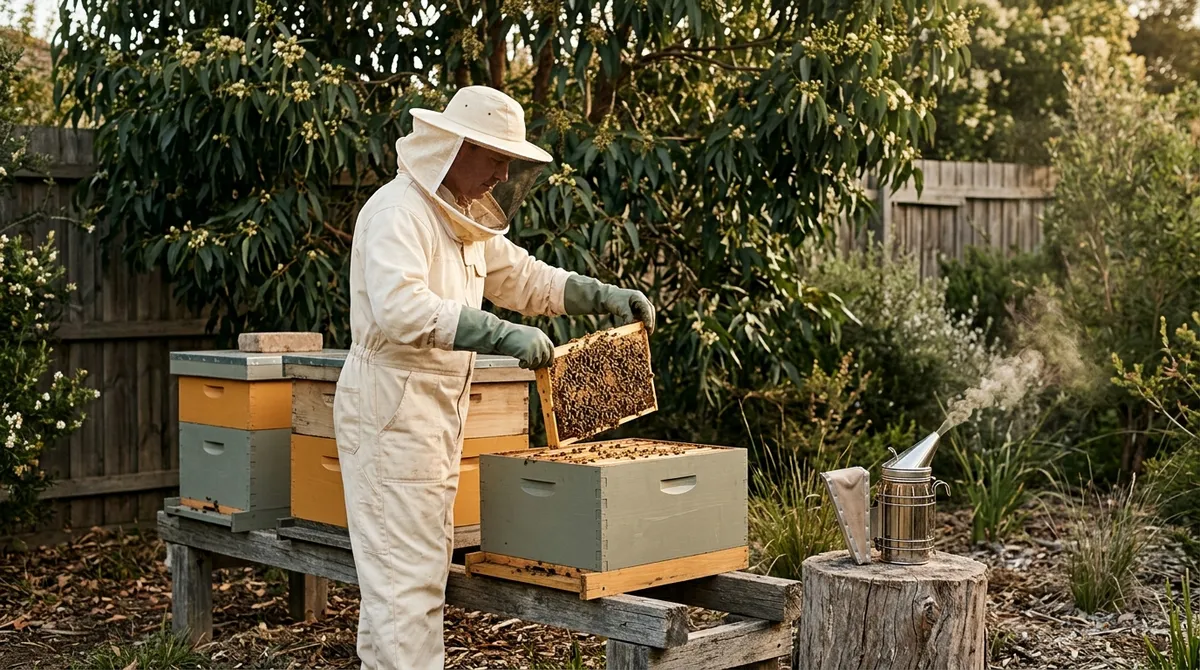
A single backyard hive produces 20 to 50kg of honey a year in most of Australia, pollinates every garden within three kilometres, and costs less to keep than a dog. Native stingless bees need even less: no extraction gear, no stings, and almost no maintenance. This section covers how to start, what the law requires in your state, and how to handle varroa now that it is part of Australian beekeeping.
Bees in your region
Start here
Identify blue banded bees, teddy bear bees, carpenters, leafcutters and the imposters, with what to plant for each.
Every state and territory requires registration for honey bees, and every one does it differently. Costs, renewal periods, hive branding rules and the official links, all in one place.
The national management program ended in February 2026. Here is exactly how to do an alcohol wash, what the thresholds mean, and what Queensland now requires every month.
Tetragonula and Austroplebeia: Australia's own bees. No registration, no varroa, no stings, a kilo of sugarbag a year, and the best pollination a subtropical garden can get.
Thresholds, strips vs organic acids, rotation, withholding periods.
Free tool: turn a wash count into a percentage and a clear verdict, and log treatments with rotation and re-check reminders.
The wider toolkit other countries use, what isn't allowed here, and the resistance and reinvasion behind heavy losses.
Feed your bees across the seasons so colonies can withstand varroa and viruses. Where the garden meets the hive.
Langstroth, Flow, top bar, Warre and OATH for Australian conditions.
OATH boxes, colony prices, placement, and where stingless bees survive.
Why they're docile, free collection, and prevention for keepers.
Inspection logs, varroa records and withholding countdowns. Pro from $4.99 a month, or $129 once.
The right order, real costs ($600-1,150), and the five first-year mistakes.
Real Australian numbers by hive type and region.
AFB, small hive beetle, wax moth and chalkbrood: spot them early.
Getting started with honey bees, the short version
- Register first. It is a legal requirement in every state before the bees arrive. See the state guide.
- Do a course. Your state amateur beekeeping association runs beginner weekends; most clubs lend equipment and mentor first-year keepers.
- One strong hive beats two weak ones. Start with a single 8 or 10 frame Langstroth (or a Flow super on a Langstroth brood box) and a nucleus colony from a local breeder in spring.
- Budget $600 to $900 for hive, suit, smoker, tools and the nuc. Honey from year one usually covers a chunk of it.
- Plan 20 minutes a fortnight in season: brood checks, space management, and from 2026 onward, a monthly varroa wash.
What about space and neighbours?
Hives fit in suburban backyards in every capital city. The usual rules of thumb: face the entrance away from paths and clotheslines, give bees a water source before your neighbour's pool becomes one, keep flight paths above head height with a fence or hedge, and stick to gentle stock. Most state Codes of Practice set hive density limits for residential blocks, typically two to four hives on a standard suburban block.
Keep compliant records without the paperwork
The Planting Season app logs hive inspections, varroa washes, treatments with withholding countdowns, and harvests, then exports the lot as a clean record. Monthly varroa reminders included. Plus the whole garden planner. Free to start, then Pro from $4.99 a month, not US$50 a year for a bees-only app.
Start free →What to plant, flock and hive jobs for the month, in one short email. No spam.
Unsubscribe any time.