Australian Bee Identification: Which Bee Is in Your Garden?
The eight bees you will actually see, plus the two imposters everyone mistakes for them.
Australia has over 1,700 native bee species alongside the introduced honey bee, but a backyard gardener meets the same cast again and again. Here is how to tell them apart in the thirty seconds before they fly off, what each one does for your garden, and what to plant to bring them back.
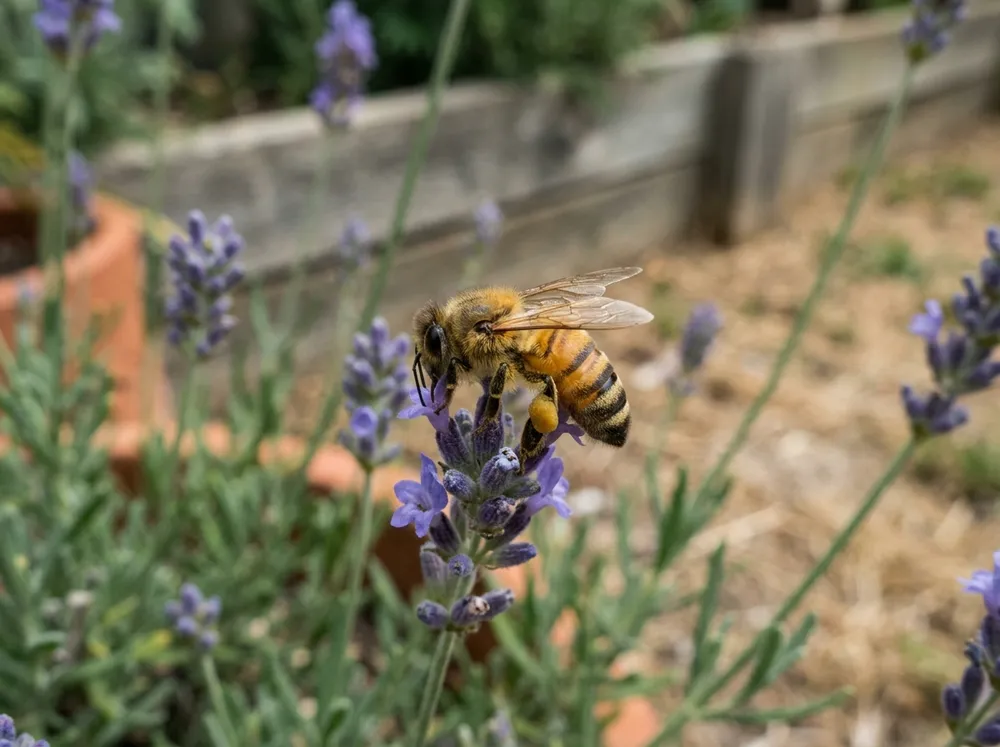 European honey bee Apis mellifera · 12-15mm
How to spot it: Golden-amber and black bands, fuzzy thorax, pollen baskets on the back legs. The bee everyone pictures.
Where: Everywhere in Australia.
The honey and commercial pollination workhorse, introduced in 1822. If a swarm lands in your yard, see our swarm guide. Lives in colonies of tens of thousands.
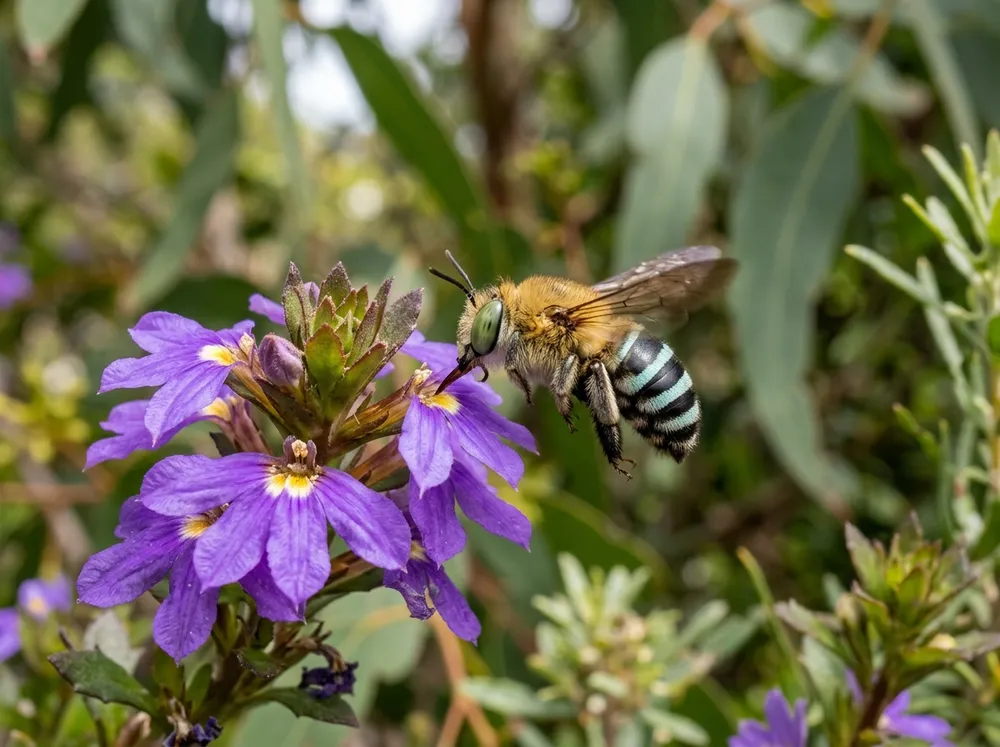 Blue banded bee Amegilla cingulata · 10-12mm
How to spot it: Unmistakable metallic blue bands across a black abdomen, golden furry thorax, big green eyes. Darts and hovers rather than crawling.
Where: All states except Tasmania.
A solitary native that nests in burrows in soft mortar and clay. The star of buzz pollination: it vibrates flowers at around 350 times a second, which tomatoes, eggplants and chillies need for full fruit set. The single best native bee a vegetable gardener can host.
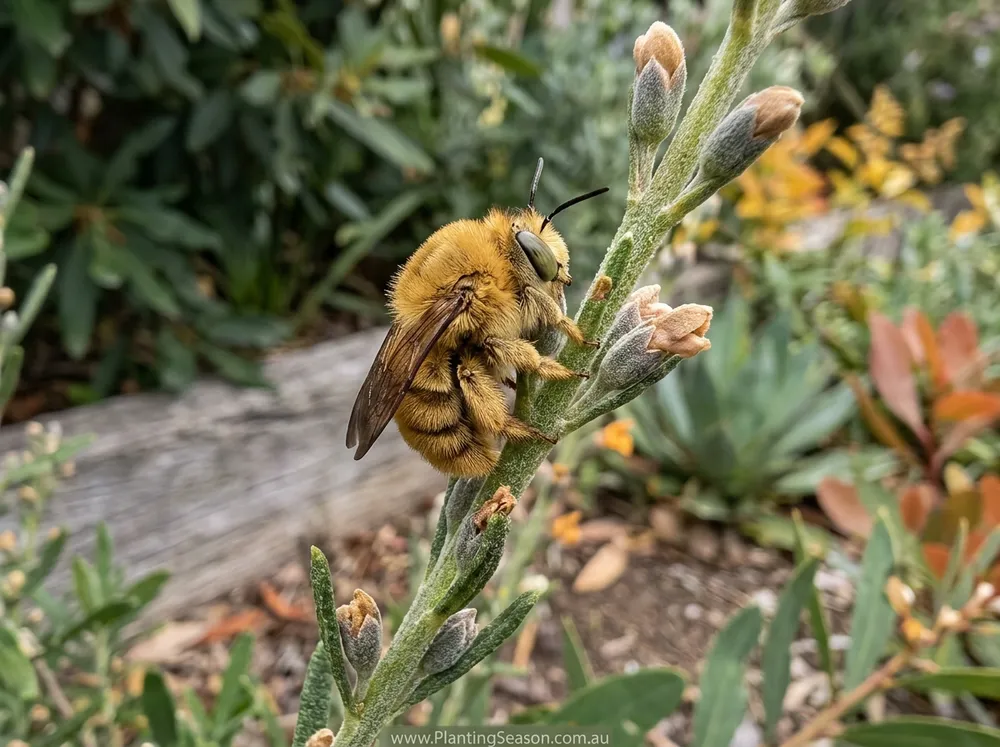 Teddy bear bee Amegilla bombiformis · 15-20mm
How to spot it: Round and completely covered in golden-brown fur. Often mistaken for a bumblebee, but mainland Australia has no established bumblebees: if you saw a fat furry golden bee, it was this.
Where: Eastern Australia, QLD to VIC.
A gentle solitary burrow-nester and another buzz pollinator. Males cling to grass stems at night in little sleeping clusters, one of the most charming sights in Australian gardens.
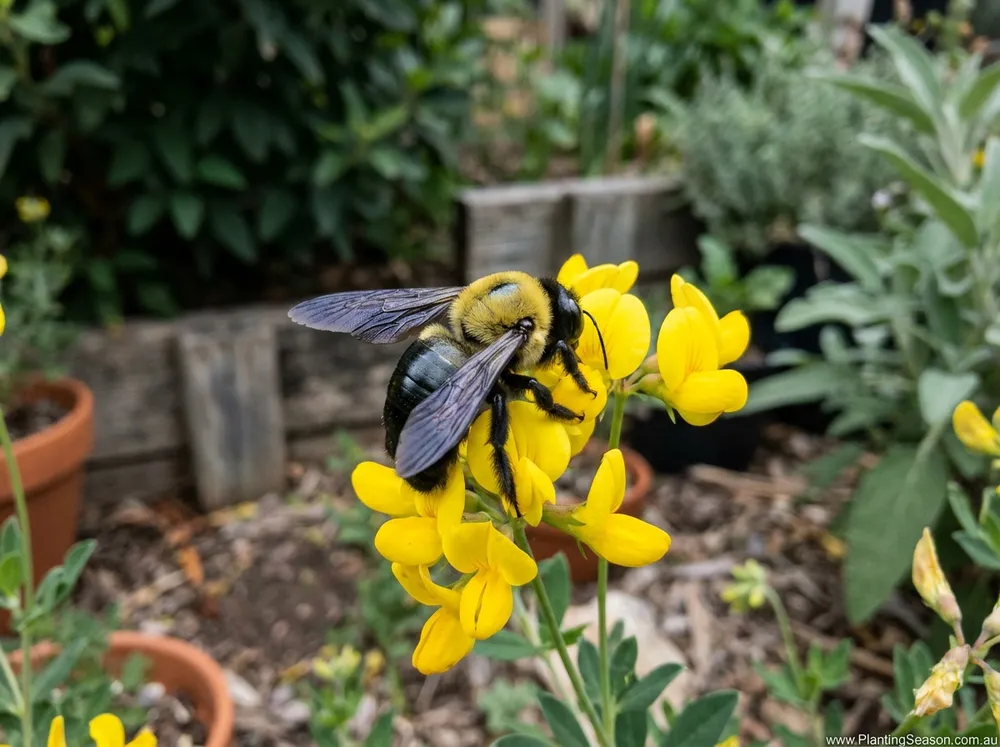 Great carpenter bee Xylocopa species · 20-24mm
How to spot it: Australia's biggest bee: glossy jet-black abdomen with a bright yellow-olive furry thorax. Loud, slow, unmistakable.
Where: Northern and eastern mainland.
Drills nest tunnels into soft dead timber (rarely structural). A heavyweight buzz pollinator for big flowers like passionfruit. Females can sting but almost never do; males cannot.
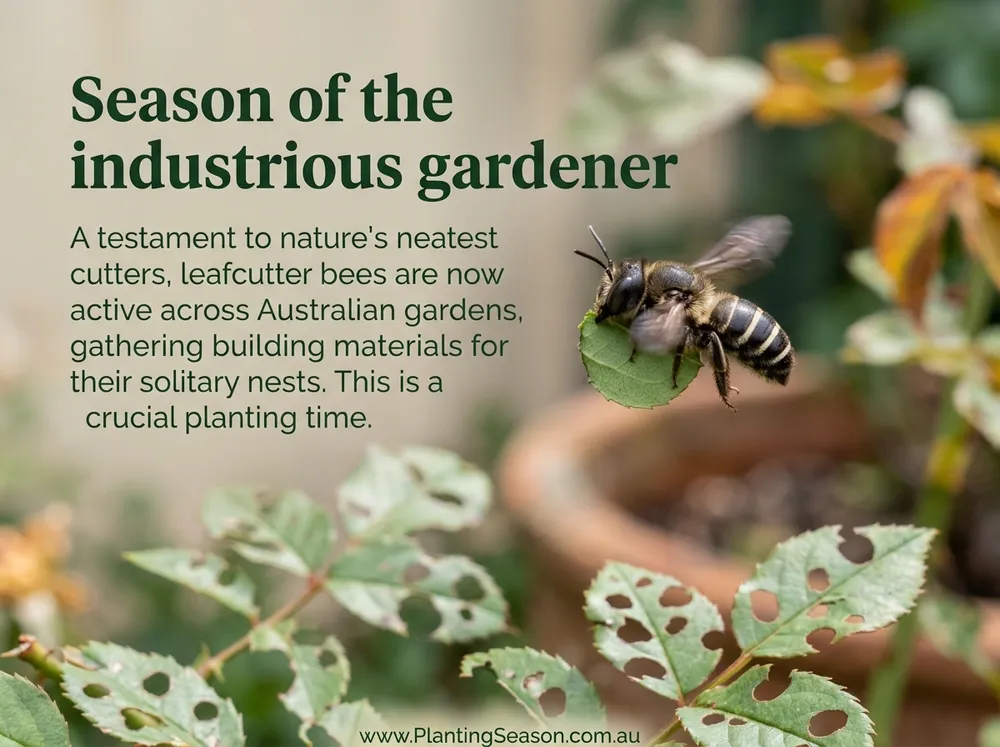 Leafcutter bee Megachile species · 6-15mm
How to spot it: Stout dark bee with pale bands that carries neat circular leaf discs beneath its body. Perfect round holes in your rose leaves are its signature.
Where: Australia-wide.
A solitary bee that wallpapers its nest cells with leaf circles. The leaf damage is cosmetic, never treat for it: you are hosting one of the best pollinators going. Loves bee hotels with 6-8mm holes.
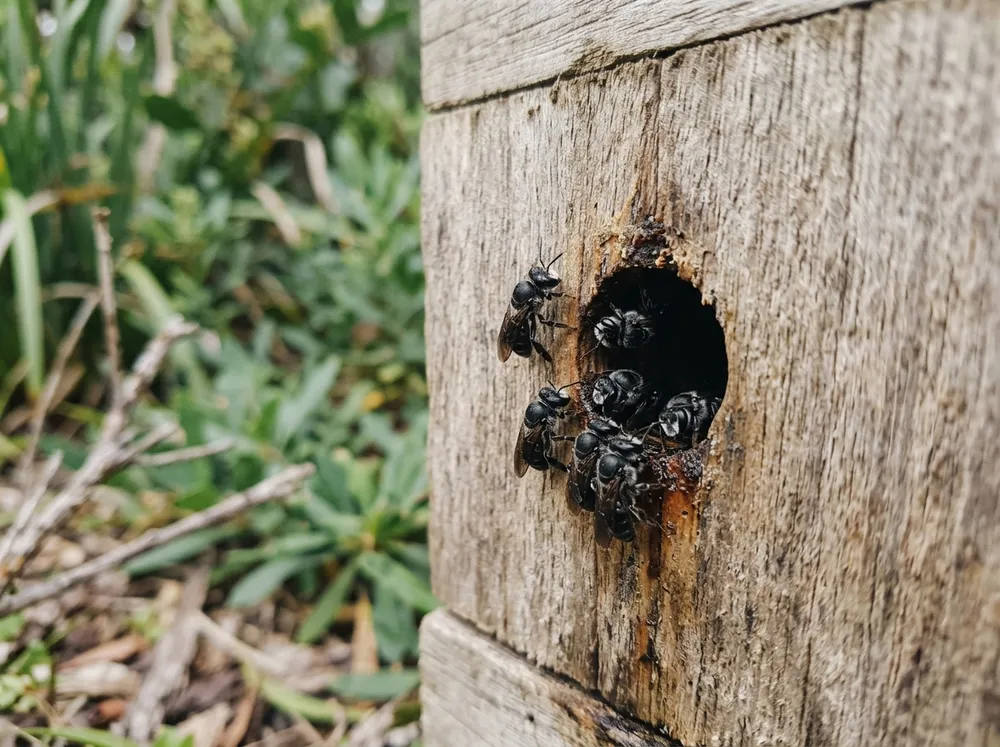 Stingless bee Tetragonula and Austroplebeia species · 4-5mm
How to spot it: Tiny jet-black bees the size of a grain of rice, streaming in and out of a small entrance hole. No stripes, no sting.
Where: Coastal QLD, northern NSW, NT and northern WA.
Australia's only true social native bees, kept in hives for sugarbag honey and superb pollination. The full story is in our stingless beekeeping guide.
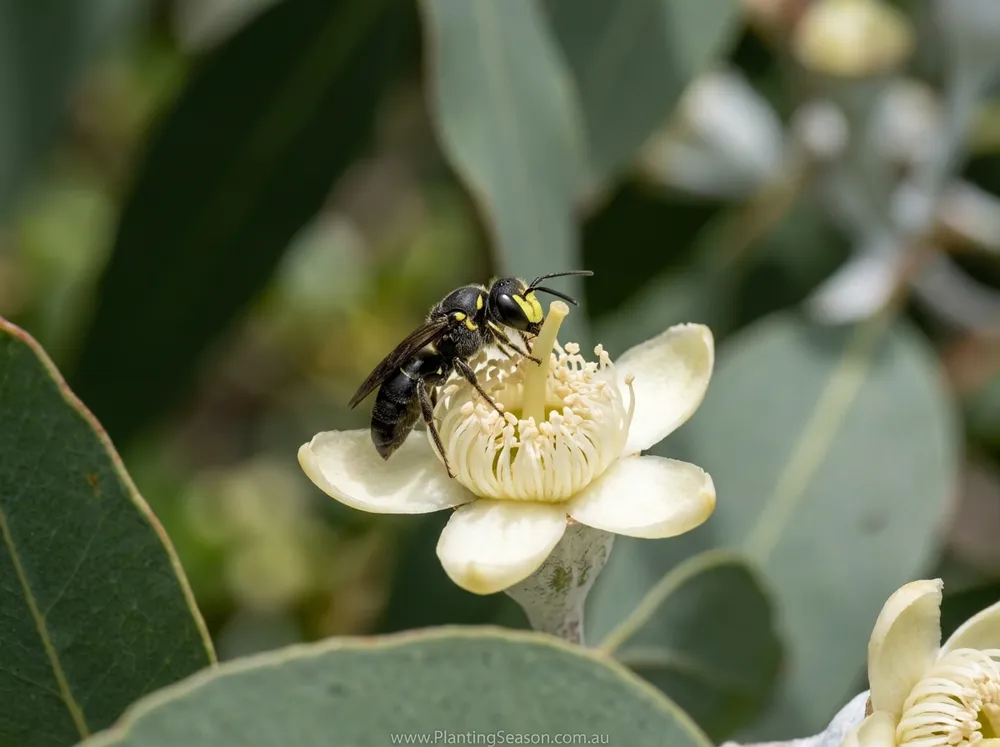 Masked bee Hylaeus species · 5-9mm
How to spot it: Slender, nearly hairless and black with sharp lemon-yellow face and side markings. Looks half-wasp, but visits flowers calmly.
Where: Australia-wide.
Carries pollen internally rather than on its legs, so it looks bare. Nests in pithy stems and beetle holes: leave some hollow stems standing in autumn and they will move in.
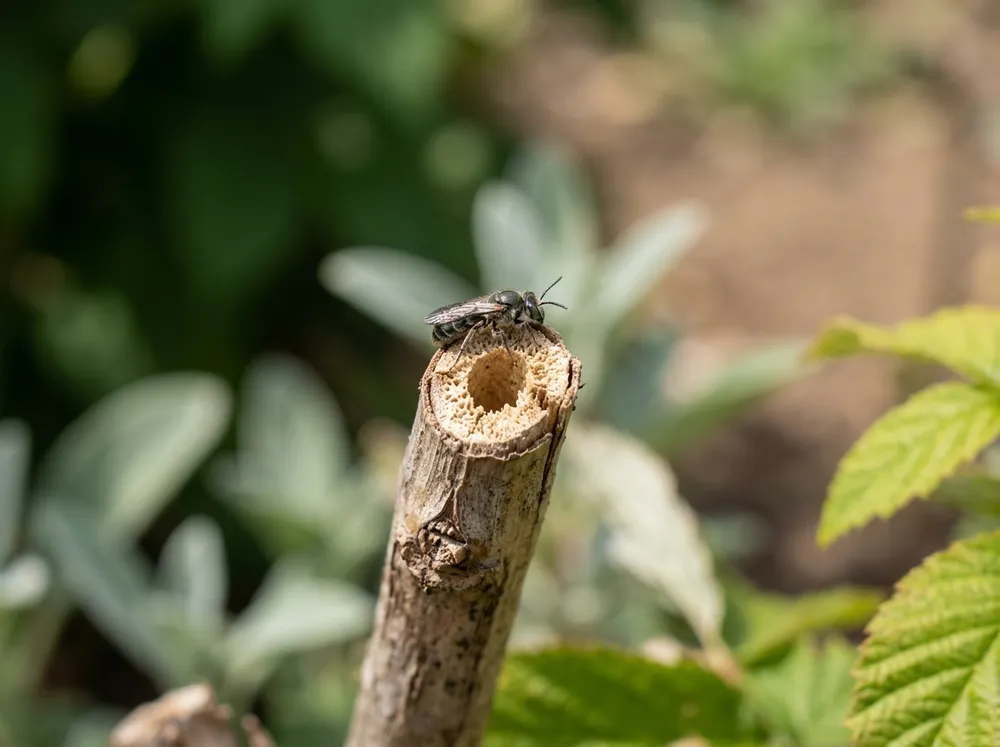 Reed bee Exoneura and Braunsapis species · 5-8mm
How to spot it: Small, slender, dark with a faint metallic sheen. Found around pruned canes and dead fronds.
Where: Eastern and southern Australia.
Semi-social natives that nest in the soft pith of cut raspberry, hydrangea and lantana canes. Prune canes 20cm proud instead of flush and you create instant nest sites.
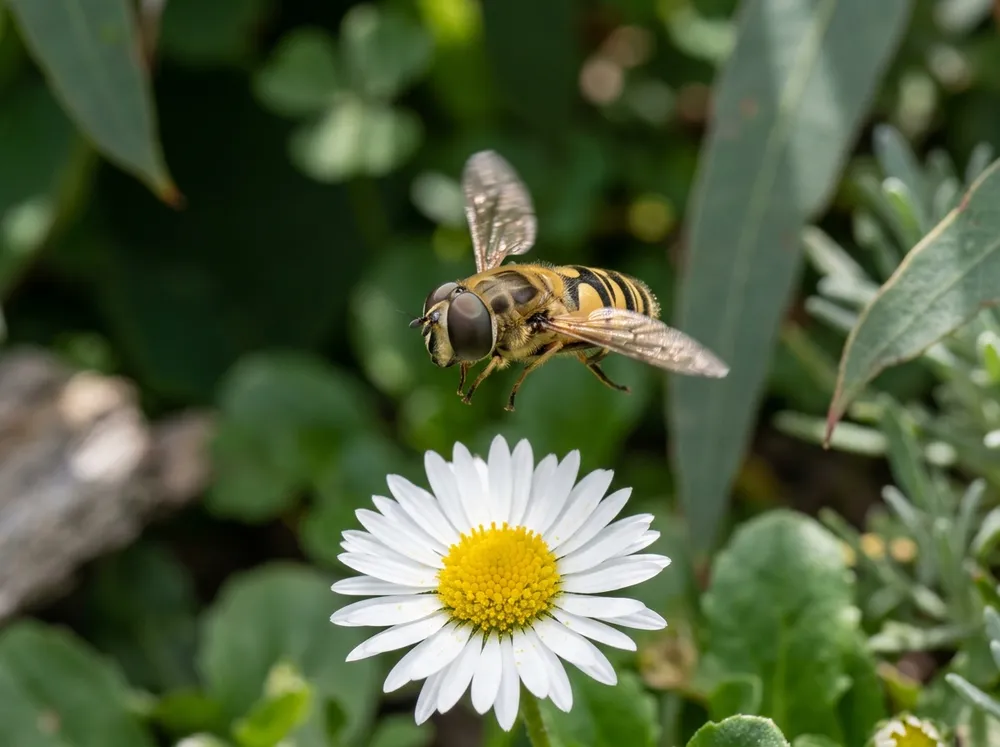 Hoverfly (not a bee) Syrphidae family · 8-12mm
How to spot it: The great imposter: bee-coloured but hovers in place like a tiny drone, has one pair of wings, enormous fly eyes and stubby antennae. Bees have two wing pairs, smaller eyes and long elbowed antennae.
Where: Australia-wide.
Harmless and wonderful: adults pollinate while their larvae eat aphids by the hundred. If it hovers dead-still and darts, it is a hoverfly. Welcome it.
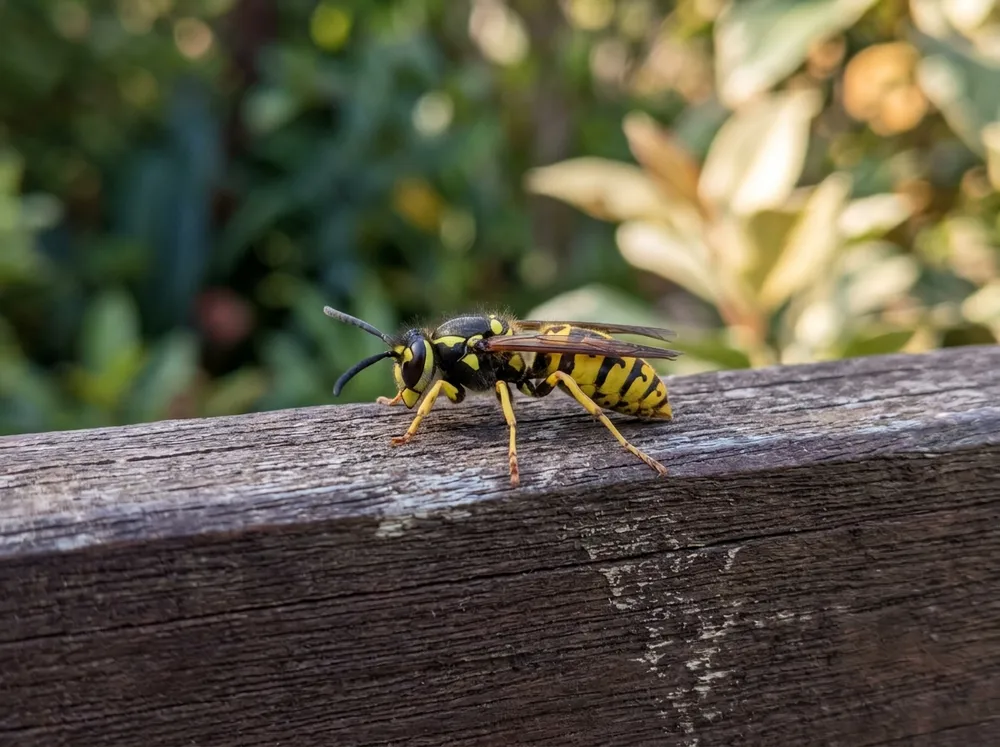 European wasp (not a bee) Vespula germanica · 12-16mm
How to spot it: Bright lemon-yellow and black, smooth and nearly hairless, narrow waist, folds its wings along its body at rest. Bees are furry; this is not.
Where: Southern Australia, worst in VIC, TAS, SA and ACT.
An aggressive introduced scavenger drawn to meat, sweet drinks and pet food rather than flowers. Can sting repeatedly. Never block a nest entrance; report nests to your council or a pest controller.
Make your garden a bee magnet
Three moves beat everything else: flower in every season (borage, alyssum and native shrubs cover the gaps), stop spraying (even organic pyrethrum kills bees on contact, spray at dusk if you must), and leave nesting habitat: bare patches of soil for burrowers, hollow stems for reed and masked bees, soft dead timber for carpenters. A stingless hive adds the social natives if you are north of Sydney.
What to plant, flock and hive jobs for the month, in one short email. No spam.
Unsubscribe any time.