A Bee Swarm Landed in Your Garden: Here's What to Do
Don't spray. They're usually gone in 48 hours, and a beekeeper will often collect them free.
First: you're safe, weirdly
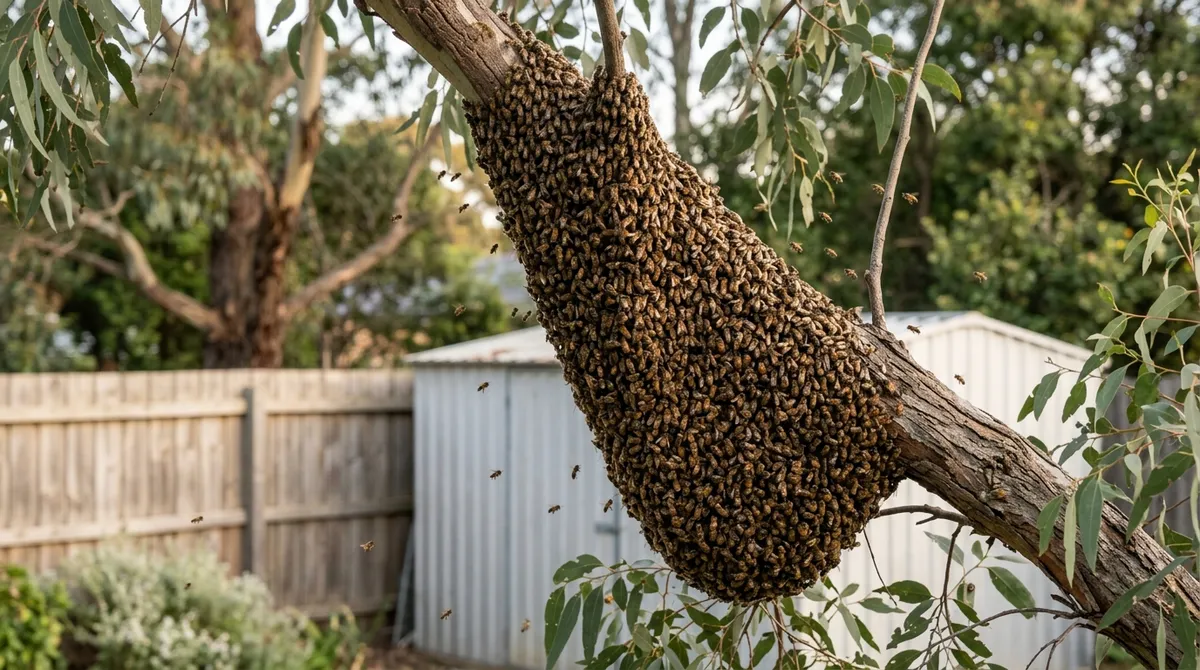
A swarm is a colony mid-house-move: thousands of bees clustered around a queen on a branch or fence while scouts find a new home. They have no hive, no honey and no babies to defend, which makes a swarm the most docile bees ever get. Keep kids and pets back, don't poke it, and absolutely don't spray it: half-poisoned bees are dangerous bees, and most swarms leave on their own within a day or two.
Get it collected free
Beekeepers want swarms, free bees. Search "[your state] amateur beekeepers swarm collection" or ring a local bee club; most run swarm lists with collectors who come the same day for accessible swarms. Have ready: how high it is, how long it's been there, and a photo.
When it's not actually a swarm
Bees flying in and out of a wall cavity, chimney or compost bay for more than a few days have moved in, which is a removal job, not a swarm collection. Still call a beekeeper first: many do cut-outs, and bees established in walls only get harder to remove with time.
For beekeepers: swarm season and prevention
Swarming peaks in spring, September to November in most of Australia, earlier in the subtropics, as colonies outgrow their boxes. Prevention is space management: add supers before they're needed, watch for queen cells in spring inspections, and split crowded colonies on your terms before they split themselves. A swarm you catch is also the perfect broodless moment for an oxalic acid treatment.
Native bees swarm too
A swirling cloud of tiny black bees around a tree hollow or hive box in the warm months is usually stingless bees fighting or mating, not honey bees. No action needed, it sorts itself out.
What to plant, flock and hive jobs for the month, in one short email. No spam.
Unsubscribe any time.