What can chickens eat? Safe foods, treats and what to avoid
Layer feed first, treats second, and a short list of foods that never go in the run. Checked against Australian government, vet and poultry extension sources, October 2026.
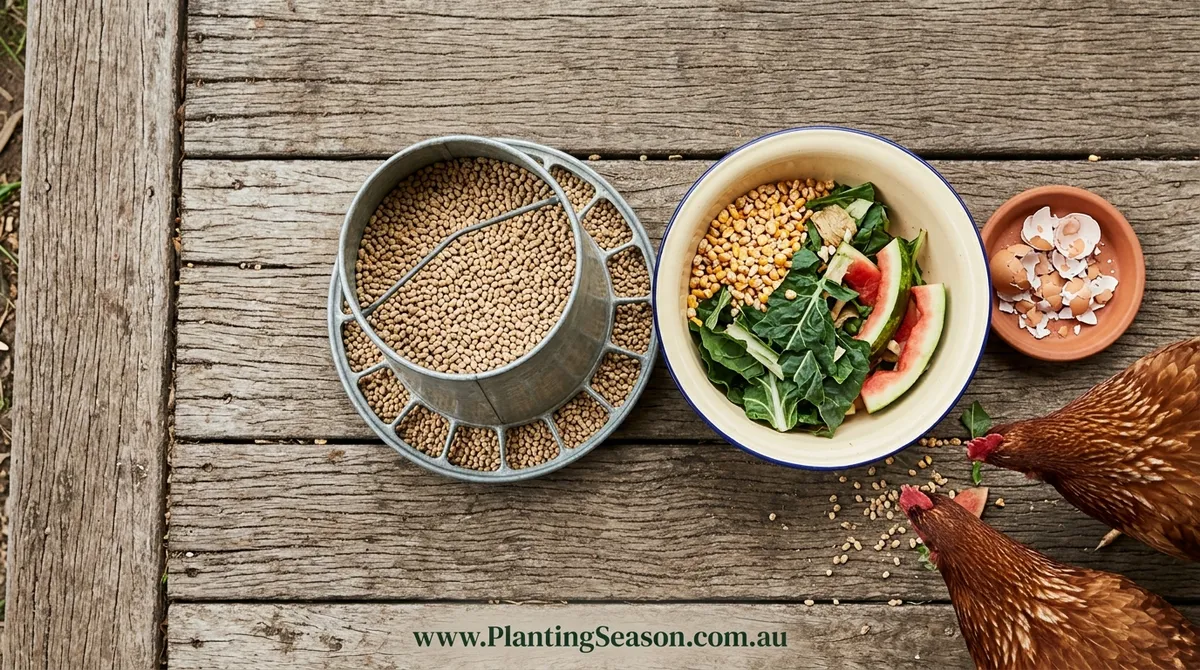
Chickens will eat almost anything, which is exactly why the list matters. A complete layer feed should be most of what they eat every day. Treats and kitchen scraps are the extra, kept to about 10 percent of the diet, and a handful of foods should never go in the run at all. Search any food below, or go straight to the foods that are toxic to chickens or feeding kitchen scraps safely in Australia.
The 10 percent rule
Keep treats under about 10 percent of what a hen eats in a day. UF/IFAS Extension gives that figure for treats, and University of Maryland Extension gives the same figure for scratch grain. Commercial layer feed is made to be complete: protein for laying, around 4 percent calcium for shells, and the vitamins and minerals scraps do not reliably supply. Every handful of scraps replaces some of it. Fill a hen up on bread and pasta and she gets the calories without the protein and calcium, and laying and shell quality are the first things to slip.
A practical measure from US Cooperative Extension: give no more scraps and grain than the flock clears in about 20 minutes, then pick up what is left so it cannot rot. Rotting scraps are a botulism risk. Biosecurity Tasmania adds that leftover scraps draw rats and mice, and that kitchen scraps alone leave hens short of calcium.
The right feed by age
- Chick starter, hatch to about 6 to 8 weeks: a high-protein crumble, around 18 to 22 percent protein.
- Grower or developer, to point of lay: around 14 to 18 percent protein, with less calcium. Do not give layer feed to young birds: University of Maryland and Alabama extension services both warn that its calcium level can cause bone problems and kidney failure in growing chickens.
- Layer, from the first egg (usually around 18 to 20 weeks): 16 to 18 percent protein with added calcium. Pellets waste less than mash.
- Grit and shell: insoluble grit lets the gizzard grind grain and scraps, and free-ranging birds pick up some of their own. Oyster shell is a calcium top-up, not grit. Offer it free choice in its own dish so each hen takes what she needs.
- Water: clean, cool water all day, every day. It matters most in an Australian summer, and it is the main protection against salt poisoning.
- Feed storage: keep feed in a sealed, dry, vermin-proof bin. Throw out feed that is mouldy, crusted or lumpy, which is a sign the bag got wet (Better Health Channel; Biosecurity Tasmania).
Can chickens eat...? Search the A to Z
Every food we are asked about, with a plain verdict: Yes safe as a treat, In moderation safe in small amounts or only in the form described, No do not feed.
Fruit
Apple Yes
Why: Flesh and skin are a good treat. Like most fruit seeds, apple seeds carry cyanogenic compounds; the flesh carries very little.
How to serve: Core it, then chop or grate. Windfalls are fine if they are not mouldy or fermenting.
Bananas Yes
Why: Soft, sweet and easy to eat. They are high in sugar, so they count towards the treat allowance.
How to serve: Peeled and mashed or in chunks. The peel is tough; chop it finely if you offer it.
Citrus (orange, mandarin, lemon) In moderation
Why: Not known to be toxic to chickens, but sour, and many hens leave it.
How to serve: A few segments now and then. Pick up whatever they ignore before it moulds.
Coconut In moderation
Why: Fresh or dried flesh is safe but high in fat.
How to serve: A little grated fresh coconut or unsweetened dried coconut. Skip sweetened products.
Fig Yes
Why: Ripe figs are safe and popular.
How to serve: Fresh ripe figs, torn open. Fallen figs sour and mould quickly in summer, so collect them rather than leave them lying.
Grapes In moderation
Why: Safe, but sugary.
How to serve: A few at a time, halved if they are large.
Kiwifruit Yes
Why: Safe.
How to serve: Halve it and let them scoop out the flesh. Remove the skins afterwards.
Mango Yes
Why: Ripe flesh is safe, and a good use for overripe fruit in a Queensland or Top End summer.
How to serve: The flesh, and the cheek skins to pick at. Take out the stone.
Pear Yes
Why: Flesh and skin are safe. As with apples, the seeds hold most of the cyanogenic compounds.
How to serve: Core it, then chop.
Pineapple In moderation
Why: Safe in small amounts. It is acidic, and the skin and core are tough and fibrous.
How to serve: Small pieces of ripe flesh only. Skip the skin and core.
Strawberries Yes
Why: Safe and well liked.
How to serve: Whole or halved. Slug-chewed garden berries are fine; mouldy ones are not.
Watermelon Yes
Why: Safe and mostly water, which makes it a good hot-weather treat.
How to serve: A wedge with the rind on for them to pick clean. In summer, take the rind away after a few hours, before it draws flies and starts to rot.
Vegetables and greens
Asparagus In moderation
Why: Safe. Strong-tasting foods can flavour eggs, and many hens ignore asparagus anyway.
How to serve: Small chopped pieces, raw or cooked.
Beetroot Yes
Why: Safe, root and leaves.
How to serve: Grate the root raw or offer it cooked, and throw in the tops.
Broccoli Yes
Why: Safe: florets, stalks and leaves.
How to serve: Raw or lightly cooked. A whole head hung in the run keeps them busy.
Brussels sprouts Yes
Why: Safe.
How to serve: Halved or shredded, raw or cooked.
Cabbage Yes
Why: Safe, and a good use for the tough outer leaves.
How to serve: Hang a whole cabbage so they have to work for it, or shred the outer leaves.
Capsicum Yes
Why: The ripe fruit is safe. The leaves and stems belong to the nightshade family, which poultry extension advice says to keep out of the run.
How to serve: Chopped ripe fruit, seeds included. No leaves or stems.
Carrot Yes
Why: Safe, root and tops.
How to serve: Grated raw, or cooked.
Cauliflower Yes
Why: Safe, leaves included.
How to serve: Raw or cooked, chopped.
Celery In moderation
Why: Safe, but the long strings can bundle up in the crop.
How to serve: Chop it into short pieces, about 1 cm.
Cucumber Yes
Why: Safe and watery, which suits hot weather.
How to serve: Halved lengthways or sliced. Overgrown garden cucumbers are fine.
Eggplant In moderation
Why: The ripe fruit is fine. Leaves, stems and green fruit are nightshade parts and should stay out of the run.
How to serve: Ripe flesh, best cooked. No leaves or stems.
Ginger In moderation
Why: We found no record of ginger harming chickens, but it is strongly flavoured and most hens ignore it.
How to serve: A little grated root mixed into other scraps, if you want to.
Kale Yes
Why: Safe, and one of the more nutritious greens.
How to serve: Hang a bunch in the run or chop it.
Lettuce Yes
Why: Safe. Darker leaf lettuces carry more nutrients than iceberg.
How to serve: Torn leaves. Throw out any that have gone slimy.
Mushrooms In moderation
Why: Plain shop-bought mushrooms are safe. Wild mushrooms are not: some are deadly, and they cannot be told apart safely by eye.
How to serve: Plain cooked shop mushrooms only. Pull out any mushrooms that come up in the run.
Peas Yes
Why: Safe, and higher in protein than most vegetables.
How to serve: Fresh, thawed or cooked. Spent pea plants after harvest are fine too.
Potato In moderation
Why: Plain cooked potato is safe. Green, sprouted or old potatoes, green peel and the potato plant contain solanine, and poultry are among the animals poisoned by it.
How to serve: Cooked, plain and cooled. Never green or sprouting potatoes or peel; cooking does not make green potato safe.
Pumpkin Yes
Why: Safe, flesh and seeds.
How to serve: Halve it and let them dig in, raw or cooked.
Radish Yes
Why: Safe, root and leaves.
How to serve: Chopped root and whole leaves. Bolted radish plants from the garden are fine.
Spinach and silverbeet In moderation
Why: Safe. Both are high in oxalates, which bind calcium, so make them part of a mix of greens rather than the whole thing.
How to serve: Chopped leaves a few times a week.
Sweet potato Yes
Why: Safe. It is not a nightshade, so the potato warnings do not apply.
How to serve: Cooked, or grated raw.
Tomato In moderation
Why: Ripe fruit is safe. Leaves, stems and green fruit are nightshade parts that poultry extension advice says to avoid.
How to serve: Ripe or overripe fruit, halved. No vines and no green fruit.
Zucchini Yes
Why: Safe, including the giant ones that hid under the leaves.
How to serve: Halved lengthways, raw or cooked.
Grains, bread and cooked food
Beans (cooked) Yes
Why: Thoroughly cooked beans are safe and a good source of protein. Raw or undercooked dried beans contain a lectin, phytohaemagglutinin, that only proper boiling destroys.
How to serve: Well-cooked, plain beans. Never raw dried beans, and never beans that were only soaked.
Bread In moderation
Why: Filling but low in protein and calcium. Mouldy bread is never safe. In Queensland, only bread with no egg or meat in it, and no contact with them, may be fed to poultry.
How to serve: A small amount, broken up. Never mouldy.
Breakfast cereal In moderation
Why: Plain cereals are safe but mostly starch. Sugary, salty and chocolate cereals are not suitable.
How to serve: A small handful of plain, low-sugar cereal, dry or softened.
Corn In moderation
Why: Safe and loved, but high in energy and low in protein. University of Maryland Extension suggests grain like this stays around 10 percent of daily intake.
How to serve: Cobs to pick at, or cracked corn as an afternoon treat. Offer grit when you feed grain.
Honey In moderation
Why: Safe, but it is sugar and little else a hen needs.
How to serve: A small smear, rarely, if at all.
Oats Yes
Why: Safe.
How to serve: Dry rolled oats or plain cooked porridge, in treat amounts.
Pasta In moderation
Why: Plain cooked pasta is safe but mostly starch. Egg pasta is an egg product, so in Queensland it may not be fed to poultry.
How to serve: Plain and cooked, no sauce, in small amounts.
Peanut butter In moderation
Why: Safe in tiny amounts, but fatty, often salted, and sticky.
How to serve: A thin smear of plain, unsalted peanut butter, rarely.
Peanuts In moderation
Why: Plain peanuts are safe. Peanuts and grain that go mouldy can carry aflatoxin, one of the mycotoxins that poison poultry.
How to serve: Plain, unsalted, shelled and fresh. Never mouldy, damp or stale.
Popcorn In moderation
Why: Plain popped corn is safe. Salted or buttered popcorn is not.
How to serve: Air-popped and plain, a small handful.
Quinoa Yes
Why: Safe once cooked.
How to serve: Rinse, cook plain, and cool.
Rice Yes
Why: Plain cooked rice is safe.
How to serve: Cooked, plain and cooled, in treat amounts. Fried rice and leftovers with meat or egg in them are a different matter: see the kitchen scraps guide.
Sunflower seeds In moderation
Why: Safe and rich in fat and protein, which helps during the moult. Too many dilute the layer feed.
How to serve: A small handful of plain, unsalted seeds.
Protein, dairy and eggs
Butter No
Why: Not toxic, but it is fat and usually salt, with nothing a hen needs.
How to serve: Do not feed it.
Cheese In moderation
Why: Safe in small amounts. Chickens do not make lactase, the enzyme that digests milk sugar, and most cheese is salty.
How to serve: A crumb or two, rarely.
Chicken (meat) No
Why: Feeding poultry meat to poultry is illegal in Queensland and a disease risk everywhere.
How to serve: Do not feed it.
Eggs In moderation
Why: Cooked eggs are good protein, but feeding eggs to poultry is illegal in Queensland.
How to serve: Outside Queensland: cooked and chopped, never raw or whole, so hens do not learn that eggs are food.
Eggshells In moderation
Why: A calcium source, but eggs, shells included, are on Queensland's prohibited list.
How to serve: Outside Queensland: dried and crushed so they do not look like eggs. Oyster shell works everywhere.
Ice cream No
Why: Sugar, fat and lactose together, and some flavours contain chocolate.
How to serve: Do not feed it. Frozen fruit does the hot-weather job better.
Mealworms In moderation
Why: High in protein and a favourite, useful during the moult.
How to serve: A small handful as a treat, live or dried.
Meat No
Why: Illegal for all poultry in Queensland, backyard hens included. Biosecurity Queensland says swill can carry poultry viruses such as Newcastle disease. We found no equivalent ban in other states, but meat scraps also spoil fast.
How to serve: Not recommended anywhere. See the kitchen scraps guide for the rules.
Milk In moderation
Why: Small amounts are fine; US Cooperative Extension notes that sour milk can be fed. Chickens do not make lactase, so a lot of milk loosens droppings.
How to serve: A splash mixed into mash, now and then.
Tuna and other fish In moderation
Why: Plain fish is a protein treat. Tinned fish in brine is salty.
How to serve: A spoonful of tuna in spring water, rarely. Queensland's law names mammal and bird material; fish is not named, but anything that has touched meat or egg is.
Yoghurt In moderation
Why: Plain yoghurt is safe in small amounts. The lactose limit is the same as for milk.
How to serve: A spoonful of plain, unsweetened yoghurt, rarely.
Garden, forage and insects
Comfrey In moderation
Why: Comfrey contains pyrrolizidine alkaloids, which damage the liver, and the damage builds up with repeated doses. It is not the safe daily green it is often said to be.
How to serve: If you use it at all, a few leaves occasionally, mixed with other greens. Do not make it a staple.
Grass clippings No
Why: Long cut grass can tangle in the crop and cause an impacted crop, and piled clippings heat up and go mouldy.
How to serve: Let them graze growing grass instead. Never give clippings from a lawn that has been sprayed.
Slugs and snails In moderation
Why: Eaten readily, but they can carry parasites such as gapeworm.
How to serve: Fine as forage. Never let hens forage where snail bait has been laid.
Spiders and insects Yes
Why: Foraging for insects, spiders, grubs and worms is natural, and they are good protein.
How to serve: Let them forage. Do not feed them insects you have sprayed.
Never feed
Alcohol No
Why: UC Davis poultry extension lists alcohol as toxic to chickens.
How to serve: Never, and clear away fermenting fruit.
Avocado No
Why: The fruit, skin, stone, leaves and stems have all been linked to avocado poisoning, and chickens are on the list of susceptible species.
How to serve: Do not feed any part.
Beans (raw or dried) No
Why: Raw and undercooked dried beans carry phytohaemagglutinin, a lectin that soaking alone does not remove.
How to serve: Never raw. Thoroughly boiled beans are fine.
Chocolate No
Why: Theobromine and caffeine are toxic to many species, and livestock have died after eating cocoa by-products.
How to serve: Never.
Coffee grounds and tea No
Why: Caffeine belongs to the same toxin family as the theobromine in chocolate.
How to serve: Never. Compost them where the hens cannot scratch.
Garlic No
Why: Garlic is in the same plant group as onion and, gram for gram, is more toxic in the animals studied. The Victorian Government's Better Health Channel says not to give chickens onions or garlic.
How to serve: Do not feed it on purpose.
Mouldy or rotting food No
Why: Moulds make mycotoxins such as aflatoxin that poison poultry, and rotting food can carry botulism.
How to serve: Never. If it is too mouldy for you, it is too mouldy for them.
Onion No
Why: Onion damages red blood cells, raw, cooked or dried. Strong-tasting scraps like onion can also flavour eggs.
How to serve: Do not feed it on purpose.
Rhubarb No
Why: The leaves are high in oxalic acid. The stalks hold little, but there is no reason to feed the plant.
How to serve: Keep rhubarb fenced off from the run.
Salty food No
Why: Poultry are among the animals most often hit by salt poisoning, especially when water runs short.
How to serve: Never: chips, salted nuts, cured meats, crackers and salty leftovers.
The never-feed list
Avocado, chocolate, coffee grounds and other caffeine, alcohol, raw or undercooked dried beans, green or sprouted potatoes and potato peel, tomato and other nightshade leaves and green fruit, rhubarb leaves, onion and garlic, anything mouldy or rotting, and salty food. The toxic foods guide explains the toxin in each one, the signs, and what to do if a hen has eaten it.
What actually keeps hens laying
Consistent layer feed, clean water in the shade, grit and oyster shell on the side, enough daylight (laying slows as the days shorten, most of all in southern winters), and low stress. No treat or supplement fixes a flock getting half its diet as bread.
What to plant, flock and hive jobs for the month, in one short email. No spam.
Unsubscribe any time.
Common questions
What can chickens eat every day?
A complete commercial feed matched to their age (starter, grower or layer), clean water, grit, and oyster shell on the side for laying hens. Treats and kitchen scraps are extra, kept to about 10 percent of what they eat.
How many treats can chickens have?
Keep treats and scraps to about 10 percent of the daily diet, or no more than the flock clears in about 20 minutes. More than that dilutes the protein and calcium in their feed, and laying suffers.
What foods are toxic to chickens?
Avocado, chocolate, coffee grounds and other caffeine, alcohol, raw or undercooked dried beans, green or sprouted potatoes and potato peel, tomato and other nightshade leaves, rhubarb leaves, onion and garlic, mouldy or rotting food, and salty food.
Can chickens eat bread?
A little plain bread is fine as an occasional treat, but it is low in protein and calcium. Never feed mouldy bread. In Queensland, only bread with no egg or meat in it, and no contact with them, may be fed to poultry.
Can chickens eat eggshells?
Outside Queensland, yes: dry them and crush them so they do not look like eggs. Queensland's prohibited feed law covers eggs, so feeding eggs or eggshells to poultry is not allowed there. Oyster shell is a calcium source that works everywhere.
Can chickens eat avocado?
No. The fruit, skin, stone, leaves and stems have all been linked to avocado poisoning, and chickens are on the list of susceptible species. Keep every part out of the run.
Sources we checked
- Better Health Channel (Victorian Government), Keeping backyard chickens
- Biosecurity Tasmania, Backyard Poultry: a guide for hobby farmers (PDF)
- RSPCA Australia, Essential tips to care for backyard chickens
- Business Queensland (Biosecurity Queensland), Laws against supplying and feeding prohibited feed to poultry (updated 9 July 2025)
- UF/IFAS Extension, The 5 most common chicken feeding mistakes beginners make (2026)
- University of Maryland Extension, Feeding the Flock (updated 11 May 2022)
- Cooperative Extension (poultry.extension.org), Feeding chickens for egg production in small and backyard flocks
- Cooperative Extension (poultry.extension.org), Egg eating by chickens in small and backyard flocks
- Alabama Cooperative Extension System, Nutrition for backyard chicken flocks
- University of Georgia Extension, Nutrition for the backyard flock (Circular 954)
- UC Davis and UC Agriculture and Natural Resources, Feeding your Flock (Pitesky and Reimers, PDF)
- MSD Veterinary Manual, Avocado toxicosis in animals
- MSD Veterinary Manual, Garlic and onion (Allium spp) toxicosis in animals
- MSD Veterinary Manual, Mycotoxicoses in poultry
- MSD Veterinary Manual, Salt toxicosis in animals
- MSD Veterinary Manual, Cyanide poisoning in animals
- MSD Veterinary Manual, Pyrrolizidine alkaloidosis in animals
- UK Committee on Toxicity, statement on pyrrolizidine alkaloids in food (PDF)
- Massey University, Poisonous Plants database: potato
- The effect of whey on performance, gut health and bone morphology in broiler chicks (PMC7278671)
- PoultryDVM, Impacted crop
Sources checked in October 2026. Feeding rules and vet advice change, so we recheck this page every year. If a hen is unwell, call a vet: this page is general information, not a diagnosis.
Images on this page are AI-generated illustrations.