Varroa Mite Treatment in Australia: What Works and When
Thresholds, chemical and organic options, rotation, and the withholding periods that protect your honey.
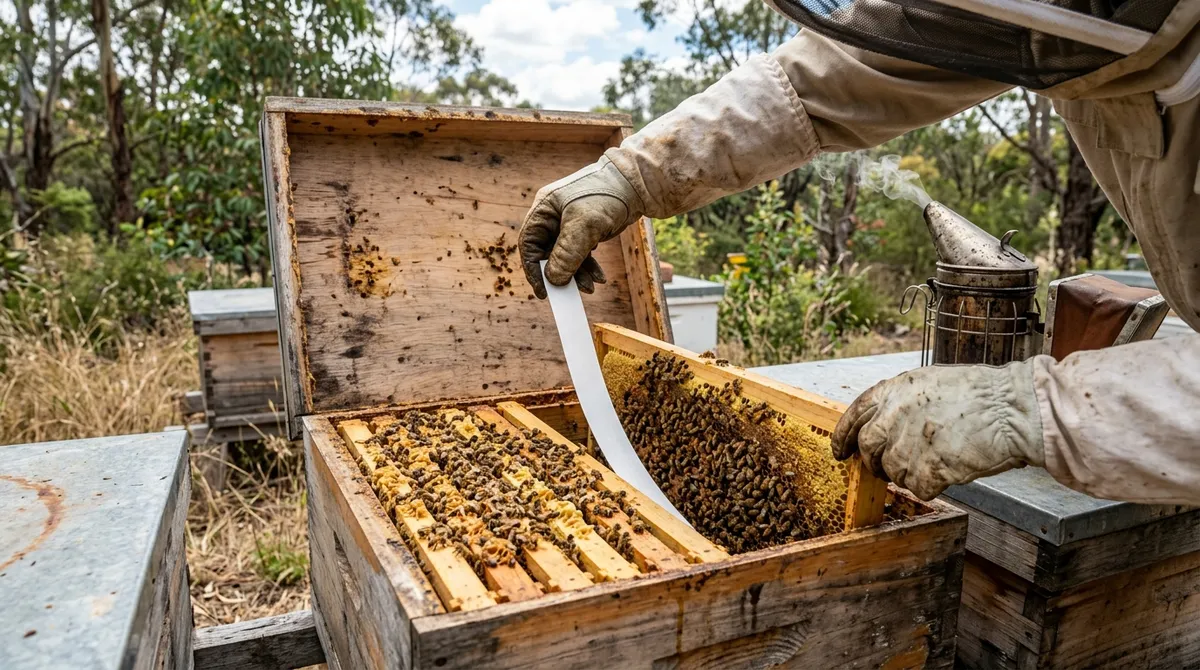
Varroa destructor is established in Australia and management is now permanent. The decision tree is simple: monitor monthly, and when an alcohol wash shows 2% or more (6+ mites per 300 bees), treat. Under 1%, keep monitoring. Between, re-test in a fortnight and get your treatment ready.
What each treatment type looks like
 Treatment strips (amitraz, flumethrin, tau-fluvalinate)
Plastic strips impregnated with miticide, hung between brood frames for 6-8 weeks while bees walk over them. The set-and-forget option and the usual first choice for high mite loads in season. Honey supers come off during treatment, and the withholding period on the label is the law.
 Oxalic acid vaporiser
A heated wand or pan pushes oxalic acid vapour through the sealed hive for a few minutes. Brutal on phoretic mites, useless on mites under cappings, which is why it shines in broodless windows: winter, after caging the queen, or on a fresh swarm. Wear a proper respirator, the vapour is nasty for you too.
 Thymol gel trays
A tray of thymol gel sits above the brood for 2-4 weeks, releasing vapour that knocks mites down. Works best between 15-30 degrees, can taint honey (supers off), and the hive smells like a throat lozenge for a fortnight. A solid organic rotation option in spring and autumn.
 Oxalic acid dribble
Oxalic acid in sugar syrup, dribbled along each seam of bees with a syringe: about 5ml per seam, 50ml max per hive, once per broodless period. The cheapest treatment there is and very effective in winter. One dose only, repeat dribbles harm the bees.
Whichever you use: rotate classes between treatments, log the date and withholding period (the app counts it down for you), and re-wash two weeks after finishing to confirm it worked.
Treatment options
Synthetic strips
- Amitraz (e.g. Apivar): the workhorse. Strips hang between brood frames for 6-8 weeks. Up to 99% effective while resistance stays low. Honey supers off during treatment.
- Flumethrin (e.g. Bayvarol) and tau-fluvalinate (Apistan): pyrethroid strips, effective where resistance hasn't developed. Overseas experience says resistance comes with overuse, which is why rotation matters from day one in Australia.
Organic acids and oils
- Oxalic acid: vaporised or dribbled, kills mites on adult bees but not under cappings, so best in broodless periods (winter, after caging the queen, or on a new swarm). Cheap, no resistance recorded, residue-free.
- Formic acid (e.g. Formic Pro): penetrates cappings, the only common option that kills mites in brood. Temperature-sensitive: follow the label's range strictly or you risk queen loss.
- Thymol (e.g. Apiguard): gel trays over brood, 2-4 week course, works best above 15°C. Can taint honey, supers off.
The two rules that matter more than the brand
Rotate chemical classes. Using the same strip year after year breeds resistant mites, the story of every other country. Alternate synthetic classes and organics across the year.
Respect withholding periods. Each product specifies how long before harvest honey can be taken for human consumption. Write the clear date down the day treatment goes in, take supers off when the label says, and re-wash two weeks after treatment ends to confirm it worked.
An integrated year, briefly
Monthly washes year-round. Treat on threshold, not on calendar. Favour organic acids in broodless windows, save synthetics for high loads in season, use drone brood removal as a free cultural control in spring, and requeen with varroa-tolerant stock as Australian breeding programs release it.
What to plant, flock and hive jobs for the month, in one short email. No spam.
Unsubscribe any time.