Varroa Monitoring: Australia's New Monthly Habit
The national program ended in February 2026. Monitoring is now every beekeeper's job.
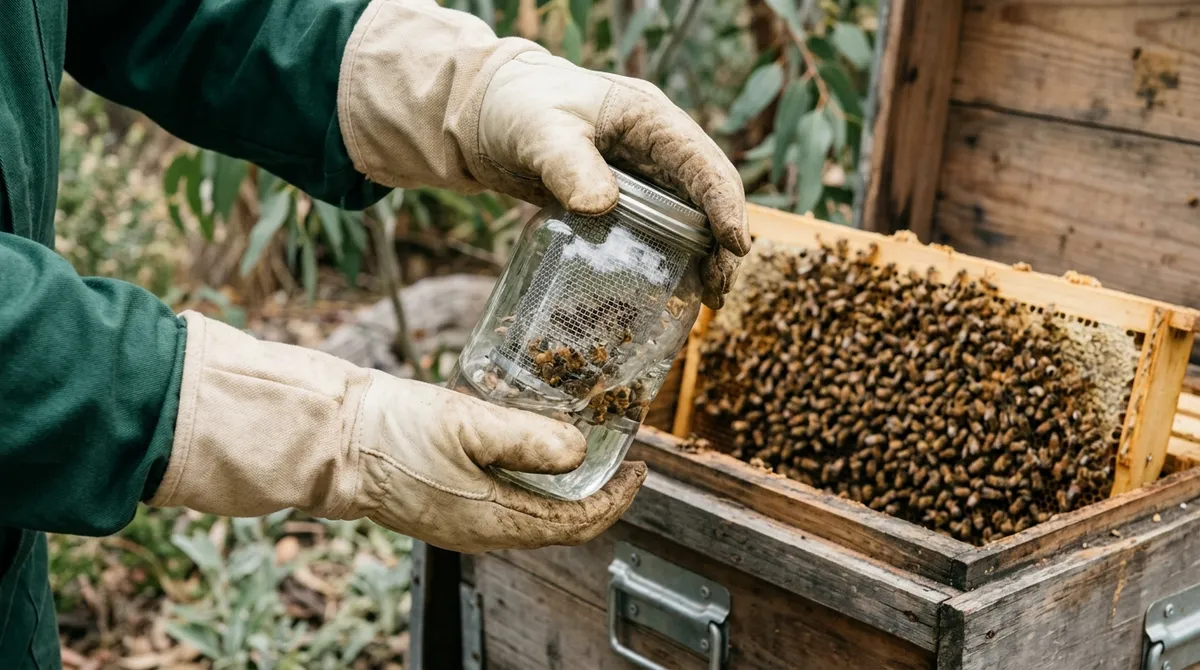
Varroa destructor reached Australia in June 2022 and is now established on the east coast. The two-year national transition-to-management program wrapped up in February 2026, which means there is no eradication coming: managing mites is simply part of Australian beekeeping now, the way it has been everywhere else in the world for decades. The good news: the method is simple, cheap, and takes ten minutes a month per hive.
The alcohol wash, step by step
- Open the brood box and find a frame of open brood (not the queen frame; spot her and set that frame aside).
- Shake or brush about 300 bees (half a metric cup) into a wash jar or shaker bottle.
- Cover with washing fluid: methylated spirits diluted to about 25%, or windscreen washer fluid. Seal and swirl gently for 60 seconds.
- Strain and count. Mites drop through the mesh; count every one.
- Work out the percentage: mites ÷ 300 × 100. Nine mites in 300 bees is a 3% load.
What the numbers mean
- Under 1%: healthy. Keep monitoring monthly.
- 1 to 2%: watch closely, re-test in two weeks, plan your treatment window.
- Over 2%: treat now. Untreated colonies above this level usually collapse within months.
Queensland: monitoring is mandatory and reportable
Queensland requires registered beekeepers to monitor every hive monthly using the alcohol wash and report results through the Bee 123 form, even when the count is zero. Zero reports matter: they map where varroa hasn't reached. Other states require records be kept; check your state's current rules on our registration page.
Treatments, briefly
If you cross the threshold: synthetic strips (amitraz, flumethrin) and organic options (oxalic acid, formic acid) all work when used by the label. Two things matter more than the brand: rotate chemical classes so mites don't develop resistance, and respect withholding periods, the weeks after treatment when honey must not be harvested for human consumption. Write the clear-date down the day you put strips in. Re-wash two weeks after any treatment to confirm it worked.
What to plant, flock and hive jobs for the month, in one short email. No spam.
Unsubscribe any time.