Native Stingless Bees: Australia's No-Fuss Hive
No stings, no registration, no varroa. Just pollination and a little liquid gold.
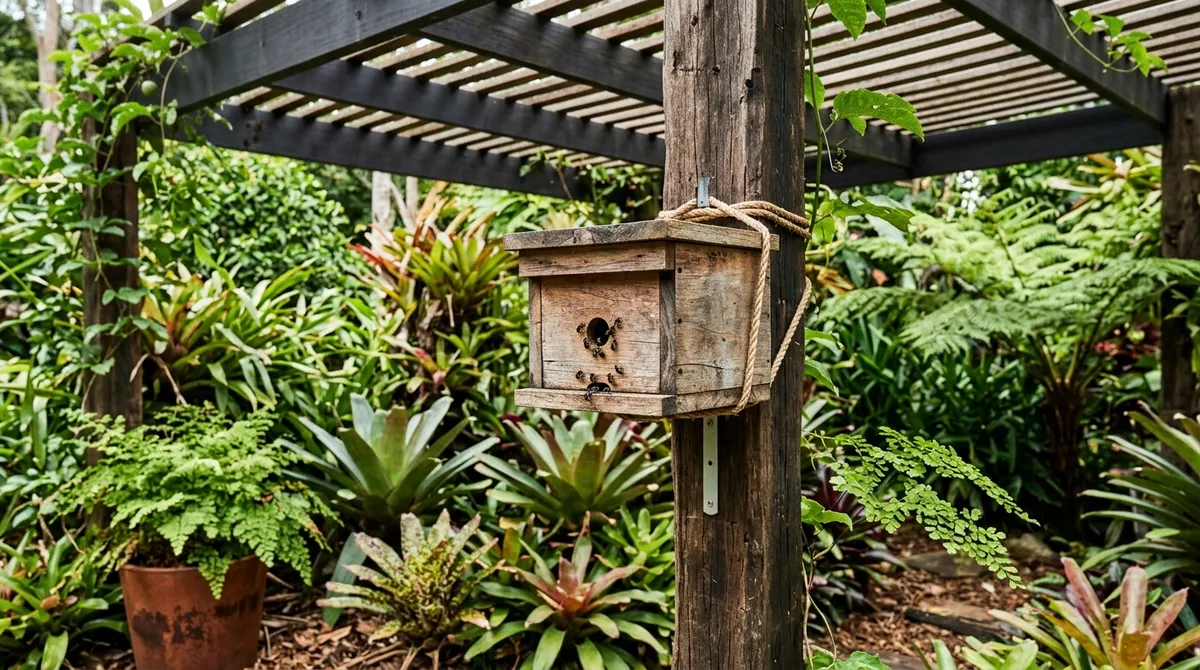
Australia has eleven species of native stingless bees in the genera Tetragonula and Austroplebeia, and the most-kept, Tetragonula carbonaria, is the easiest bee in the country to look after. They're a quarter the size of a honey bee, can't sting, fly only about 500 metres from home, and need almost nothing from you once established. For a vegetable garden in the subtropics, a stingless hive is the single best pollination upgrade you can buy.
Can you keep them where you live?
Stingless bees are warmth-lovers. They thrive from about Sydney's latitude north along the coast: all of Queensland, Northern Rivers and coastal NSW. Inland and south of that they struggle with cold winters; Melbourne, Canberra and Tasmania are generally outside their range, with rare protected-microclimate exceptions. If you're in the cool south, honey bees are your pollinators.
Getting started
- Buy an established hive in an OATH box (Original Australian Trigonula Hive) from a local breeder or your state's native bee association. Expect $400 to $600.
- No registration, no licence. State beekeeper registration applies to European honey bees only.
- Position is everything: morning sun, full afternoon shade, a metre or more off the ground away from ants. Heat is the one killer: colonies die above about 42°C. On extreme days, move the hive into deep shade or drape a damp towel nearby.
- Then mostly leave them alone. No frames to inspect, no swarm control, no feeding. Watch the entrance traffic; steady traffic is a healthy colony.
Sugarbag honey and splits
A strong colony in the subtropics produces up to 1kg of tangy "sugarbag" honey a year. Harvest only in warm months, only from strong colonies, and only from purpose-built honey supers; never raid the brood. Every year or two a strong colony can be split (or "educted") into a second hive: that's how the hobby grows, and spare colonies sell quickly.
They're also serious pollinators
Stingless bees are documented pollinators of macadamia, mango, watermelon, strawberry, avocado and most backyard vegetables. Because they forage close to home, one hive concentrates its entire effort on roughly your street, which is to say: your garden.
What to plant, flock and hive jobs for the month, in one short email. No spam.
Unsubscribe any time.