Beehive Types Compared for Australian Conditions
Langstroth, Flow, top bar, Warre and the OATH stingless box, honestly compared.
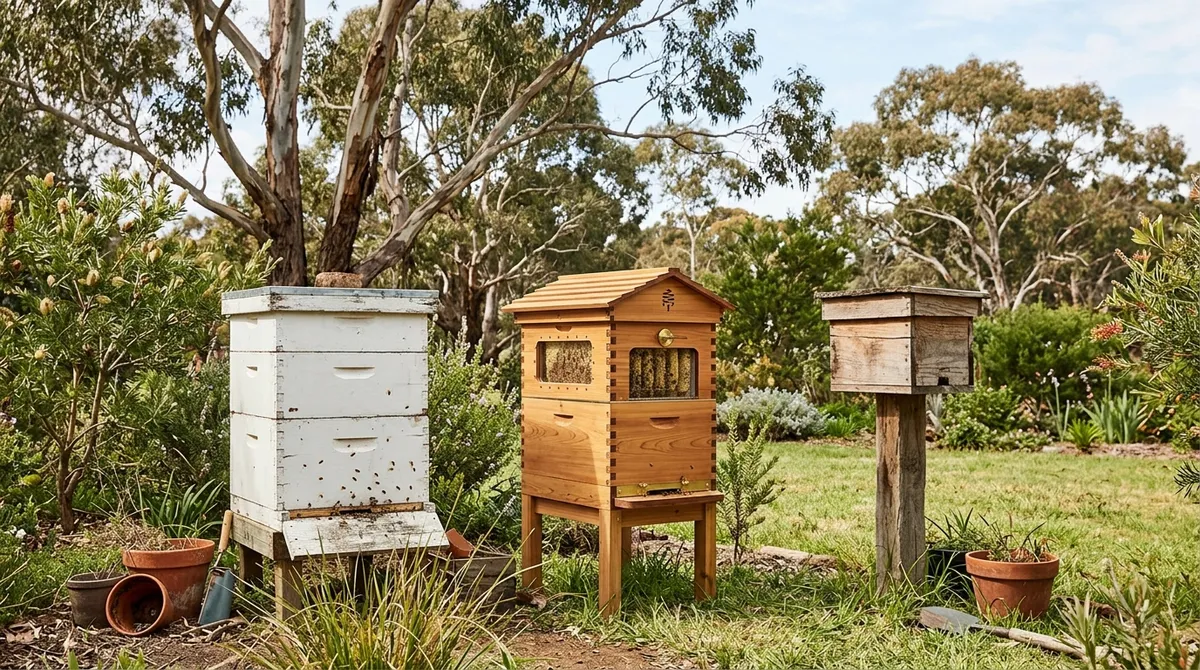
The standard. 8 or 10 frame boxes, every part replaceable from any beekeeping supplier in the country, and the design every course and mentor teaches on. Heavy lifting at harvest is the real cost: a full honey super weighs 25kg+. If you want one recommendation: start Langstroth, 8-frame to save your back.
An Australian invention: a Langstroth brood box with a patented super that drains honey through a tap, no extractor needed. It genuinely works and suits backyard keepers harvesting small batches. Costs 3-4 times a standard setup, and you still do every brood inspection and varroa wash a Langstroth needs; the tap automates the harvest, not the beekeeping.
A horizontal hive where bees build natural comb from bars, no heavy lifting, ideal for keepers with bad backs. Comb is harvested whole (crush and strain), so honey costs the bees more rebuilding effort, and frames can't go in an extractor or be shared with Langstroth gear.
A vertical top-bar concept run with minimal intervention. Lovely philosophy, awkward in an Australian regulatory environment that now expects frame-by-frame inspection and monthly mite washes. Better as a second-hive experiment than a first hive.
Not a honey-bee hive at all: the standard box for native stingless bees in the warm half of Australia. No frames, no inspections, no varroa, no registration, around 1kg of sugarbag a year. The right answer if pollination and zero maintenance rank above honey volume. See the stingless guide and hive buying guide.
The quick chooser
- Most people, most blocks: 8-frame Langstroth.
- Hate extraction mess, budget flexible: Flow.
- Bad back: top bar.
- Subtropics, want pollination not production: OATH stingless.
What to plant, flock and hive jobs for the month, in one short email. No spam.
Unsubscribe any time.