Bee Pests and Diseases in Australia: Spot Them Early
American foulbrood, small hive beetle, wax moth, chalkbrood and the imports we watch for.
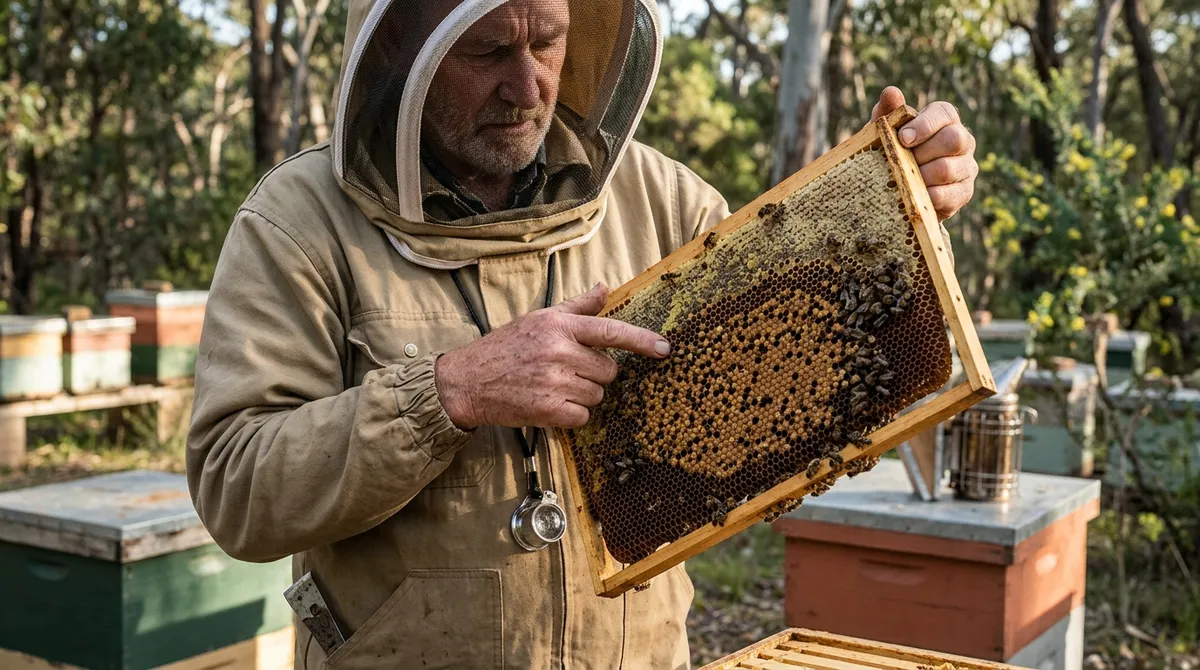
Varroa gets the headlines (we cover it in monitoring and treatment guides), but the diseases that end most Australian colonies are older and closer to home. Every brood inspection should glance for these.
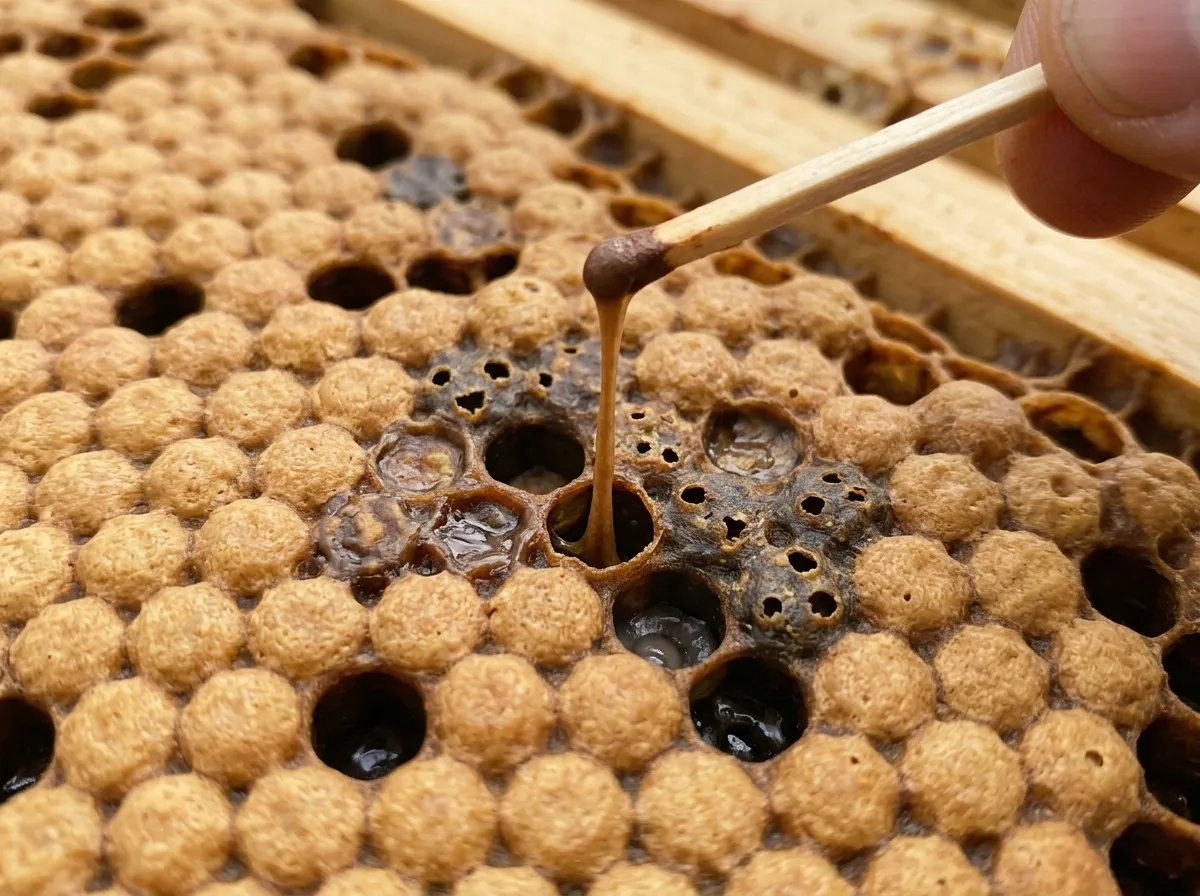
AFB signs: sunken, perforated cappings and the ropey matchstick test. AI-generated illustration for guidance, confirm suspect brood with your state apiary officer.
The one that matters legally. A bacterial brood disease, fatal to the colony, and notifiable in every state, report within 24 hours. Spot it: sunken, greasy, perforated brood cappings; coffee-coloured larvae that rope out 2-3cm on a matchstick; a foul smell in advanced cases. There is no cure: infected hives are euthanised and burned or irradiated, which is exactly why early reporting protects every apiary around you. Never feed honey from unknown sources, spores travel in honey and on second-hand gear.
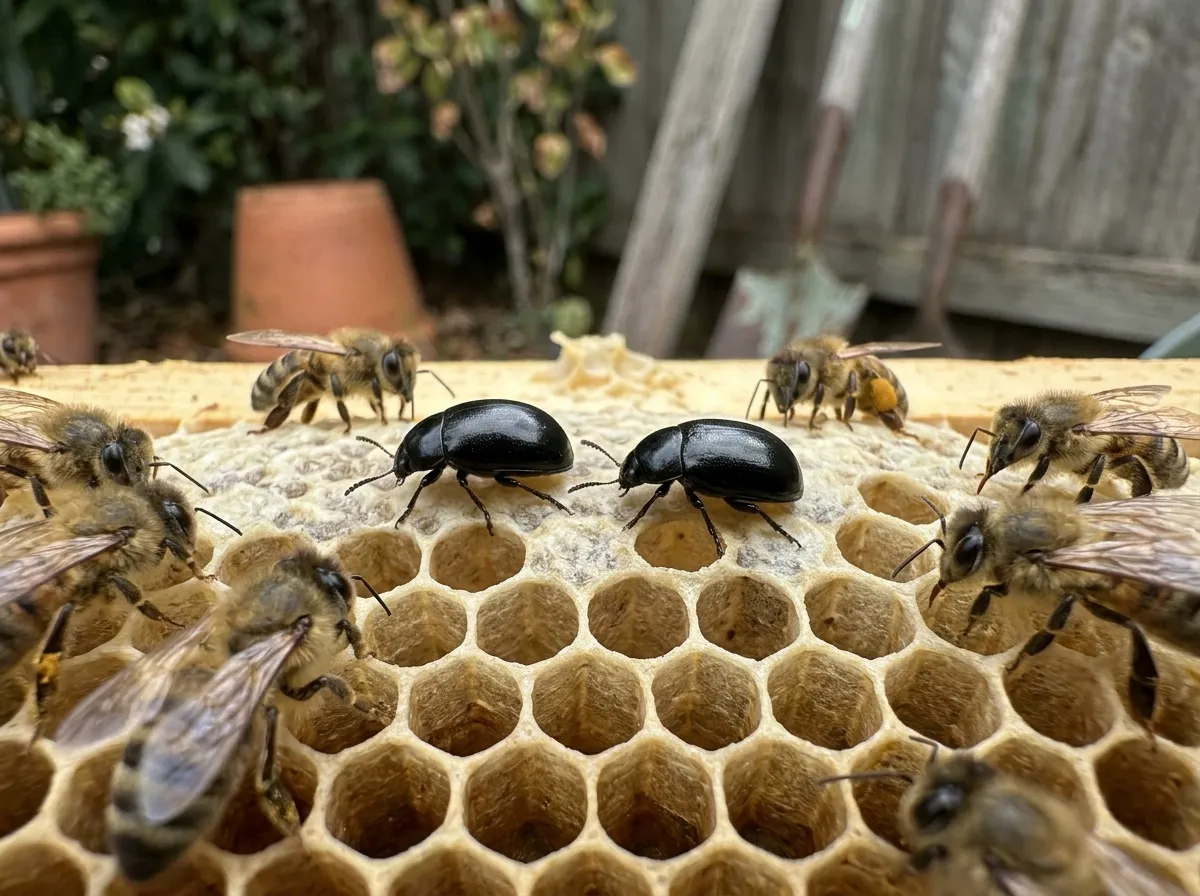
Small hive beetles are clearly smaller than the workers around them.
The subtropical menace: small black beetles whose larvae turn weak hives into fermented slime. Worst in humid QLD and NSW summers. Defence is colony strength (beetles overwhelm weak hives, not strong ones), beetle traps (oil traps between frames), and never leaving supers of drawn comb sitting unguarded. If you see beetles scuttling when you lift the lid, trap and squash; if you smell fermentation, you are late.
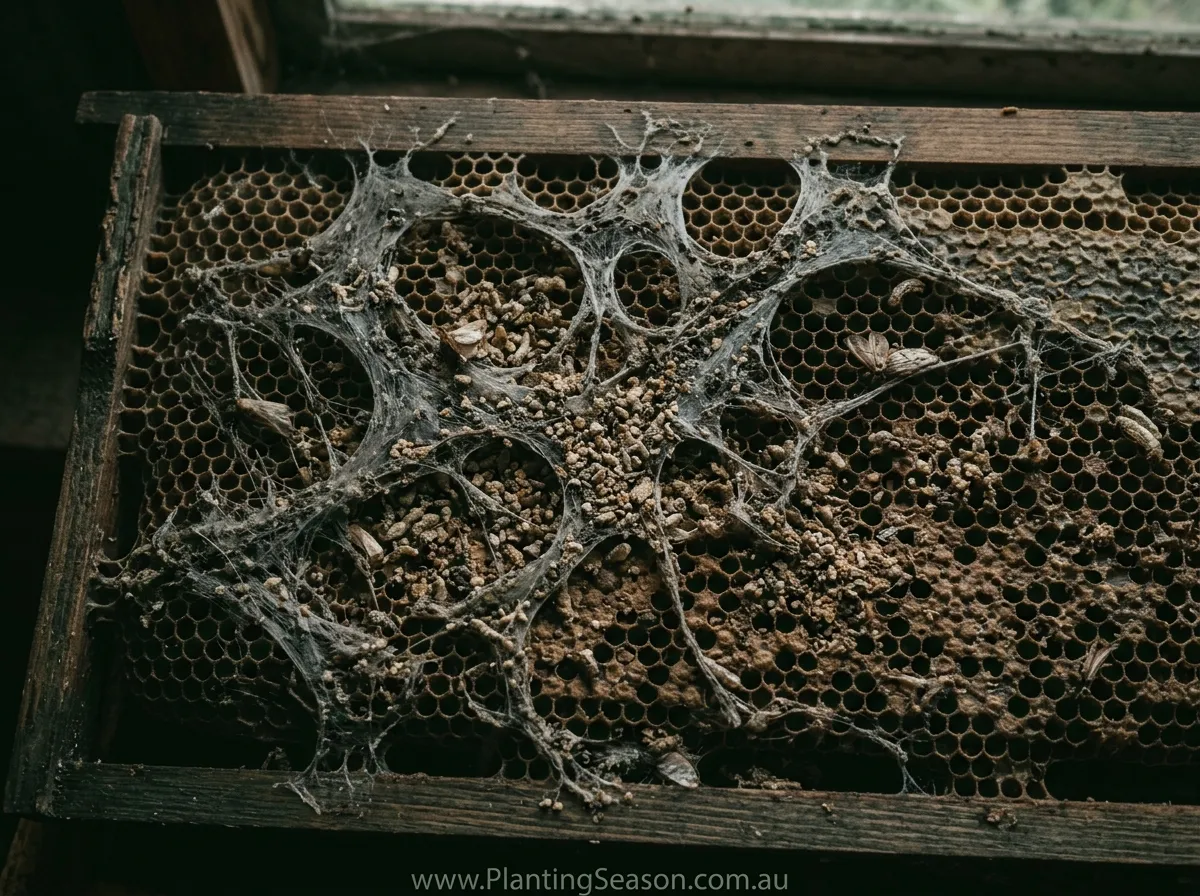
Wax moth: silken tunnels and webbing through stored comb.
Destroys stored comb and weak colonies: silken tunnels and webbing through frames. Like SHB, it punishes weakness and stored equipment. Freeze spare drawn comb for 48 hours before storage and keep stored boxes bee-tight.
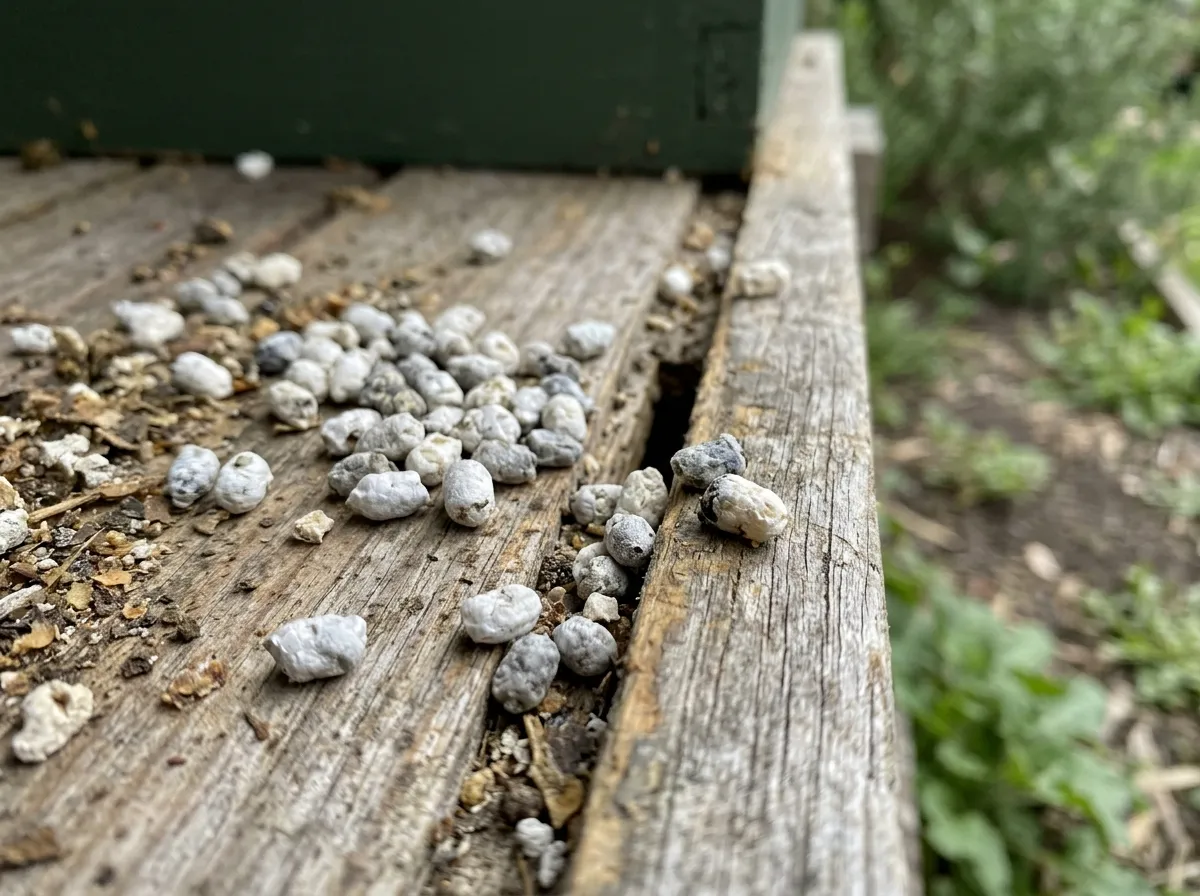
Chalkbrood mummies: hard white or grey pellets on the floor and entrance.
A fungal brood disease: hard white or grey "mummies" in cells and on the hive floor. Stress-triggered, often after damp springs or chilling. Usually self-resolving with a strong queen, good ventilation and a sunny hive position; requeen persistent cases.
The milder cousin of AFB: twisted, discoloured larvae that die before capping. Also notifiable in most states. Strong nutrition and requeening usually carry colonies through; confirm any suspect brood with your state apiary officer rather than guessing, the AFB/EFB call matters.
Exotic mites Australia monitors for at ports. If you ever see something mite-like that is not varroa, photograph it and call the Exotic Plant Pest Hotline on 1800 084 881.
The habit that catches everything
A 30-second brood check at every inspection: capped brood should be even, biscuit-coloured and unbroken; larvae should be pearly-white C-shapes in open cells. Anything sunken, slimy, smelly, twisted or chalky gets a photo and a closer look. Log it in the app so you can see changes between visits.
What to plant, flock and hive jobs for the month, in one short email. No spam.
Unsubscribe any time.