Keeping Quail in the Backyard (Even Where Chickens Are Banned)
Tiny, quiet, legal on most small blocks, and laying eggs in eight weeks. The smallest way into backyard eggs.
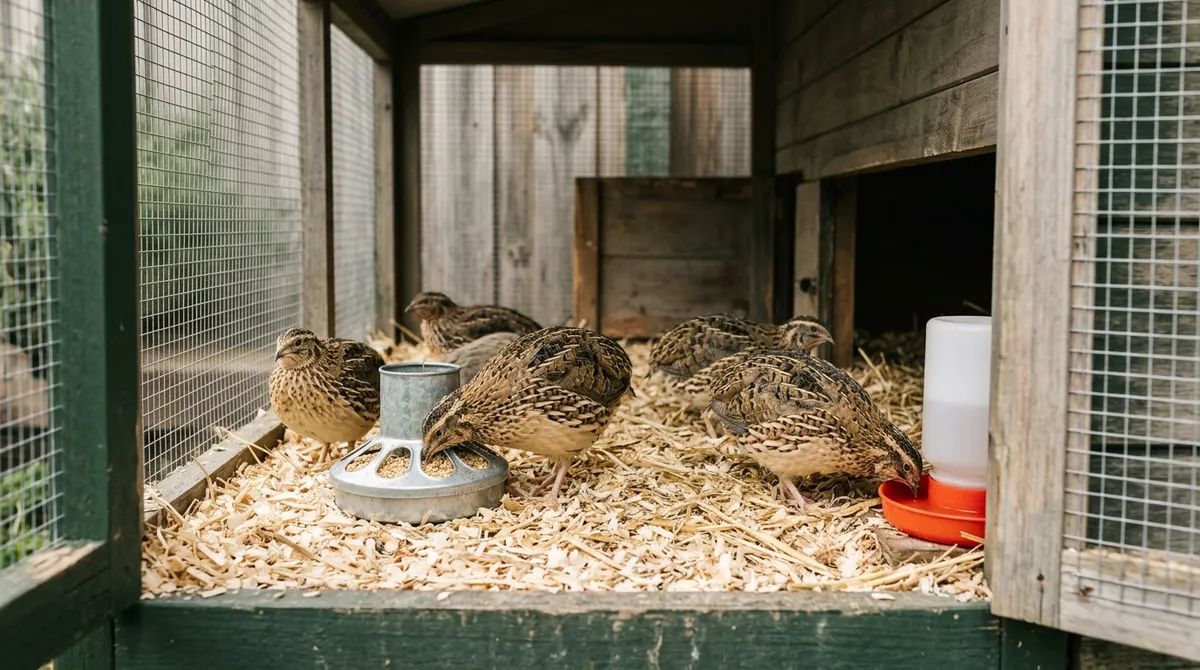
Quail are the answer for everyone who cannot keep chickens. They are quiet enough for a unit balcony, take up a fraction of the space, are usually allowed where councils ban hens, and start laying at six to eight weeks, faster than any other backyard bird. Five quail hens will keep a household in eggs, and three quail eggs roughly equal one hen egg.
Why quail
- Legal where chickens are not. Quiet and contained, they slip under most council poultry bans (always check yours).
- Tiny footprint. A colony fits on a balcony or in a courtyard corner.
- Fast. Laying at 6-8 weeks; an egg nearly every day from a good hen.
- Quiet. Hens are near-silent; males give a soft crow, not a rooster’s blast.
- Gourmet eggs. Prized, pretty, speckled, and selling well at markets and to restaurants.
Start here
Coturnix basics, cage vs aviary, the high-protein feed they need, and managing a colony.
How many they lay, eating and selling the eggs, and the council and permit picture across Australia.
Every food A to Z with a verdict, the protein quail need by age, grit and shell, and Queensland's scrap law.
Often yes. Many councils that restrict or ban backyard chickens have no rules against quail, or much looser ones, because quail are quiet, tiny and kept in contained hutches. Always check your own council, but quail are the classic answer for units, townhouses and small blocks where hens are not allowed.
Very little. A pair or trio is happy in a hutch the size of a large rabbit cage; a productive covered colony of a dozen fits on a balcony or in a corner. Allow roughly 0.1 square metre per bird in a colony, more is always better.
Coturnix quail are astonishingly fast: they start laying at just 6-8 weeks old and a good hen lays an egg almost every day, around 280-300 a year. From egg to laying bird in two months makes them the quickest backyard protein there is.
No, which is their superpower. Hens are near-silent; males make a soft, pleasant crow far quieter than a rooster. This is why they are tolerated on small blocks and in units where chickens and roosters are banned.
What to plant, flock and hive jobs for the month, in one short email. No spam.
Unsubscribe any time.