How to Grow Bok Choy in Australia
Updated June 2026
A fast cool-season crop ready in 6 to 8 weeks from seed to harvest
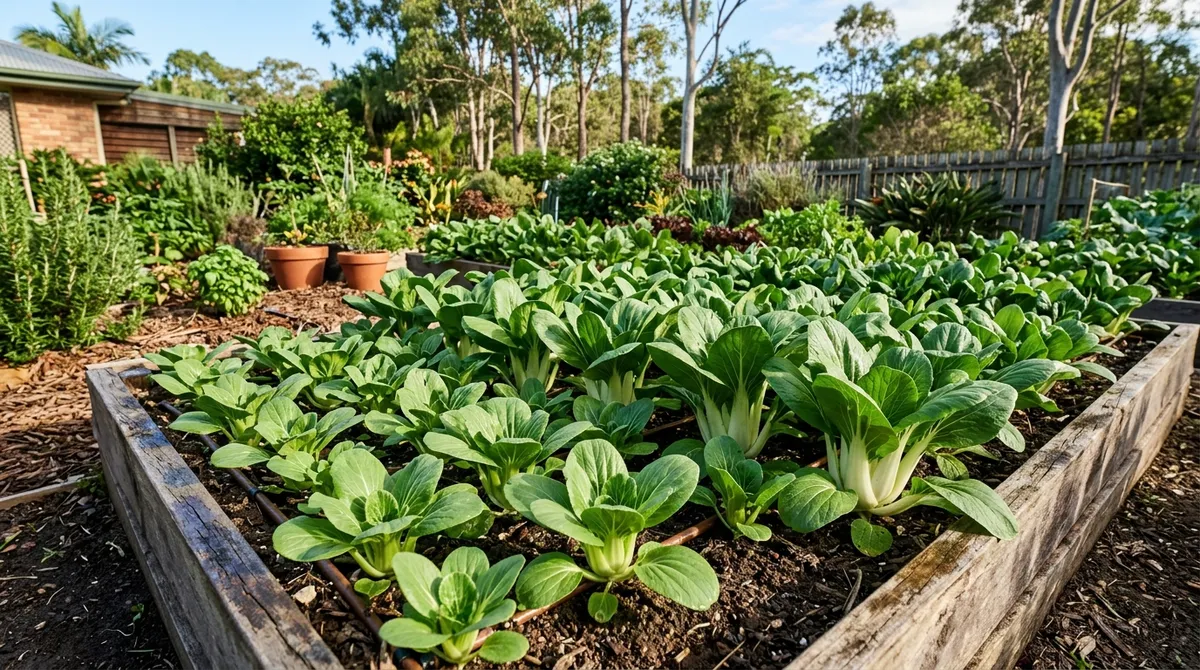
Bok choy (also called pak choi) is one of the fastest vegetables you can grow. Baby varieties are ready to eat in about 30 days. Full-size plants take 45 to 60 days. It grows well in garden beds, raised beds, and containers, making it suitable for any sized space.
This Chinese cabbage has become a staple in Australian kitchens. It is mild, crunchy, and versatile. The good news for home gardeners is that it grows easily in most Australian climates, especially during the cooler months.
🌱 Plant profile: Bok Choy, with sowing times for your region, companion plants and common pests.
When to Plant Bok Choy in Your Region
Bok choy prefers cool weather but will grow in mild warmth with consistent watering. The ideal temperature range is 15 to 22 degrees. Growth slows below 10 degrees and bolting risk increases sharply above 26 degrees.
- Tropical (Darwin, Cairns, Townsville): Plant from April to August. The wet season is too hot and humid.
- Subtropical (Brisbane, Gold Coast, Sunshine Coast): Plant from March to September. Bok choy grows year-round in SEQ with shade cloth protection in summer.
- Temperate (Sydney, Melbourne, Adelaide, Perth): Plant from September to April, avoiding December and January in hot years.
- Cool climate (Hobart, Canberra, highlands): Plant from October to March. Protect from frost with fleece or cloches in early spring and late autumn.
Best Varieties
Shanghai (Baby Bok Choy)
Pale green stems and spoon-shaped leaves. Reaches 15 to 20 cm tall. Ready in 30 to 35 days. More heat-tolerant than full-size types and perfect for containers. The variety most commonly sold in supermarkets and Asian grocers.
Pak Choi (Standard)
Thick white stems with dark green leaves. Grows 25 to 40 cm tall and needs 45 to 60 days. Crunchier stems that hold their structure in soups and braised dishes. More cold-tolerant but bolts faster in warm weather.
Tatsoi (Rosette)
Forms a flat rosette of dark, round, spoon-shaped leaves close to the ground. Hardy and cold-tolerant, surviving light frosts. Mild mustard flavour. Slower to bolt than upright types.
Joi Choi (Bolt-Resistant)
A full-size hybrid bred for slow bolting. Bright white stems and dark green leaves. Reliable in the shoulder seasons and more forgiving of temperature swings than other varieties.
Canton White
The classic full-size bok choy with broad white stems and large dark leaves. Excellent flavour for stir-fries and soups. Best planted in the cooler months for the crispest stems.
How to Sow Bok Choy
Direct sowing (recommended)
Bok choy has a taproot that does not love being disturbed. Direct sowing into the garden bed gives the best results and the lowest bolting risk. Sow seeds 5 mm deep in rows 20 to 30 cm apart. Thin seedlings to 10 cm apart for baby varieties or 25 cm for full-size types once they have two true leaves.
Raising seedlings
Use deep cells or tubes to accommodate the taproot if you prefer to start in seed trays. Transplant at the 3 to 4 leaf stage, about 2 to 3 weeks after sowing. Handle roots gently and water in immediately. Transplant in the late afternoon to reduce shock.
Succession planting
Sow a small batch every 3 weeks for a continuous harvest through the growing season. Succession planting is especially important with bok choy because it matures quickly and does not hold well in the garden once it reaches peak size.
Soil and Position
Bok choy grows fastest in rich, moisture-retentive ground. Mix in plenty of compost before planting. A soil pH of 6.0 to 7.0 is ideal.
Full sun works well in winter and cool climates. Provide afternoon shade in warmer regions or during the transition months. A spot that gets morning sun and is shaded from 1 pm onward suits it well. You can also use 30% shade cloth over a frame.
Keep the soil consistently moist. Bok choy is roughly 95% water by weight, so it needs a steady supply. Shallow roots dry out quickly. Mulch around plants with sugar cane mulch or straw to keep roots cool and reduce evaporation.
Feeding
Bok choy is a leafy green, so nitrogen is the priority nutrient. Apply a balanced organic fertiliser at planting time and side-dress with a nitrogen-rich feed (blood and bone, fish emulsion, or diluted worm tea) every 2 weeks.
Moderate, consistent feeding produces the best balance of fast growth and firm, crunchy stems. Too much nitrogen makes leaves soft and prone to pest damage.
Preventing Bolting
Bolting (running to flower) is the biggest challenge with bok choy. Timing is everything. Once it bolts, the stems turn tough and bitter. These strategies reduce bolting risk:
- Direct sow instead of transplanting. Root disturbance triggers bolting. Keep as much root ball intact as possible if you must transplant.
- Water consistently. Irregular watering stresses the plant and signals it to reproduce. Keep soil evenly moist.
- Grow in autumn and winter. Bok choy that experiences temperatures above 26 degrees for several consecutive days will bolt regardless of other conditions.
- Choose bolt-resistant varieties. Joi Choi, Shanghai Green, and Mei Qing Choi are bred for slower bolting.
- Harvest early. Pick baby bok choy at 30 days and full-size at 45 days rather than waiting for maximum size.
Growing Bok Choy in Containers
Bok choy is one of the best vegetables for container growing. Baby varieties thrive in pots because of their compact root system and fast maturity.
Use a container at least 20 cm deep and as wide as you can manage. A standard 40 cm pot fits 9 to 12 baby bok choy plants. A long trough planter works even better because it gives you a row to harvest from.
Use a premium potting mix with added compost. Container-grown bok choy needs more frequent watering than in-ground plants because pots dry out faster. Check the soil daily and water when the top 2 cm feels dry.
Position containers where they get morning sun. Move them to a shadier spot if temperatures climb above 25 degrees. This is one of the big advantages of container growing: you can relocate plants to suit the conditions.
Pest Management
Bok choy belongs to the brassica family, so it attracts the same pests as cabbage and broccoli.
Snails and slugs
Bok choy is a slug magnet, especially young seedlings. Iron-based snail pellets are safe for the garden and effective. Beer traps work too. Go out with a torch after dark and pick them off by hand for the most immediate results. Read our full pest management guide for more options.
Cabbage white butterfly caterpillars
The green caterpillars of the cabbage white butterfly chew holes through leaves and can destroy a crop in days. Fine mesh netting (insect exclusion fabric) draped over a frame is the most effective control. Check under leaves regularly and pick off any caterpillars you find. Bacillus thuringiensis (Bt) spray is effective if caterpillars get through.
Aphids
Aphids cluster on the underside of leaves and in the heart of the plant. A strong jet of water from the hose knocks most of them off. Neem oil spray applied in the evening controls persistent infestations. Encourage ladybirds and lacewings by planting flowering herbs nearby.
Harvesting
You have two options for harvesting bok choy:
- Cut-and-come-again. Pick individual outer leaves as needed, leaving the centre to keep growing. This works well for baby bok choy and extends the harvest over several weeks.
- Whole plant. Cut the entire plant at the base once it reaches the desired size. This is the standard method for full-size varieties.
Harvest in the morning when stems are crisp and full of water. Bok choy wilts quickly after picking, so use it within a day or two. It stores in the fridge for up to a week wrapped in a damp paper towel inside a plastic bag.
Cooking with Bok Choy
Baby bok choy can be halved or quartered and stir-fried, steamed, or added to soups in the last few minutes of cooking. The stems stay crunchy while the leaves wilt to a silky texture.
Common uses include stir-fries with garlic and oyster sauce, added to ramen or pho, steamed with ginger and soy, braised in chicken stock, or added raw to salads when the leaves are young and tender.
Full-size bok choy works well in slow-cooked dishes. The thick white stems hold up to braising and add a clean, mild flavour.
Frequently Asked Questions
When should I plant bok choy in Australia?
In subtropical and tropical regions, plant from March to September. In temperate regions like Sydney, Melbourne, and Perth, plant from September to April, avoiding the hottest weeks. In cool climates, plant from October to March. Baby bok choy is more heat-tolerant than full-size varieties.
How long does bok choy take to grow?
Baby bok choy (Shanghai type) is ready to harvest in 30 to 35 days from sowing. Full-size Canton varieties take 45 to 60 days. Succession sow every 3 weeks for a continuous supply through the growing season.
How do I prevent bok choy from bolting?
Sow directly instead of transplanting, keep soil consistently moist, and grow in autumn and winter rather than summer. Temperatures above 26 degrees for several days will trigger bolting. Bolt-resistant varieties like Joi Choi and Shanghai Green also help.
Can I grow bok choy in pots?
Yes. Bok choy grows well in containers at least 20 cm deep. Baby varieties are ideal for pots. Use a quality potting mix, keep the soil moist, and position the pot where it gets morning sun with afternoon shade in warmer months.
See also: Bok Choy in the Plant Library
Plant profile
The bok choy profile has sowing times for your region, companion plants and common pests.