Composting Guide for Australian Gardens
Updated June 2026
Hot, cold, worm farming, and Bokashi methods with troubleshooting tips
Compost is the foundation of a productive garden. It improves soil structure, feeds soil microbes, retains moisture, and provides slow-release nutrients to plants. Making compost turns kitchen scraps and garden waste into the best soil amendment you can get, and it is free.
This guide covers the four main composting methods, the carbon-nitrogen ratio that makes compost work, and how to fix common problems.
Composting Methods
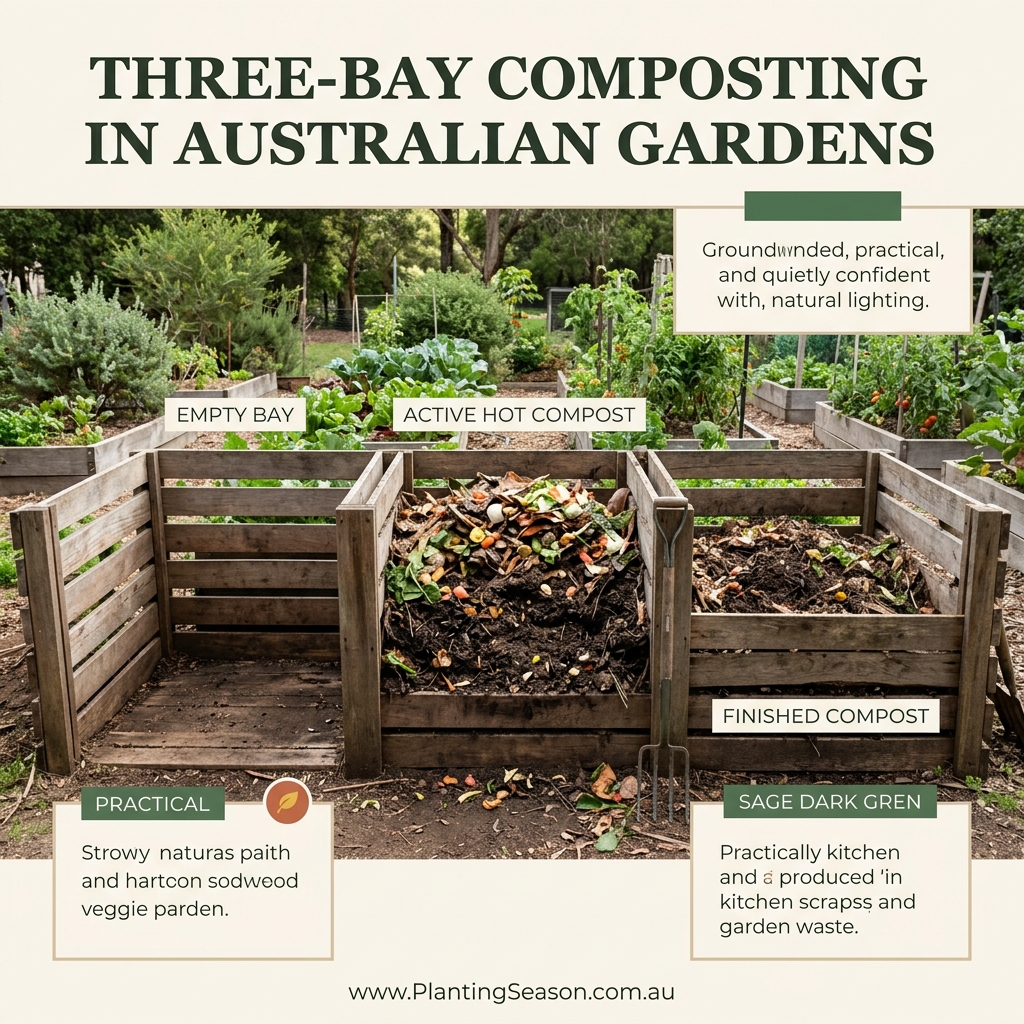
Hot composting
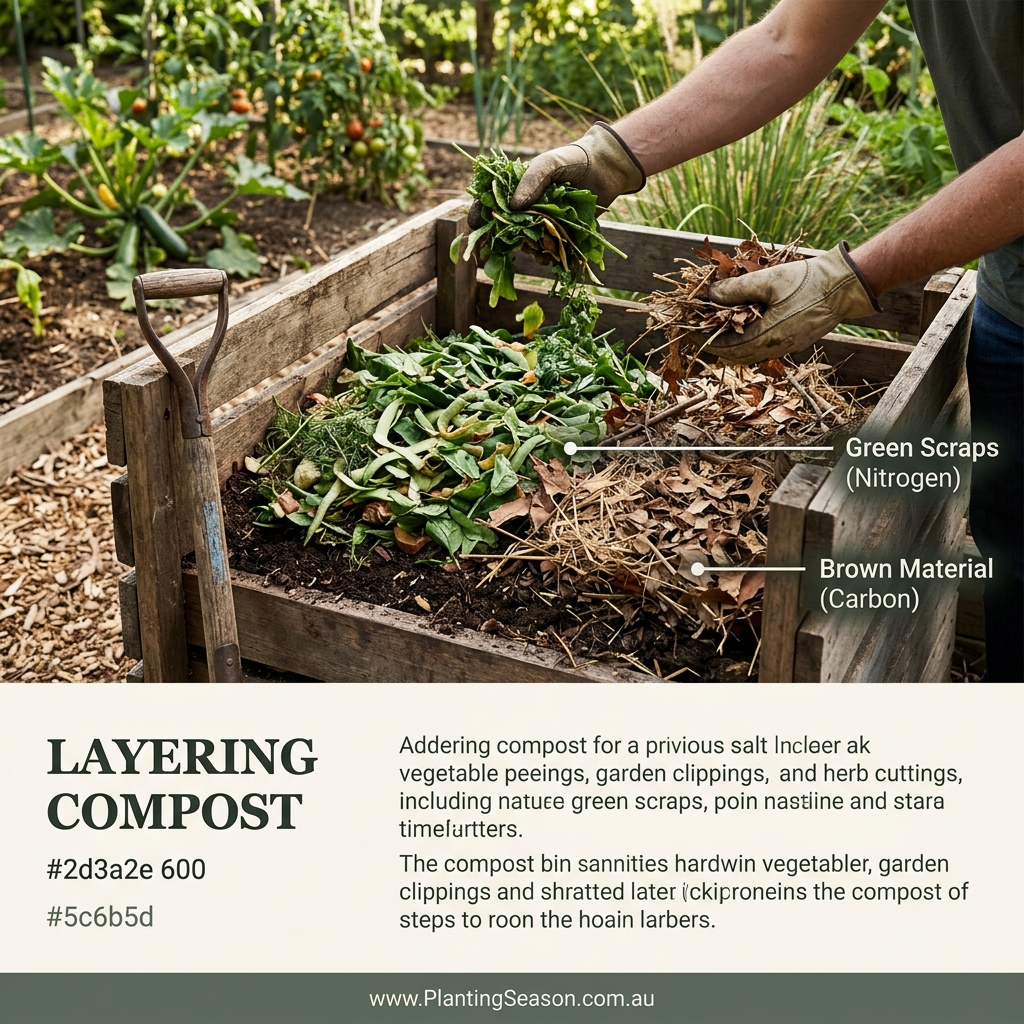
The fastest method. A well-built hot compost pile reaches 55 to 65 degrees Celsius internally and produces finished compost in 6 to 8 weeks. It kills weed seeds and pathogens.
- Build a pile at least 1 cubic metre in size (smaller piles will not heat up properly)
- Layer carbon-rich materials (brown) and nitrogen-rich materials (green) in a roughly 3:1 ratio by volume
- Moisten each layer as you build (the pile should feel like a wrung-out sponge)
- Turn the pile every 3 to 5 days when the temperature drops below 45 degrees
- The pile is finished when it stops reheating after turning and looks like dark, crumbly soil
Cold composting
The lazy method. Add materials as you have them, let nature do the work, and wait. A cold compost pile takes 6 to 12 months to break down but requires almost zero effort. Just keep adding scraps and garden waste on top and let it rot.
Cold compost does not heat up enough to kill weed seeds, so avoid adding weeds with seeds. Otherwise, almost any organic material can go in.
Worm farming
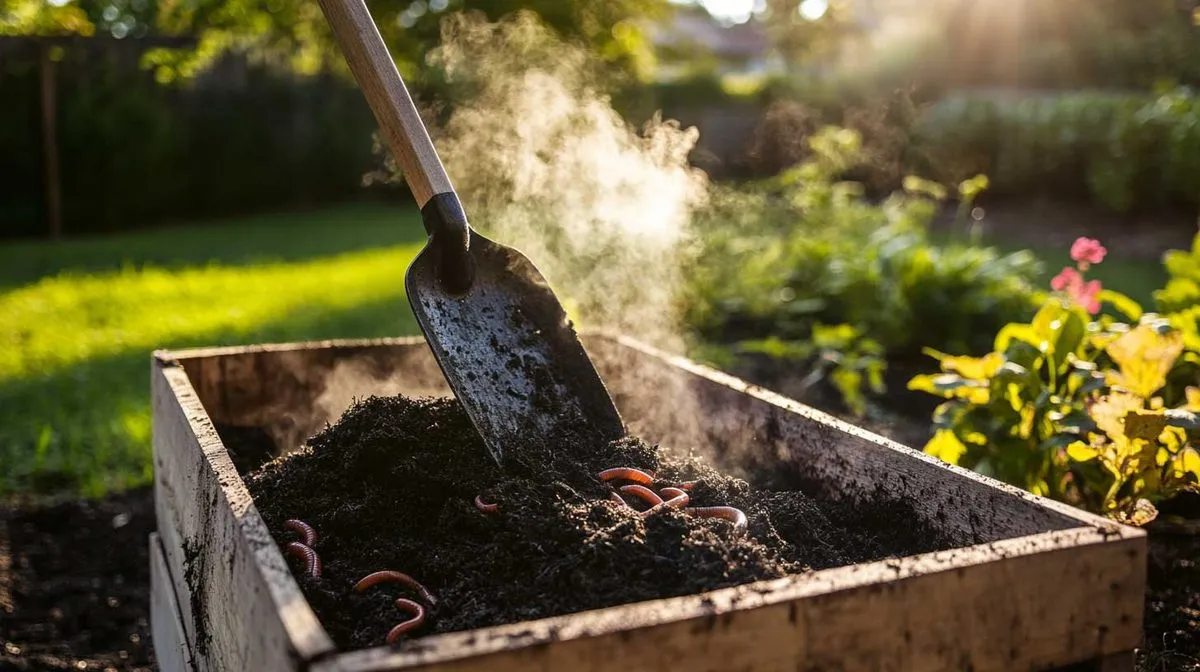
Compost worms (red wrigglers or tiger worms) process kitchen scraps into nutrient-rich castings and liquid fertiliser. Worm farms are compact, odourless when managed properly, and perfect for small spaces.
- Buy or build a tiered worm farm with drainage
- Start with 1,000 to 2,000 worms
- Feed small amounts regularly (the worms will eat roughly their own body weight per week)
- Avoid citrus, onion, meat, dairy, and oily foods
- Keep the farm in a cool, shaded spot (worms die above 35 degrees)
- Dilute the liquid (worm wee) 10:1 with water as a liquid fertiliser
Bokashi
A Japanese method that ferments kitchen scraps (including meat and dairy) using specific microbes. Not true composting, but a fermentation process that pre-digests food waste before it goes into the soil or a compost bin.
- Add kitchen scraps to a sealed Bokashi bucket, sprinkling Bokashi bran between layers
- Press down to remove air pockets. Keep the lid sealed
- Drain the liquid every few days (dilute 100:1 as a fertiliser)
- Once the bucket is full, leave sealed for 2 weeks to complete fermentation
- Bury the fermented contents in a trench in the garden or add to a compost bin to finish
Carbon-Nitrogen Ratio
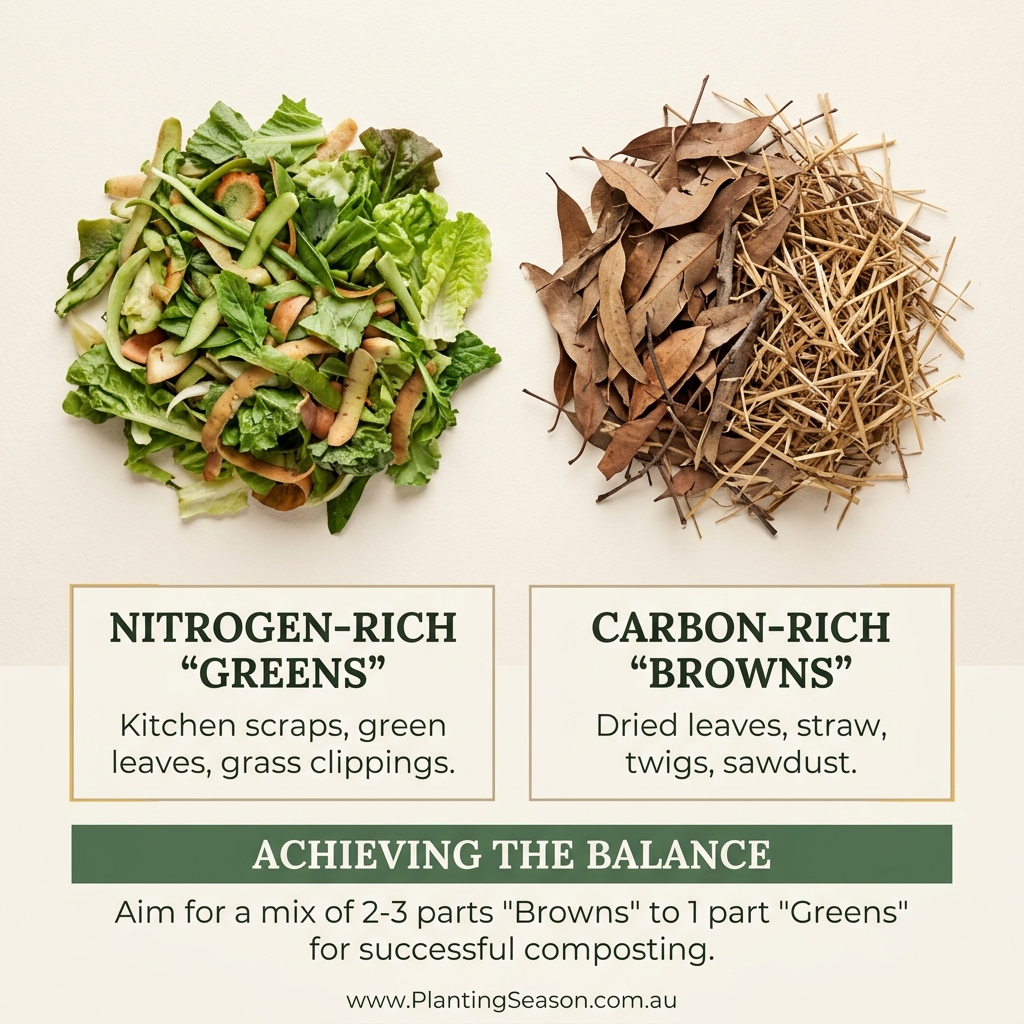
Good compost needs a balance of carbon-rich materials (brown, dry) and nitrogen-rich materials (green, wet). The ideal ratio is roughly 25 to 30 parts carbon to 1 part nitrogen, but in practice, just aim for about 3 parts brown material to 1 part green by volume.
Carbon-rich (brown) materials
- Dry leaves
- Straw and hay
- Cardboard and newspaper (shredded)
- Wood chips and sawdust (in small amounts)
- Dried grass clippings
Nitrogen-rich (green) materials
- Fresh grass clippings
- Kitchen scraps (fruit, vegetables)
- Coffee grounds
- Fresh garden prunings
- Animal manure (chicken, cow, horse)
Troubleshooting
Compost smells bad
Smells like ammonia or rotten eggs. Too much nitrogen (green) material and/or too wet. Add dry carbon material (shredded cardboard, straw) and turn to add air. The smell should clear within a day or two.
Compost is not heating up
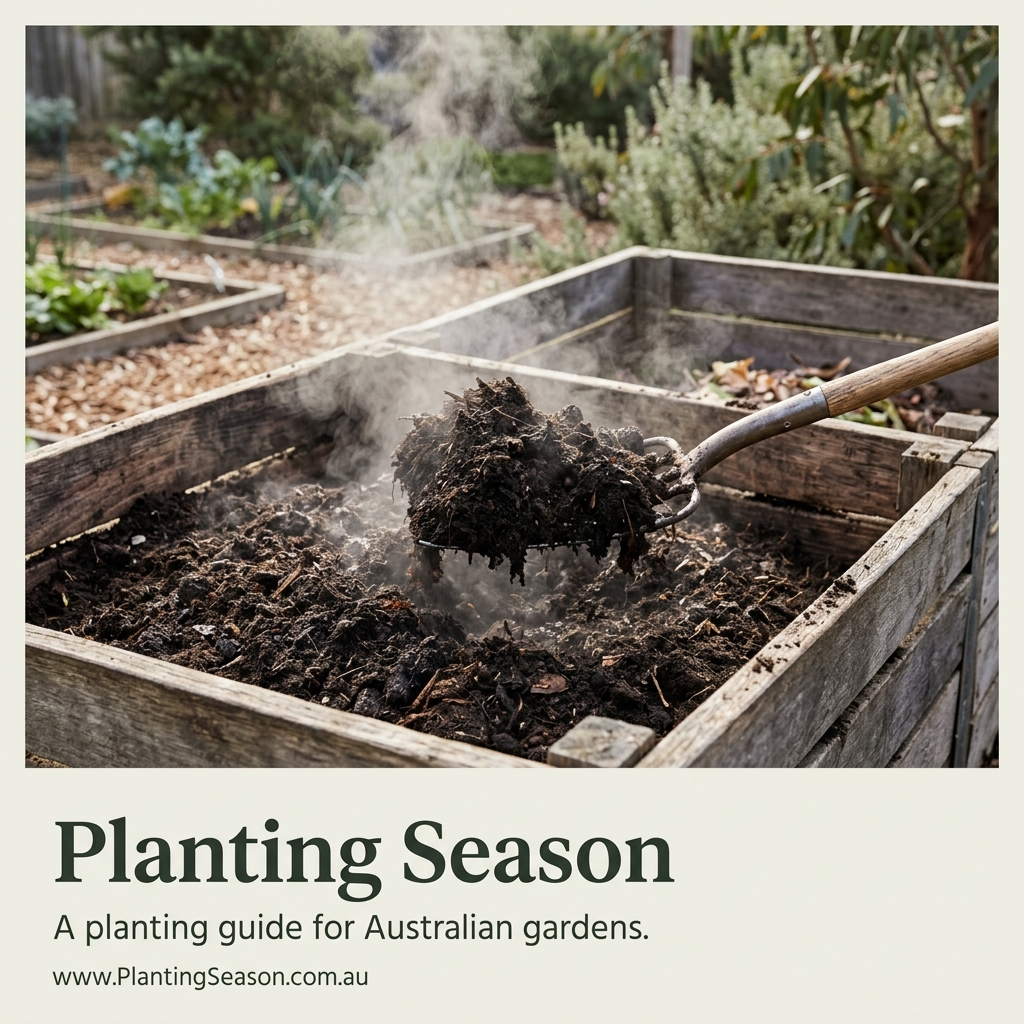
Pile too small (needs at least 1 cubic metre), too dry, or not enough nitrogen. Add nitrogen-rich material (fresh grass clippings, chicken manure), moisten, and turn. Ensure the pile is at least 1 metre in each dimension.
Compost is attracting flies
Exposed food scraps attract vinegar flies and blow flies. Always bury fresh kitchen scraps under a layer of carbon material. Cover the top of the pile with a layer of straw, dry leaves, or cardboard.
Compost is too dry
Add water while turning. The pile should feel like a wrung-out sponge throughout. In dry Australian climates, you may need to water your compost pile as regularly as you water the garden.
Frequently Asked Questions
How long does compost take to make?
Hot composting takes 6 to 8 weeks with regular turning. Cold composting takes 6 to 12 months. Worm castings build up over 2 to 3 months. Bokashi fermentation takes about 4 weeks (2 weeks in the bucket plus 2 weeks in soil).
Can I compost meat and dairy?
Not in standard compost bins or worm farms. Meat and dairy attract pests and create odour. Bokashi is the only home method that handles meat and dairy, because the sealed bucket and fermentation process prevent these problems.
What should I not put in compost?
Avoid diseased plant material, weeds with seeds (in cold compost), meat and dairy (except Bokashi), pet droppings from cats and dogs, treated timber or sawdust, and glossy printed paper.
Do I need to buy a compost bin?
No. A simple pile on the ground works. Bins are tidier and keep pests out, but they are not essential. Even a circle of wire mesh makes an effective compost bay. Start simple and upgrade later if you want.