Mulching Guide for Australian Gardens
Updated June 2026
Straw, sugarcane, wood chip, and living mulch compared with application tips
Mulching is one of the simplest and most effective things you can do for your garden. A good layer of mulch retains moisture (reducing watering by up to 70%), suppresses weeds, insulates soil from temperature extremes, and gradually adds organic matter as it breaks down. In Australian conditions, where summer heat and dry spells are the norm, mulch is not optional. It is essential.
This guide compares the main mulch types, covers how to apply them correctly, and highlights the mistakes that trip people up.
Mulch Types Compared
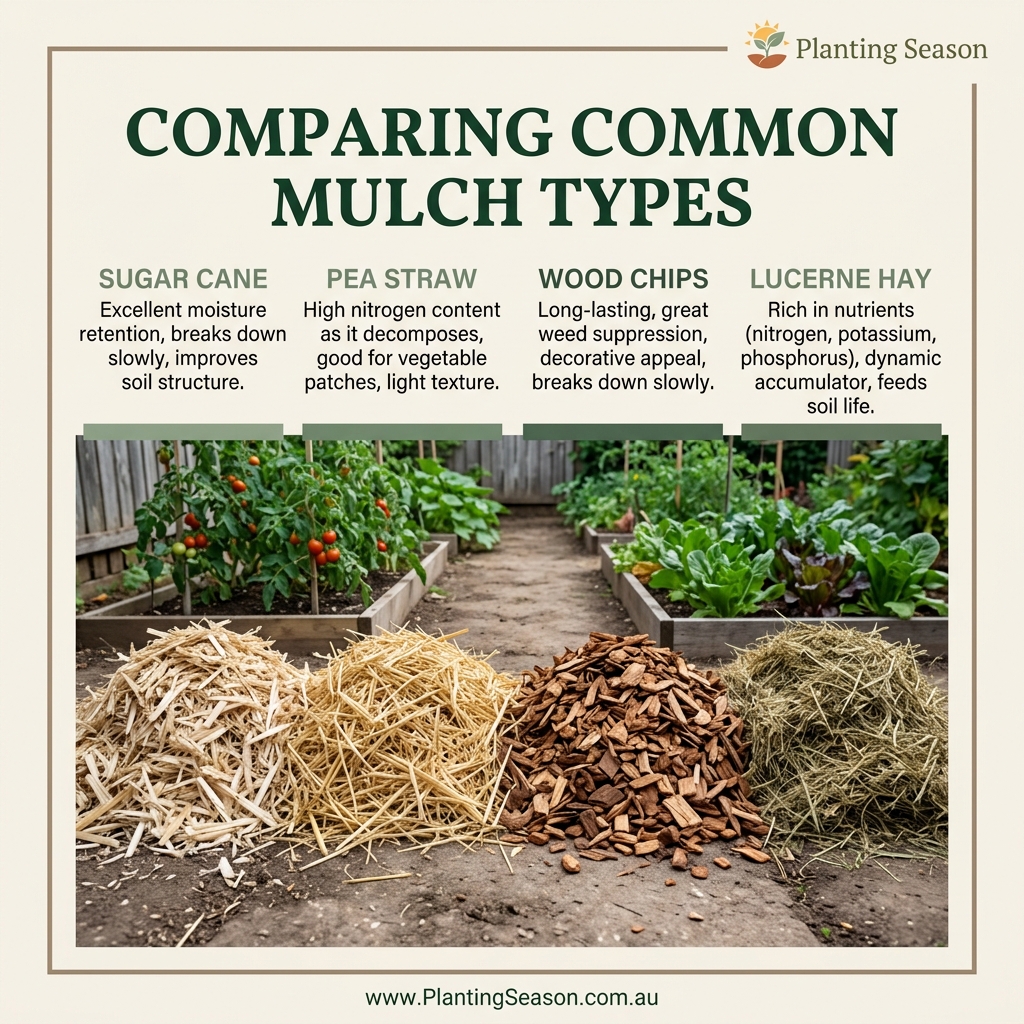
Straw
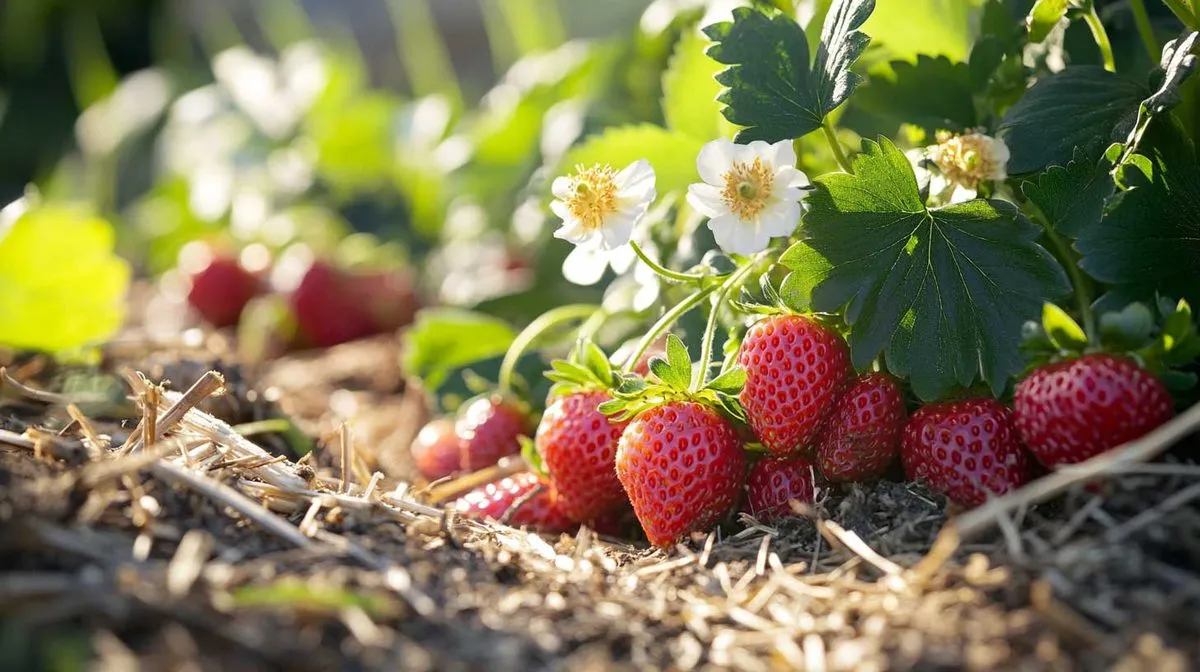
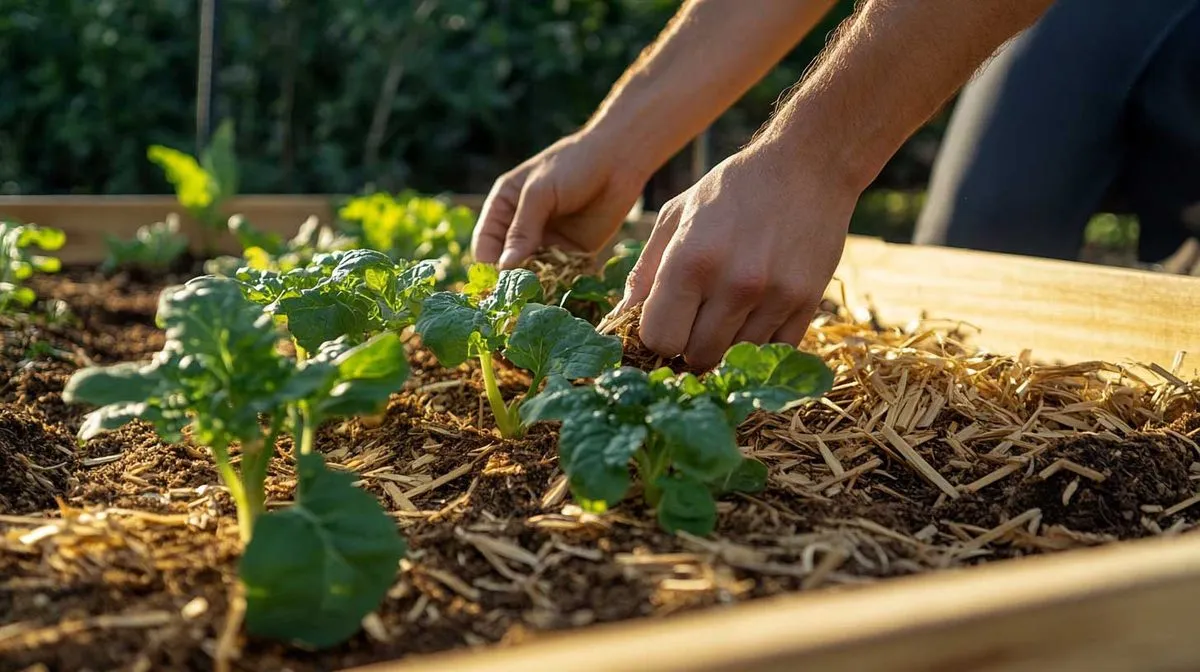
Excellent for vegetable gardens. Cheap, easy to apply, and breaks down over one season to add organic matter to the soil. Use lucerne (alfalfa) straw for extra nitrogen. Pea straw is the most popular choice in Australian gardens.
- Depth: 10 to 15 cm (it compresses quickly)
- Best for: Vegetable beds, strawberries, potatoes
- Drawbacks: Can contain weed seeds if not well-sourced. Blows around in windy spots. Needs replacing each season.
Sugarcane mulch
The standard mulch for Australian gardens. Light, easy to handle, and breaks down at a moderate rate. Suppresses weeds well and looks tidy. Widely available and affordable.
- Depth: 5 to 8 cm
- Best for: General garden use, flower beds, vegetable gardens
- Drawbacks: Blows around when dry. Can attract cane toads in some areas (the name is misleading; cane toads are not actually attracted to sugarcane mulch).
Wood chip
Long-lasting mulch that is excellent around trees, shrubs, and permanent plantings. Breaks down slowly over 1 to 3 years. Arborist wood chip (mixed species) is often available free from tree loppers.
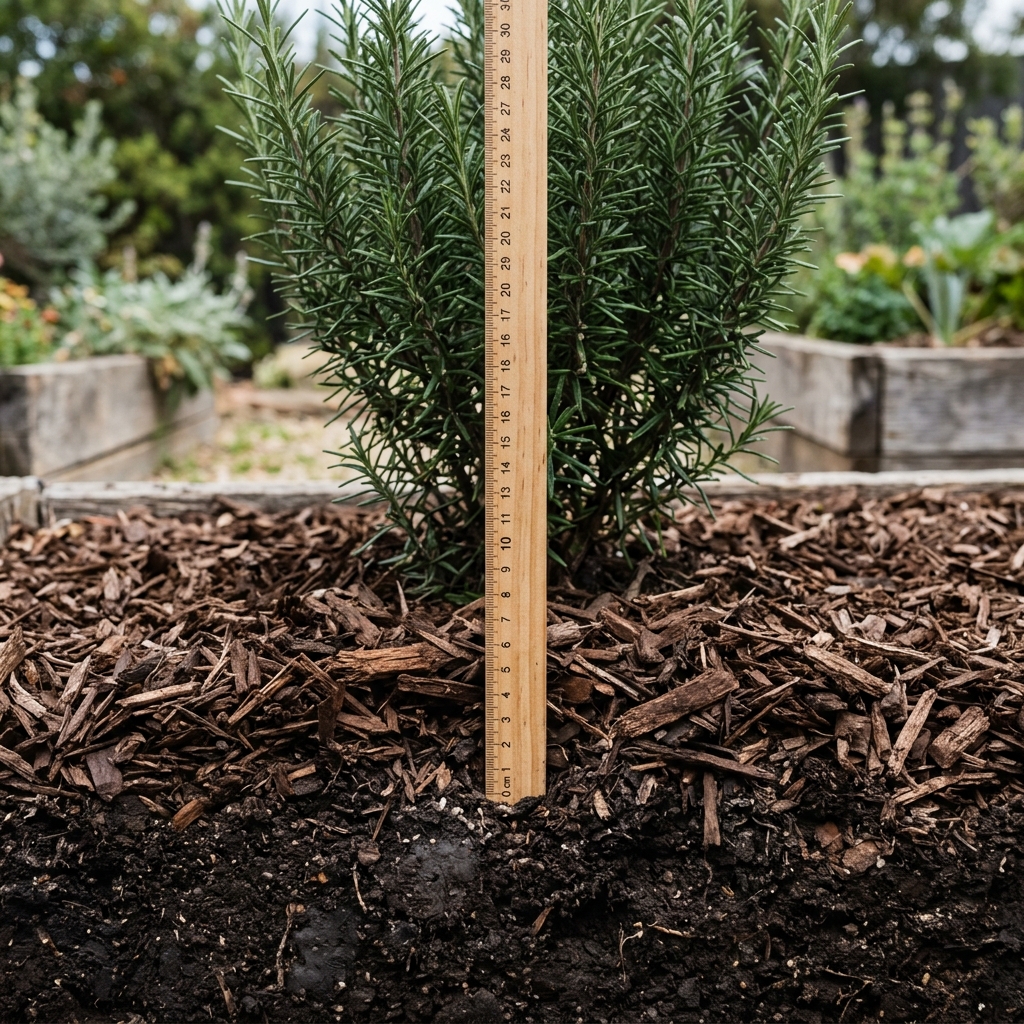
- Depth: 8 to 10 cm
- Best for: Fruit trees, established shrubs, pathways, permanent garden areas
- Drawbacks: Can temporarily tie up soil nitrogen as it decomposes. Not ideal for annual vegetable beds that are dug over regularly.
Living mulch
Low-growing ground cover plants that serve the same function as traditional mulch: suppressing weeds, retaining moisture, and protecting soil. Common living mulches include sweet potato, clover, alyssum, and native violets.
- Best for: Orchards, perennial gardens, food forests
- Drawbacks: Takes time to establish. May compete with young plants for water and nutrients. Needs management to prevent it becoming a weed itself.
Application Tips
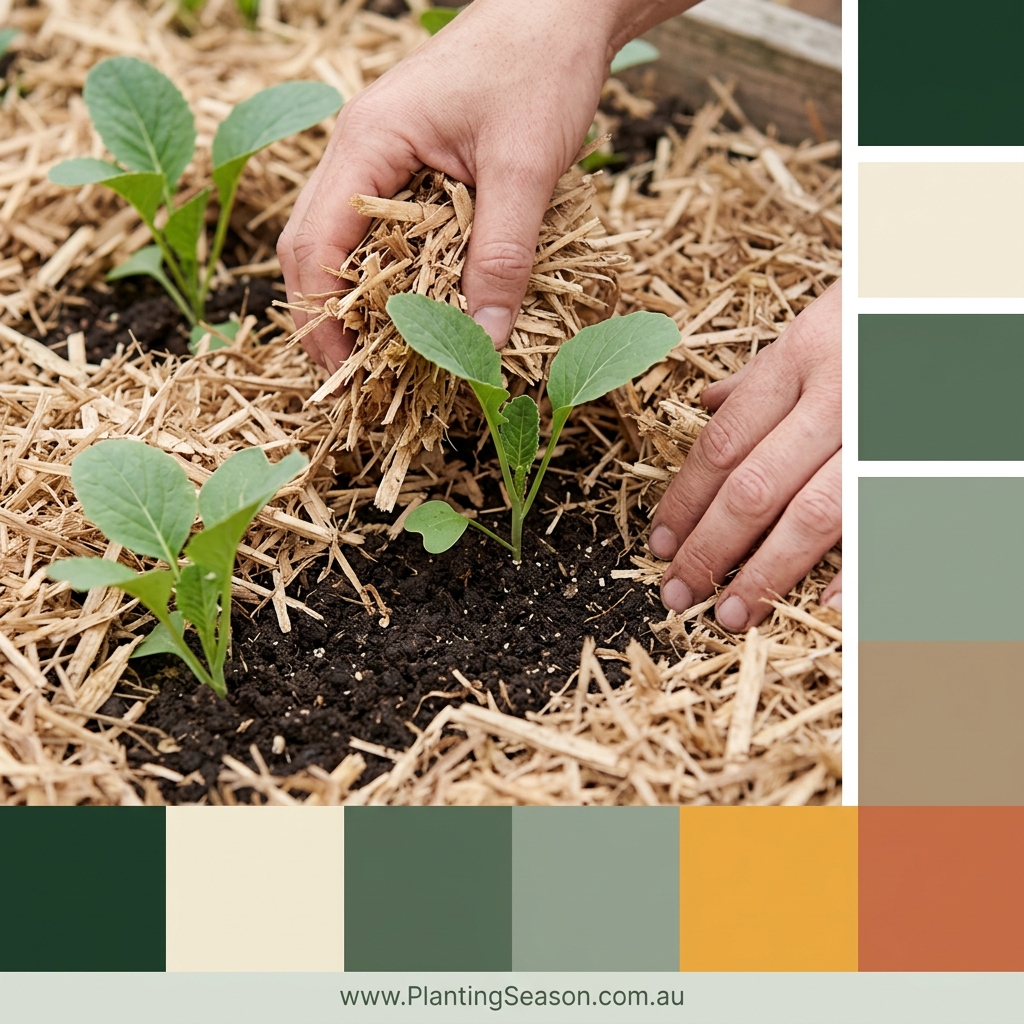
- Keep mulch away from stems and trunks. A mulch-free zone of 10 to 15 cm around the base of plants prevents collar rot and trunk disease. This is the most important mulching rule.
- Apply to moist soil. Water the garden thoroughly before mulching. Mulching dry soil locks in the dryness.
- Top up regularly. Straw and sugarcane mulch break down quickly in warm weather. Top up whenever the layer thins to less than 5 cm.
- Do not mix mulch into the soil. Mulch belongs on top of the soil. Digging it in ties up nitrogen and can cause nutrient deficiency in plants.
Seasonal Benefits
Summer
Mulch reduces soil temperature by up to 10 degrees and dramatically reduces water loss through evaporation. In Australian summers, this is the biggest benefit. A well-mulched garden needs 50 to 70% less water than a bare-soil garden.
Winter
Mulch insulates soil, keeping it warmer on cold nights. This protects roots and soil organisms and extends the growing season for cool-season crops. In frosty areas, extra mulch over root zones helps plants survive cold snaps.
Year-round
Weed suppression, soil biology support, and gradual organic matter addition happen all year. A constantly mulched garden builds better soil every season.
Common Mulching Mistakes
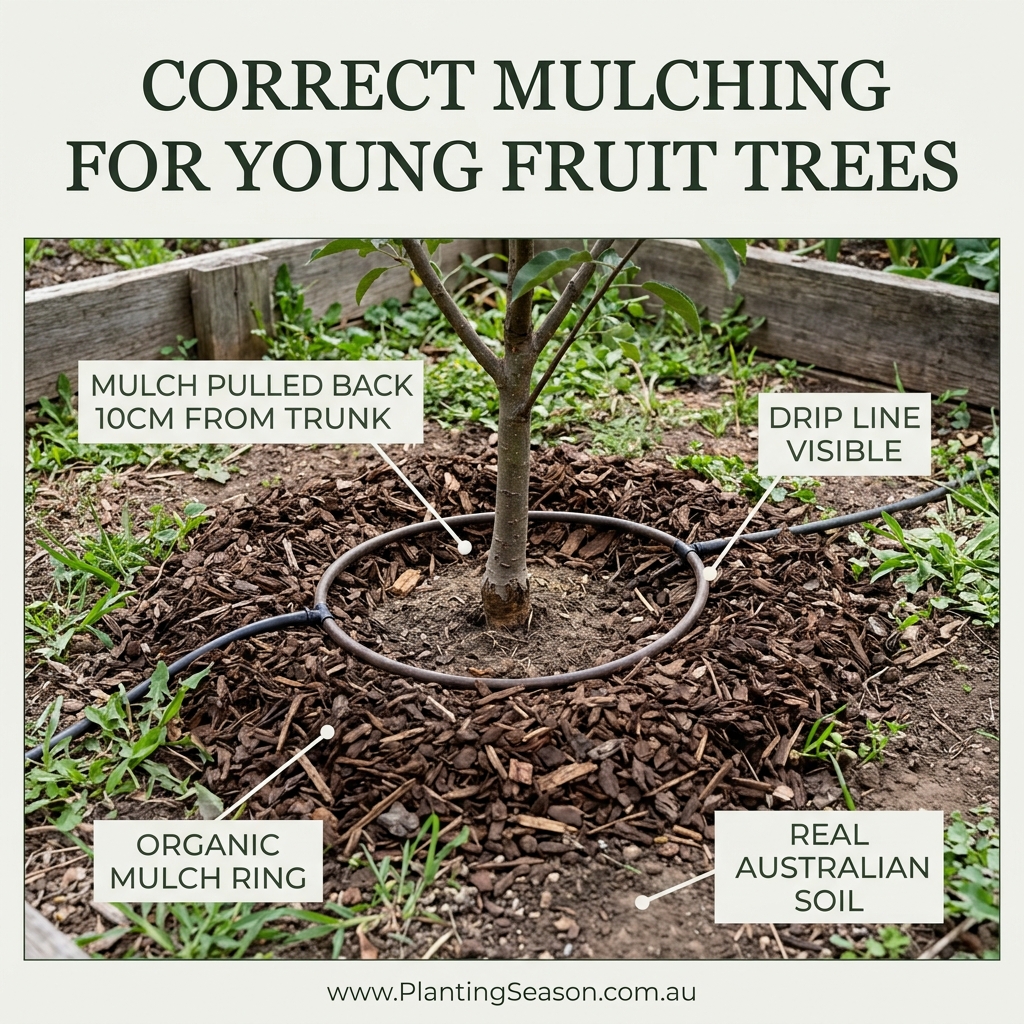
Volcano mulching
Piling mulch up against tree trunks like a volcano. This causes bark rot, attracts pests, and can kill the tree over time. Keep a 10 to 15 cm gap between mulch and any trunk or stem.
Mulching too thin
A thin layer of mulch (under 5 cm) does not suppress weeds effectively and dries out quickly. Apply at the recommended depth for each mulch type.
Mulching over dry soil
Applying mulch to dry soil seals in the dryness. Always water thoroughly first, then mulch over moist soil.
Using the wrong mulch
Fresh wood chip in annual vegetable beds can cause nitrogen drawdown. Straw in ornamental gardens looks untidy. Match the mulch type to the garden situation.
Frequently Asked Questions
How deep should mulch be?
It depends on the type. Straw: 10 to 15 cm. Sugarcane: 5 to 8 cm. Wood chip: 8 to 10 cm. Thinner for fine mulches, thicker for coarse. All types compress and break down, so apply at the upper end of the range.
Does wood chip mulch steal nitrogen from the soil?
Wood chip can temporarily tie up nitrogen in the top few centimetres of soil as it decomposes. This effect is minor when mulch sits on top of the soil (rather than being dug in). For vegetable beds, use straw or sugarcane instead.
Should I remove old mulch before adding new?
No. Old mulch that has partially broken down is adding organic matter to the soil. Just top up with fresh mulch on top. The exception is if old mulch is harbouring disease, in which case remove and replace.
Can I use grass clippings as mulch?
Yes, but apply in thin layers (2 to 3 cm at a time) and let each layer dry before adding more. Thick layers of fresh grass clippings become slimy, smelly, and matted. Dried grass clippings work well as a nitrogen-rich mulch.