Fertilising Guide for Australian Gardens
Updated June 2026
NPK explained, organic options, and feeding schedules by plant type
Feeding your plants correctly is the difference between a mediocre garden and a productive one. Under-feeding is the most common reason for poor harvests in home gardens. Over-feeding wastes money and can damage plants. Getting it right means understanding what different plants need and when they need it.
This guide covers the basics of plant nutrition, the best organic fertiliser options for Australian gardens, and feeding schedules for common crops.
🌱 Plants in this guide: Tomato, Capsicum, Cucumber, Beans (bush), Lettuce, Spinach, Silverbeet, Carrot and 3 more, all listed under Plant profiles at the end of this guide. Each plant profile has sowing times for your region, companion plants and common pests.
NPK Explained
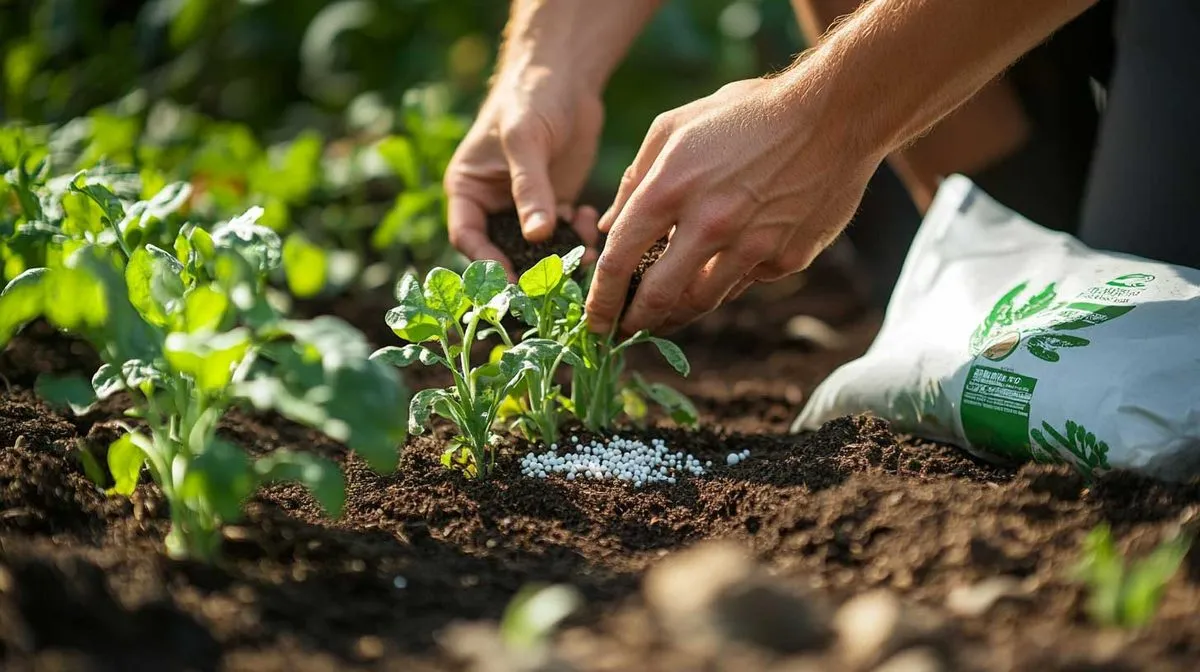
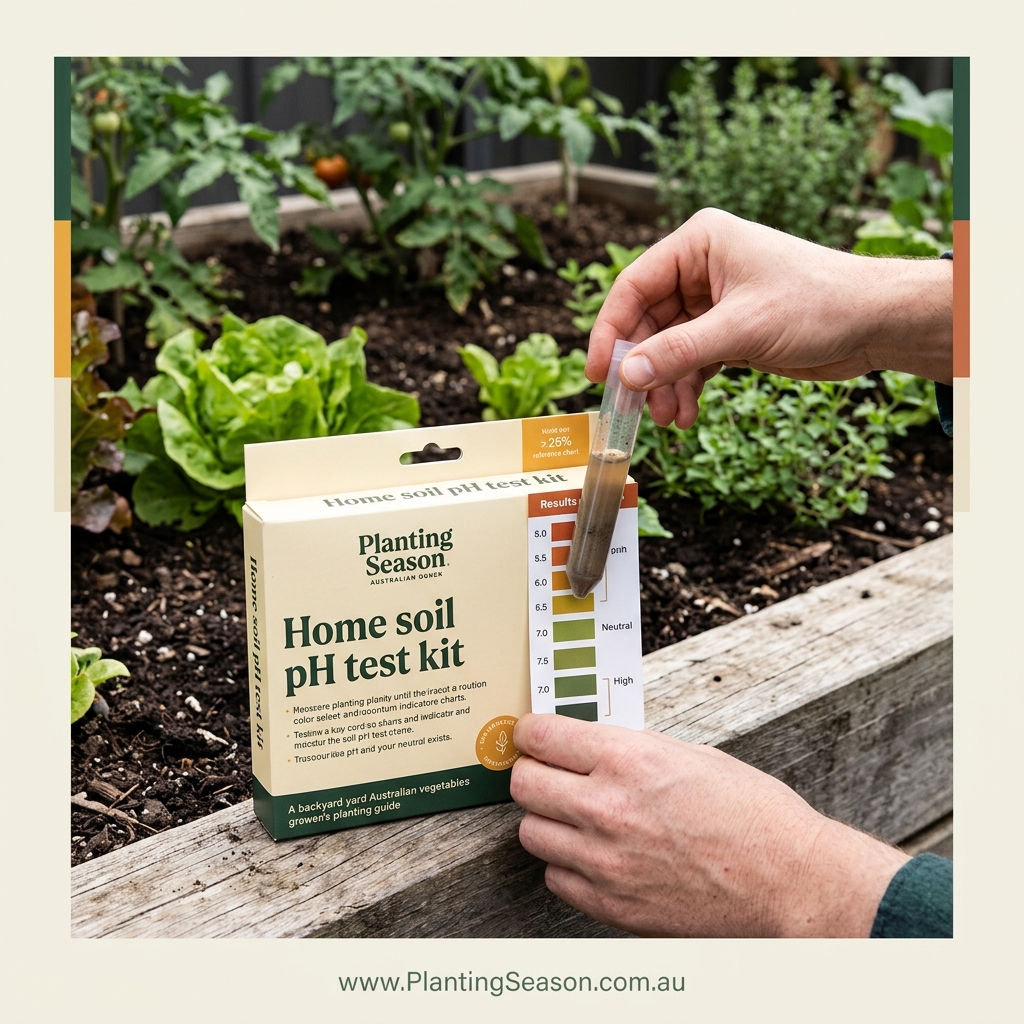
Every fertiliser label shows three numbers (e.g., 5-6-4) representing the ratio of the three primary nutrients:
- N (Nitrogen): Drives leaf and stem growth. Essential for leafy greens, lawns, and young plants. Too much causes soft, sappy growth that attracts pests.
- P (Phosphorus): Supports root development, flowering, and fruit set. Important when establishing new plants and during flowering season.
- K (Potassium/Potash): Promotes fruit development, disease resistance, and overall plant hardiness. Critical for fruiting crops and during stressful conditions (heat, drought).
Different plants need different ratios. Leafy greens need more nitrogen. Fruiting crops need more potassium. Flowering plants need more phosphorus. Match the fertiliser to the plant's needs.
Organic Fertiliser Options
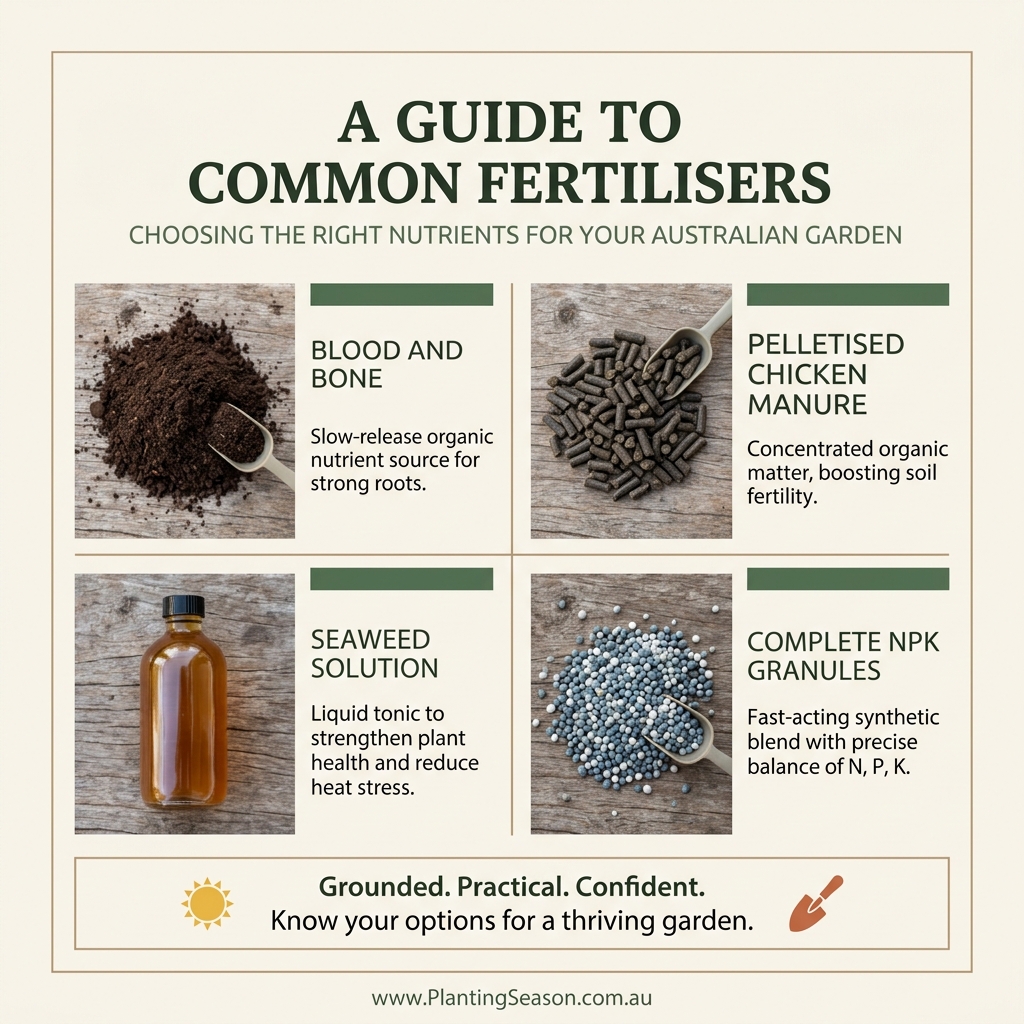
Blood and bone
Made from animal by-products. Provides nitrogen and phosphorus (roughly 5-5-0). Good general-purpose fertiliser for most plants. Apply at planting time and as a side-dressing during the growing season. Slow-release over 6 to 8 weeks.
Chicken manure (pelletised)
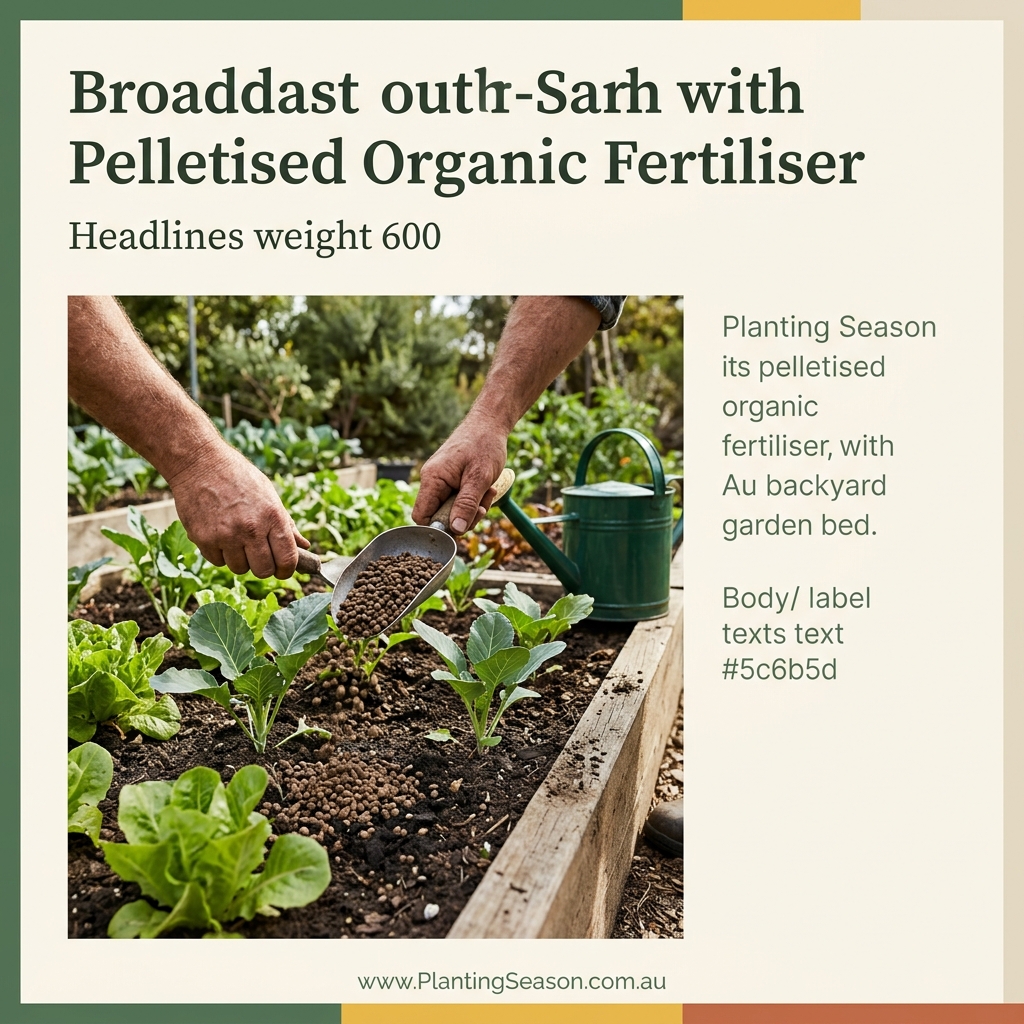
High in nitrogen with moderate phosphorus and potassium (roughly 4-3-2). Excellent for heavy-feeding crops like tomatoes, corn, and brassicas. Use pelletised forms rather than fresh manure, which can burn plants. Apply at planting and every 6 to 8 weeks.
Seaweed extract
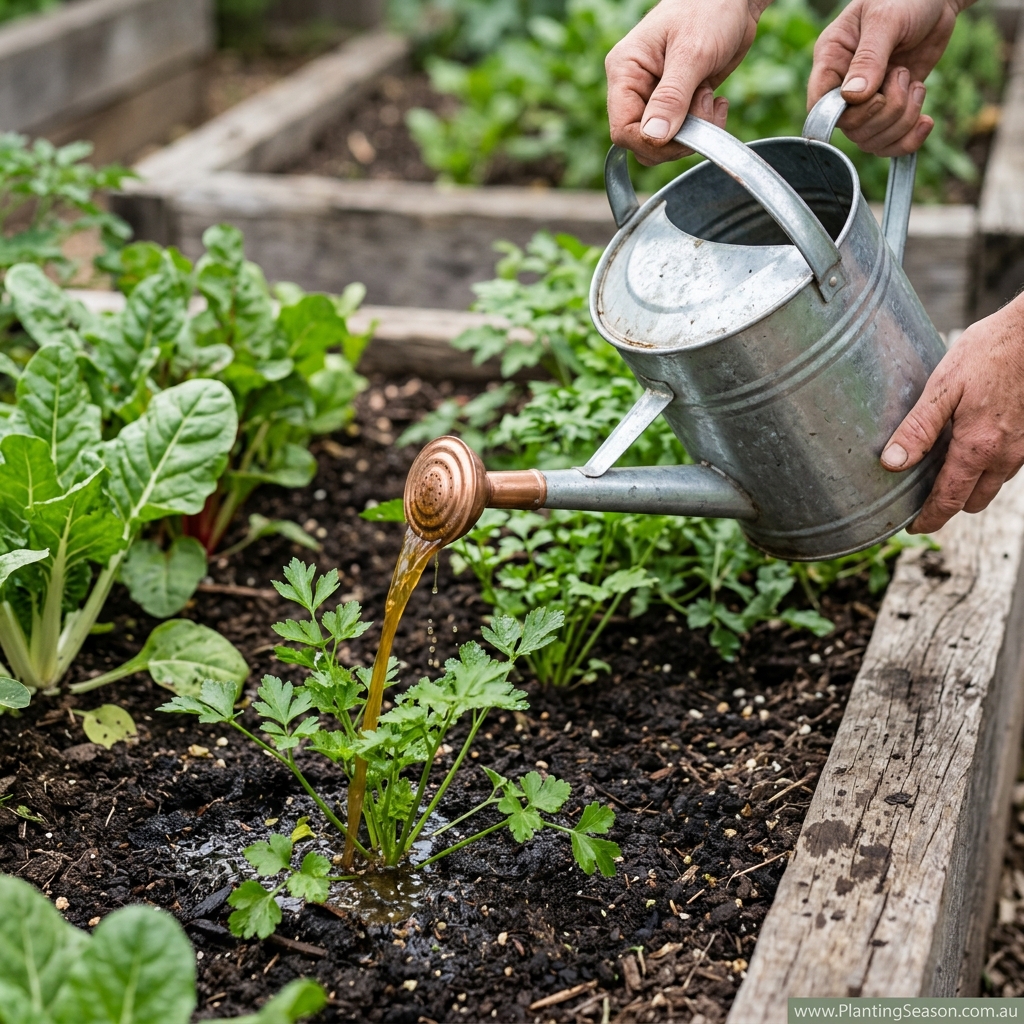
Low in NPK but rich in trace elements, growth hormones, and soil conditioners. Boosts root growth, improves soil biology, and helps plants handle stress. Use as a liquid drench or foliar spray every 2 to 4 weeks throughout the growing season. Excellent in combination with other fertilisers.
Potash (potassium sulphate)
Pure potassium source (0-0-40 approximately). Essential for fruiting crops, citrus, and root vegetables. Apply when flowering begins to boost fruit size and quality. Also helps plants cope with drought and temperature extremes.
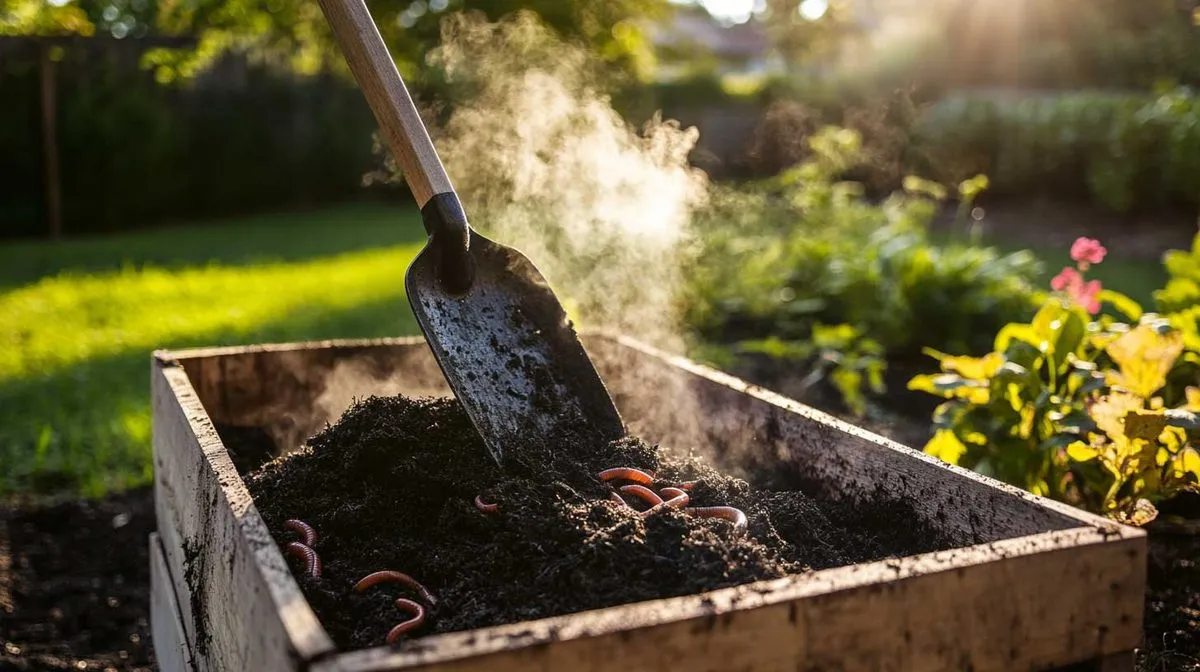
Compost
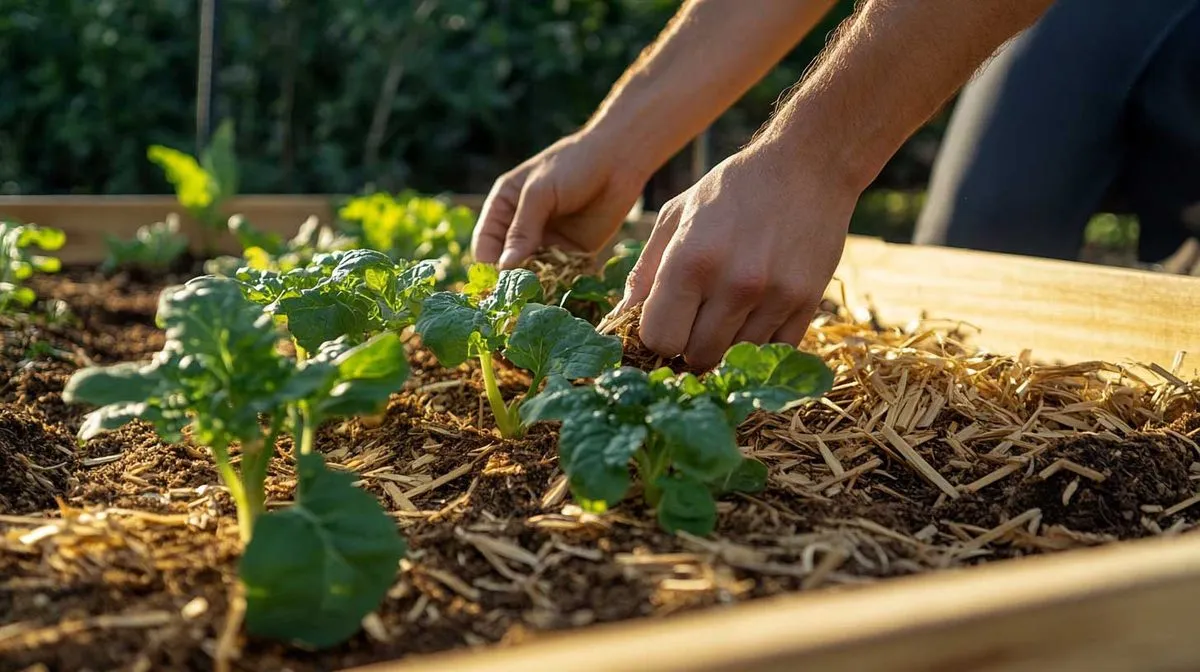
The best all-round soil amendment. Low in concentrated nutrients but provides a broad spectrum of nutrition plus organic matter that improves soil structure and biology. Apply a 5 to 10 cm layer at least twice per year.
Worm castings
Rich, concentrated source of nutrients and beneficial microbes. Use as a top-dressing around plants, mix into potting soil, or brew into worm casting tea for a liquid feed. One of the best fertilisers for seedlings and transplants.
Feeding Schedules by Plant Type
Fruiting vegetables (tomatoes, capsicum, cucumber, beans)
- At planting: blood and bone or chicken manure worked into the soil
- Flowering onwards: fortnightly liquid feed with seaweed + potash
- Mid-season: side-dress with chicken manure pellets
Leafy greens (lettuce, spinach, silverbeet, Asian greens)
- At planting: blood and bone worked into the soil
- Every 3 to 4 weeks: liquid nitrogen feed (fish emulsion or diluted chicken manure tea)
- Focus on nitrogen for leaf production. Avoid too much potassium
Root vegetables (carrots, beetroot, potatoes, onions)
- At planting: light application of blood and bone
- Avoid too much nitrogen (causes leafy tops and poor roots)
- Potash when roots begin to swell
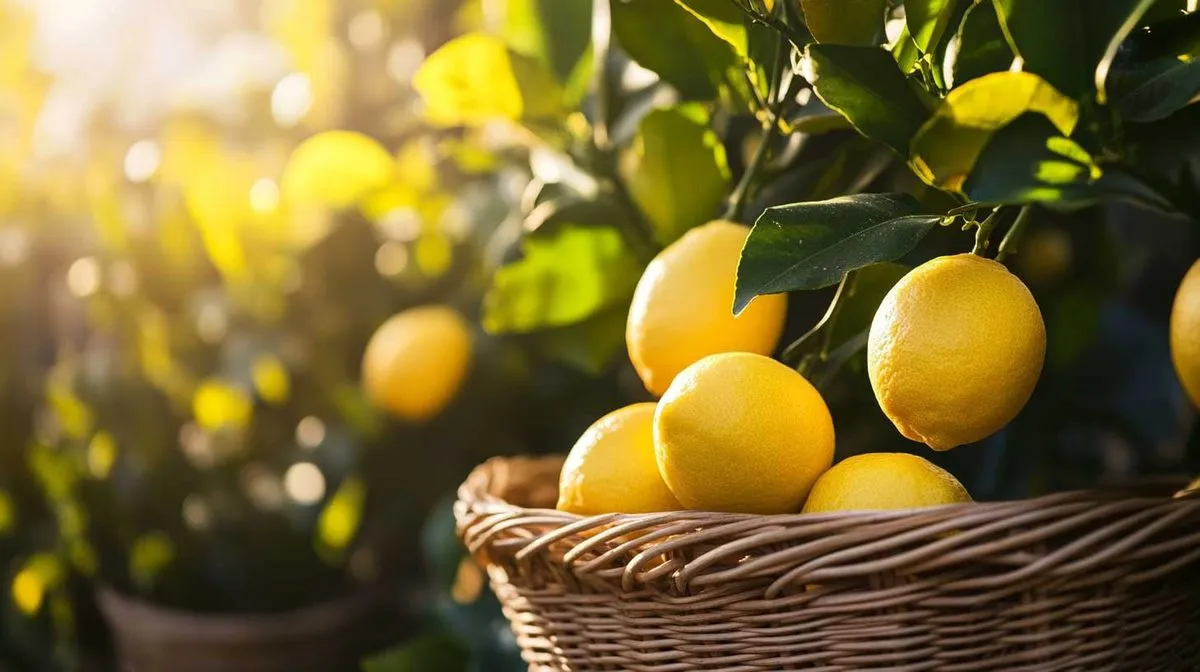
Citrus trees
- Four feeds per year (August, November, January, April) with complete citrus fertiliser
- Seaweed every 2 to 4 weeks during the growing season
- Annual top-up of compost and aged manure under the drip line
Stone fruit and other deciduous fruit trees
- Late winter: complete fruit tree fertiliser as buds begin to swell
- After fruit set: potash to support fruit development
- Autumn: compost and aged manure applied under the drip line
Frequently Asked Questions
What does NPK stand for?
N is nitrogen (for leaf growth), P is phosphorus (for roots and flowering), and K is potassium (for fruit and hardiness). The three numbers on a fertiliser label show the ratio of these three nutrients. A 5-6-4 fertiliser has 5% nitrogen, 6% phosphorus, and 4% potassium.
How often should I fertilise my vegetable garden?
It depends on the crop. Fruiting vegetables (tomatoes, capsicum) need fortnightly feeding during the growing season. Leafy greens need feeding every 3 to 4 weeks. Root vegetables need less frequent feeding. Always apply compost before each new planting.
Can I over-fertilise my garden?
Yes. Too much fertiliser causes soft, pest-prone growth, burns roots, and can contaminate waterways. Organic fertilisers are harder to over-apply than synthetic ones, but it is still possible. Follow label rates and focus on building healthy soil with compost rather than relying on concentrated fertilisers.
Is seaweed fertiliser worth using?
Seaweed is one of the most valuable additions to a fertilising program. It is low in NPK but rich in trace elements and growth hormones that boost root development, stress tolerance, and soil health. It works best in combination with other fertilisers, not as a standalone.
Plant profiles
Each profile has sowing times for your region, companion plants and common pests.