Seed Raising Guide for Australian Gardens
Updated June 2026
Mix recipe, sowing methods, hardening off, and seed saving for beginners
Starting plants from seed is the cheapest way to fill your garden and gives you access to hundreds of varieties you will never find as seedlings at a nursery. Seed raising is not difficult, but a few basic techniques make the difference between strong, healthy transplants and leggy, weak seedlings that struggle once planted out.
This guide covers everything from making your own seed raising mix to saving seeds for next year.
Seed Raising Mix Recipe
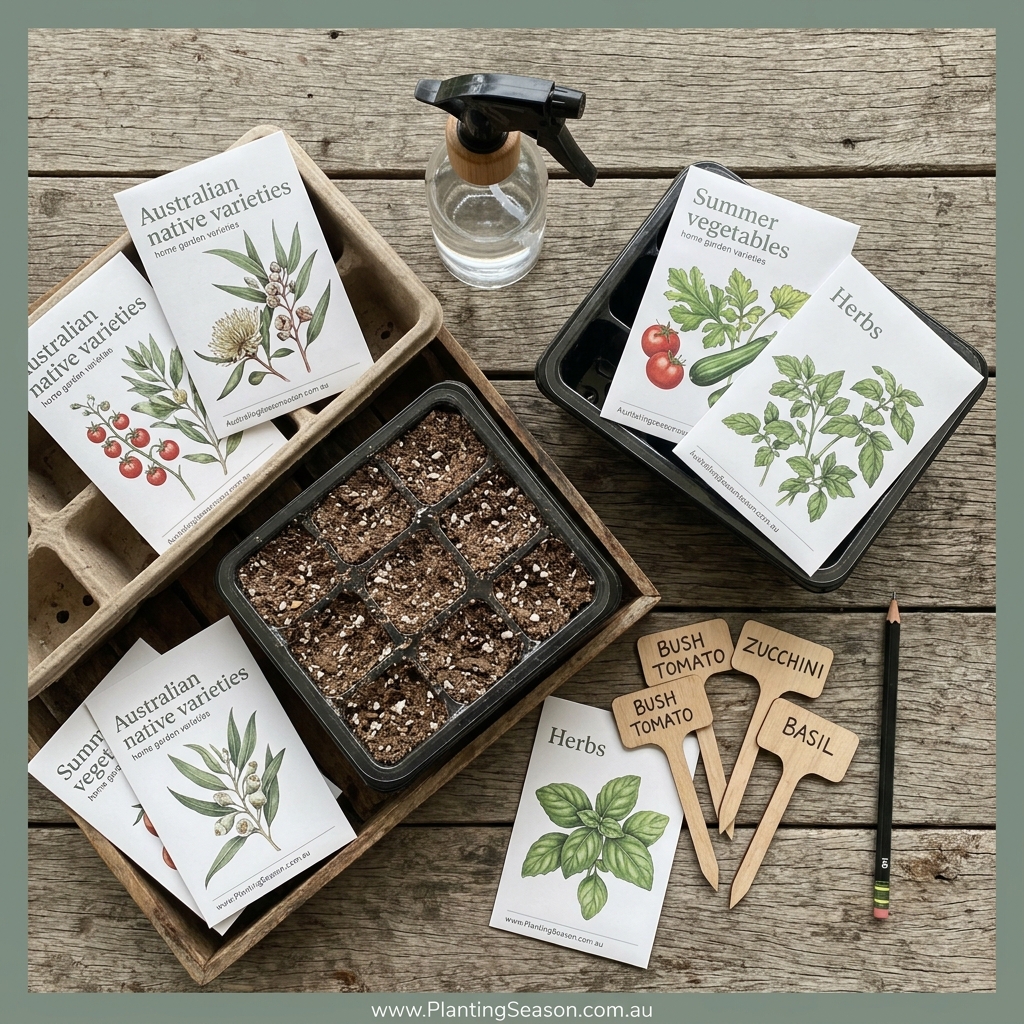
Commercial seed raising mix works well, but you can make your own for a fraction of the cost:
- 2 parts coir (coconut fibre) or peat moss
- 1 part perlite or vermiculite
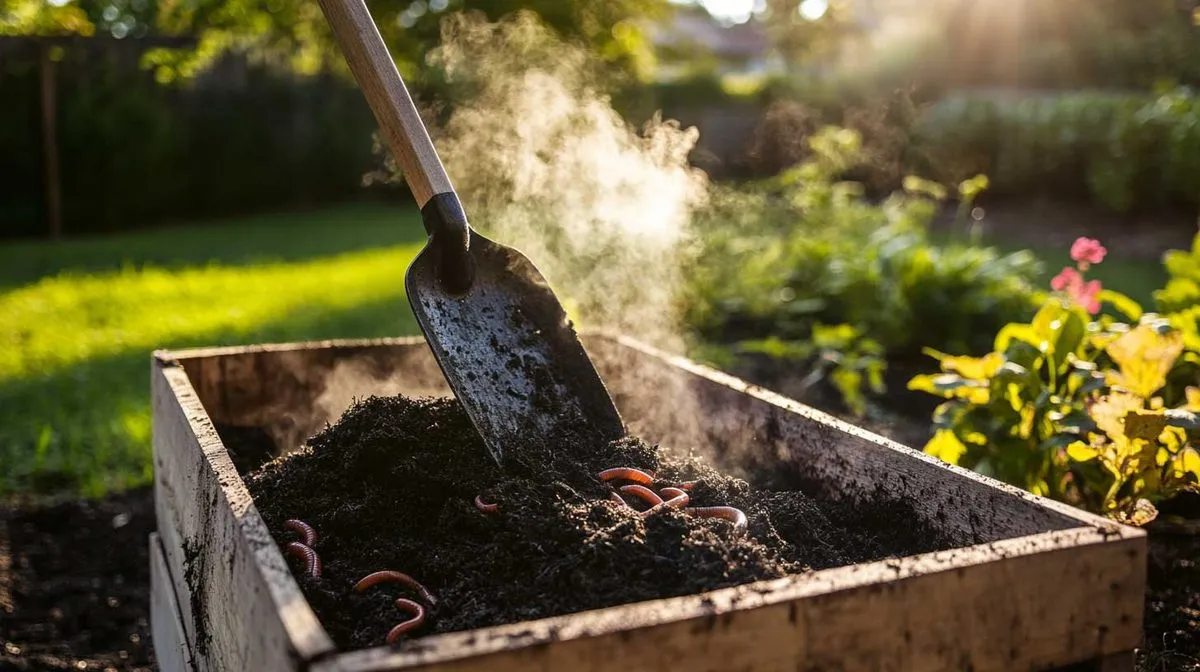
- 1 part fine compost (sieved to remove lumps)
Mix thoroughly and moisten before filling trays. The mix should be damp but not dripping. Good seed raising mix is fine-textured, free-draining, and sterile enough to prevent damping off. Do not use garden soil, which is too heavy and contains disease organisms.
Direct Sow vs Indoor Sowing
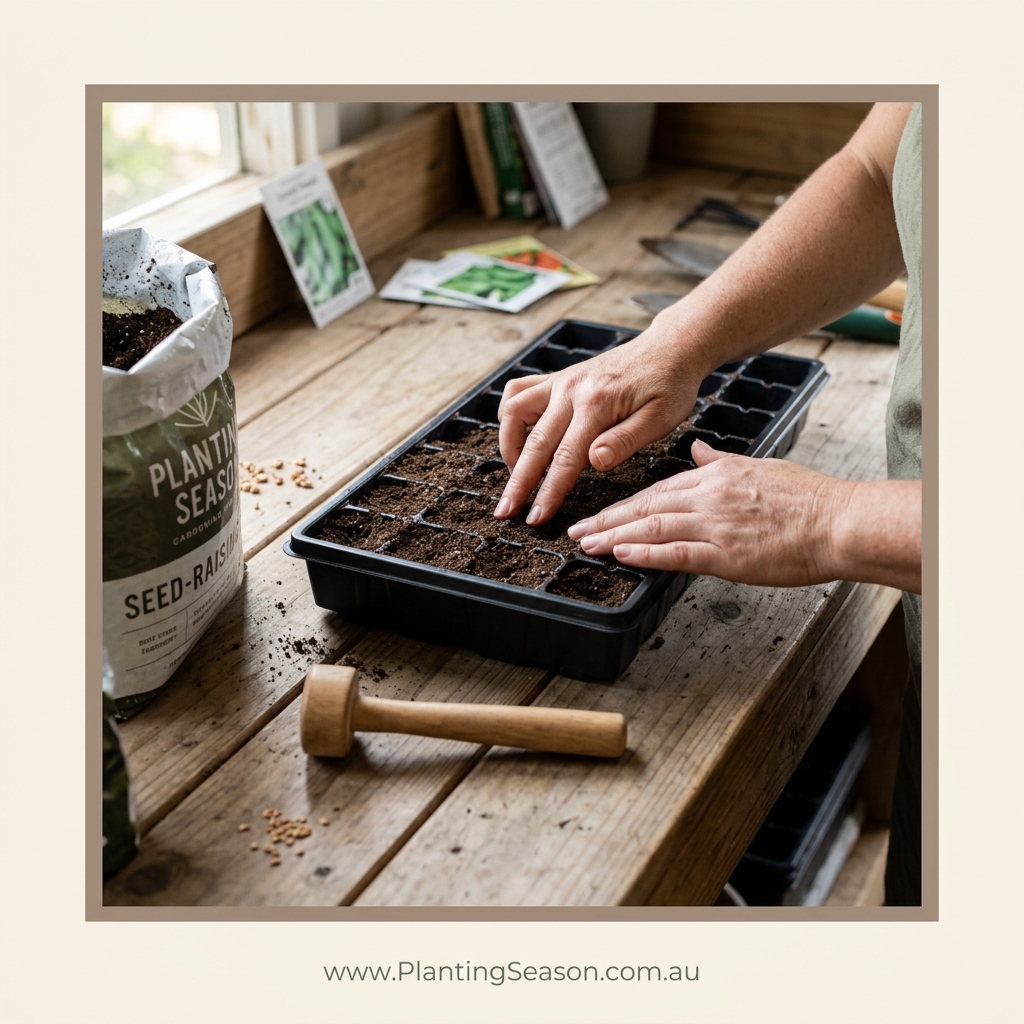
Direct sow (plant seeds where they will grow)
Best for: beans, peas, corn, carrots, beetroot, radish, lettuce, coriander, and most root vegetables. These crops either grow so fast there is no advantage to transplanting, or they resent root disturbance.
Start indoors (in trays, then transplant)
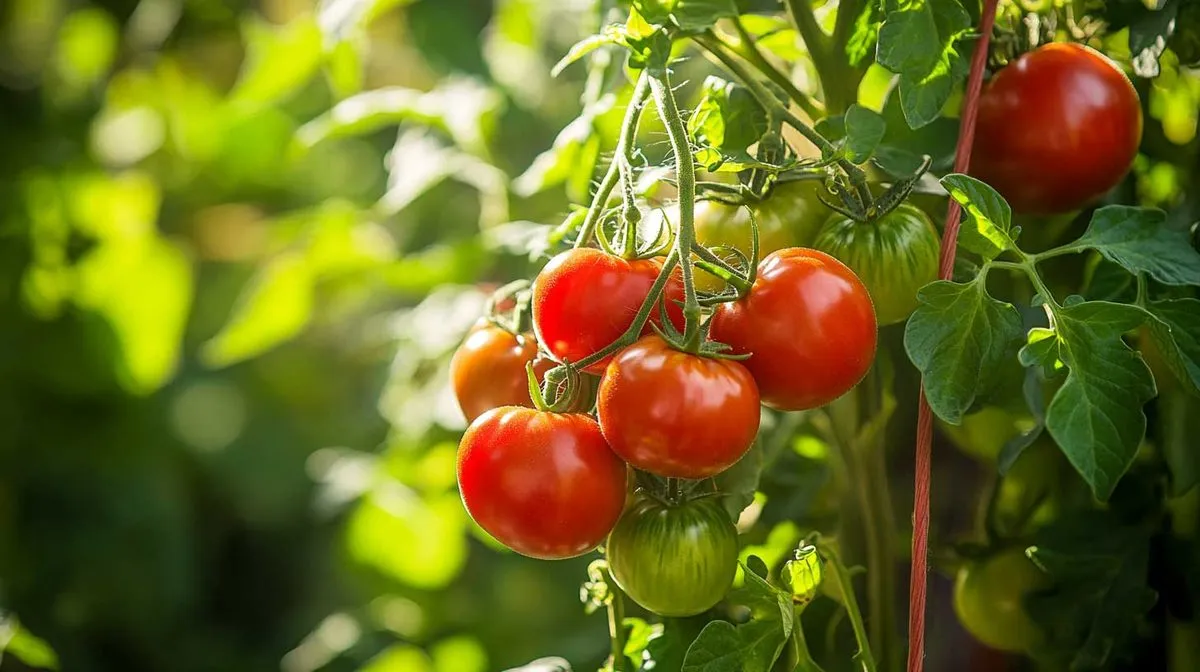
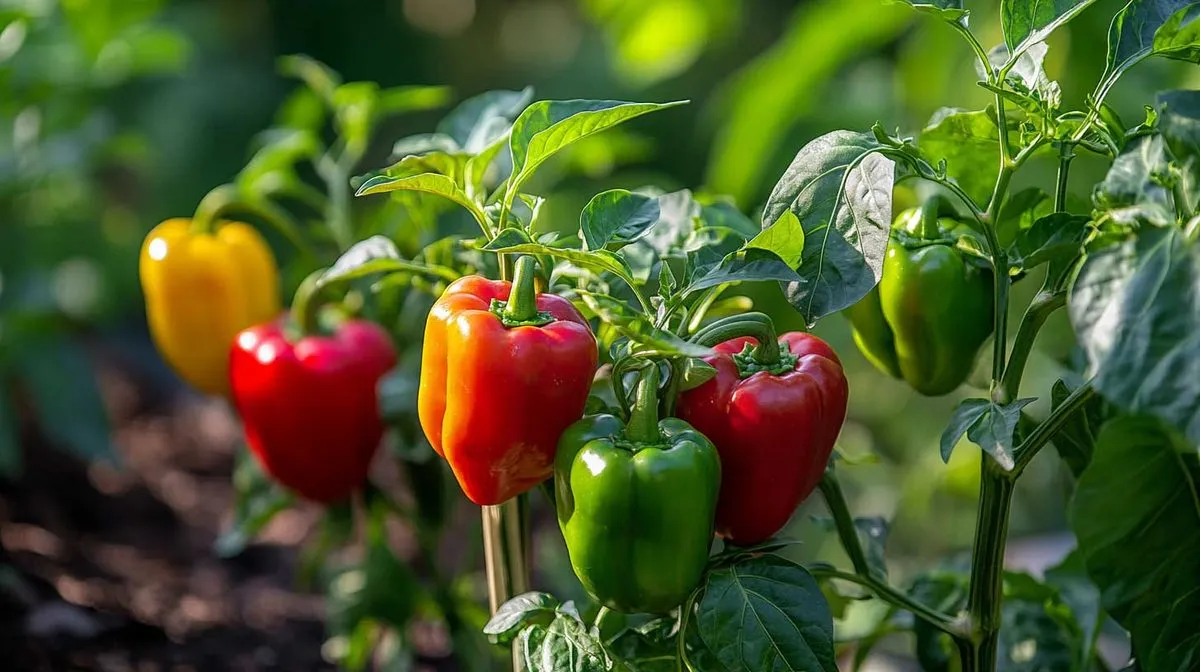
Best for: tomatoes, capsicum, chilli, eggplant, brassicas, celery, and any crop that needs a head start before the season is warm enough outside. Starting indoors extends your growing season by 6 to 10 weeks.
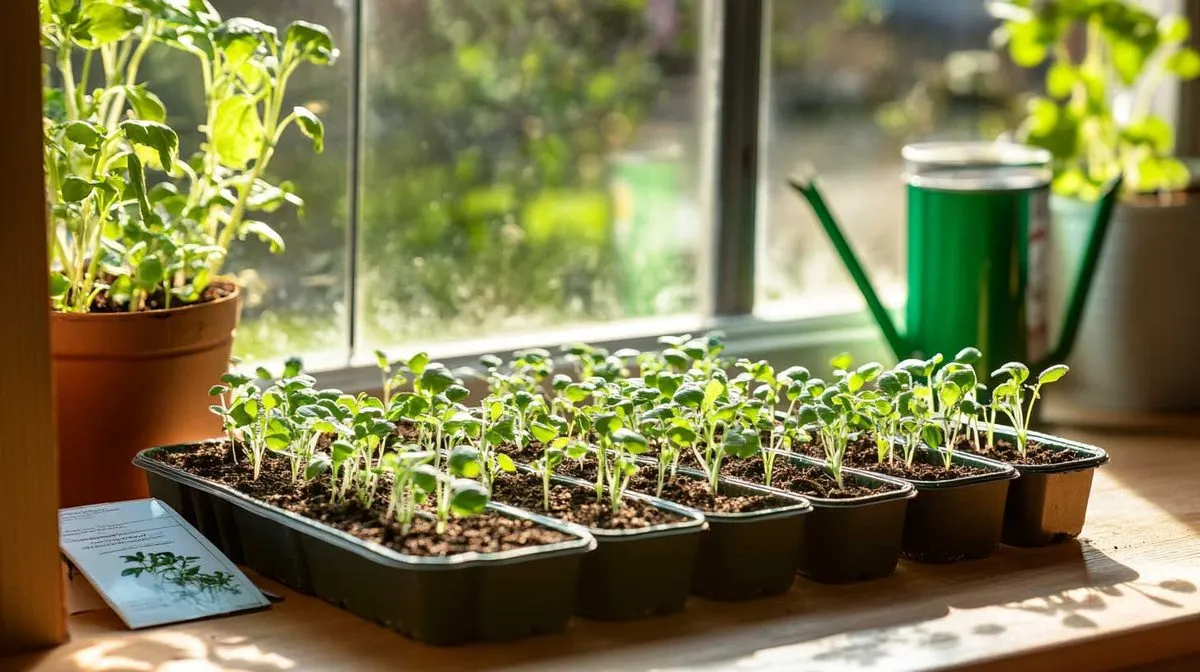
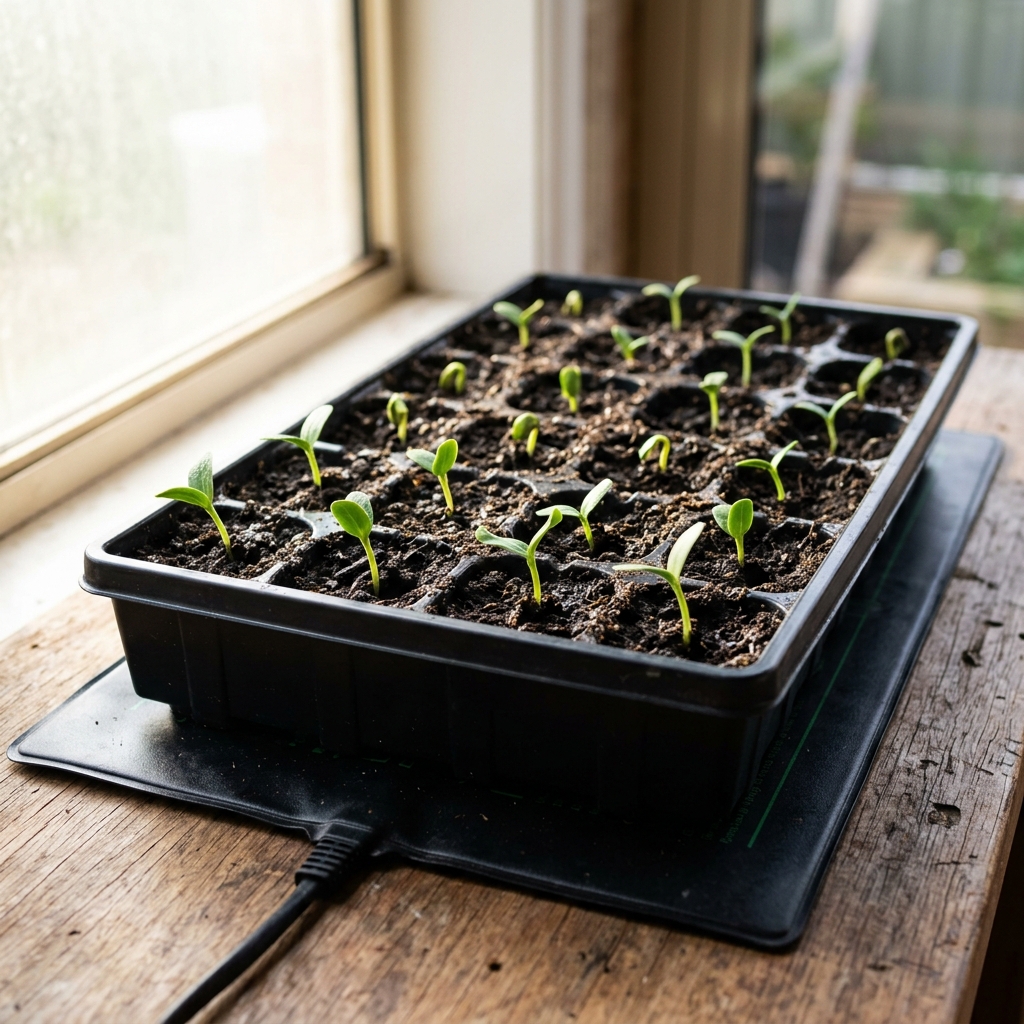
Sow seeds indoors in a warm, well-lit spot. A north-facing windowsill, greenhouse, or heat mat provides the warmth seeds need to germinate. Most vegetable seeds germinate best at 20 to 25 degrees Celsius.
Hardening Off
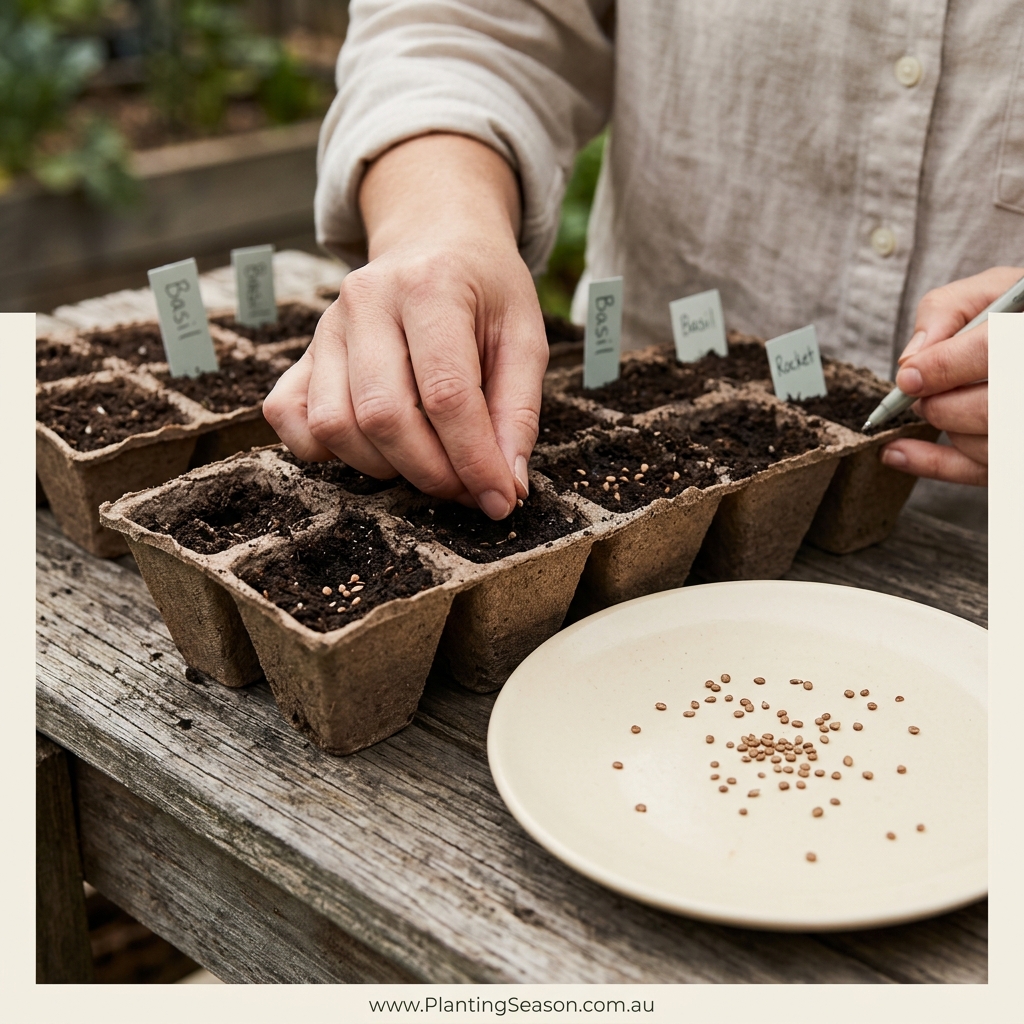
Seedlings grown indoors need to be gradually acclimatised to outdoor conditions before transplanting. This process is called hardening off. Without it, tender seedlings suffer transplant shock, sunburn, and wind damage.
- Day 1 to 2: Place seedlings outdoors in a sheltered, shaded spot for 2 to 3 hours. Bring inside overnight.
- Day 3 to 4: Increase to 4 to 5 hours outdoors with some direct morning sun.
- Day 5 to 6: Leave outdoors for most of the day in a spot with morning sun and afternoon shade.
- Day 7: Leave outdoors all day and overnight (if no frost risk). Transplant the next day.
The process takes about a week. Rushing it leads to stressed, set-back seedlings. Take your time.
Damping Off Prevention
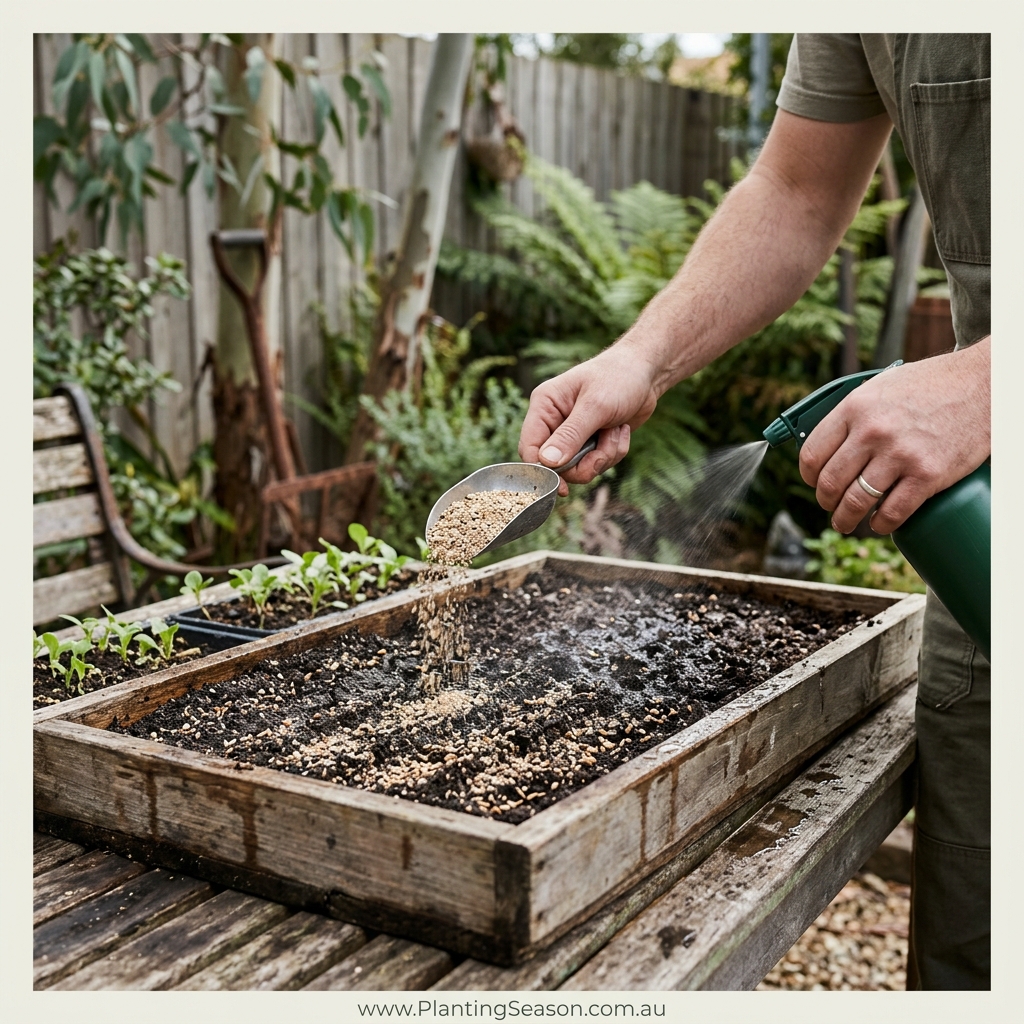
Damping off is a fungal disease that kills seedlings at soil level. The stem goes soft and the seedling topples over. Whole trays can be lost overnight. Prevention is the only option since there is no cure once it starts.
- Use sterile seed raising mix (not garden soil)
- Do not overwater. Keep the mix moist, not soggy
- Provide good air circulation around seedlings
- Water from below (fill the tray base) rather than overhead
- Thin seedlings so they are not overcrowded
- Use clean trays and pots (wash in diluted bleach solution before reuse)
Seed Saving
Saving seeds from your best plants is free, satisfying, and gradually selects for varieties that suit your specific garden conditions. The basics:
- Open-pollinated varieties only. Seeds saved from hybrid (F1) varieties will not grow true to type. Choose heirloom or open-pollinated varieties for seed saving.
- Let fruit ripen fully. Seeds need to be mature. Leave tomatoes, capsicums, and cucumbers on the plant until fully ripe (even slightly past eating stage).
- Dry seeds thoroughly. Spread on a plate in a cool, dry, airy spot for 1 to 2 weeks. Seeds must be completely dry before storage.
- Store in a cool, dry place. Paper envelopes in an airtight container in the fridge is ideal. Label with variety name and date.
- Test germination before relying on old seeds. Place 10 seeds on a damp paper towel in a sealed bag. Count how many germinate after 7 to 14 days. If fewer than 6 out of 10 germinate, sow more thickly or buy fresh seed.
Frequently Asked Questions
What is the easiest vegetable to grow from seed?
Beans, lettuce, and radish are the easiest. They germinate quickly, grow fast, and are sown directly where they will grow (no transplanting needed). Beans are especially reliable and satisfying for beginners.
Why are my seedlings leggy and thin?
Leggy seedlings are caused by insufficient light. They stretch toward the nearest light source. Move trays to a brighter spot, ideally a north-facing windowsill. If growing under lights, keep lights 5 to 10 cm above the seedlings.
How deep should I sow seeds?
The general rule is to sow seeds at a depth of 2 to 3 times their diameter. Very fine seeds (lettuce, celery) are pressed onto the surface and not covered. Large seeds (beans, corn, pumpkin) are planted 2 to 4 cm deep.
How long do seeds last in storage?
Most vegetable seeds last 2 to 4 years if stored cool and dry. Onion and parsnip seeds lose viability within 1 to 2 years. Bean, tomato, and brassica seeds can last 4 to 5 years. Always test germination of old seeds before relying on them.