Succession Planting: Harvest Vegetables Year-Round
Updated June 2026
Stagger your sowings so something is always ready to pick. Works in every Australian region.
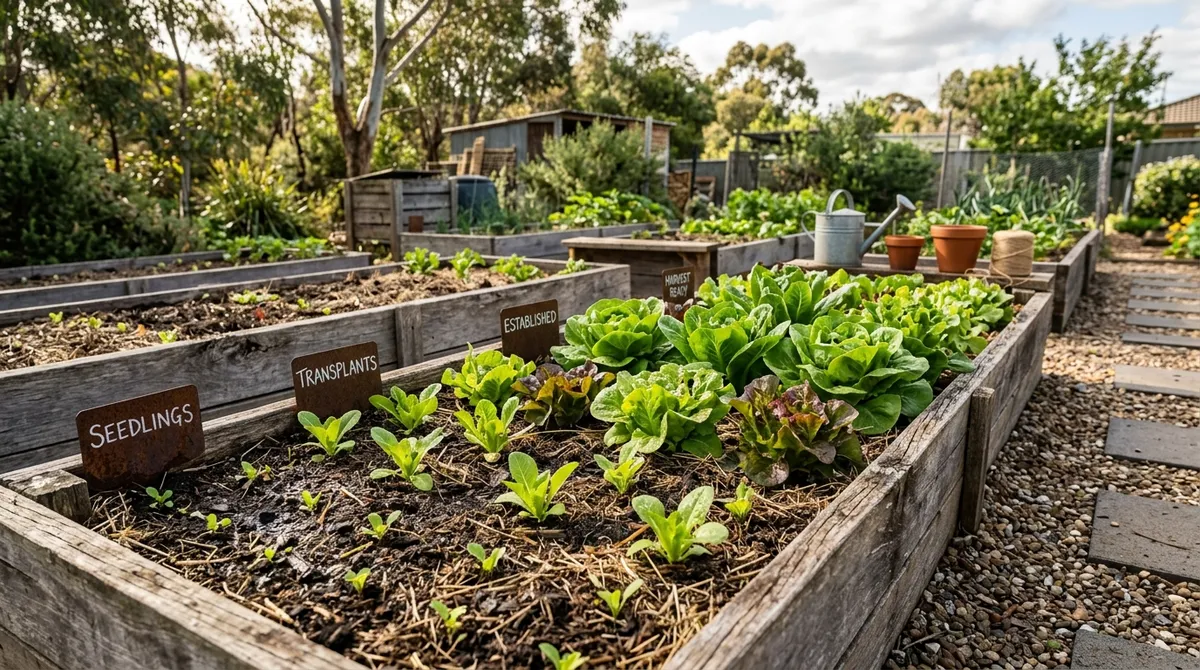
Succession planting means sowing the same crop on regular intervals so harvests flow continuously instead of arriving in one big glut. Plant lettuce once and you get a massive harvest in one week, then nothing for two months. Plant lettuce every two weeks and you harvest tender leaves every week for six months straight.
It works in every Australian climate. Cooler regions have a shorter warm-season window but a longer cool-season run for greens and brassicas. Subtropical and tropical regions can succession plant nearly year-round. The intervals change with your region, but the principle is the same everywhere.
Best Crops for Succession Planting
Not every crop suits succession planting. Long-season vegetables like pumpkins or brassicas take too much space and time. Fast-maturing crops that produce a single harvest window are ideal, because staggering their sowings gives you a continuous supply.
Lettuce
Sow every 2-3 weeks
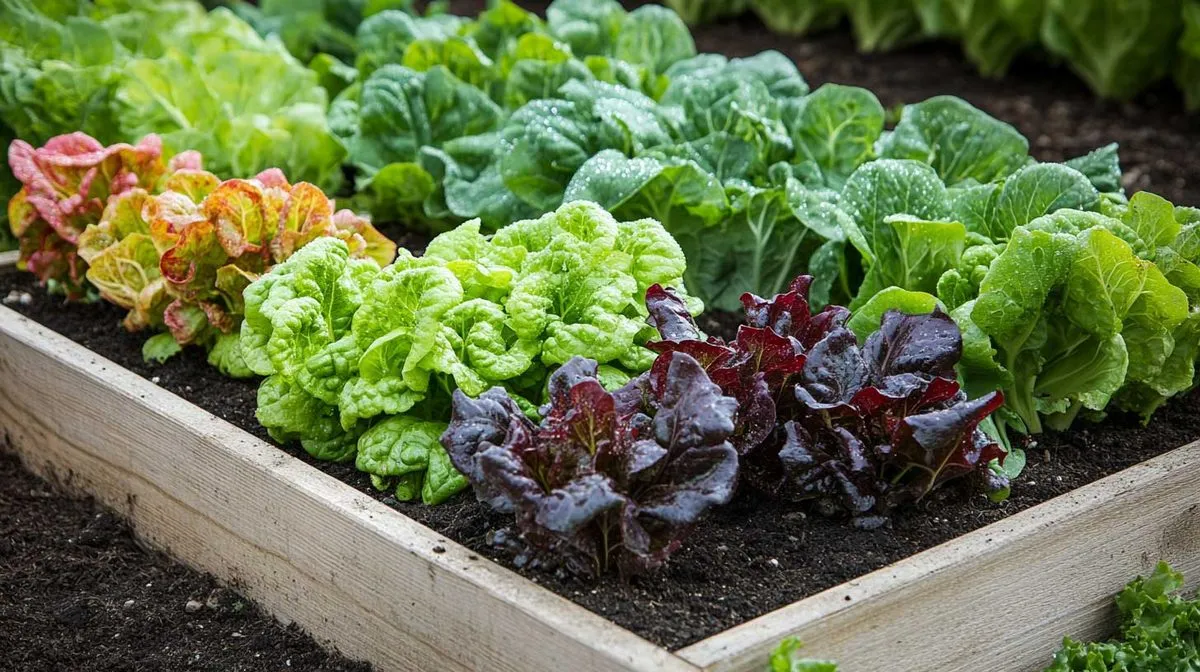
The perfect succession crop. Matures in 35-45 days in warm weather, 60-75 days in cool weather. A single row sown every 2 weeks guarantees salad greens year-round.
Radish
Sow every 2 weeks
Ultra-fast at 25-30 days to harvest. You can fit 6-8 crops per year in one small bed. The ideal starter crop for succession planting beginners.
Beans
Sow every 4 weeks
Each planting produces pods for 4-6 weeks. Overlapping plantings give continuous production through the warm months. Bush beans are easiest.
Carrot
Sow every 3 weeks
Matures in 60-80 days. Slower than lettuce but still fast enough for multiple cycles per year. Harvest at any size from baby to full.
Rocket
Sow every 2-3 weeks
Matures in 30-40 days. Even faster than lettuce. Perfect for small spaces and continuous salad supply.
Spinach
Sow every 3 weeks
Matures in 40-50 days. More heat-sensitive than lettuce, so it works best in autumn, winter, and spring. Bolts quickly in summer.
Peas
Sow every 4 weeks
Matures in 50-70 days. Best from March to August in most regions. Overlapping sowings give continuous pod production through the cool months.
How to Stagger Plantings in Small Spaces
Method 1: Rolling harvest in a single bed. Divide a bed into 3-4 sections. Sow section 1 on day 1, section 2 on day 14, section 3 on day 28, section 4 on day 42. By the time section 4 is sown, section 1 is ready to harvest. You harvest continuously for months from one bed.
Method 2: Relay planting into the same space. When one crop finishes, immediately sow a different crop in its place. Lettuce finishes at 60 days, pull it out and sow beans. Beans finish at 55 days, pull them out and sow spinach. Three crops from one bed in 180 days.
Method 3: Staggered pots or containers. Sow lettuce in a pot. Every 2 weeks, sow another pot. By week 6, you have three pots producing at different stages. Works on any balcony or courtyard.
Seasonal Timing by Region
Growth speed changes dramatically with temperature. Lettuce sown in January matures in 35 days. The same variety sown in June takes 65-75 days. Adjust your succession intervals based on the season.
| Season | Lettuce | Radish | Beans | Carrot | Peas |
|---|---|---|---|---|---|
| Summer Nov to Feb | Every 2 wks | Every 2 wks | Every 4 wks | Every 3 wks | Too hot |
| Shoulder Mar to Apr, Aug to Oct | Every 2-3 wks | Every 2 wks | Every 4-5 wks | Every 3 wks | Every 4 wks |
| Winter May to Jul | Every 3-4 wks | Every 3 wks | Too cold* | Every 4 wks | Every 4 wks |
* In subtropical regions (SEQ, Darwin, North QLD), beans grow through winter. In cool-temperate regions (Melbourne, Hobart, Canberra), skip beans from May to August.
Month-by-Month Succession Schedule
This schedule focuses on the key succession crops. Adjust the timing for your region using the dropdown above.
January to February: Sow lettuce fortnightly. Sow radish fortnightly. Plant beans every 4 weeks. Sow carrot every 3 weeks. Growth is fast in the heat. Water consistently.
March to April: Continue lettuce and radish succession. Start peas (they prefer cooling weather). Begin spinach and rocket sowings as temperatures drop. Sow beans early March in cooler regions for a final warm-season round.
May to June: Extend lettuce intervals to 3 to 4 weeks (growth slows). Sow peas every 4 weeks. Sow spinach and rocket fortnightly. This is peak cool-season greens territory. In frost-prone regions, protect seedlings with cloches or frost cloth.
July to August: Growth is slowest. Lettuce every 3 to 4 weeks. Last pea sowing in July. By mid-August, warming soil lets you resume fortnightly lettuce. Sow radish again as spring approaches. Prepare beds for warm-season succession.
September to October: Resume fortnightly lettuce. Sow carrot every 3 weeks. Start beans again (soil warm enough). Last spinach sowings before heat arrives. By October, hot-weather lettuce varieties handle the transition better.
November to December: Full summer succession resumes. Lettuce fortnightly (heat-tolerant varieties like Cos). Beans every 4 weeks. Radish fortnightly. Watch for bolting in extreme heat and provide afternoon shade.
Relay Planting: The Advanced Technique
Relay planting sows a second crop into the same bed while the first crop is still finishing. It maximises bed productivity in limited space.
Plant beans in September. By early December (90 days later), beans are declining. Plant lettuce seedlings between the remaining bean plants 3-4 weeks before bean harvest. When beans finish completely, lettuce is established and taking over. One bed produces three different crops per year instead of one.
The timing is critical: sow the relay crop 2-3 weeks before the main crop finishes, so it is established when you remove the spent plants. If you are a week late, the relay crop gets shaded and grows slowly.
Tracking Your Plantings
Without tracking, you will forget when you last sowed lettuce and end up with everything ripening at once again. Write the crop, sowing date, and expected harvest date on a calendar. Take a photo of each new sowing so you remember what is where.
The Planting Season app logs planting dates, tracks days to harvest, and sends reminders when the next succession sowing is due. After one full cycle, you will know your exact intervals for your garden and climate.
Dealing With Pest and Disease Cycles
Succession plantings of the same crop can concentrate pests. If lettuce gets aphids, all your lettuce batches are at risk.
Rotate crop families when you can. If lettuce finishes, plant beans (a different family) in the same bed rather than more lettuce. This breaks pest and disease cycles. Space different crop families in different parts of the garden. If a succession planting looks diseased, remove it immediately and skip that crop for two months before replanting.
Plan Your Succession Schedule
The Planting Season app generates a personalised succession schedule for your region and sends weekly planting reminders.
Open the Planting Season App →Frequently Asked Questions
What is succession planting?
Succession planting means sowing the same crop on regular intervals so harvests flow continuously rather than arriving in one big glut. For example, sowing lettuce every 2 weeks gives you tender leaves to pick every week for months, rather than one large harvest followed by nothing.
Which vegetables are best for succession planting?
Fast-maturing crops work best: lettuce (35-70 days), radish (25-30 days), rocket (30-40 days), beans (50-60 days), carrot (60-80 days), spinach (40-50 days), and peas (50-70 days). Long-season crops like tomatoes and brassicas are less suited because they take too much space and time for multiple sowings.
How often should I sow lettuce for continuous harvest?
Every 2 weeks in warm months (when lettuce matures in 35-45 days) and every 3-4 weeks in cool months (when growth slows to 60-75 days). This ensures one batch is always ready to harvest as the previous one finishes.
What is relay planting?
Relay planting is sowing a second crop into the same bed while the first crop is still finishing. For example, planting lettuce seedlings between declining bean plants 3-4 weeks before bean harvest. When the beans finish, the lettuce is already established. It maximises bed productivity in limited space.