
Crop Rotation in the Vegetable Garden: A Four-Bed Plan for Australia
Updated November 2026
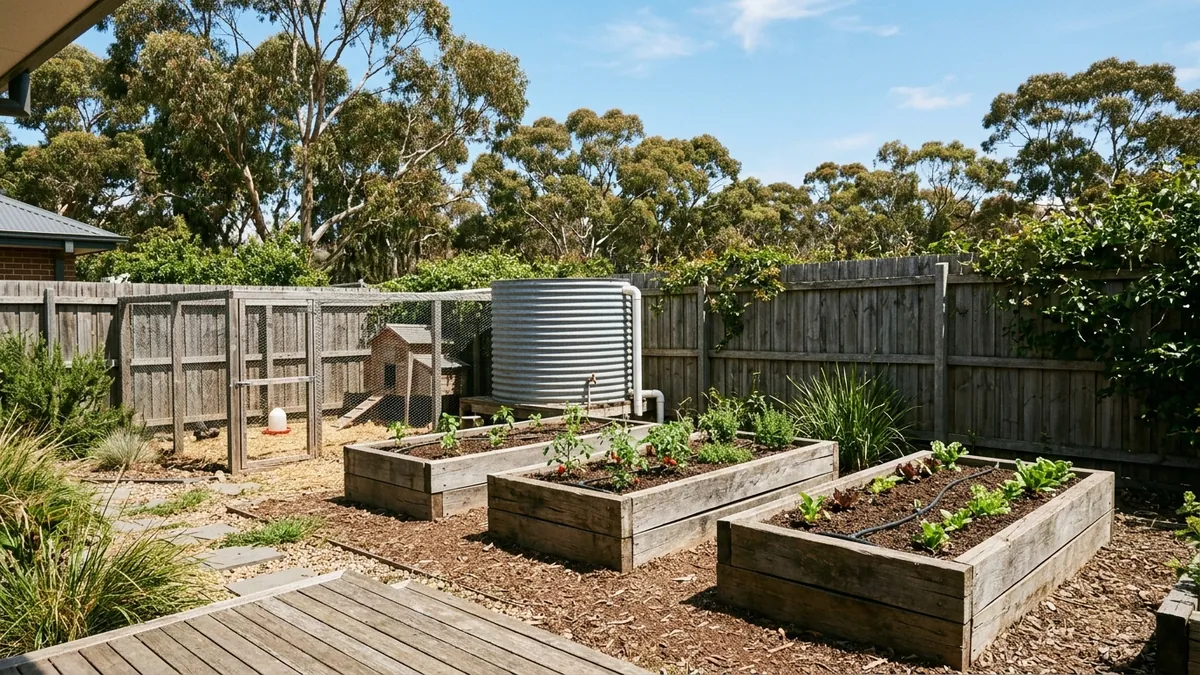
Crop rotation means growing each group of related vegetables in a different bed every year, so the same family only returns to the same soil every three or four years. The simplest way to do it is a four-bed plan: legumes and fruiting crops, then brassicas, then the potato family, then onions and roots, with each group moving along to the next bed each year.
Rotation matters because vegetables in one family share diseases and pests that live in the soil or on old plant debris, and because the families feed in different ways. This page gives you the four-bed diagram, a table that sorts the crops in our plant library by family, and direct answers to what to plant after potatoes, garlic, tomatoes and brassicas, with sowing months taken from our regional planting data.
Why rotate crops?
There are three practical reasons.
- Shared diseases and pests. Late blight and early blight affect both potatoes and tomatoes, clubroot affects every brassica, and white rot affects every onion and garlic plant. If the family comes back to the same bed year after year, whatever lives in that soil is waiting for it.
- Different appetites. Leafy brassicas take a lot of nitrogen. Peas and beans carry bacteria in their root nodules that capture nitrogen from the air and can leave some behind for the crop that follows. Carrots and beetroot grow best in soil that has not been freshly manured, because fresh manure makes carrots fork.
- Different roots. Deep-rooted crops open up the subsoil and shallow-rooted crops use the top layer, so moving between them uses the whole depth of the bed over a few years.
The usual guideline is to keep a family out of a bed for three to four years, and longer if you can manage it (Iowa State University Extension). That gap is why four beds work so neatly.
The four-bed crop rotation plan
The plan below is the classic four-group rotation described by the Royal Horticultural Society, adapted to the crops in our Australian plant library. Each bed works through the same order: legumes and fruiting crops, then brassicas, then the potato family, then onions and roots. Label your beds A to D, put one group in each in year one, and shift every group along each year.
Bed A in year one grows legumes and fruiting crops. In year two it grows brassicas, in year three the potato family and in year four onions and roots, and then the cycle starts again. Every bed follows the same order, just out of step with its neighbours, so all four groups are growing somewhere in the garden every year.
| Bed A | Bed B | Bed C | Bed D | |
|---|---|---|---|---|
| Year 1 | Legumes and fruiting crops | Brassicas | The potato family | Onions and roots |
| Year 2 | Brassicas | The potato family | Onions and roots | Legumes and fruiting crops |
| Year 3 | The potato family | Onions and roots | Legumes and fruiting crops | Brassicas |
| Year 4 | Onions and roots | Legumes and fruiting crops | Brassicas | The potato family |
Lettuce, rocket and other quick salad crops have few soil problems in common with the main groups, so tuck them into gaps in any bed.
Crop families in our plant library
This table sorts the crops in our Australian plant library by botanical family and shows which group of the plan each family belongs to. Crops in the same family share pests and diseases, so rotate them together.
| Family | Crops in our library | Group in the plan | What they share |
|---|---|---|---|
| Legumes (pea family) | Beans (bush), Broad Beans, Peas, Snow Peas, Edamame, Snake Beans | Group 1: legumes and fruiting crops | Root and foot rots in wet or compacted soil. Peas and beans leave some nitrogen in the soil. |
| Cucurbits (pumpkin family) | Pumpkin, Zucchini, Squash, Cucumber, Watermelon, Rockmelon, Choko | Group 1: legumes and fruiting crops | Powdery mildew and fungal wilts, which carry over on old vines. |
| Sweet corn (grass family) | Sweet Corn, Popcorn | Group 1: legumes and fruiting crops | Corn earworm (a Helicoverpa caterpillar). Sweet corn is also a hungry feeder. |
| Brassicas (cabbage family) | Cabbage, Broccoli, Cauliflower, Kale, Brussels Sprouts, Kohlrabi, Bok Choy, Radish, Turnip, Swede, Rocket, Mustard Greens, Daikon, Collards | Group 2: brassicas | Clubroot, which survives in soil for many years, plus cabbage moth and cabbage white butterfly caterpillars. Radish and turnip count as brassicas. |
| Potato family (nightshades) | Potato, Tomato, Capsicum, Chilli, Eggplant, Tomatillo | Group 3: the potato family | Early blight, late blight and root-knot nematodes. Potatoes and tomatoes share the first two. |
| Onion family (alliums) | Onion, Garlic, Leek, Shallot, Spring Onion, Chives | Group 4: onions and roots | White rot, which lasts in soil for many years, and rust on garlic and leeks. |
| Carrot family (umbellifers) | Carrot, Parsnip, Celery, Celeriac, Parsley, Coriander, Dill, Fennel | Group 4: onions and roots | Cavity spot and root-knot nematodes. Parsley, coriander and dill belong here too. |
| Beet family | Beetroot, Silverbeet, Spinach | Group 4: onions and roots | Leaf spots and leaf miner. Silverbeet, spinach and beetroot all take the same ones. |
| Lettuce family (daisies) | Lettuce, Endive, Radicchio, Chicory | Fits any group | Few shared soil problems, so lettuce fits into any gap in any group. |
What to plant after potatoes, garlic, tomatoes and brassicas
The table pairs each crop with the group that follows it in the plan. The sowing months come from our regional planting data for South East Queensland, Sydney and Melbourne. Open the plant page for any other region.
| After this | Plant this next | Why | When to sow (from our data) |
|---|---|---|---|
| Potatoes | Carrots, beetroot, onions or garlic | Potatoes leave loose, well-worked soil that has not been freshly manured, which is what carrots and beetroot want. The diseases of potatoes do not affect these crops. Do not follow potatoes with tomatoes, capsicum or eggplant, which share their blight. | Carrot sowing months: South East Queensland and Sydney: Feb to Oct; Melbourne: Mar to Sep |
| Garlic and onions | Beans, peas, zucchini, cucumber or sweet corn | Garlic is lifted in late spring or early summer, which leaves the bed free for a summer legume or fruiting crop. White rot and rust do not affect these crops. Keep the onion family out of the bed for the next three to four years. | Beans (bush) sowing months: South East Queensland: Feb to May, Aug to Oct; Sydney: Sep to Feb; Melbourne: Oct to Dec |
| Tomatoes, capsicum, eggplant and chilli | Garlic, onions, carrots or beetroot | These crops finish in autumn, just as the onion family and roots go in. Moving away from the potato family for three to four years cuts the carry-over of blight and nematodes. | Garlic sowing months: South East Queensland and Sydney: Mar to May; Melbourne: Mar to Jun |
| Brassicas (cabbage, broccoli, cauliflower, kale) | Tomatoes, capsicum, eggplant or potatoes | Brassicas finish in spring, when the potato family goes in. Keep brassicas out of the bed for at least three years, and longer if you have had clubroot. | Tomato sowing months: South East Queensland: Feb to Apr, Aug to Sep; Sydney: Jul to Nov; Melbourne: Aug to Dec |
| Carrots, beetroot, silverbeet and spinach | Peas, beans or broad beans | Legumes are a good reset after roots and leaf crops. Peas and broad beans sown in autumn fit the bed as soon as the summer root crops are out. | Peas sowing months: South East Queensland and Melbourne: Mar to Aug; Sydney: Apr to Aug |
| Peas, beans, pumpkin, zucchini, cucumber and corn | Cabbage, broccoli, cauliflower or kale | Brassicas are hungry leaf crops, and the plan puts them in the bed that legumes and fruiting crops have just left, where the soil has been fed. | Broccoli sowing months: South East Queensland: Feb to May; Sydney: Feb to Jul; Melbourne: Feb to Jun |
If you do not have four beds
Divide the beds you have into quarters and rotate the quarters. A raised bed 1.2 metres wide and 2.4 metres long becomes four sections of 1.2 by 0.6 metres, which is enough for a group each. With only two beds you can still alternate the potato family and the brassicas between them, and keep the onion family and roots on the opposite side, which gives each family a two-year gap. That is better than nothing, but it is weaker than a three or four year gap. For help with bed size and layout, see how to plan a vegetable garden and raised beds.
Resting a bed with a green manure
A bed that is empty between crops can carry a green manure, a crop grown to be dug back in rather than eaten. A legume green manure such as field peas or broad beans fits the legume stage of the plan, and a quick cover crop in a gap protects the soil from heavy rain. Our green manure and cover crops guide covers what to sow and when to dig it in.
Keep a map so you do not have to remember
The hard part of rotation is remembering what grew where two years ago. Draw the beds on paper each year, or use the bed planner to lay out each bed and run the companion checks. The Planting Season app also records which plant family has grown in each bed and warns you when you are about to repeat one; see the crop rotation feature.
What rotation cannot do
Rotation slows the build-up of soil diseases, but it does not remove them. Clubroot spores and onion white rot can survive in soil for many years, so a bed that has had either one needs a long break from the family and good drainage, and rotation alone will not clear it. Rotation also does nothing about airborne problems such as blight spores blown in from a neighbour's tomatoes, or about pests that fly in. Use it as one of several measures, along with clean seed and seedlings, good drainage, and clearing diseased plant material.
Related pages
- Bed planner with companion checks
- Crop rotation in the Planting Season app
- Companion planting chart
- Green manure and cover crops
- How to plan a vegetable garden
- Tomato and potato blight
- Clubroot
- White rot
- How to grow garlic
- How to grow potatoes
Questions about crop rotation
What is crop rotation in a vegetable garden?
Crop rotation means growing each plant family in a different bed every year, so the same family returns to the same soil only every three or four years. It reduces the build-up of soil diseases and pests and balances the nutrients that different crops take and leave.
How many years before I can grow the same crop in the same bed?
Aim for three to four years between plantings of the same family in the same bed, and longer if you can. Iowa State University Extension gives three to four years, or five or more where possible.
What should I plant after potatoes?
In the four-bed plan the onion and root group follows potatoes, so plant carrots, beetroot, onions or garlic. Avoid tomatoes, capsicum and eggplant, because they share blight and nematodes with potatoes.
What should I plant after garlic?
Plant a legume or fruiting crop such as beans, peas, zucchini, cucumber or sweet corn. Garlic comes out in late spring or early summer, which suits a summer crop, and none of these share garlic's white rot or rust. Keep onions and garlic out of that bed for three to four years.
What should I plant after tomatoes?
Plant garlic, onions, carrots or beetroot, which are not in the potato family. Tomatoes finish in autumn, when these crops are ready to go in. Do not follow tomatoes with potatoes, capsicum or eggplant.
Can I do crop rotation in a small garden or raised beds?
Yes. Split each raised bed into four sections and rotate the sections, so each group moves along one section a year. If you only have one or two beds, rotate as well as you can and use a different family from last year in each spot.
Does crop rotation get rid of clubroot or white rot?
No. Rotation slows the build-up of both, but clubroot spores and onion white rot can last in soil for many years. A bed that has had either needs a long break from that family and good drainage.