White rot: identify, prevent, control
Updated October 2026
Worst in cool, moist soil between about 10 and 20 degrees, so from late autumn to spring across southern Australia, especially Victoria and Tasmania.
White rot is a soil borne fungus that attacks only plants in the onion family, including onions, garlic, spring onions, leeks, shallots and chives. Industry sources describe it as the most destructive fungal disease of onions and spring onions in Australia. Its tiny black resting bodies, called sclerotia, can survive in soil for 20 years or more without a host, so the best defence is never to let it into your garden.
Stromatinia cepivora (syn. Sclerotium cepivorum)

How to identify it
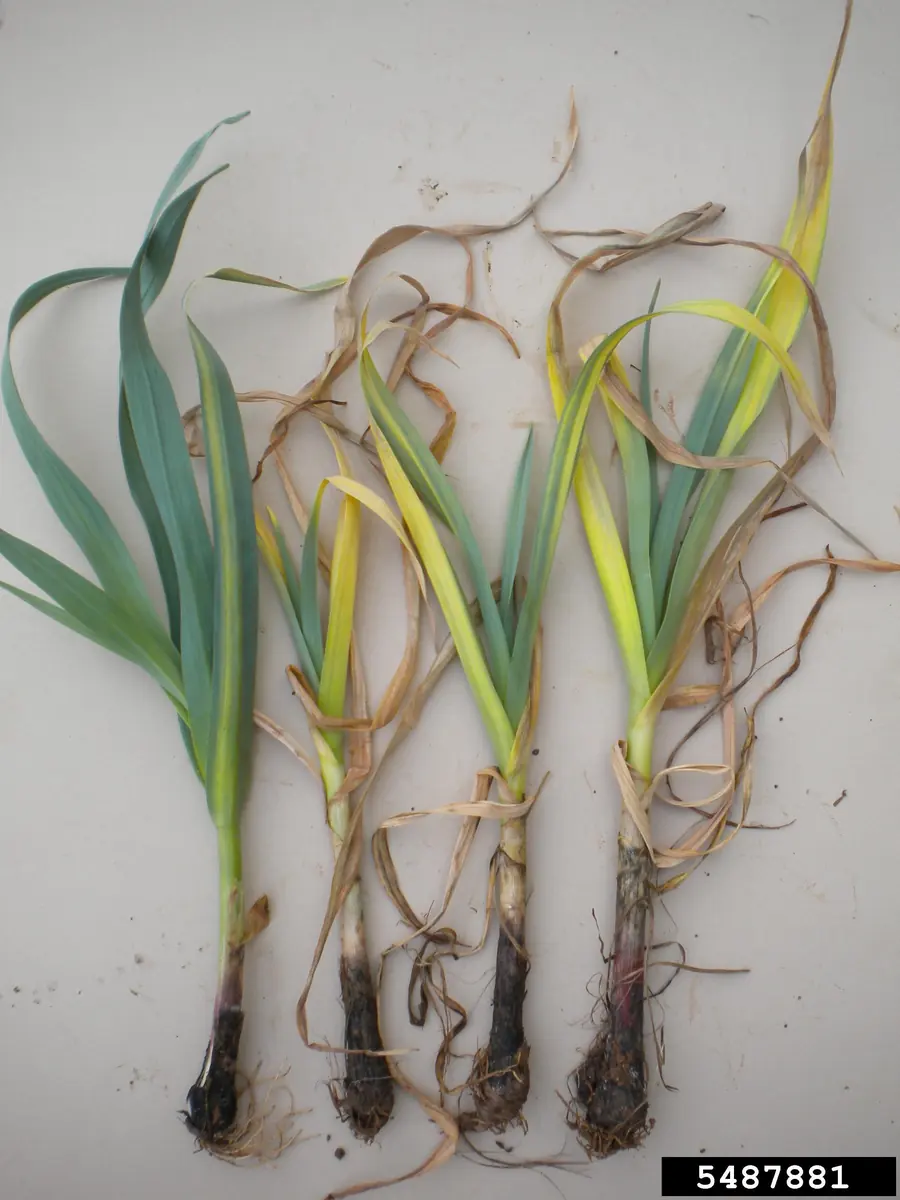
- The oldest leaves yellow and die back from the tips, and the plant stops growing, often in a small patch that widens along the row.
- Affected plants wobble or pull out of the ground with almost no effort, because the roots have rotted away.
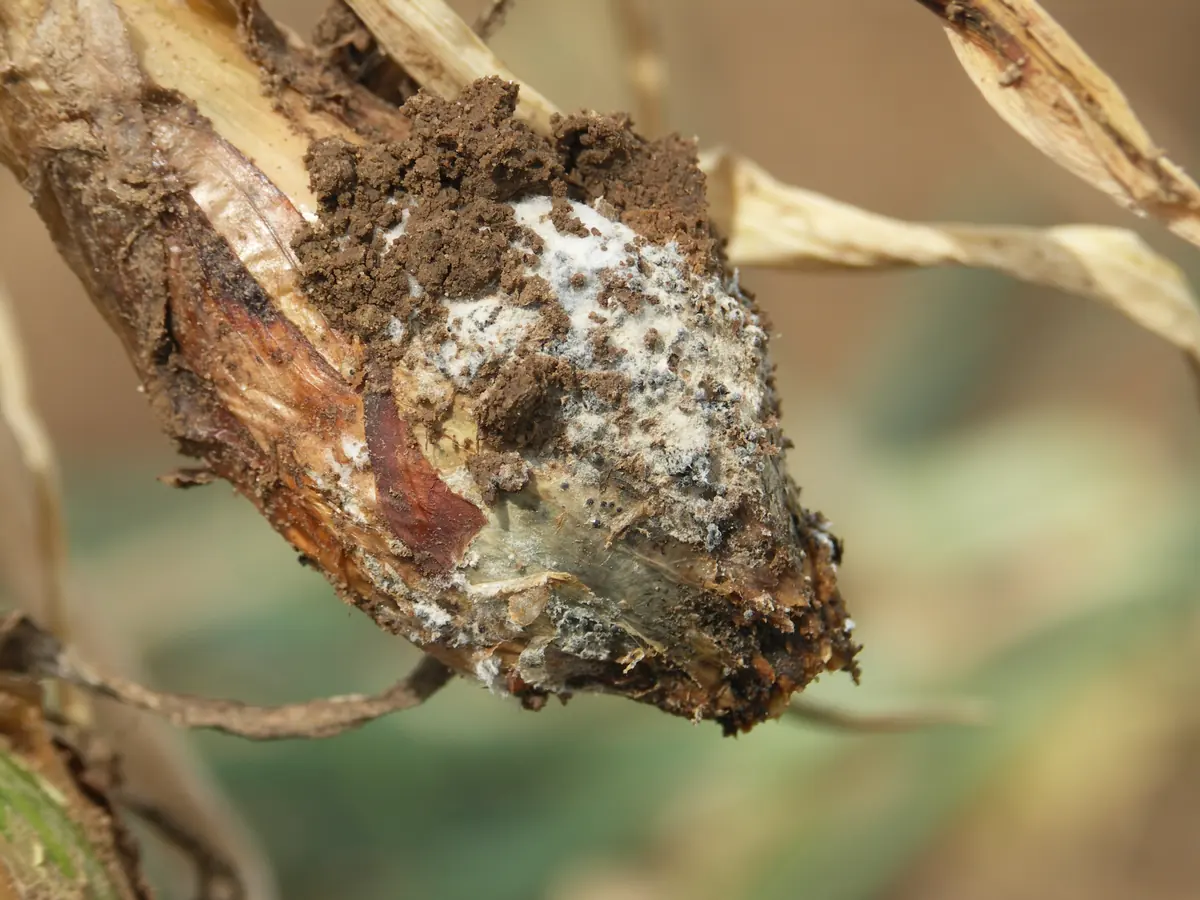
- The base of the bulb or clove is covered in a fluffy white mould that looks like cotton wool.
- Within the white mould you can see tiny round black specks the size of a poppy seed, which are the sclerotia that carry the disease over in soil.
- The bulb becomes soft and watery and rots completely, and garlic cloves turn grey and collapse inside the papery skin.
_-_Elizabeth_Bush.jpg)
What it is often confused with
Fusarium basal rot
Fusarium basal rot also yellows onion and garlic leaves and rots the base, but the mould is pinkish or pale and there are no black poppy seed sclerotia. It is worse in warm soil.
Sclerotinia
Sclerotinia also makes white cottony mould, but on lettuce, beans and many other crops, and its black sclerotia are much bigger, like mouse droppings. White rot sclerotia are tiny and only attack the onion family.
Thrips
Onion thrips make leaves silvery and streaked from the top down, but the roots and bulb stay healthy and the plant does not pull out easily.
When and where it is worst
White rot can occur in any Australian garden where onions and garlic have been grown, but it is most active in cool, moist soil. Victoria and Tasmania have the biggest problems in commercial crops, and Tasmanian researchers have studied it closely because it threatens the onion industry there. Home gardeners in Melbourne, Hobart, Canberra, Adelaide and the tablelands of NSW are most likely to meet it, usually from May to October while garlic and onions are growing.
The sclerotia lie dormant until they sense the roots of an onion family plant, then germinate and infect. They are spread in soil on tools, boots and wheelbarrows, in infected garlic cloves and onion sets, and in compost made from infected plants. Warm, dry soil above about 24 degrees slows the disease, which is why it often seems to stop in late spring.
Plants it affects
These plants in our library list it as a problem to watch for.
How to prevent it
- Buy garlic and onion sets from a reputable supplier, and never plant cloves from supermarket garlic or from a crop that had rotted bulbs.
- Rotate onion family crops so that onions, garlic, leeks, shallots and spring onions do not return to a bed for at least four years, although this will not clear a heavy infestation.
- Do not move soil, potted plants or compost from a garden known to have white rot into your own beds.
- Clean soil off tools, boots and wheelbarrow tyres before moving from an infected bed to a clean one.
- If you share plants with friends, give them seed or clean bulbs rather than divisions of chives or spring onions with soil on the roots.
Organic control, step by step
- Dig out affected plants carefully with the soil around the roots, bag them and put them in the rubbish bin, never in the compost or green waste.
- Mark the infected bed and stop growing onion family crops there, then grow them in pots of fresh potting mix or in a raised bed filled with new soil instead.
- Solarise small infected beds in the hottest part of summer by watering them and covering them with clear plastic for six to eight weeks, which kills some of the sclerotia near the surface.
- Grow other crops such as brassicas, lettuce, beans and tomatoes in the infected bed, as they are not affected by white rot.
Conventional control
- No fungicide is registered for home garden use against white rot in Australia. Commercial onion growers use tebuconazole applied at planting, but this is not a home garden use and does not clean the soil.
- Because there is no chemical fix, hygiene, clean planting material and keeping onion family crops out of infected beds are the only reliable control.
- If you use any garden fungicide on onion family crops, always read the label, check that your crop is listed, and keep to the withholding period.
Frequently asked questions
How long does white rot stay in the soil?
The sclerotia can stay alive for 20 years or more without any onion family plants nearby. In practice, a bed with white rot should be treated as lost for onions, garlic and leeks for a very long time.
Can I eat garlic from a plant with white rot?
Bulbs that are firm and clean are safe to eat, but use them soon, as they will not store well. Never replant those cloves, because they can carry the fungus into another bed.
Are chives and spring onions affected too?
Yes. White rot attacks the whole onion family, including chives, spring onions, leeks and shallots, so all of them need to stay out of an infected bed.
Related problems
Sources: Tasmanian Institute of Agriculture (University of Tasmania), Modelling onion white rot in Tasmania; AUSVEG VIC, Onion white rot; UC IPM, Onion and garlic white rot. Identification and control follow these sources. Always read the product label before use.