Sclerotinia: identify, prevent, control
Updated October 2026
Worst in cool to mild, moist weather from 15 to 20°C, in autumn, winter and spring across southern Australia and in winter crops in Queensland.
Sclerotinia is a soil fungus that causes lettuce drop, white mould and stem rots in hundreds of plants, including lettuce, celeriac, celery, Jerusalem artichokes, beans, carrots and brassicas. It survives in the soil as hard black sclerotia that look like rat droppings and can last for several years. Plants usually collapse suddenly, and the fungus can keep rotting harvested vegetables in storage.
Sclerotinia sclerotiorum and Sclerotinia minor

How to identify it
- Outer lettuce leaves wilt and lie flat on the ground, then the whole head collapses within a few days, which is why it is called lettuce drop.
- The base of the stem and the undersides of the lowest leaves are soft, watery and light brown.
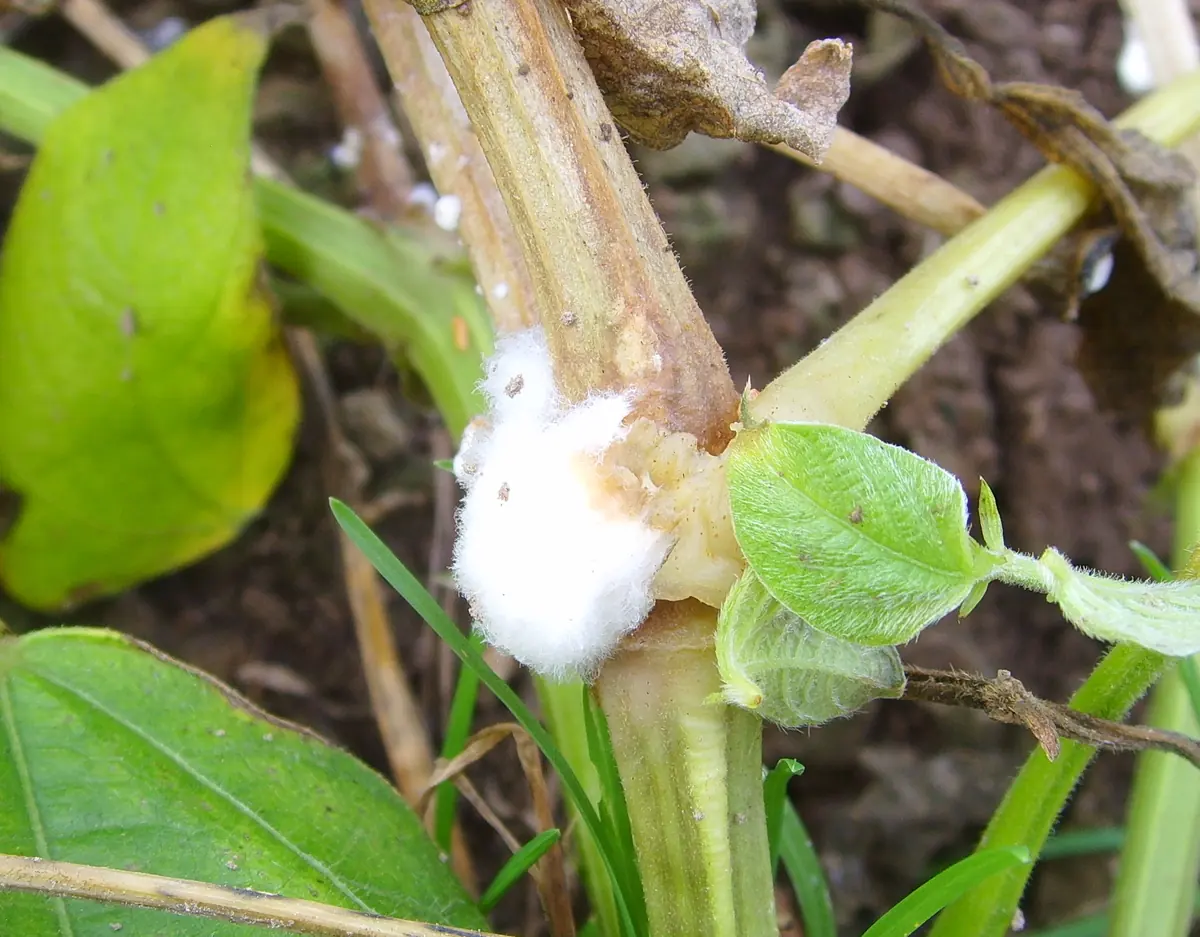
- A dense, fluffy, white cotton-like mould grows over the rotted tissue in humid weather.
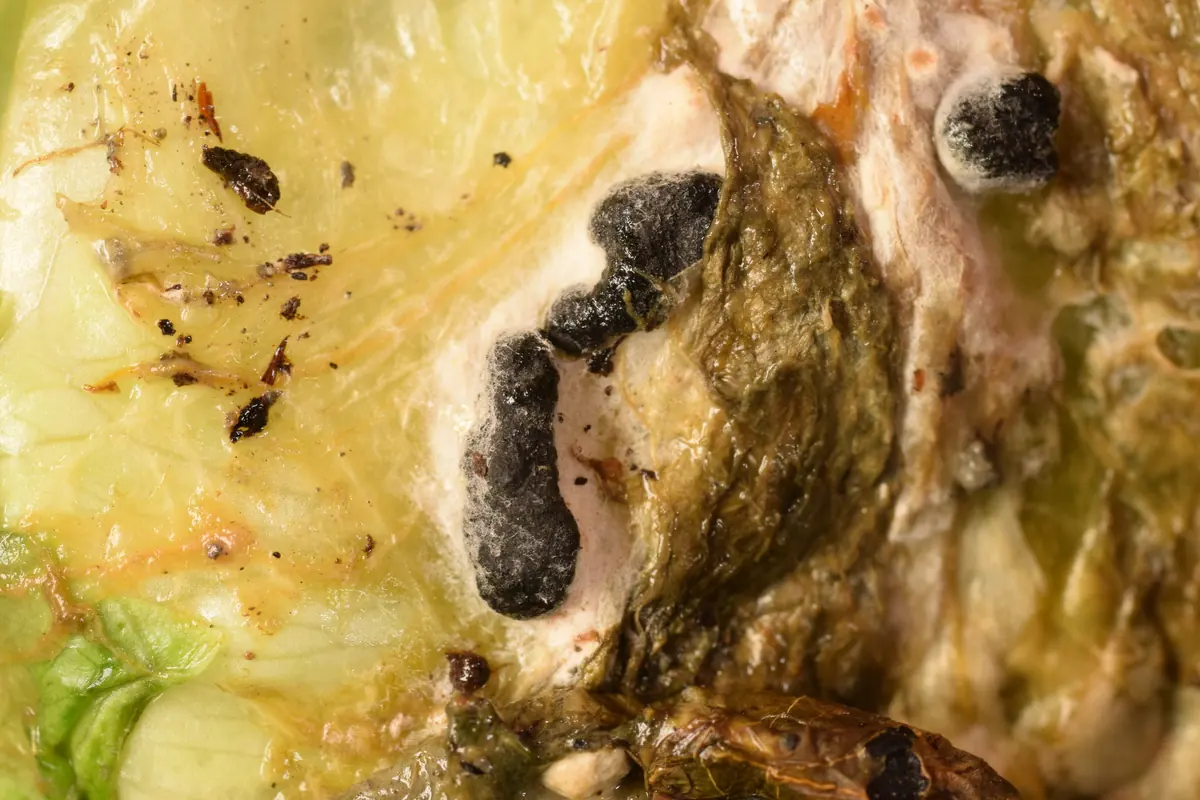
- Hard black sclerotia form in the white mould: up to 1 cm long and irregular for Sclerotinia sclerotiorum, or small and grainy, 1 to 2 mm, for Sclerotinia minor.
- On Jerusalem artichokes and celeriac, stems develop pale, bleached patches near the soil that girdle the stem, and the tops wilt and fall over, with sclerotia inside hollow stems.
What it is often confused with
Botrytis
Botrytis grey mould is fuzzy grey-brown and dusty, rather than pure white and cottony, and its sclerotia are tiny and flat.
White rot
White rot of onions and garlic makes white mould with tiny poppy-seed sclerotia and only attacks the onion family.
Crown rot
Phytophthora crown rot causes a dark rot at the base without white mould or black sclerotia.
When and where it is worst
Sclerotinia is found in vegetable gardens across Australia and is a major lettuce disease in the Lockyer Valley, the Sydney basin, Victoria and Tasmania, where growers have reported losses of 20 to 70 percent. It is favoured by mild temperatures and long periods of wet soil and leaves, so it is worst in autumn, winter and spring in the south, and in the winter growing season in South East Queensland.
Sclerotia near the soil surface either infect roots and stems directly or produce small tan mushroom-like cups that release airborne spores, which land on dying flowers and leaves. Dense plantings, heavy watering and old plant debris all help it build up.
Plants it affects
These plants in our library list it as a problem to watch for.
How to prevent it
- Space lettuce and celeriac widely so the soil surface and lower leaves dry quickly after rain or watering.
- Water in the morning, at the base of the plants, and avoid keeping the soil constantly wet.
- Rotate lettuce, celeriac and beans with sweet corn, onions or grasses, which are not hosts, for at least three years in beds where Sclerotinia has appeared.
- Plant into raised beds or ridges so lower leaves sit off wet soil.
- Remove infected plants with their sclerotia before the black bodies fall into the soil.
- Do not add infected plants to the compost, because sclerotia can survive a home compost heap.
Organic control, step by step
- Pull out collapsed lettuces and wilted stems promptly, place them straight into a bag and put them in the rubbish bin.
- Pick up any sclerotia you can see on the soil surface around affected plants.
- Remove old, yellowing lower leaves so the fungus has less dying tissue to colonise.
- Solarise a badly affected bed under clear plastic during the hottest weeks of summer to kill sclerotia near the surface.
Conventional control
- We could not find a home garden fungicide in Australia registered for Sclerotinia on lettuce, celeriac or Jerusalem artichokes; commercial growers use products that are not sold for home use.
- Manage the disease with spacing, rotation and hygiene, and read the label of any product to check the crop is listed and to keep to the withholding period.
Frequently asked questions
What are the black things in the white mould?
They are sclerotia, hard resting bodies of the fungus. They can survive in soil for several years and start new infections, so remove them with the plant.
Can I eat a lettuce that has just started to drop?
The rotted parts should be discarded, but firm, clean inner leaves can be eaten if you harvest straight away. Do not store affected heads, because the rot keeps spreading.
Why do my Jerusalem artichoke stems fall over in autumn?
Sclerotinia often girdles the stems near the ground in wet autumn weather. Split a fallen stem and look for white mould and black sclerotia inside.
Related problems
Sources: Australasian Plant Pathology, Lettuce drop caused by Sclerotinia minor in Australia (Springer); AUSVEG, Development of biological controls for Sclerotinia diseases of horticultural crops in Australia; DPIRD Western Australia, Journal of Agriculture, Sclerotinia rot of vegetables. Identification and control follow these sources. Always read the product label before use.