Thrips: identify, prevent, control
Updated June 2026
Worst in warm, dry weather through spring and summer, September to February.
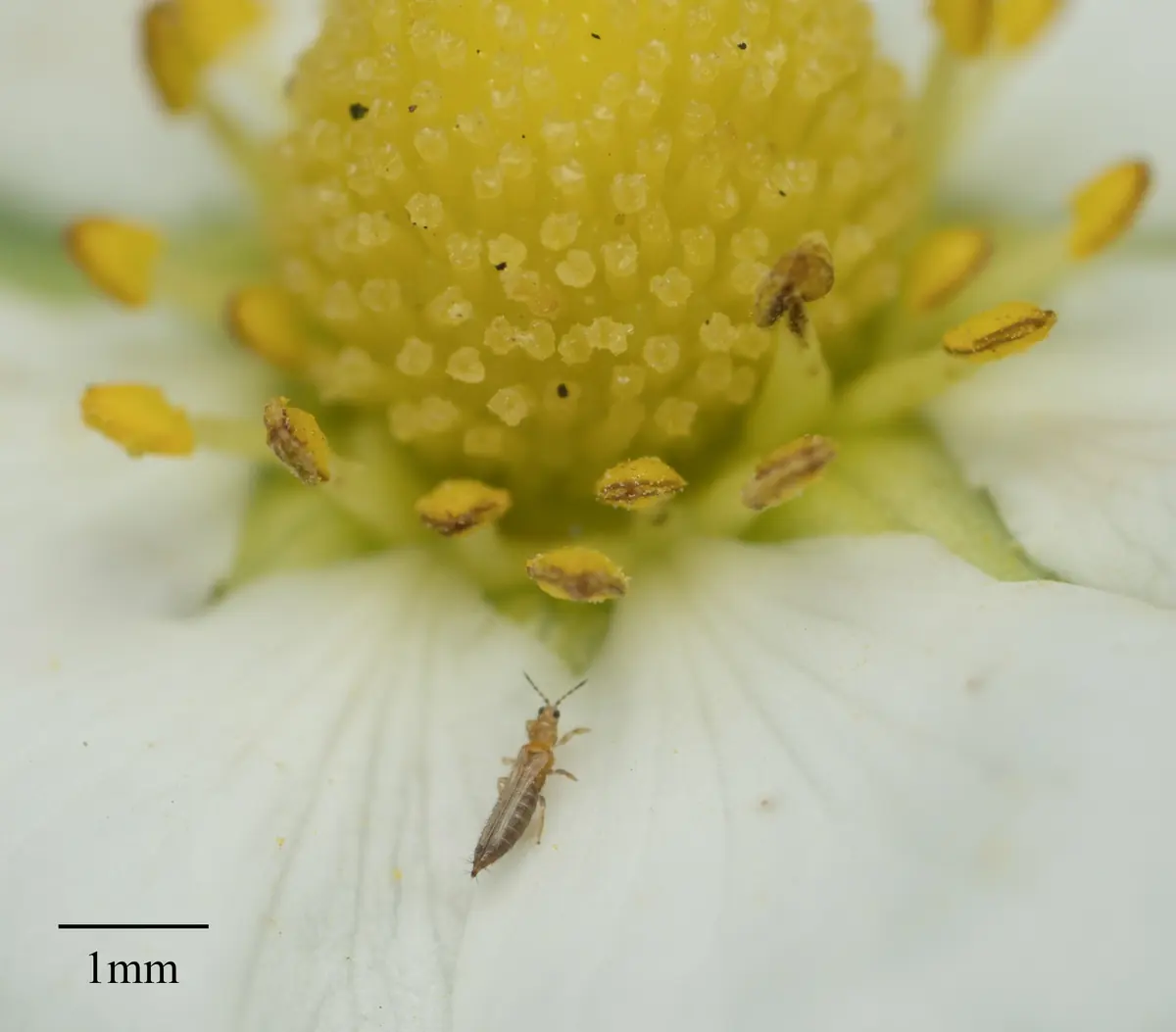
Thrips are slender sap-sucking insects barely a couple of millimetres long that rasp at leaves, flowers and fruit. They silver and distort foliage, scar fruit and spread viruses like tomato spotted wilt, so they punch well above their tiny size.
How to identify it
- Silvery or pale streaking and stippling on leaves and petals
- Tiny black flecks of droppings on damaged surfaces
- Distorted new growth and flowers that fail to open properly
- Slender pale or dark insects that scatter when you blow on a flower
How to prevent it
- Keep plants well watered, since thrips thrive on stressed plants in dry heat
- Clear weeds and old crop debris that harbour thrips
- Hang blue or yellow sticky traps to monitor numbers early
- Encourage predatory mites, lacewings and pirate bugs by avoiding harsh sprays
Organic control, step by step
- Hose plants down to dislodge thrips and raise humidity
- Spray eco-oil or eco-neem, targeting flowers and new growth where thrips hide
- Repeat sprays every 5 to 7 days, as thrips breed quickly in warm weather
- Use blue sticky traps among flowers to catch adults
- Remove badly distorted growth and spent flowers
- Release predatory mites in greenhouses for ongoing control
Plants it attacks
Track it in the app. The free Planting Season planner lists the pests and diseases to watch for on every plant in your garden, tuned to your region.