Root rot: identify, prevent, control
Updated June 2026
Worst in warm, waterlogged conditions after heavy summer rain, December to April, and any time soil stays wet.
Root rot covers a group of soil fungi, including Phytophthora and Pythium, that rot roots in wet, poorly drained soil. Plants wilt and decline despite moist soil, and once roots are destroyed there is no cure, so the answer lies in drainage and prevention.
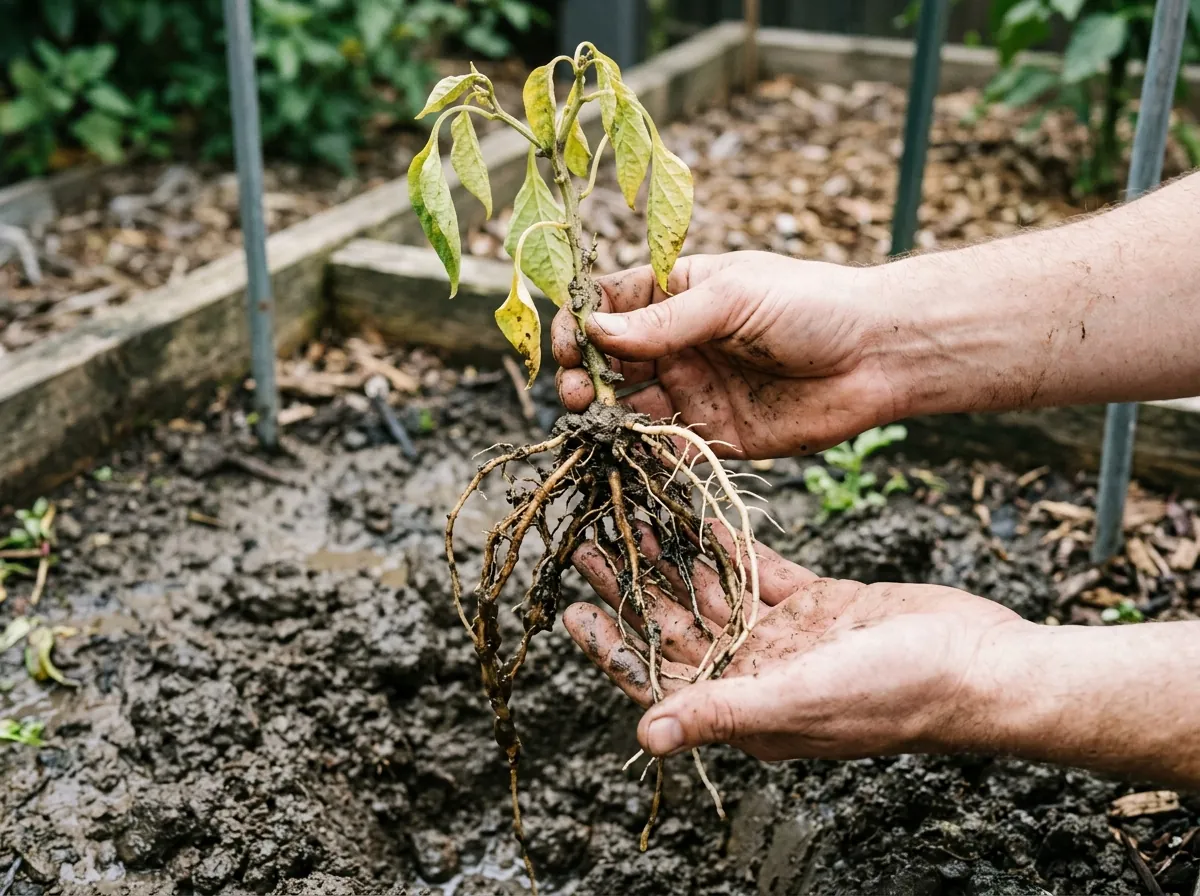
How to identify it
- Wilting and yellowing even though the soil is wet
- Stunted growth and dieback that worsens over weeks
- Brown, mushy, blackened roots instead of firm white ones
- Plants that pull up easily with little healthy root left
How to prevent it
- Improve drainage and grow in raised beds or mounds on heavy soils
- Avoid overwatering and let the surface dry between waterings
- Add compost to build soil structure and beneficial microbes
- Never plant into waterlogged ground and rotate susceptible crops
Organic control, step by step
- Remove and dispose of affected plants, including the rotted roots
- Improve drainage immediately by forking the bed or switching to raised beds
- Cut back watering to let the soil recover
- Drench remaining plants with a beneficial Trichoderma soil inoculant to outcompete the rot
- Add compost to boost soil life that suppresses the fungi
- Avoid replanting susceptible crops in the same spot for a few seasons
Plants it attacks
RosemaryThymeTarragonMarjoramBlueberryKiwifruitBlackberrySweet PeaOreganoCurry LeafLemon VerbenaBay LaurelMandarinCustard AppleBoysenberry
Track it in the app. The free Planting Season planner lists the pests and diseases to watch for on every plant in your garden, tuned to your region.