How to Grow Kale in Australia
Updated June 2026
Year-round greens, variety picks, and planting calendars for every region
Kale is one of the hardiest vegetables you can grow. It handles frost, heat, and neglect better than most plants in the garden. A single plant produces leaves for 6 to 12 months, making it one of the best value crops for home gardeners.
Flavour improves after cold nights. The plant converts starch to sugar as a natural antifreeze response, so winter-harvested kale is noticeably sweeter than summer-picked leaves. This guide covers the best varieties for Australian gardens, planting times for every region, and how to keep plants producing for as long as possible.
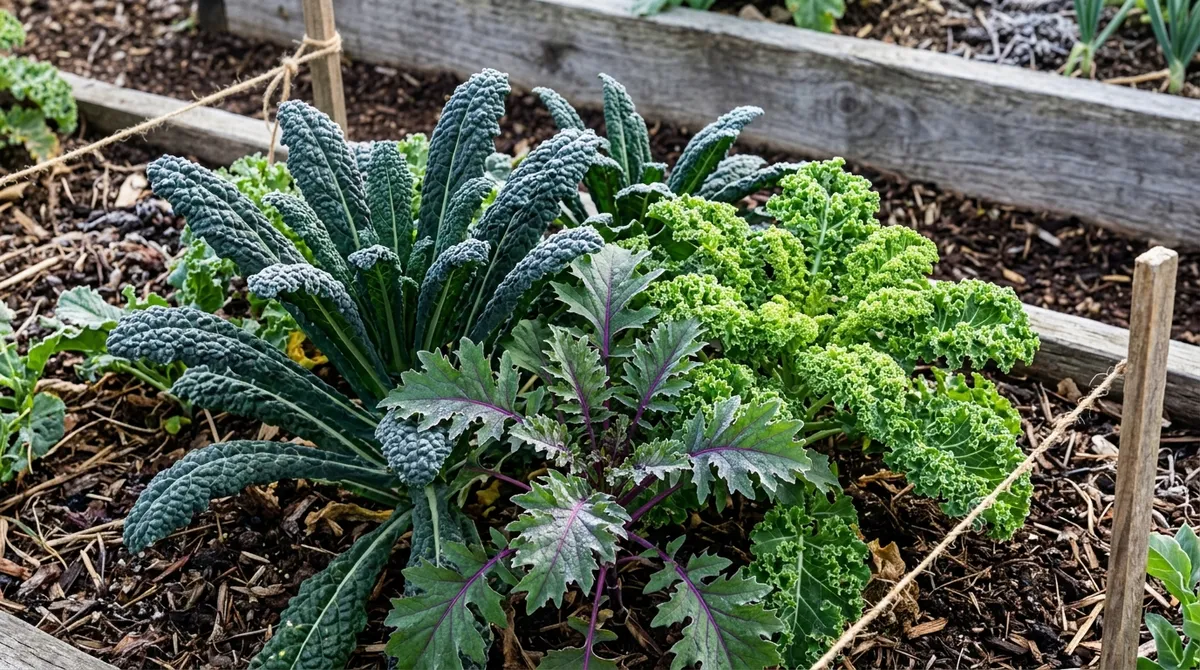
What it looks like as it grows


🌱 Plant profile: Kale, with sowing times for your region, companion plants and common pests.
When to Plant in Your Region
Best Varieties
Tuscan (Cavolo Nero)
Long dark green leaves with a bumpy texture. The classic Italian kale. Sweeter and more tender than curly types. Beautiful in the garden.
Curly Green
Tightly ruffled bright green leaves. Hardy and productive. The most common kale at nurseries and supermarkets. Good raw in salads or cooked.
Red Russian
Flat grey-green leaves with purple veins and stems. Tender texture, mild sweet flavour. One of the best varieties for eating raw. Colour intensifies in cold weather.
Siberian
Extremely cold-hardy variety with large flat blue-green leaves. Milder flavour than curly types. Tolerates heat better than most kale varieties. Good for warmer regions.
Planting
Kale can be direct sown or transplanted. Direct sowing is the easiest approach. Sow seeds 1 cm deep and thin seedlings to 40 cm spacing once they have a few true leaves. Transplanting gives you a head start and is useful if you want to fill gaps in the garden quickly.
- Space plants 40 cm apart in rows or staggered in beds
- Full sun to part shade. Kale handles partial shade better than most vegetables
- Any reasonable soil works. Kale tolerates poor conditions better than most brassicas
- Add compost at planting for best results, but kale will grow in soil that would defeat other crops
- Firm soil around seedlings well. Brassicas like solid contact with the soil
Growing
Kale needs minimal fuss once established. Water during dry spells, but established plants are surprisingly drought-tolerant. Consistent moisture produces the best-quality leaves, so mulch around plants to keep the soil cool and moist.
- Side-dress with nitrogen fertiliser every 4 to 6 weeks for continuous leaf production
- Mulch to keep soil cool and retain moisture
- Remove any yellowing lower leaves to improve air circulation
- Kale is frost-hardy. No need to protect plants in winter
- Plants can reach 60 to 90 cm tall. Give them room to grow upward
Harvesting
Pick outer leaves first and leave the growing tip and inner leaves intact. The plant keeps producing new leaves from the centre, giving you a continuous harvest over many months.
Young leaves are more tender and milder in flavour. Pick them at 15 to 20 cm long for salads, or let them grow larger for cooking. A single plant can produce for 6 to 12 months before it bolts and goes to seed.
- Start harvesting once plants have 8 to 10 leaves
- Take no more than a third of the leaves at any one time
- Use a sharp knife or snap leaves off at the stem
- Kale stores well in the fridge for up to a week in a damp cloth or bag
- Leaves can be blanched and frozen for long-term storage
Kale in Warm Regions
Kale grows year-round in most Australian regions. It is tougher and more adaptable than people expect. In subtropical areas, avoid midsummer planting as leaves become tough and bitter in extreme heat. The best results in warm climates come from autumn, winter, and spring plantings.
Siberian and Red Russian handle heat best. These varieties have flatter, thinner leaves that cope better with warm conditions than the thick, curly types. Partial shade during the hottest part of the day also helps in northern regions.
Common Problems
Cabbage moth
White butterfly caterpillars are the main pest. The adult white butterflies lay eggs on the undersides of leaves, and the green caterpillars chew holes through the foliage. Handpick caterpillars regularly and check the undersides of leaves for clusters of yellow eggs. Fine mesh netting over plants is the most effective prevention.
Aphids
Grey-green clusters on new growth, especially in spring and autumn. A strong spray of water knocks most aphids off. Ladybirds are natural predators and will clean up moderate infestations if you avoid using broad-spectrum sprays.
Whitefly
Tiny white insects on the undersides of leaves that fly up in a cloud when disturbed. Yellow sticky traps placed near plants catch adults. Avoid over-fertilising with nitrogen, as lush soft growth attracts whitefly.
Frequently Asked Questions
Can I grow kale year-round in Australia?
Yes, in most regions kale grows year-round. It handles frost, heat, and poor soil better than most vegetables. In subtropical areas, avoid planting in midsummer as leaves become tough and bitter. Everywhere else, sow successionally for a continuous supply.
Does kale grow back after cutting?
Yes. Pick the outer leaves and leave the growing tip and inner leaves intact. The plant keeps producing new leaves from the centre. A single kale plant can produce harvests for 6 to 12 months before it bolts and goes to seed.
Is kale easy to grow?
Kale is one of the easiest vegetables to grow. It tolerates frost, heat, poor soil, and irregular watering better than most brassicas. It has fewer pest problems than cabbage or broccoli. Direct sow seeds or transplant seedlings, give them reasonable soil, and they will produce for months.
How do I make kale less bitter?
Harvest younger, smaller leaves. They are more tender and less bitter than large mature leaves. Frost and cold nights also reduce bitterness because the plant converts starch to sugar. Massaging raw leaves with olive oil and salt breaks down the tough cell walls and mellows the flavour.
See also: Kale in the Plant Library
Plant profile
The kale profile has sowing times for your region, companion plants and common pests.