
When to Plant Cucumbers in Australia and Companion Planting
Updated October 2026
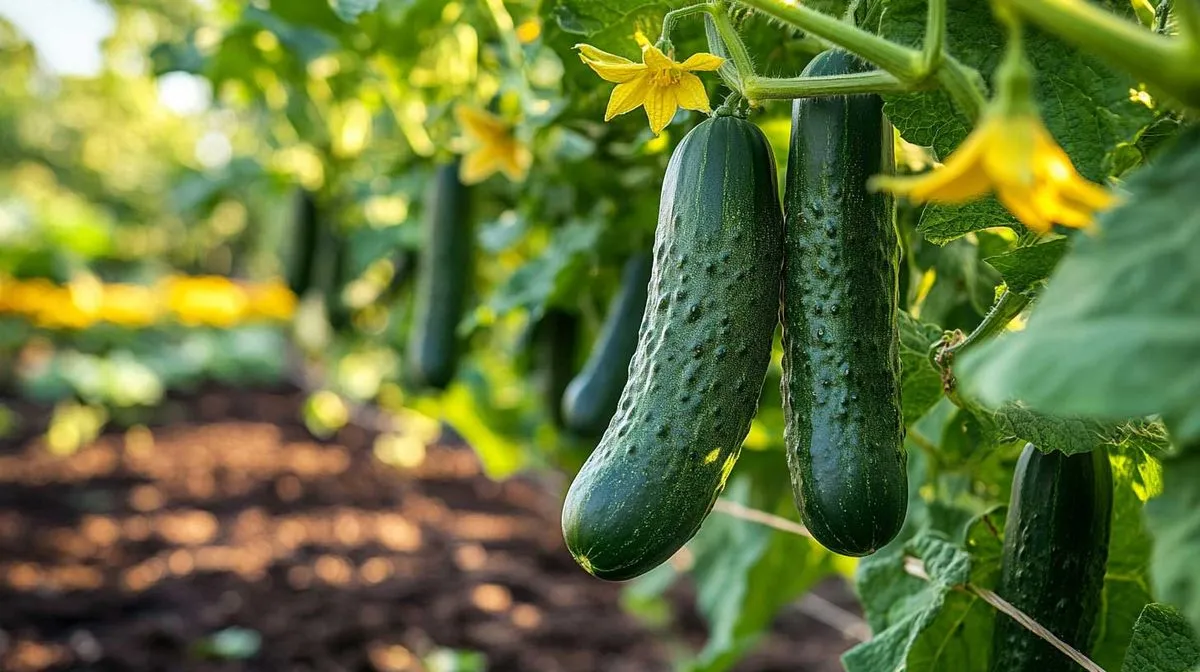
Trellis vs bush growing, the best varieties, and watering for sweet, crisp fruit
Cucumbers are a fast, generous summer crop. Give them warmth, steady water, and something to climb and a single healthy plant will out-produce most families. They are easy once the soil is warm, and the few things that go wrong all come back to the same handful of causes.
This guide covers position and soil, sowing, the right spacing for trellised and bush types, watering for sweet fruit, pollination, the common problems, and harvest. Start with the spacing and trellis calculator to plan your bed.
Spacing & trellis calculator
Enter your bed or row length and pick a cucumber type. The calculator works out how many plants fit at the correct spacing and recommends a support.
What it looks like as it grows


🌱 Plant profile: Cucumber, with sowing times for your region, companion plants and common pests.
Position & soil
Cucumbers want full sun, at least six hours a day, and shelter from strong wind. They are hungry and thirsty, so dig in plenty of compost or aged manure before planting. Aim for free-draining soil rich in organic matter with a pH around 6.0 to 7.0. In very hot inland regions, a little afternoon shade through the worst of summer keeps the plants from stalling.
Sowing & planting
Cucumbers hate cold soil. Wait until the soil has warmed to at least 18 degrees, and ideally 20 degrees or more, which is usually a few weeks after the last frost. You have two options:
- Direct sow: the simplest method. Push seeds about 2 cm deep straight into warm, prepared soil. They dislike root disturbance, so direct sowing avoids transplant shock.
- Raise seedlings: in cooler regions, start seeds in pots indoors or in a glasshouse three to four weeks before your planting window, then plant out gently once the soil is warm. Use larger cells so you barely disturb the roots.
Seeds germinate in about seven to ten days in warm soil. Most varieties are picking-ready in eight to ten weeks.
Spacing & support
Spacing depends on the type. Trellised vining cucumbers grow up, so they sit closer together, about 30 to 45 cm apart in a row. Bush types sprawl sideways and need about 45 to 60 cm. Use the calculator above to match your bed.
Vining types crop better on a trellis. A panel of wire mesh or netting 1.5 to 2 metres tall is plenty. Cucumbers climb with tendrils and grab any thin support. Trellising keeps fruit clean and straight, improves airflow to hold powdery mildew at bay, and saves ground space. If you grow on the ground instead, mulch heavily so fruit sits on straw rather than bare soil.
Watering & feeding
Even moisture is the single biggest factor in sweet fruit. Cucumbers are mostly water, and any check from drying out and then flooding shows up as bitterness and misshapen fruit. Water deeply every two to three days in summer, more in heat, and mulch heavily to even out soil moisture. Water at the base in the morning so leaves dry quickly.
Feed fortnightly with a liquid fertiliser once flowering starts. Hungry plants slow down and produce bitter fruit, so keep them fed right through the harvest.
Pollination
Most cucumbers carry separate male and female flowers on the same plant. Bees move pollen between them, and the female flowers are the ones with a tiny cucumber behind the bloom. Early on, plants often throw mostly male flowers, so be patient before assuming a problem.
If bees are scarce, hand pollinate by brushing pollen from a male flower into the centre of a female flower with a small soft brush. Some modern varieties are all-female or parthenocarpic, meaning they set fruit without pollination, which is handy in a glasshouse or where pollinators are few.
Companion Planting Cucumbers
Our companion data pairs cucumbers with beans, sweet corn, sunflowers, radish, nasturtium and marigold, and the pairing works both ways: the bean, pea, sweet corn, sunflower and peanut entries in our plant data list cucumber as a good companion too. Keep cucumbers away from potatoes, sage and strongly aromatic herbs.
- Marigold and nasturtium draw in pollinators. Cucumbers need insect pollination to set fruit, and our plant notes recommend pollinator-attracting flowers nearby for reliable harvests.
- Sunflowers provide shade for heat-sensitive crops, which suits cucumbers in very hot inland gardens, where a little afternoon shade through the worst of summer keeps the plants from stalling.
- Beans and peas fix nitrogen in the soil, and our data lists them as good neighbours for cucumber in both directions.
- Sweet corn and radish complete the list. Corn is the classic summer partner, and radish is a quick crop that pairs with cucumber in our data.
Potatoes are the main plant to keep apart, and that pairing is listed in both directions. Sage and other strongly aromatic herbs are best grown in another bed. The companion planting chart has the pairings for every common vegetable and herb.
Common problems
Powdery mildew
A white powdery coating on leaves, usually mid to late season. Improve airflow with a trellis, water at soil level, and treat early with a milk spray of one part milk to nine parts water. Remove badly affected leaves.
Bitter fruit
Caused by stress, mostly inconsistent watering, heat, or under-feeding. Keep water steady, mulch, feed regularly, and pick young. If a fruit is bitter, peel it from the blossom end toward the stem, where bitterness concentrates.
Blossom end and misshapen fruit
Fruit that shrivels at the tip or curves usually points to patchy watering or poor pollination. Steady moisture and good bee activity fix most of it.
Pumpkin beetle and aphids
Spotted pumpkin beetles chew flowers and young leaves, and aphids cluster on soft growth. Squash beetles by hand in the morning, hose off aphids or treat with soapy water, and encourage ladybirds. See our pest and disease guide for organic control.
Harvest
Pick young and pick often. Cucumbers are at their best while still firm and before the skin dulls. Leaving oversized fruit on the vine turns it seedy and bitter and tells the plant to stop producing. Harvesting every day or two at peak keeps the crop coming for weeks.
Best cucumber varieties for Australia
| Variety | Type | Notes |
|---|---|---|
| Lebanese | Vining | The most popular home cucumber. Short, thin-skinned, never bitter, and a prolific early cropper. Best on a trellis. |
| Apple (Crystal Apple) | Vining | Round, pale heirloom with crisp, mild flesh. Very productive and sets well even in dry spells. |
| Telegraph (Burpless) | Vining | Long, dark, thin-skinned slicer. Grows straight on a trellis and is easy to digest. Good disease resistance. |
| Marketmore | Vining | Reliable, smooth slicer with strong mildew resistance. A dependable all-rounder for most regions. |
| Spacemaster | Bush | Compact bush bred for small spaces and pots. Vines stay under a metre yet carry full-sized fruit. |
When to Plant Cucumbers in Your Region
Cucumbers are a warm-season crop, so timing follows the southern hemisphere calendar and your climate:
- Temperate (Sydney, Melbourne, Adelaide, Perth): Sydney sows from September to February, Adelaide from September to January, Melbourne from October to December, and Perth from August to October, because cucumbers fail in the extreme heat of a Perth January and February.
- Subtropical (Brisbane, northern NSW): South East Queensland sows from August to March and the Northern Rivers from September to March, avoiding the wettest peak of summer.
- Tropical (Darwin, far north Queensland): grow through the dry season, from March to August in North Queensland and April to August in Darwin.
- Cool and highland (Tasmania, Canberra, alpine areas): Tasmania sows from October to December, and a greenhouse or warm wall makes a big difference. Canberra sows in November and December, after the last frost in early November.
Cucumber sowing months in every region
Cucumbers are sown into warm soil in spring and summer in the south and in the dry season in the tropics. These are the sowing months for each region from our planting data. Each region links to its full vegetable planting calendar, and the Cucumber plant page has spacing, companions and care notes for your region.
| Region | Sow seed | Local note |
|---|---|---|
| South East Queensland | August to March | Sow Aug to Mar, avoiding the wettest weeks of summer. |
| Northern Rivers NSW | September to March | Sow Sep to Mar. Inland, wait out the last frost risk first. |
| Sydney & Coastal NSW | September to February | Sow Sep to Feb once the soil reaches 18°C, direct or in punnets. |
| Melbourne & Victoria | October to December | Sow direct or transplant Oct to Dec once soil warm. Frost-sensitive; no winter sow. Shorter season than SEQ. |
| Adelaide & SA | September to January | Sow Sep undercover, Oct to Dec direct. A Jan sowing gives an autumn crop. Afternoon shade and steady water through heatwaves. |
| Perth & WA | August to October | Sow Aug to Oct only. Cucumbers fail in the extreme January and February heat and need moderate warmth. |
| Tasmania | October to December | Sow Oct to Dec. The season is short, so a greenhouse or warm wall makes a big difference. |
| Canberra & ACT | November and December | Sow direct Nov to Dec after the last frost in early November. Frost kills; harvest before the April frosts. |
| North Queensland | March to August | Dry season Mar to Aug. Wet season humidity wrecks cucurbits with mildew; a winter crop here, not a summer one. |
| Darwin & Top End | April to August | Dry season only Apr to Aug. Cucurbits collapse with fungal disease in wet season humidity. Darwin harvest peaks Sep. |
Frequently Asked Questions
When should I plant cucumbers in Australia?
Cucumbers need warm soil, at least 18 degrees, to germinate well. South East Queensland sows from August to March, the Northern Rivers from September to March, Sydney from September to February, Adelaide from September to January, Melbourne and Tasmania from October to December, Perth from August to October and Canberra in November and December. In the tropics cucumbers are a dry season crop, sown from March to August in North Queensland and April to August in Darwin.
How far apart should I space cucumbers?
Trellised vining cucumbers go about 30 to 45 cm apart in a row. Bush types need about 45 to 60 cm because they sprawl sideways. Use the spacing and trellis calculator on this page to work out how many plants fit your bed.
Why are my cucumbers bitter?
Bitterness comes from stress, usually inconsistent watering, extreme heat, or hungry plants. Water deeply and evenly, mulch well, and feed fortnightly through the fruiting season for sweet fruit.
Do cucumbers need a trellis?
Vining types crop better on a trellis. It keeps fruit clean and straight, improves airflow to reduce powdery mildew, and saves space. Bush types like Spacemaster can sprawl on the ground or in a pot without support.
Why does my plant have flowers but no fruit?
Early plants make mostly male flowers. Female flowers, which have a tiny cucumber behind them, come a little later. If bees are scarce, hand pollinate by brushing pollen from a male flower into a female flower. All-female and parthenocarpic types set fruit without pollination.
Can I grow cucumbers in pots?
Yes. Use a pot of at least 30 litres, pick a bush variety such as Spacemaster, water daily in summer, and feed fortnightly with liquid fertiliser.
What is the best companion plant for cucumbers?
Our companion data pairs cucumbers with beans, sweet corn, sunflowers, radish, nasturtium and marigold. Marigold and nasturtium draw in the pollinators cucumbers need to set fruit, and beans, peas and sweet corn list cucumber as a good companion too.
What should you not plant near cucumbers?
Our companion data says to keep cucumbers away from potatoes, sage and strongly aromatic herbs. Potatoes and cucumbers are listed as poor companions in both directions.
When is it too late to plant cucumbers?
It depends on your region. Perth stops sowing at the end of October, Melbourne, Tasmania and Canberra at the end of December, Adelaide at the end of January, Sydney at the end of February, and South East Queensland and the Northern Rivers at the end of March. In the tropics, sow in the dry season rather than the wet.
How long do cucumbers take to grow?
Our plant data allows about 60 days from sowing to the first fruit, and seedlings appear in about 7 days in warm soil. Pick young and often, and a healthy vine gives 10 to 20 fruit.
See also: Cucumbers in the Plant Library
Plant profile
The cucumber profile has sowing times for your region, companion plants and common pests.