Planting Watermelon in Australia: When to Sow and How to Grow
Updated October 2026
Ripeness testing, variety picks, and planting calendars for every region
Watermelon is the ultimate summer crop. Nothing beats cracking open a sun-warmed melon you grew yourself. They need space, heat, and patience, but the growing itself is straightforward. If you can grow pumpkins, you can grow watermelons.
This guide covers the best varieties for Australian conditions, how to tell when a melon is actually ripe, pollination tips, and regional planting times.
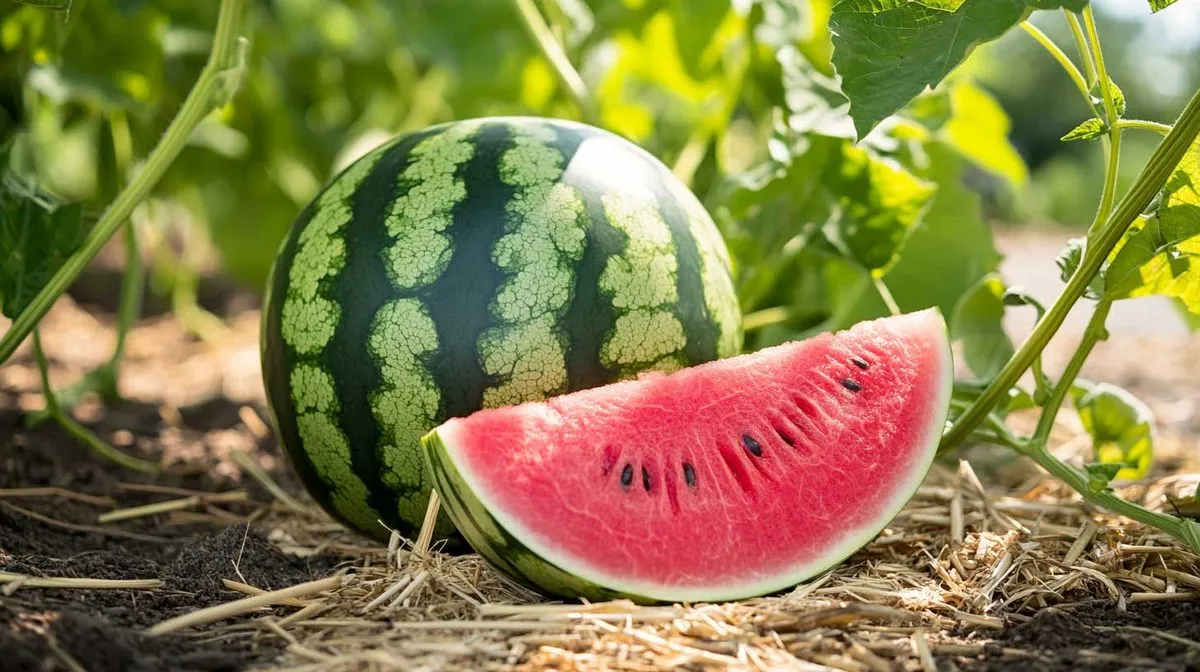
What it looks like as it grows


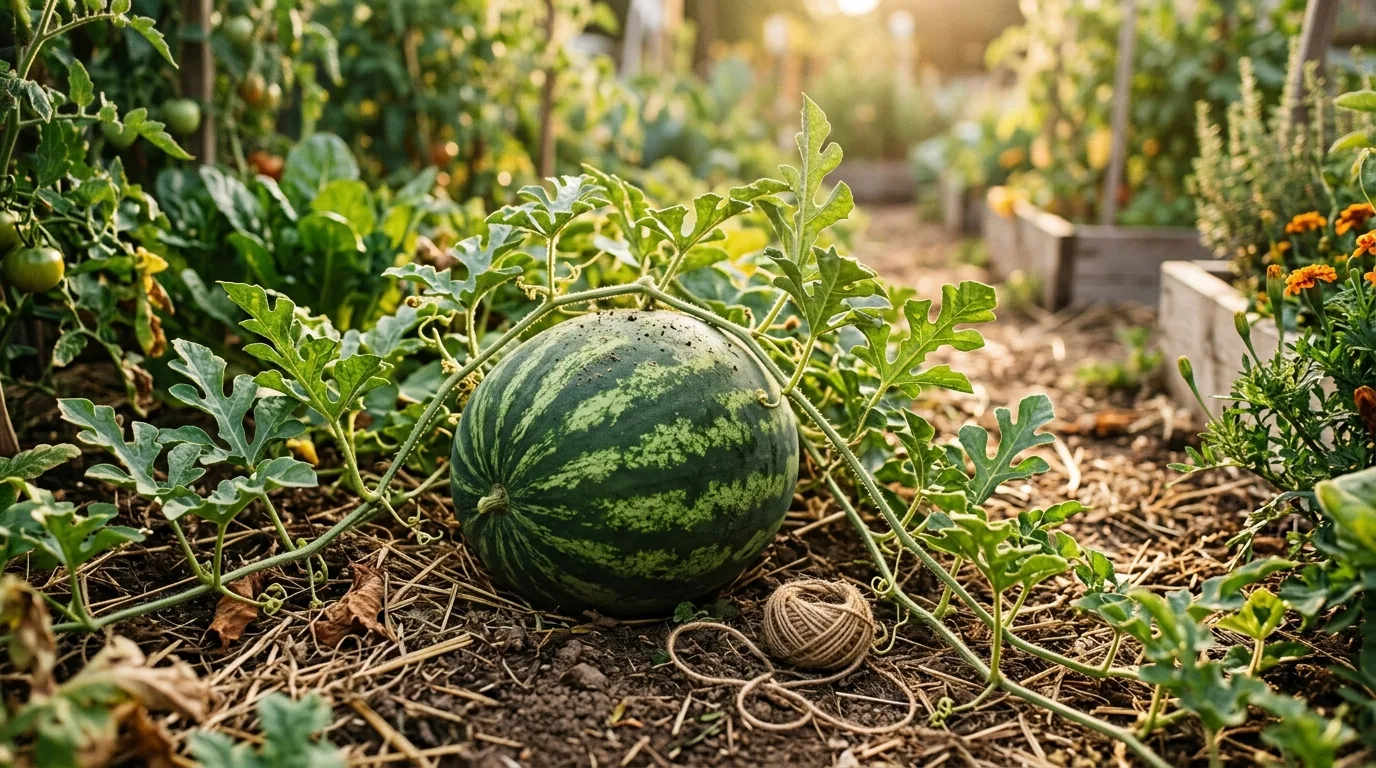
🌱 Plant profile: Watermelon, with sowing times for your region, companion plants and common pests.
When to Plant Watermelon in Your Region
Best Watermelon Varieties for Australia
Watermelon is a warm-season crop in the south and a dry season crop in the tropics. These are the sowing months for every region from our planting data. Each region links to its full vegetable planting calendar, and the Watermelon plant page has spacing, companions and care notes for your region.
| Region | Sow seed | Local note |
|---|---|---|
| South East Queensland | September to February | |
| Northern Rivers NSW | September to February | |
| Sydney & Coastal NSW | September to January | Spring planting (Sept+); start indoors late Aug; shorter season than SEQ. |
| Melbourne & Victoria | October to December | Sow Oct to Dec. Needs 100+ warm days, and Melbourne's short summer risks immature fruit before the May frost, so earlier sowings are safer. |
| Adelaide & SA | September to November | Sow Sep undercover or Oct to Nov direct into warm soil. Long hot summers ripen melons well with deep weekly watering. |
| Perth & WA | August to November | Sow Aug to Nov once soil passes 20C. The long dry summer ripens sweet fruit; too late after November to beat the heat deadline. |
| Tasmania | Not recommended outdoors | Unsuitable outdoors. Needs months of real heat that Tasmania does not get. Greenhouse novelty at best. |
| Canberra & ACT | November | Sow in November once the last frost has passed. Marginal short season; quick small fruited varieties only. |
| North Queensland | April to August | Dry season crop. Bowen and Gumlu melons are planted Apr to Aug for the national winter supply. Wet season planting fails. |
| Darwin & Top End | April to August | Dry season Apr to Aug. NT melons are a dry season signature crop harvested Sep to Oct. Fruit splits and rots in monsoon rain. |
Sugar Baby
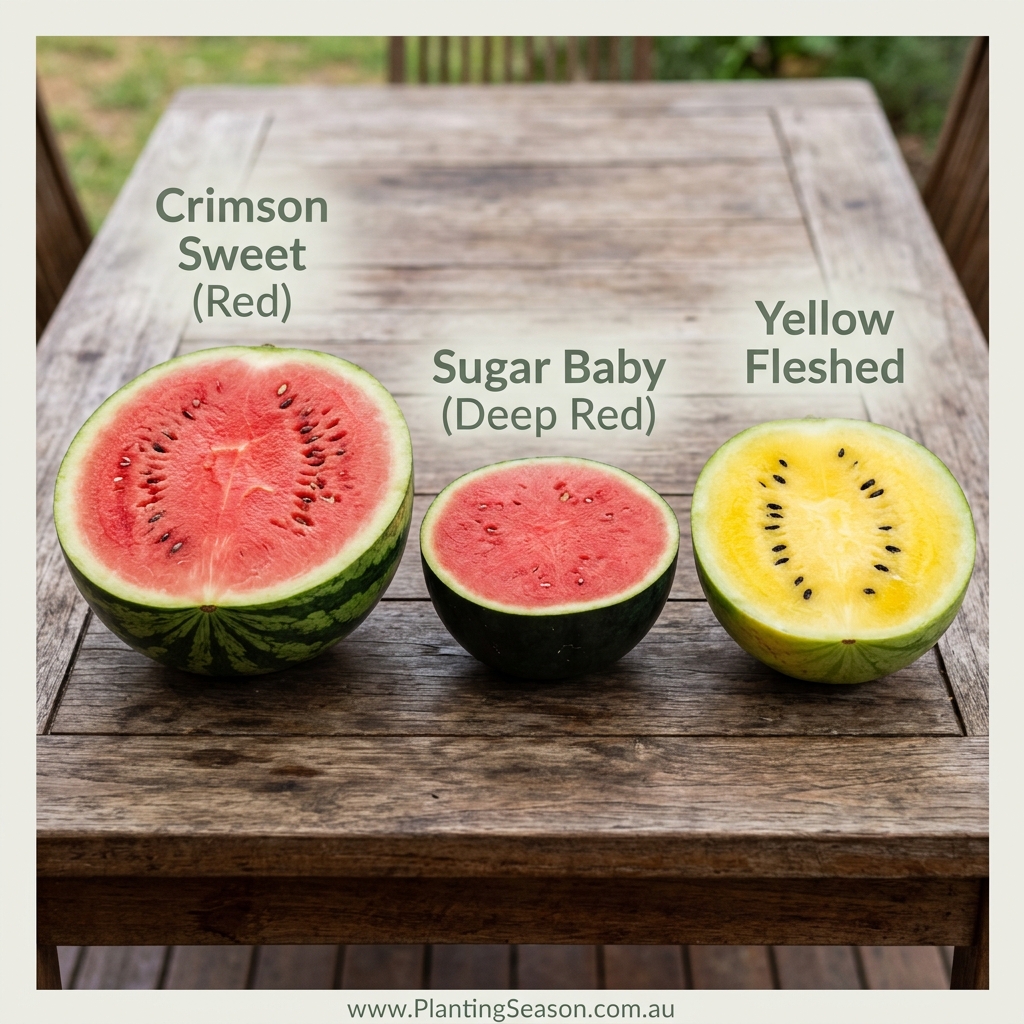
Compact variety producing round, dark-green melons weighing 3 to 5 kg. Sweet red flesh. The best choice for smaller gardens and cooler regions because it matures faster (10 to 12 weeks) than large varieties.
Crimson Sweet
Classic large watermelon with striped skin and deep red, sweet flesh. Fruit weigh 8 to 12 kg. Needs a long, hot season. Best in subtropical and tropical regions or warm-temperate areas with long summers.
Moon and Stars
Stunning heirloom with dark green skin splashed with yellow spots. Sweet, flavourful flesh. A heritage variety worth growing for its beauty alone. Medium-sized fruit around 6 to 8 kg.
Yellow Baby
Small, round melons with bright yellow flesh and a delicate, honey-sweet flavour. A surprise at the table. Compact vines suit smaller gardens. Matures in 10 to 12 weeks.
Charleston Grey
Large, elongated watermelon with pale grey-green skin. Thick rind resists cracking. Excellent for hot climates. Fruit can weigh 10 to 15 kg in good conditions. One of the best varieties for tropical regions.
Ripeness Testing
Knowing when a watermelon is ripe is the trickiest part. Once picked, they do not ripen further. Here are the reliable tests:
- Ground spot: The patch where the melon rests on the ground should be creamy yellow, not white or pale green
- Tendril test: The curly tendril nearest the fruit stem dries out and turns brown when the melon is ripe
- Thump test: A ripe melon sounds hollow when tapped. An unripe one sounds dull and solid
- Skin texture: The skin loses its shine and becomes slightly dull when ripe
Pollination
Watermelons have separate male and female flowers on the same vine. Male flowers appear first. Female flowers have a tiny melon shape behind the petals. Bees do most of the pollination work.
If fruit is not setting, pollination may be poor. Hand-pollinate in the morning by picking a male flower, removing the petals, and rubbing the pollen onto the centre of a female flower. Each female flower is only receptive for one day.
How to Plant Watermelon
Planting watermelon is straightforward once the soil is warm. Our plant data gives a germination temperature of 22 to 32°C, and seedlings appear in about 8 days in that warmth. Seed sown into cold soil sits and rots, so wait until your region's window opens. In cooler regions, starting seed indoors a few weeks early, as our Sydney notes suggest from late August, gives the plants a head start.
- Prepare a mound. Watermelons need excellent drainage. Build mounds of compost-enriched soil about 30 cm high and 1 metre across. Space mounds 2 to 3 metres apart.
- Sow 2 to 3 seeds per mound. Plant seeds 2 cm deep. Thin to the strongest seedling once they have 2 true leaves.
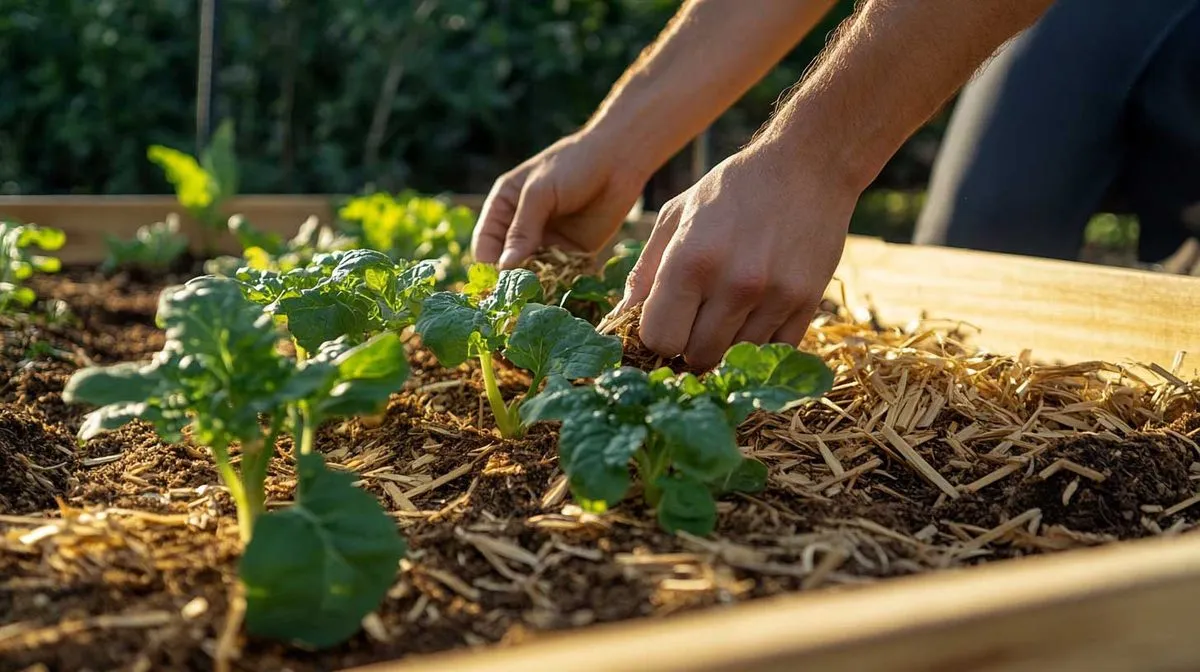
- Mulch heavily. Black plastic mulch or thick straw keeps soil warm, retains moisture, and keeps fruit clean.
- Water deeply but infrequently. Deep watering encourages deep roots. Reduce watering as fruit approaches maturity to concentrate sugars and prevent splitting.
- Feed with potassium-rich fertiliser once fruit begins to swell. Avoid high nitrogen which produces vines at the expense of fruit.
Watering and Feeding for Sweet Fruit
Feed with a nitrogen-rich fertiliser while the vines are running, then switch to a potassium feed once the fruit sets. Water deeply at the base and keep the leaves dry to limit mildew. As the fruit ripens, ease off the water: our plant data notes that too much water late in the season gives bland or split fruit, while drying the plants off a little lifts the sugar. Rest each melon on a bed of straw so it sits off wet ground.
How Long Does Watermelon Take to Grow?
Our plant data allows about 90 days from sowing to harvest, and a healthy vine gives 2 to 4 fruit. Small, fast varieties such as Sugar Baby and Yellow Baby are ready sooner, in 10 to 12 weeks, while large melons such as Crimson Sweet and Charleston Grey need 14 to 16 weeks. In regions with a short summer, such as Melbourne and Canberra, choose a quick, small-fruited variety and sow early in the window so the fruit ripens before the weather cools.
Growing Watermelon in the Tropics
In North Queensland and the Top End, watermelon is a dry season crop. Our data has it sown from April to August, the same window the growers around Bowen and Gumlu use for the national winter supply. Wet season planting fails, because the fruit splits and rots in monsoon rain. Northern Territory melons sown in the dry are harvested around September and October.
Can You Grow Watermelon in a Pot?
Our plant data does not rate watermelon as a container crop, because the vines need a lot of root room, heat and water to fill their fruit. If space is tight, grow a small variety such as Sugar Baby up a strong trellis in the ground and support each fruit as it swells, rather than trying to grow a melon in a pot.
Common Problems
Splitting
Fruit cracks open, usually after heavy rain or overwatering when the melon is nearly ripe. Reduce watering in the last 2 weeks before harvest.
Powdery mildew
White coating on leaves late in the season. Spray with milk solution (1 part milk to 9 parts water). Good air circulation helps prevent it.
Fruit fly
A serious pest in tropical and subtropical regions. Use fruit fly netting or traps. Monitor from the moment fruit begins to ripen.
Frequently Asked Questions
When should I plant watermelon in Australia?
Watermelons need warm soil (above 22 degrees) to germinate. South East Queensland and the Northern Rivers sow from September to February, Sydney from September to January, Perth from August to November, Adelaide from September to November and Melbourne from October to December. Canberra has a short window in November. In the tropical north, watermelon is a dry season crop sown from April to August, because fruit splits and rots in the wet. Sugar Baby and Yellow Baby mature fastest in shorter growing seasons.
How long do watermelons take to grow?
Small varieties like Sugar Baby take 10 to 12 weeks. Large varieties like Crimson Sweet and Charleston Grey take 14 to 16 weeks. The fruit needs consistent warmth throughout the growing period.
How do I know when a watermelon is ripe?
Check four things: the ground spot should be creamy yellow, the nearest tendril should be brown and dry, the melon should sound hollow when tapped, and the skin should lose its shine. Use all four tests together for the most reliable result.
How much space do watermelons need?
Watermelon vines spread 2 to 3 metres in each direction. Space mounds 2 to 3 metres apart. Small varieties like Sugar Baby need slightly less room. Vertical growing is possible but requires strong support for the heavy fruit.
When is it too late to plant watermelon?
It depends on your region. Perth and Adelaide stop sowing at the end of November, Melbourne in December, Sydney in January and South East Queensland in February, because later sowings run out of warm weather before the fruit ripens. In the tropics, plant in the dry season from April to August, not in the wet.
Can I grow watermelon in a pot?
It is not a good pot crop. Watermelon vines need a lot of root room, heat and water to fill their fruit. In a small space, grow a small variety such as Sugar Baby on a strong trellis in the ground instead.
How many watermelons do you get from one plant?
Usually 2 to 4 fruit per vine, according to our plant data. Good pollination by bees makes the biggest difference to how many fruit set and how well they fill out.
See also: Watermelon in the Plant Library
Plant profile
The watermelon profile has sowing times for your region, companion plants and common pests.