How to Grow Blueberries in Australia
Updated June 2026
More fruit growing help: Backyard Fruit Trees in Australia, with the best fruit for each region and when to plant it.
Australia's most popular container fruit, producing buckets of berries for years
Blueberries have become one of the most popular fruit plants for Australian home gardeners. They grow well in pots, they produce fruit within a couple of years, and a single mature bush can give you 3 to 5 kilograms of berries every season. The fruit is expensive to buy at the supermarket and tastes far better picked ripe from your own plant.
The main challenge with blueberries is soil. They need acidic conditions that most Australian garden soils cannot provide. That is why growing them in pots with the right potting mix is the most reliable method. Once you get the soil right, blueberries are surprisingly low maintenance.
🌱 Plant profile: Blueberry, with sowing times for your region, companion plants and common pests.
Understanding Chill Hours
Blueberry varieties are divided into two groups based on how much cold they need during winter to set fruit. This is measured in "chill hours," the number of hours below 7 degrees Celsius a plant experiences between May and August.
High-chill varieties
These need 600 to 1,000 chill hours. They grow best in cool climates like Melbourne, Hobart, Adelaide Hills, Canberra, and the Blue Mountains. If you plant high-chill varieties in Brisbane or coastal Sydney, they will grow leaves but produce little or no fruit because they do not get enough cold.
Low-chill varieties
These need fewer than 300 chill hours and are bred for warm climates. They suit Sydney, Brisbane, Perth, and subtropical areas. Some produce fruit even in tropical Queensland with as few as 100 chill hours. These are the varieties most commonly sold in Australian nurseries because they work in the widest range of climates.
Best Blueberry Varieties for Australia
Low-Chill Varieties (warm and subtropical climates)
Sunshine Blue
The most popular home garden blueberry in Australia. Semi-dwarf (1 to 1.2 metres), semi-evergreen, and partially self-pollinating. Needs only 150 chill hours. Produces sweet, medium-sized berries from November to January. Compact enough for pots and small gardens. Good for Sydney, Brisbane, Perth, and coastal areas.
Misty
A vigorous southern highbush variety needing about 150 to 200 chill hours. Produces large, light blue berries with excellent flavour. One of the heaviest producers among low-chill types. Grows 1.2 to 1.5 metres tall. Performs well in pots and in the ground. Cross-pollinate with Sunshine Blue for bigger yields.
O'Neal
An early-fruiting variety that ripens in October and November, ahead of most others. Large, sweet berries. Needs about 200 chill hours. Grows to 1.5 metres. A good choice for Sydney, the Central Coast, and Adelaide. Cross-pollination improves fruit set.
Blueberry Burst (Dwarf)
A compact variety bred for pots and small spaces. Stays under 60 cm tall. Needs only 100 to 200 chill hours. Self-pollinating. Good for balconies, patios, and windowsills. Smaller yields than full-sized bushes but perfect for gardeners with limited space.
High-Chill Varieties (cool and temperate climates)
Brigitta
A late-season variety with large, firm berries. Needs 700 to 800 chill hours. Produces heavy crops from January to March. Grows 1.5 to 2 metres tall. The berries store well and have excellent flavour. Best for Melbourne, Hobart, Canberra, Adelaide Hills, and highland areas.
Northland
A reliable mid-season producer that handles cold well. Needs 800 to 1,000 chill hours. Compact growth to 1.2 metres. Wild blueberry flavour with smaller but intensely sweet berries. Very cold hardy. Good for Tasmania and the high country.
Denise Blue
An Australian-bred variety with high yields and large berries. Mid-season harvest. Needs 600 to 700 chill hours. Grows to 1.5 metres. The berries are firm, sweet, and store well in the fridge for over a week. A strong performer in Melbourne and Adelaide.
Soil and pH Requirements
This is the most important section of the entire guide. Blueberries need acidic soil with a pH between 4.5 and 5.5. Most Australian garden soils sit between 6.0 and 8.0, which is far too alkaline. If you plant blueberries in regular garden soil, the leaves will turn yellow (chlorosis), growth will stall, and the plant will slowly decline.
Testing your soil
Buy a pH testing kit from any garden centre or hardware store. Test the soil where you plan to plant. If the pH is above 5.5, you need to amend the soil or grow in pots with acidic potting mix.
Creating acidic soil in the ground
- Elemental sulphur: The most effective way to lower soil pH. Apply 100 to 200 grams per square metre and dig it in at least 8 weeks before planting. Sulphur takes time to react with soil bacteria and lower the pH. Retest before planting.
- Pine bark: Mix composted pine bark into the planting hole at a 50/50 ratio with the existing soil. Pine bark is naturally acidic and improves drainage.
- Peat moss: Acidic and moisture-retentive. Mix into the planting hole alongside pine bark. Expensive, so use it as an additive, not the main growing medium.
- Avoid lime and mushroom compost. Both raise the pH and will harm blueberries.
Growing in pots (the easier method)
Buy a camellia and azalea potting mix from your garden centre. These mixes are formulated with an acidic pH of 4.5 to 5.5, which is exactly what blueberries need. No amendments required. This is why growing blueberries in pots is the most popular method in Australia. You skip the soil-amending process entirely.
Growing Blueberries in Containers
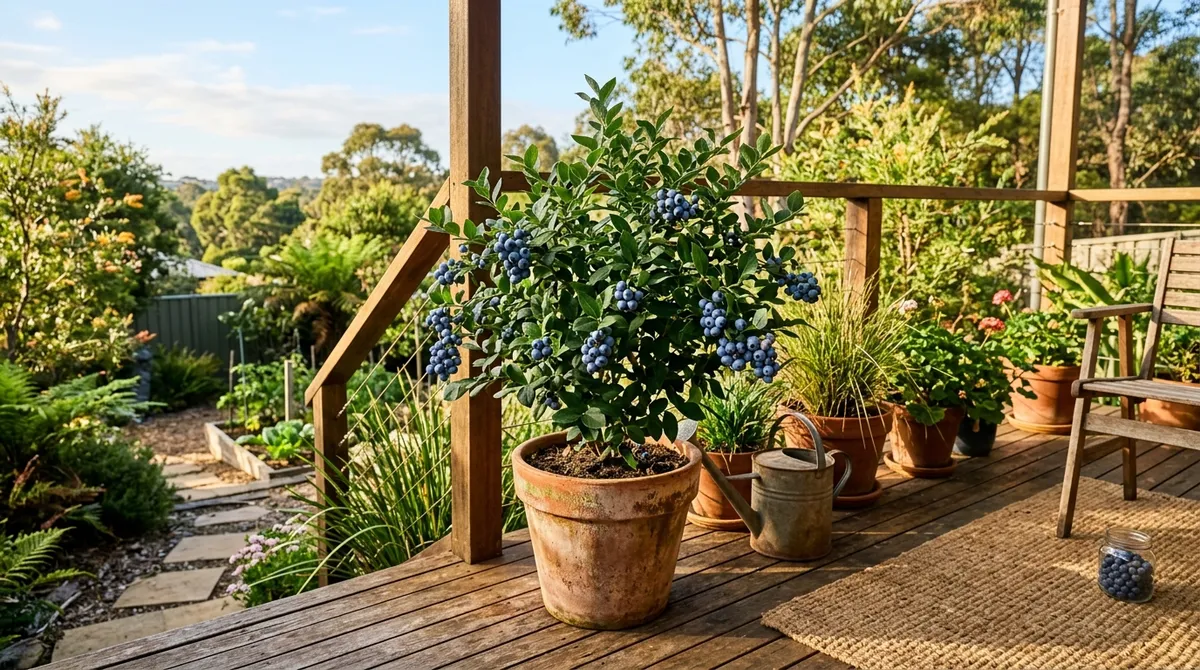
Container growing is the most reliable way to grow blueberries in Australia. You control the soil pH, you can move the plants to follow the sun or escape frost, and you avoid the challenge of modifying garden soil.
Choosing the right pot
- Size: Start with a 30 to 40 cm pot for a young plant. Move to a 50 to 60 cm pot as the bush matures. Dwarf varieties stay happy in 30 cm pots long-term.
- Material: Plastic or glazed ceramic. Avoid terracotta because it dries out fast and blueberries need consistent moisture. Avoid dark-coloured pots that heat up in summer.
- Drainage: At least 3 to 4 drainage holes. Blueberries hate waterlogging. Use pot feet to keep the base off the ground and help water drain freely.
Potting mix
Use a premium camellia and azalea potting mix. This has the right pH and contains slow-release fertiliser. Repot every 2 to 3 years with fresh acidic mix. Top up with a 3 cm layer of pine bark mulch to help retain moisture and keep roots cool.
Position
Full sun for at least 6 hours daily. Morning sun is ideal. In very hot climates (inland areas, western Sydney, Adelaide plains), provide afternoon shade in summer to prevent heat stress and sunburned berries. Blueberries in pots are easy to move around to find the best spot each season.
Planting Blueberries
When to plant
Plant blueberries in autumn or early winter (March to June) in most Australian climates. This gives the roots time to establish during the cool months before the growing season starts in spring. In tropical and subtropical areas, plant in the cooler dry season (April to July).
Planting in the ground
- Dig a hole twice as wide and the same depth as the root ball.
- Mix the removed soil 50/50 with composted pine bark and peat moss.
- Place the plant at the same depth it was in the pot. Blueberries have shallow roots, so do not plant too deep.
- Backfill with the amended soil mix and firm gently.
- Water deeply and apply 10 cm of pine bark mulch around the base, keeping it 5 cm away from the stem.
Planting in a pot
- Fill the pot one-third full with camellia and azalea potting mix.
- Place the plant so the top of the root ball sits 3 cm below the rim of the pot.
- Fill around the root ball with potting mix and firm gently.
- Water thoroughly until water runs from the drainage holes.
- Top with 3 cm of pine bark mulch.
Watering
Blueberries have shallow, fibrous roots that dry out quickly. Consistent moisture is critical, especially during flowering and fruiting (September to February).
- In pots: Water every 1 to 2 days in summer. Check daily. The potting mix should stay moist but not saturated. Pots dry out much faster than ground soil.
- In the ground: Deep watering twice a week in warm weather, once a week in cool weather. Drip irrigation is ideal.
- Water type: Blueberries prefer slightly acidic water. If your tap water is alkaline (common in many Australian cities), add 1 tablespoon of white vinegar per 10 litres of water occasionally. Rainwater is ideal if you have a tank.
- Mulch: Pine bark mulch (not eucalyptus or hardwood) helps retain moisture and maintains soil acidity. Apply 8 to 10 cm in the ground, 3 to 5 cm in pots.
Feeding
Blueberries need regular feeding but are sensitive to the type of fertiliser used. Standard garden fertilisers are often too alkaline and can raise the soil pH.
- Use a fertiliser formulated for acid-loving plants (sold as camellia and azalea fertiliser or rhododendron food). These contain ammonium sulphate as the nitrogen source, which helps maintain low pH.
- Feed in early spring (August) as new growth starts, then again in late spring (October) and early summer (December).
- Avoid chicken manure, blood and bone, and wood ash. These can raise pH or burn the shallow roots.
- Liquid seaweed extract every 4 weeks during the growing season provides trace elements and promotes root health without affecting pH significantly.
Pruning
Blueberries fruit on wood that grew the previous season. Pruning keeps the bush productive and prevents it from becoming a tangled mess of old, unproductive wood.
When to prune
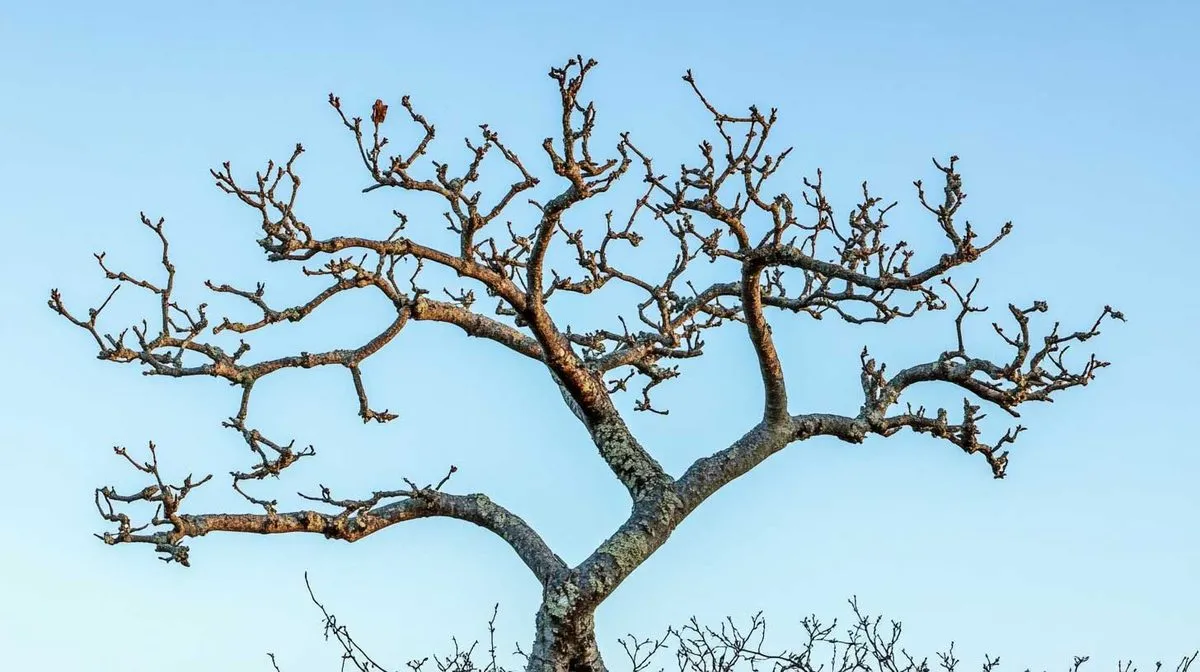
Prune in late winter (July to August) while the bush is dormant and before new growth starts. Deciduous varieties lose their leaves and the branch structure is easy to see. Evergreen and semi-evergreen varieties can be pruned at the same time.
What to prune
- Remove dead, damaged, or crossing branches. Open up the centre of the bush for air circulation.
- Cut out any wood older than 4 years. Old wood produces smaller berries and fewer of them. Cut it back to ground level to encourage new growth from the base.
- Remove thin, weak growth. Keep the strongest 5 to 7 canes and remove everything else.
- Tip prune young bushes. In the first 2 years, pinch off flower buds to direct energy into root and branch growth rather than fruit production. This builds a stronger plant that produces heavier crops from year 3 onward.
Netting for Bird Protection
Birds love blueberries. Without netting, you will lose most of your crop to currawongs, silvereyes, Indian mynas, and other fruit-eating birds. Netting is not optional.
- Use wildlife-safe netting with a mesh size of 5 mm or smaller. Larger mesh can trap birds and small animals. Many councils and states now require wildlife-safe netting.
- Build a frame around the bush (PVC pipe or wire) and drape the netting over the frame. Do not drape netting directly on the bush because birds can still peck through it, and the netting tangles in the branches.
- Secure the base with clips, pegs, or bricks. Birds will find any gap and get in.
- Time your netting. Put it up when berries start to colour (usually November) and remove it after the last berries are picked. Leaving netting up year-round reduces pollination because it blocks bees.
Pests and Problems
Chlorosis (yellow leaves)
The most common problem in Australian blueberry growing. Caused by soil pH that is too high, which locks up iron and prevents the plant from absorbing it. Leaves turn yellow between the veins while the veins stay green. Treat with iron chelates as a foliar spray. Long-term fix: lower the soil pH with sulphur.
Scale insects
Small, brown, raised bumps on the stems. They suck sap and weaken the plant. Spray with horticultural oil (white oil) in late winter when the bush is dormant. Repeat every 2 weeks until they are gone.
Fruit fly
Queensland fruit fly can attack blueberries in warm climates. Use fruit fly exclusion netting (the same netting that protects from birds works if the mesh is 1 mm or smaller) or hang fruit fly traps near the bush from October onward.
Root rot (Phytophthora)
Caused by waterlogged soil or poor drainage. The plant wilts even when the soil is wet, and the roots turn brown and mushy. Prevention is key: plant in well-drained soil or pots with good drainage. There is no effective cure for established root rot. Remove and destroy affected plants.
Sunburn
Berries on the exposed side of the bush can get sunburned in extreme heat (40+ degrees). Provide 30% shade cloth in hot climates or move potted plants to afternoon shade during heatwaves.
Harvesting and Storage
Blueberries ripen from late October through to March, depending on the variety and climate. Individual berries on the same cluster ripen at different times, so you pick over several weeks.
- When to pick: Berries are ripe when they are fully blue with no red or green colouring. A ripe blueberry comes off the stem easily with a gentle tug. If you have to pull hard, it is not ready.
- Leave ripe berries on the bush for a few days after turning blue. They continue to sweeten even after colouring up. The best-tasting berries are the ones you almost forgot to pick.
- Pick every 3 to 5 days during the fruiting season. Leaving overripe berries on the bush attracts birds and insects.
- Storage: Fresh blueberries last 1 to 2 weeks in the fridge. Do not wash them until you are ready to eat. Blueberries freeze perfectly. Spread them in a single layer on a tray, freeze for 2 hours, then transfer to a bag or container.
Regional Growing Tips
Melbourne, Hobart, and Canberra
The best climates for high-chill varieties. Plant Brigitta, Northland, and Denise Blue. These areas get 700 to 1,200 chill hours, which is more than enough. Protect pots from hard frosts in July and August by moving them against a north-facing wall.
Sydney and Perth
Low-chill varieties perform best. Sunshine Blue, Misty, and O'Neal are reliable choices. Coastal areas may only get 200 to 400 chill hours, so avoid high-chill varieties entirely. Afternoon shade in summer prevents heat stress.
Brisbane and Subtropical
Stick to low-chill varieties with 100 to 200 chill hour requirements. Sunshine Blue and Blueberry Burst are the safest picks. The wet season (December to March) brings humidity and fungal disease risk. Ensure excellent air circulation and avoid overhead watering.
Adelaide and South Australia
The Adelaide Hills and cooler elevated areas suit high-chill varieties. The Adelaide plains are warmer and suit low-chill types. Check your specific location's chill hours before choosing. The dry summer heat suits blueberries well as long as you water consistently.
Frequently Asked Questions
Can you grow blueberries in Australia?
Yes. Blueberries grow well across most of Australia. Low-chill varieties suit subtropical and warm temperate areas like Brisbane and Sydney. High-chill varieties thrive in cooler climates like Melbourne, Adelaide, Hobart, and the highlands. Most home gardeners grow them in pots with acidic potting mix, which avoids the challenge of modifying garden soil.
Do blueberries need acidic soil?
Yes. Blueberries require a soil pH between 4.5 and 5.5, which is more acidic than most garden soils. In pots, use a camellia and azalea potting mix. In the ground, amend soil with sulphur, pine bark, and peat moss to lower the pH. Test your soil pH before planting and retest every 6 months.
How long do blueberry bushes take to produce fruit?
Blueberry bushes produce a small crop in their second or third year. Full production starts from year 4 or 5. A mature bush produces 3 to 5 kg of fruit per season. Plants are productive for 15 to 20 years with proper care.
Can you grow blueberries in pots?
Yes, and it is the most popular method for home gardeners in Australia. Pots let you control the soil pH easily using acidic potting mix. Use a pot at least 40 cm wide and deep. Blueberries have shallow roots and do well in containers as long as they are watered consistently and fed with an acidic fertiliser.
See also: Blueberry in the Plant Library
Plant profile
The blueberry profile has sowing times for your region, companion plants and common pests.