How to Grow Raspberries in Australia
Updated June 2026
More fruit growing help: Backyard Fruit Trees in Australia, with the best fruit for each region and when to plant it.
Cane management, trellising, and variety picks for cool and warm climates
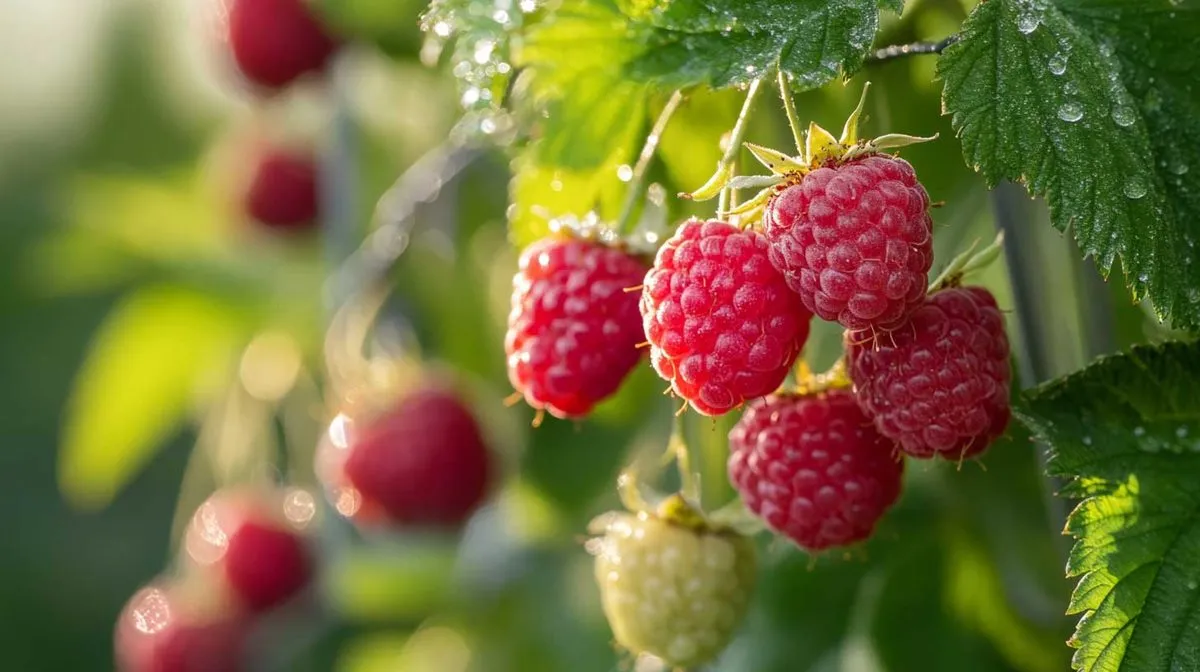
Raspberries are a premium crop that costs a fortune in shops but grows surprisingly well in Australian gardens. They need cooler conditions than many Australian fruits, but the right variety in the right spot produces abundantly. Once established, a raspberry patch will produce for 10 to 15 years with basic care.
This guide covers the best raspberry varieties for Australian conditions, how to manage canes, trellising methods, and planting times by region.
🌱 Plant profile: Raspberry, with sowing times for your region, companion plants and common pests.
When to Plant in Your Region
Heritage
The most popular raspberry for Australian home gardens. Everbearing variety that fruits in summer and again in autumn. Reliable, heavy-cropping, and tolerates warmer conditions better than most raspberries. Medium-sized, red berries with classic raspberry flavour.
Willamette
Summer-fruiting variety with large, dark red berries and excellent flavour. The benchmark for raspberry flavour in cooler climates. Needs winter chill, so best in Melbourne, Hobart, Canberra, and Adelaide hills.
Nantahala
Late-season, everbearing variety with large berries and outstanding flavour. Fruits on first-year canes, which simplifies pruning. A newer variety that is gaining a strong reputation in Australian gardens.
Autumn Bliss
Everbearing variety that produces a large autumn crop on first-year canes. Compact growth habit suits smaller gardens. Good disease resistance. Works well in containers with a simple support.
Cane Management
Understanding raspberry canes is the key to good harvests. Raspberries have two types of cane behaviour:
Summer-fruiting varieties (Willamette)
These fruit on second-year canes. First-year canes (primocanes) grow tall and green. In their second year, they fruit, then die. After harvest, cut the spent canes to the ground and tie in the new primocanes for next year's crop.
Everbearing varieties (Heritage, Autumn Bliss, Nantahala)
These fruit on first-year canes. The simplest approach is to cut all canes to the ground in winter. New canes grow in spring and fruit in late summer to autumn. You can also leave some canes for a smaller early-summer crop, then cut after it finishes.
Trellising
Raspberry canes grow 1.5 to 2 metres tall and flop over without support. A simple trellis keeps them upright and makes picking easy.
- T-bar trellis: Posts with horizontal crossbars at 60 cm and 120 cm height. Run wires along each side. Canes grow up between the wires.
- V-trellis: Two wires angled outward from posts. Spreads canes open for better light and air circulation.
- Simple post and wire: Single wire at 120 cm height. Tie canes to the wire. The minimum effective support.
Space raspberry canes 30 to 40 cm apart along the trellis. Rows should be 1.5 to 2 metres apart for access.
Common Problems
Cane blight
Dark lesions on canes that can kill them. Remove and destroy affected canes. Improve air circulation and avoid wounding canes during cultivation.
Raspberry beetle
Small beetles that lay eggs in flowers. Larvae develop inside the fruit (the small white grubs sometimes found in berries). Spray with pyrethrum when flowers first open. Pick fruit frequently to reduce damage.
Heat stress
Raspberries struggle above 35 degrees. Provide afternoon shade in hot regions, mulch heavily, and water deeply during heat waves. Heritage and Autumn Bliss handle heat better than Willamette.
Frequently Asked Questions
Can I grow raspberries in warm climates?
Everbearing varieties like Heritage and Autumn Bliss tolerate warmer conditions than summer-fruiting types. Provide afternoon shade, mulch heavily, and water deeply. Raspberries struggle in truly tropical climates but grow well in warm-temperate and subtropical regions with some care.
How long do raspberries take to produce fruit?
Raspberry canes planted in winter produce their first fruit by the following summer or autumn, depending on variety. Full production is reached by the second or third year as the patch fills in.
When should I prune raspberries?
For everbearing varieties, cut all canes to the ground in winter (June to July). For summer-fruiting varieties, remove the canes that have just fruited and tie in the new green canes for next year.
Do raspberries need a trellis?
Raspberries produce better fruit and are much easier to manage with some form of support. A simple post-and-wire trellis at 120 cm height is the minimum. Without support, canes flop over and fruit rots on the ground.
See also: Raspberries in the Plant Library
Plant profile
The raspberry profile has sowing times for your region, companion plants and common pests.