How to Grow Squash in Australia
Updated June 2026
Summer and winter varieties, planting times, pollination, and harvest tips
Squash is one of the most productive plants you can grow. A single healthy plant can produce 5 to 15 fruit over a season, and the range of varieties available in Australia covers everything from tiny pattypans eaten skin and all to hard-shelled spaghetti squash that stores for months.
This guide covers the difference between summer and winter squash, the best varieties for Australian gardens, planting times by region, and how to deal with common problems like poor pollination and powdery mildew.
🌱 Plant profile: Squash, with sowing times for your region, companion plants and common pests.
Summer Squash vs Winter Squash
The names are misleading. Both types grow in warm weather and are planted at the same time. The difference is about harvest timing and storage.
Summer squash is picked young, usually 3 to 7 days after the flower opens. The skin is thin and edible, the flesh is tender, and the seeds are soft. Summer squash does not store well. Eat it within a week of picking. Examples include pattypan (button squash), yellow crookneck, and scallopini.
Winter squash is left on the vine until the fruit fully matures and the rind hardens. This takes 80 to 110 days from planting. The payoff is that winter squash stores for 3 to 6 months in a cool, dry spot. Examples include spaghetti squash, gem squash, and tromboncino (when left to mature).
Best Squash Varieties for Australia
Button / Pattypan Squash
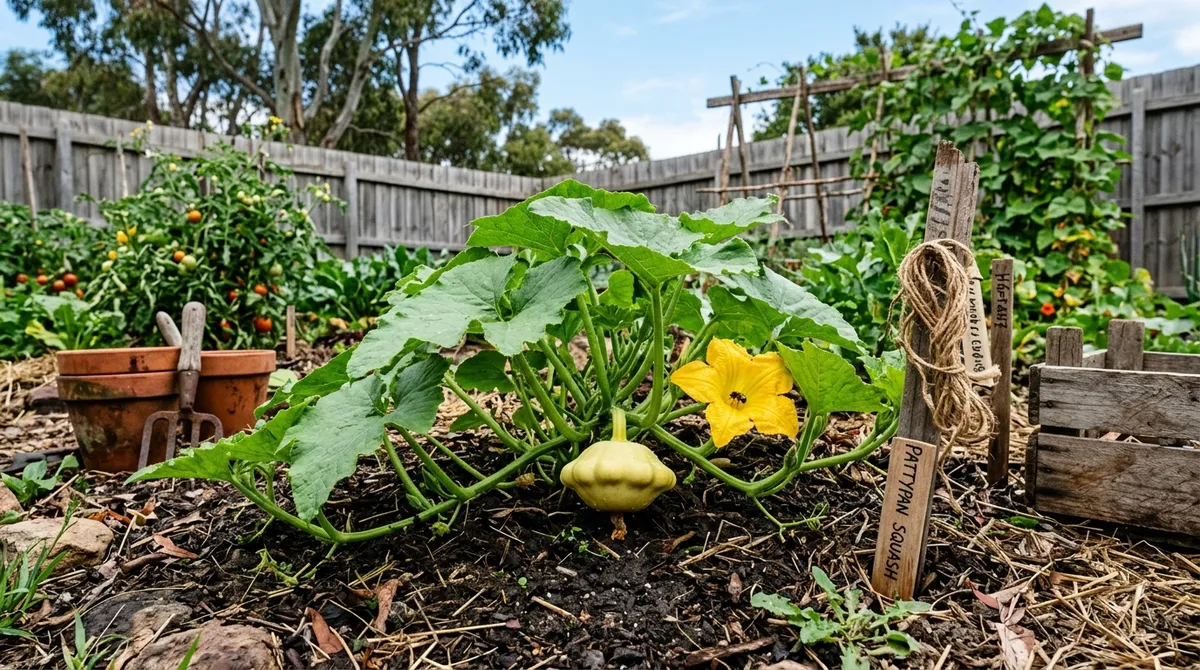
The most popular summer squash in Australian gardens. Small, scallop-edged fruit in white, yellow, or green. Bush habit, so it fits in small spaces. Pick at 5 to 8 cm across for the best flavour and texture. Extremely productive from a single plant.
Scallopini
A dark green pattypan type with a slightly nutty flavour. Compact bush plants, heavy yielding, and very reliable. Pick young at 6 to 8 cm. Excellent sliced and grilled or roasted whole.
Spaghetti Squash
Winter squash with pale yellow, oblong fruit. The flesh separates into spaghetti-like strands when cooked. Needs a long growing season of 90 to 100 days and plenty of space for vines that can spread 3 to 4 metres. Stores 3 to 5 months after harvest. Grows well across most of Australia.
Gem Squash
A compact, round, dark green winter squash popular in South African and Australian gardens. Each fruit is a single serving size. Sweet, dense flesh. Matures in 75 to 80 days. Stores for 3 to 4 months. Vining habit but more contained than spaghetti squash.
Yellow Crookneck
Classic summer squash with a curved neck and bumpy yellow skin. Buttery flavour, best harvested at 12 to 15 cm. Bush habit. Very productive in warm conditions. A staple in American gardens that deserves more attention in Australia.
Tromboncino
Italian heirloom that works as both summer and winter squash. Pick young (30 to 40 cm) and use like zucchini, or leave to mature fully for a hard-shelled winter squash. Vigorous climber that grows well on a sturdy trellis or arch. Resistant to vine borer, which is a real advantage.
When to Plant Squash by Region
Squash is a warm-season crop that will not tolerate frost. Seeds rot in cold, wet soil. Wait until the soil temperature reaches at least 18 degrees Celsius before planting.
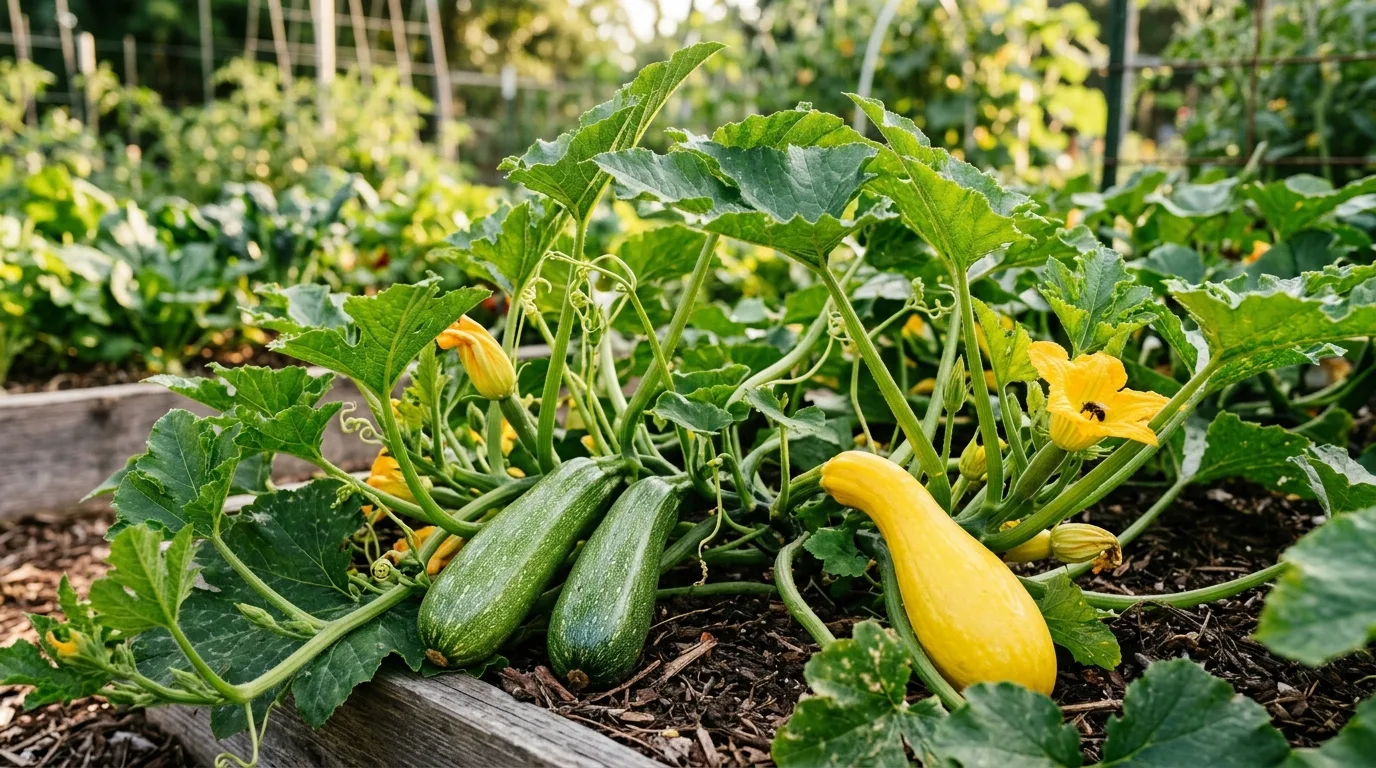
What it looks like as it grows


As a general guide:
- Tropical and subtropical regions (Darwin, Cairns, Brisbane): Plant August to January. The long warm season means you can get two crops in.
- Temperate regions (Sydney, Perth, Adelaide): Plant September to December. Start seeds indoors in August if you want an early crop.
- Cool-temperate regions (Melbourne, Hobart, Canberra): Plant October to December. Stick to shorter-season varieties (pattypan, scallopini) or start seeds in pots under cover in September.
Soil and Feeding
Squash are heavy feeders. They need rich, well-drained soil loaded with organic matter. Dig in a generous amount of aged compost or well-rotted manure before planting. A 10 cm layer worked into the top 20 cm of soil is a good starting point.
Build mounds about 30 cm high and 60 cm across for each planting spot. Mounds warm up faster, drain well, and give roots extra depth. Plant 2 to 3 seeds per mound and thin to the strongest seedling.
Feed every 2 to 3 weeks once the plants start flowering. Use a liquid fertiliser high in potassium to encourage fruiting. Seaweed solution applied fortnightly builds overall plant health and helps with stress resistance.
Bush vs Vine Types
This is a practical decision based on your garden space.
Bush types (pattypan, scallopini, most crookneck) stay compact at about 60 to 90 cm across. They suit raised beds, small gardens, and containers. Plant them 60 to 90 cm apart.
Vine types (spaghetti squash, gem squash, tromboncino) send out runners that can spread 3 to 5 metres. They need room to run or a strong structure to climb. Plant them 1.5 to 2 metres apart. Train vines along a fence, over an arch, or across the ground between other crops.
Tromboncino is the best climber of the lot. Its fruit hangs down and grows straighter on a trellis than on the ground.
Pollination
Squash plants produce separate male and female flowers on the same plant. Male flowers appear first, often a full week or two before any female flowers show up. This is normal. The males sit on long, thin stems. Female flowers have a small swelling (the baby fruit) at the base of the flower.
Bees do most of the pollination work. Squash flowers open in the early morning and close by midday, so pollination needs to happen in that window.
When to hand-pollinate
If you notice female flowers shrivelling and dropping without forming fruit, pollinators may not be visiting. This happens in very hot weather, during wet spells, or in urban gardens with fewer bees. Hand-pollination is simple:
- Pick a male flower early in the morning. Peel back the petals to expose the pollen-covered stamen.
- Find an open female flower (look for the swelling at the base).
- Dab the pollen directly onto the stigma in the centre of the female flower. Roll it around gently to transfer as much pollen as possible.
- One male flower can pollinate 2 to 3 female flowers.
Harvesting at the Right Stage
Timing your harvest correctly makes a huge difference to flavour and texture.
Summer squash
Pick summer squash small and often. Pattypan and scallopini are best at 5 to 8 cm across. Yellow crookneck is best at 12 to 15 cm. The skin should be glossy and you should be able to dent it easily with a fingernail. If the skin is tough and dull, the squash is overgrown and will be seedy and bland.
Harvest every 2 to 3 days during peak production. Leaving oversized fruit on the plant signals it to stop producing new flowers.
Winter squash
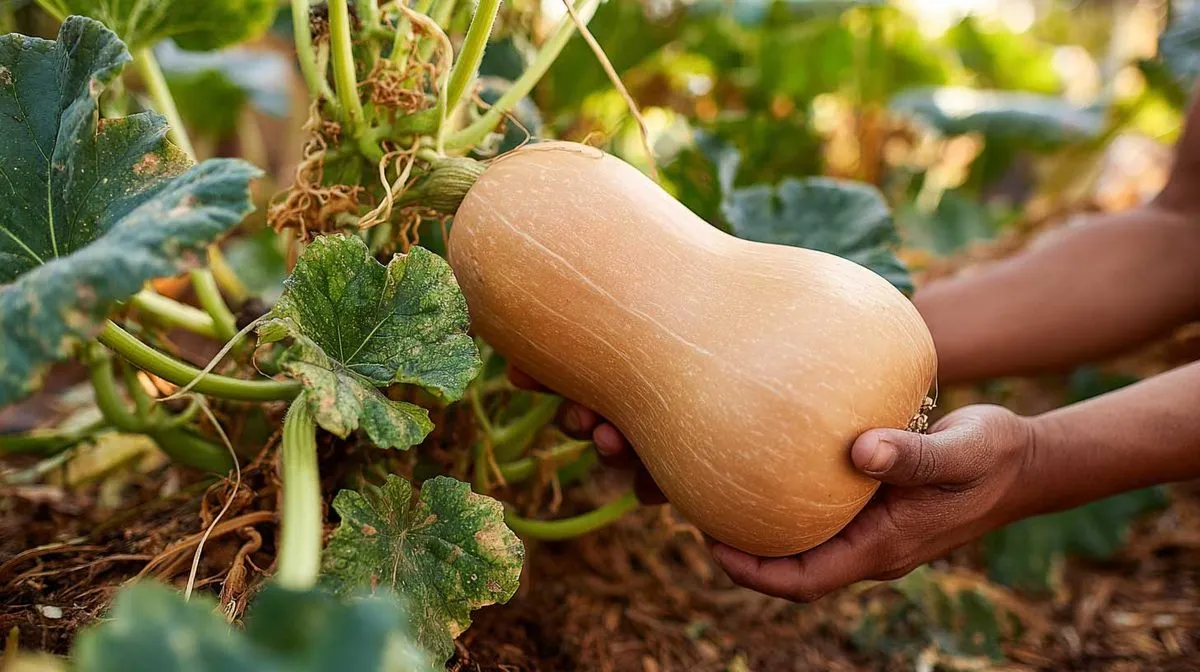
Leave winter squash on the vine as long as possible. Spaghetti squash is ready when the skin turns deep golden yellow and feels rock-hard. Gem squash should have a dark, hard rind. Press your thumbnail into the skin. If it does not dent, it is ready.
Cut winter squash from the vine with secateurs, leaving a 5 to 7 cm stem attached. The stem acts as a seal and prevents rot from entering the fruit. A squash without a stem will not store well.
Storage
Summer squash does not store. Keep it in the fridge and use it within 5 to 7 days of picking.
Winter squash stores well if cured first. Leave harvested fruit in a warm, sunny spot for 7 to 10 days to harden the skin further. Then move to a cool, dry place (10 to 15 degrees Celsius). Spaghetti squash stores 3 to 5 months. Gem squash stores 3 to 4 months. Tromboncino stores 2 to 3 months.
Check stored squash every few weeks and use any that show soft spots or mould first.
Pest and Disease Management
Squash bug
Grey-brown shield-shaped insects that cluster on stems and leaf undersides. They suck sap and cause leaves to wilt and brown. Check under leaves regularly and crush egg clusters (small bronze ovals laid in neat rows). Remove adults by hand into a bucket of soapy water. Keep the garden bed clean of debris where bugs overwinter.
Powdery mildew
White, powdery coating on leaves. It appears in warm, humid weather and spreads quickly. Improve air circulation by spacing plants properly and pruning excess foliage. Spray affected leaves with a mix of 1 part full-cream milk to 9 parts water. Apply in the morning, every 5 to 7 days. Remove badly affected leaves entirely.
Fruit fly
Queensland fruit fly is a problem for squash in many parts of Australia. Use exclusion netting or individual fruit bags once fruit begins to form. Fruit fly traps (protein-based lures) help reduce populations in the area.
Blossom end rot
Dark, sunken patches on the bottom of fruit. Caused by inconsistent watering rather than a nutrient deficiency. Water deeply and regularly. Mulch helps keep soil moisture even.
Frequently Asked Questions
What is the difference between summer and winter squash?
Summer squash (pattypan, yellow crookneck, scallopini) is picked young with thin, edible skin and eaten fresh. Winter squash (spaghetti squash, gem squash) is left on the vine to fully mature, develops a hard rind, and stores for months after harvest.
When should I plant squash in Australia?
Plant squash after the last frost when soil temperature reaches at least 18 degrees Celsius. In most regions this means September to December. Tropical and subtropical areas can plant from August through to January.
Can you grow spaghetti squash in Australia?
Yes. Spaghetti squash grows well across most of Australia. It needs a long, warm growing season of 90 to 100 days. Plant in spring after the last frost, give it plenty of space for its sprawling vines, and harvest in late summer to autumn when the skin turns golden yellow and feels hard.
Why are my squash flowers falling off without forming fruit?
Squash plants produce male flowers first, often for 1 to 2 weeks before female flowers appear. Male flowers fall off naturally after releasing pollen. If female flowers are dropping too, the issue is usually poor pollination. Hand-pollinate by transferring pollen from a male flower to the centre of a female flower using a small paintbrush or cotton bud.
See also: Squash in the Plant Library
Plant profile
The squash profile has sowing times for your region, companion plants and common pests.