How to Grow Rhubarb in Australia
Updated June 2026
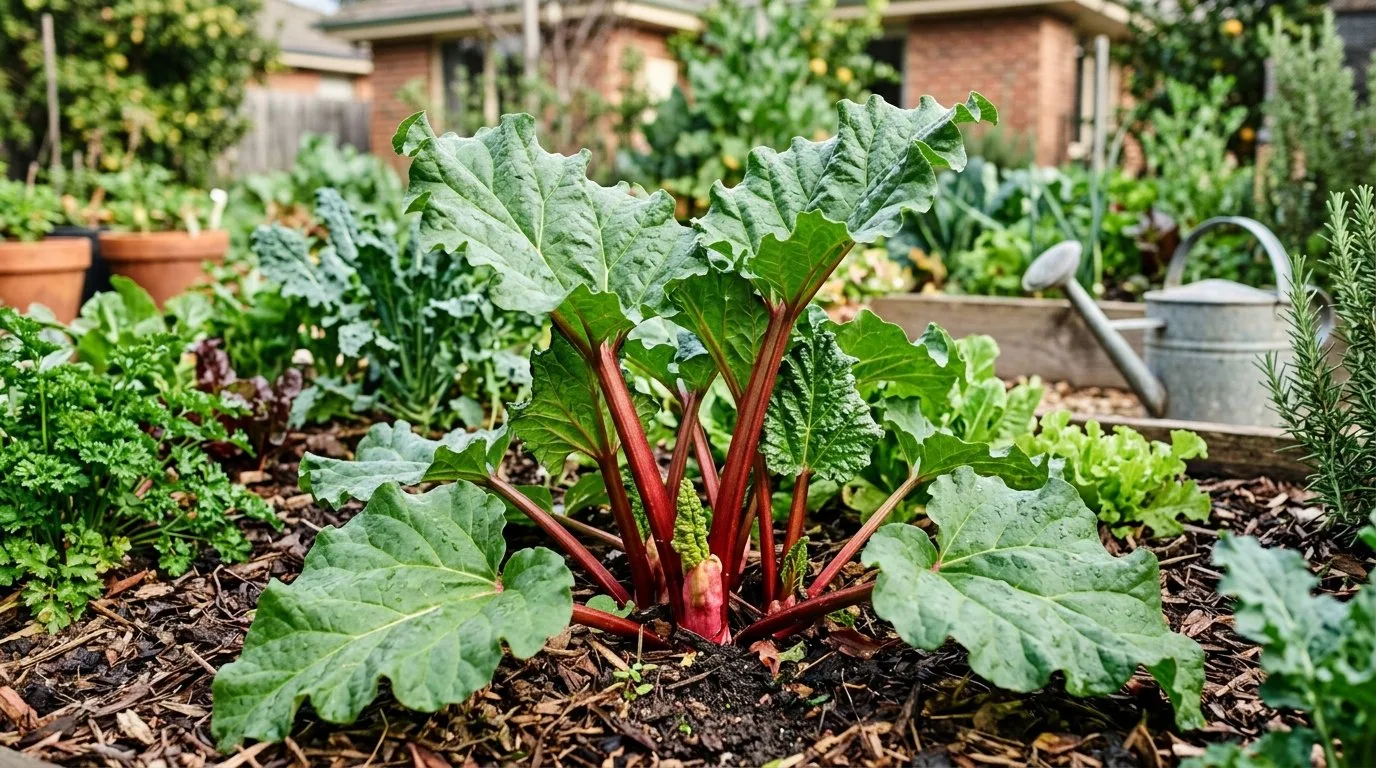
A hardy, long-lived perennial that gives tart red stalks for crumbles and jam year after year
What it looks like as it grows


Rhubarb is one of the easiest perennials to keep going in a cool Australian garden. Plant a crown once, look after it, and a single clump will crop for ten years or more. The reward is armfuls of tart, colourful stalks for crumbles, compote, jam and roasting, picked fresh from the patch when stone fruit is still weeks away.
There is one rule that matters more than any other. Only the stalks are edible. The big green leaf blades are toxic and must never be eaten. This guide covers planting crowns at the right depth, the year-one rest, pulling stalks the right way, feeding and dividing, and where rhubarb does and does not thrive in Australia. The care selector below tells you exactly how much to pick based on the age of your plant.
Is it ready to harvest? Care selector
Choose how old your rhubarb is and the selector shows how much you can pull, and how.
Position and Soil
Give rhubarb full sun, at least 6 hours a day, though in hot inland or northern gardens a spot with afternoon shade keeps it happier. It wants rich, free-draining soil with plenty of organic matter. Dig in compost or aged manure before planting and aim for a pH around 6 to 7. Heavy, waterlogged ground rots the crown, so improve drainage or build a mound or raised bed if your soil stays wet.
Planting Crowns
Plant crowns or divisions in winter while the plant is dormant. The key is depth: set the crown so the growing bud, the pink or white shoot at the top, sits just at or slightly below soil level. Bury it too deep and the bud can rot. Plant it too high and it dries out and is exposed. Space plants about 90 cm apart so each clump has room and airflow. Water in well and mulch around the crown, keeping mulch off the bud itself.
Why You Pull Stalks, Not Cut Them
Always pull rhubarb, never cut it. Hold a stalk low at its base, twist gently and pull sideways so the whole stalk lifts cleanly away from the crown. Pulling is healthier for the plant than cutting because a cut leaves a stub that can rot back into the crown and invite disease. Remove the leaf at the top straightaway and compost it, keeping only the stalk.
Watering and Feeding
Rhubarb is a hungry, thirsty plant. Keep the soil consistently moist through the warm months, watering deeply rather than little and often, and ease back over winter dormancy. Feed it well: spread compost or aged manure around the crown in late winter, top up through the growing season, and keep a good layer of mulch to hold moisture and feed the soil. A well-fed clump produces thicker, more colourful stalks.
Dividing the Clump
Every four to six years, lift and divide an established clump in winter dormancy to keep it vigorous. Dig up the whole crown, split it with a spade into pieces that each carry at least one healthy bud, and replant the best pieces at the right depth. Dividing stops the centre of an old clump becoming woody and unproductive and gives you free plants to spread around or share.
Forcing for Early Tender Stalks
For a few weeks of pale, sweet, extra-tender stalks early in the season, force a crown by covering it with an upturned bucket or large pot in late winter to exclude light. The plant grows fast reaching for light, producing slender blanched stalks. Only force a strong, established crown, and give it a rest the following season to recover.
Varieties to Try
| Variety | Notes |
|---|---|
| Sydney Crimson / Crimson types | Deep red stalks with good colour. Popular in Australia and a reliable performer for home gardens. |
| Wandin Red | A classic Australian variety with sweet red stalks. Productive and well suited to southern gardens. |
| Ever Red / Ruby | Dependable red-stalked types that hold their colour and crop steadily. |
| Victoria | Vigorous and productive with green-to-pink stalks. Less red than the crimson types but a strong cropper with good flavour. |
| Glaskins Perpetual | Lower oxalic acid in the stalks, which lets it crop a little longer into the season. A good choice for keen pickers. |
Common Problems
Rhubarb is largely trouble free. Snails and slugs may graze young growth, so use iron-based pellets or pick them off in the early morning. Crown rot shows up in wet, poorly drained soil, so the fix is better drainage and not overwatering. Leaf spot can mark older leaves but rarely harms the plant; remove badly affected leaves to the bin. See our Pest and Disease Guide to identify and fix any issue.
Harvest and Storage
Do not harvest in the first year. Take a light harvest in the second year and harvest freely once established, following the care selector above. Picked stalks keep in the fridge wrapped in a damp cloth for about a week. To store longer, chop the stalks and freeze them, where they keep for months and go straight into crumbles and compote. Remember to discard every leaf.
Growing Rhubarb Around Australia
Plant crowns in winter dormancy and harvest from spring into early summer. Rhubarb needs winter cold to build thick, well-coloured stalks, so it does best in cool temperate climates from around Melbourne and Canberra south, and it is excellent in Tasmania and the cooler hills. In subtropical and tropical areas it sulks without winter chill and may be short-lived or grown as a short-term plant, so give it the coolest, shadiest spot you have and replace it as needed.
Track Your Rhubarb Growing
Add rhubarb to your garden in the Planting Season app and get reminders for planting, feeding, dividing and harvest, tuned to your region.
Open the App →Frequently Asked Questions
Are rhubarb leaves poisonous?
Yes. Rhubarb leaf blades are toxic and must never be eaten. They contain oxalic acid and other compounds. Only the stalks, the petioles, are edible. Cut the leaves off and put them in the compost, and eat just the stalks.
Should you cut or pull rhubarb stalks?
Pull, do not cut. Hold the stalk low at the base, twist gently and pull so the whole stalk comes away cleanly from the crown. This is healthier for the plant than cutting, which leaves a stub that can rot back into the crown.
Can you harvest rhubarb in the first year?
No. Do not harvest in the first year. Let the plant build a strong crown. Take a light harvest in the second year, pulling only a few of the thickest stalks and always leaving at least four or five behind, then harvest freely once the plant is established from the third year on.
How deep do you plant rhubarb crowns?
Plant the crown so the growing bud sits just at or slightly below soil level. Burying the bud too deep can cause it to rot, while planting too high leaves it exposed. Use rich, free-draining soil in full sun, or part shade in hot areas.
Does rhubarb grow in warm parts of Australia?
Rhubarb needs winter cold to perform well, so it suits cool temperate climates best. In subtropical and tropical areas it may be short-lived or grown as an annual. Plant it in the coolest, shadiest spot you have and accept that it may not last for years.
How often should you divide rhubarb?
Divide an established clump every four to six years during winter dormancy. Lift the crown, split it into pieces that each have at least one healthy bud, and replant. This keeps the plant vigorous and stops the centre becoming woody and unproductive.
See also: Rhubarb in the Plant Library