How to Grow Rocket in Australia
Updated June 2026
Wild rocket vs salad rocket, succession sowing, bolting prevention, and year-round harvesting
Rocket is one of the fastest and easiest leafy greens you can grow. Seeds go in, and within 4 to 6 weeks you are picking handfuls of peppery leaves for salads, pizzas, and pasta. It grows well in garden beds, pots, and even window boxes.
This guide covers the two main types of rocket, how to keep a constant supply through succession sowing, and how to prevent the most common problem: bolting to seed in warm weather.
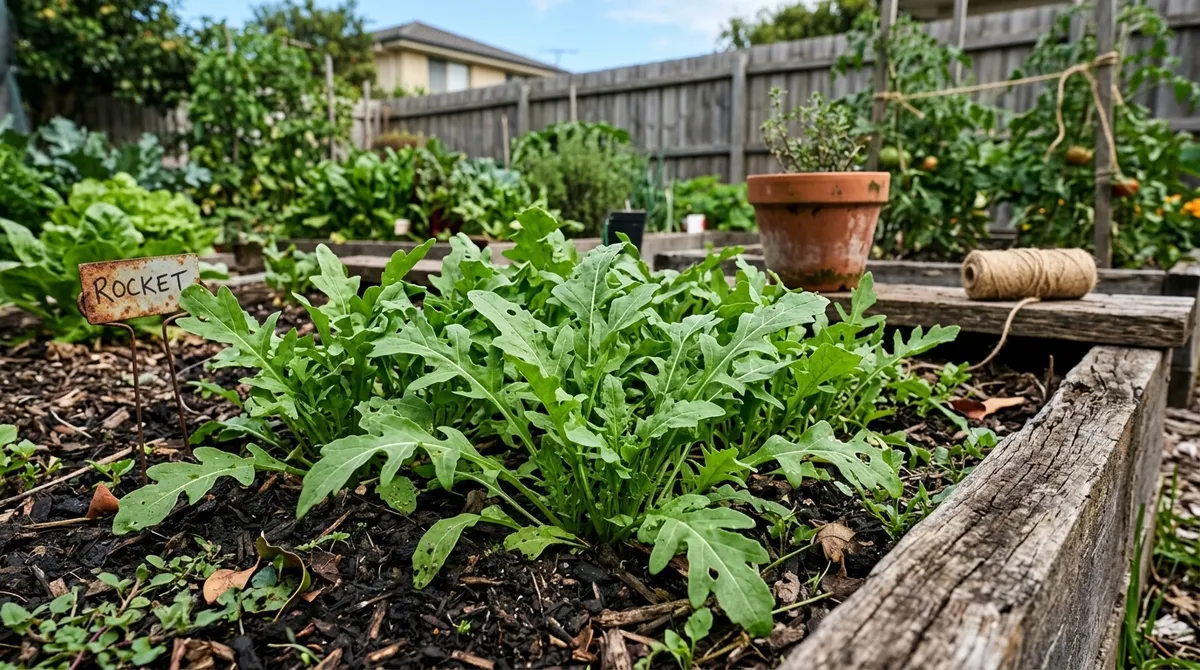
What it looks like as it grows


🌱 Plant profile: Rocket, with sowing times for your region, companion plants and common pests.
When to Plant Rocket in Your Region
Rocket prefers cool weather and grows best between 10 and 20 degrees Celsius. It tolerates light frost and actually develops better flavour in cooler conditions. Hot weather above 25 degrees causes rapid bolting, especially in salad rocket.
In subtropical regions like South East Queensland, rocket grows well from March through to October. Plant it in partial shade during the shoulder months and it will keep producing. Cool-temperate gardeners in Melbourne, Hobart, and Canberra can sow from early spring right through to late autumn. Tropical gardeners should stick to the dry season (April to September).
Wild Rocket vs Salad Rocket
There are two distinct rocket plants commonly grown in Australian gardens, and understanding the difference will save you frustration.
Salad Rocket (Eruca vesicaria)
An annual plant with broad, rounded leaves and a mild peppery flavour. Grows fast and is ready to harvest in 4 to 6 weeks from sowing. The trade-off is that it bolts quickly when temperatures rise. Best for cooler months. Produces white flowers with dark veins. Once it bolts, the leaves become intensely bitter. Sow fresh batches every 3 to 4 weeks for a continuous supply.
Wild Rocket (Diplotaxis tenuifolia)
A perennial plant with narrow, deeply lobed leaves and a much stronger, nuttier pepper kick. Grows more slowly than salad rocket but produces leaves for 2 to 3 years from a single planting. More heat-tolerant and slower to bolt. Yellow flowers that are also edible. The better choice for warm climates and gardeners who want a long-lived plant rather than repeated sowings.
Year-Round Growing in Subtropical Australia
Gardeners in South East Queensland, Northern NSW, and similar subtropical areas can grow rocket in every month of the year with the right approach.
- Autumn and winter (March to August): Peak season. Sow salad rocket freely in full sun. Growth is steady and bolting is rare. This is when rocket tastes its best.
- Spring (September to November): Sow in partial shade or under shadecloth. Salad rocket will bolt as temperatures climb, so switch to wild rocket by late October.
- Summer (December to February): Wild rocket only, planted in a shaded position. Harvest regularly to slow bolting. Expect smaller leaves with stronger flavour. Salad rocket is not worth sowing in subtropical summers.
Cool-temperate gardeners have a shorter season but can extend it at both ends by growing under cloches or in a cold frame during winter frosts.
Succession Sowing
Rocket has a short productive window before it flowers and the leaves turn bitter. The solution is simple: sow a new batch every 3 to 4 weeks throughout the growing season.
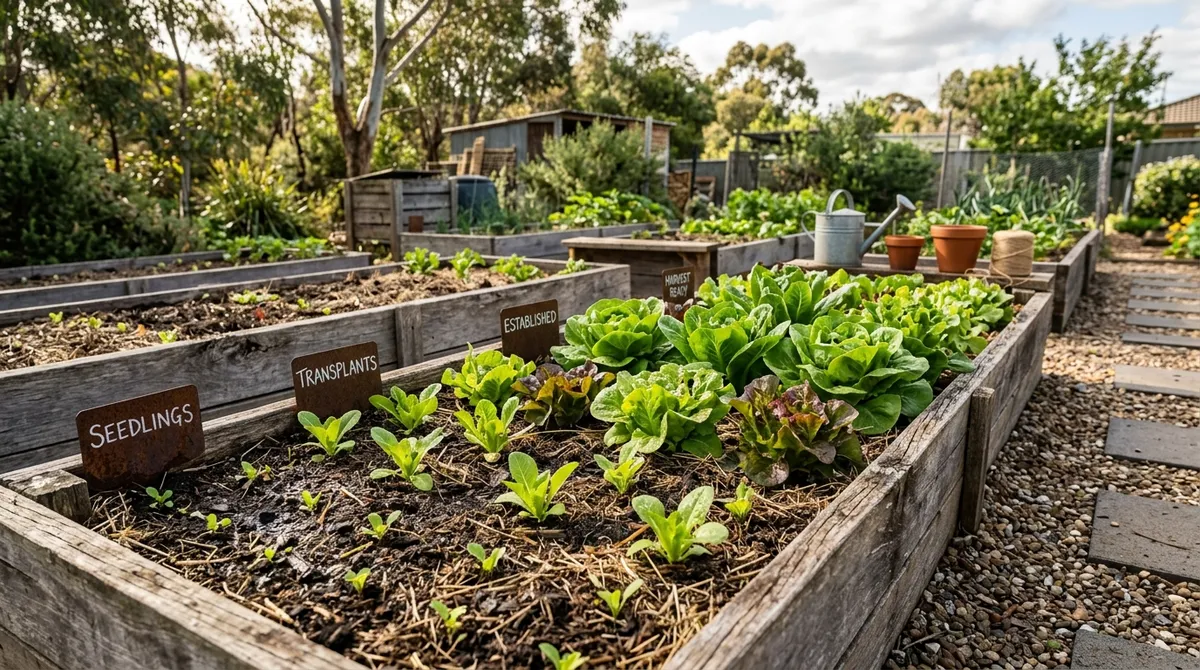
Scatter seeds thinly across a prepared bed or pot every 3 weeks. By the time your current plants are slowing down and starting to send up flower stalks, the next batch is ready to pick. Keep 3 to 4 plantings going at different stages for an unbroken supply.
Mark your sowing dates on the calendar or set reminders in the Planting Season app so you never miss a sowing window.
How to Sow Rocket
Rocket is always direct-sown. There is no benefit to starting it in trays because it germinates so quickly and transplanting slows it down.
- Seed depth: Scatter seeds on the surface and cover with no more than 5 mm of fine soil or seed-raising mix. Rocket seeds need some light to germinate.
- Spacing: Thin seedlings to 10 to 15 cm apart once they have their first true leaves. Eat the thinnings in a salad.
- Germination: 4 to 7 days in warm soil (15 to 25 degrees). Keep the surface moist until seedlings are established.
- Soil: Any reasonable garden soil with compost dug in. Rocket is not fussy. It prefers a pH of 6.0 to 7.0 but grows in most conditions.
- Watering: Keep soil consistently moist. Dry conditions stress plants and trigger early bolting. Water at the base in the morning.
Growing Rocket in Containers
Rocket is one of the best vegetables for pot growing. Its shallow roots, compact size, and fast turnaround make it ideal for balconies, patios, and kitchen windowsills.
- Use any container at least 15 cm deep with drainage holes. Wide, shallow pots and window boxes work well.
- Fill with quality potting mix. Garden soil compacts in pots and drains poorly.
- Scatter seeds across the surface, press lightly, and cover with a fine layer of mix.
- Water daily in warm weather. Pots dry out faster than garden beds, and dry rocket bolts fast.
- Feed fortnightly with a half-strength liquid fertiliser (seaweed or fish emulsion).
- Place pots in full sun during cooler months and move to a shaded spot as temperatures rise.
Harvesting: Cut-and-Come-Again
Rocket is a classic cut-and-come-again crop. You do not harvest the whole plant. Instead, pick the outer leaves once they reach 8 to 10 cm long, leaving the growing centre intact. The plant keeps pushing out new leaves from the middle.
- Start harvesting as soon as leaves are big enough to use, usually 4 to 6 weeks after sowing for salad rocket, 6 to 8 weeks for wild rocket.
- Pick outer leaves first. Never strip more than a third of the plant at once.
- Harvest in the morning when leaves are cool and crisp.
- Regular harvesting encourages leafy growth and delays flowering. A plant that is picked often produces longer than one left to grow tall.
- Once flower stalks appear and leaves taste very bitter, pull the plant and let the next succession take over. (Wild rocket flowers can be left for a while as the leaves stay palatable longer.)
Preventing Bolting
Bolting is when a plant shifts from leaf production to flowering and seed-setting. For rocket, this means the leaves become tough and unpleasantly bitter. Salad rocket is especially prone to bolting.
These strategies slow bolting down:
- Shade: Grow in partial shade during warmer months. A spot that gets morning sun and afternoon shade is ideal.
- Water: Keep soil consistently moist. Drought stress triggers bolting faster than almost anything else.
- Harvest often: Regular picking removes the growing tip energy that would otherwise go into flower production.
- Choose wild rocket: It is naturally slower to bolt and handles heat far better than salad rocket.
- Succession sow: Accept that bolting will happen and always have younger plants ready to take over.
- Mulch: A layer of sugar cane or pea straw mulch keeps roots cool and retains moisture.
Companion Planting for Rocket
Rocket fits easily into mixed plantings and makes a good understory crop beneath taller vegetables.
- Plant with: Lettuce, spinach, and other salad greens (similar needs and harvest timing). Beans and peas provide light shade that helps rocket in warmer months. Strawberries share similar spacing and watering needs. Carrots, beetroot, and radish all grow well alongside rocket.
- Avoid planting with: Other brassicas (rocket is related to cabbage and broccoli, so rotating away from those beds reduces shared pest buildup).
Common Problems
Flea beetles
Tiny black beetles that chew small round holes in rocket leaves. They are more active in warm, dry conditions. Keep plants well watered, use fine insect-exclusion netting, and remove weedy brassicas nearby that harbour the beetles. Damage is mostly cosmetic on established plants.
Aphids
Green or black aphids can cluster on rocket leaves, especially in spring. Blast them off with a strong jet of water. Encourage beneficial insects like ladybirds by growing nearby flowers. Heavy infestations can be treated with neem oil spray.
Slugs and snails
Young rocket seedlings are a favourite target. Use iron-based snail pellets around new plantings, or set up beer traps. Once plants are established, slug damage is usually manageable.
Culinary Uses
Rocket's peppery bite makes it one of the most versatile salad greens in the kitchen.
- Fresh salads: Toss with parmesan shavings, lemon juice, and olive oil. Pair with pear, walnut, and blue cheese.
- Pizza topping: Pile fresh rocket on top of pizza straight from the oven. The heat wilts it just enough.
- Pasta: Stir through hot pasta with garlic, chilli, and olive oil. The leaves wilt into a peppery sauce.
- Pesto: Blend rocket with pine nuts, parmesan, garlic, and olive oil for a sharper alternative to basil pesto.
- Sandwiches and wraps: Use rocket instead of lettuce for a flavour upgrade.
- Smoothies: Add a handful to green smoothies. The pepper flavour is mild when blended with fruit.
Frequently Asked Questions
What is the difference between wild rocket and salad rocket?
Wild rocket (Diplotaxis tenuifolia) is a perennial with narrow, deeply lobed leaves and a strong peppery flavour. It grows slowly, tolerates heat better, and produces for years. Salad rocket (Eruca vesicaria) is an annual with broader, rounder leaves and a milder taste. It grows faster and is ready to pick in 4 to 6 weeks, but bolts quickly in warm weather.
Why does my rocket keep bolting?
Rocket bolts (runs to seed) when temperatures rise above 25 degrees Celsius or when plants are water-stressed. To prevent bolting, grow rocket in partial shade during warmer months, water consistently, harvest outer leaves regularly, and switch to wild rocket which is more heat-tolerant. Succession sowing every 3 to 4 weeks also ensures you always have young, leafy plants.
Can I grow rocket in pots?
Rocket is one of the best vegetables for container growing. Use any pot at least 15 cm deep with drainage holes, fill with quality potting mix, and scatter seeds across the surface. A single window box can supply enough rocket leaves for regular salads. Water daily in warm weather and harvest the outer leaves to keep plants producing.
Can I grow rocket year-round in Australia?
In subtropical regions like South East Queensland and Northern NSW, rocket grows year-round with some shade protection in summer. In cool-temperate regions (Melbourne, Hobart), rocket grows from early spring through to late autumn. In tropical regions, grow it in the dry season (April to September). Wild rocket handles heat better than salad rocket for year-round growing.
See also: Rocket in the Plant Library
Plant profile
The rocket profile has sowing times for your region, companion plants and common pests.