How to Grow Eggplant in Australia
Updated June 2026
Varieties, heat needs, and when to sow by climate zone
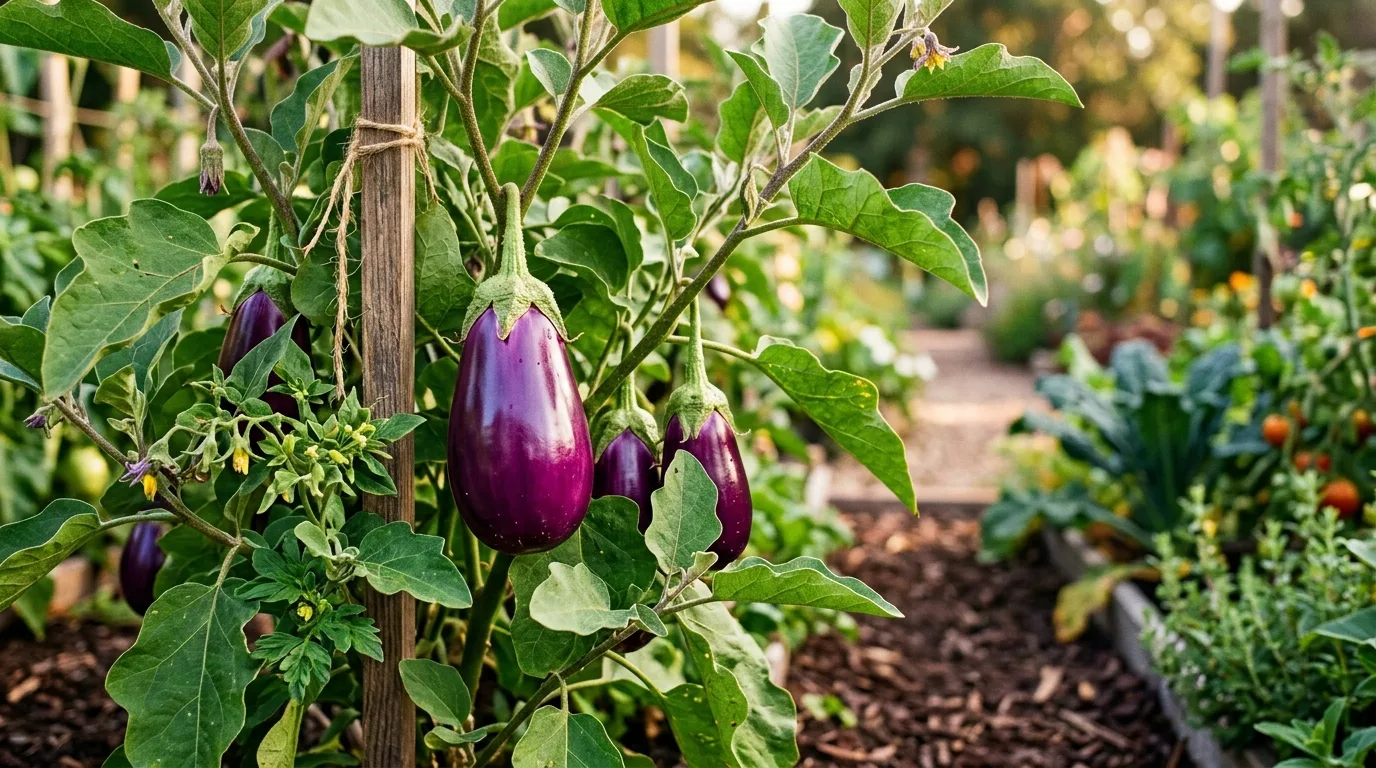
What it looks like as it grows


Eggplant is a warm-season crop that thrives in Australian summers. It is even more heat-loving than capsicum and needs three things to crop well: warm soil of at least 18 degrees to establish, warm nights to set fruit, and a long warm season to ripen. That makes it a natural fit for tropical, subtropical, and warm temperate gardens. Cool and mountain gardeners can still grow it, but it wants the warmest spot you have, a long head start indoors, and is often happiest in a pot.
The reward is worth the effort. Home-grown eggplant picked at the right stage has a creamy texture and a mild, faintly sweet flavour that supermarket fruit rarely matches. This guide covers the best varieties for Australian conditions, how to get fruit to set reliably, and how to handle the pests that find it.
Climate sowing selector
Choose your zone above to see when to sow eggplant, whether to start indoors or sow direct, whether to plant in the ground or a pot, and the warmth it needs.
🌱 Plant profile: Eggplant, with sowing times for your region, companion plants and common pests.
Position and soil
Give eggplant the hottest, sunniest position in the garden. A full day of sun is essential, and a spot against a north-facing wall or fence is ideal because the reflected heat creates a warmer microclimate. Soil should be rich, free-draining, and well dug with compost. Aim for a slightly acidic to neutral pH of about 6.0 to 7.0.
- Full sun, all day, with shelter from cold wind
- Rich, free-draining soil improved with plenty of compost
- Warm the soil before planting with black plastic or by waiting for true warmth
- In cool areas, a large pot against a sunny wall beats open ground
Sowing and planting
Eggplant seed is slow to germinate and needs steady warmth to get moving. Start seed indoors 8 to 10 weeks before you plan to transplant. Soil temperature of 25 to 30 degrees gives reliable germination, so a heat mat or the top of a warm appliance helps. Seedlings then grow slowly for the first few weeks, so do not rush them outside.
- Sow seed 1 cm deep in seed-raising mix, on bottom heat if you can
- Keep the mix consistently moist but never waterlogged
- Germination takes 10 to 21 days depending on warmth
- Pot up once seedlings have two true leaves
- Harden off over a week before planting out
- Transplant only when nights stay above 15 degrees and the soil is at least 18 degrees
Spacing
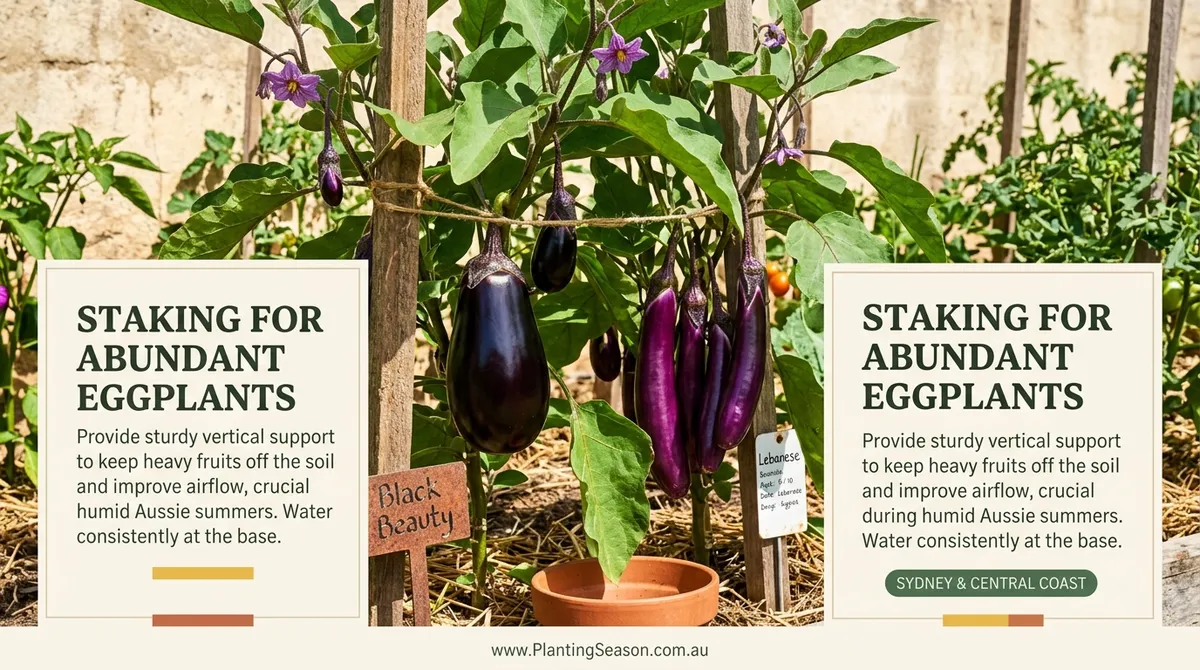
Space plants about 50 to 60 cm apart, with similar spacing between rows. Eggplant grows into a sturdy bush, but the fruit is heavy and can pull branches down or snap them, so stake each plant early with a single stake or a tomato cage.
Watering and feeding
Consistent moisture is the key to tender, non-bitter fruit. Irregular watering leads to tough skin and a bitter flavour, so water deeply and mulch heavily to hold moisture in. Once flowering starts, feed every two weeks with a potassium-rich fertiliser to drive fruiting rather than leafy growth. Go easy on high-nitrogen feeds, which give you a lush bush and few fruit.
Pollination
Eggplant flowers are self-fertile, so a single plant will set fruit on its own. Pollination is helped along by gently shaking or tapping open flowers in the warmest part of the day to release pollen. The main enemy of fruit set is temperature: flowers drop without setting when nights fall below about 15 degrees or days push well past 35 degrees.
Common problems
Flower drop
The most common complaint. Flowers form and then fall without setting fruit. The cause is almost always temperature, either cold nights below 15 degrees or extreme heat above the mid-30s. Wait for settled warm weather, keep water steady, and shake the flowers to assist pollination.
Blossom end rot
A sunken brown patch at the base of the fruit. It is caused by uneven watering disrupting calcium uptake, not by a pest. Mulch well and water consistently to fix it.
Aphids
Clusters of small sap-suckers on new growth and under leaves. Squash them, hose them off, or spray with soap or oil. Encourage ladybirds and other predators.
Two-spotted mite (red spider mite)
Fine speckling and pale, dull leaves in hot dry weather, with faint webbing underneath. Raise humidity, hose the undersides of leaves, and spray with horticultural oil if it spreads.
Fruit fly
A major pest in Queensland and northern areas. Females lay eggs inside the fruit and the larvae feed within, ruining the harvest. Use exclusion bags or fine netting over plants, and protein-bait traps to monitor and reduce numbers.
Harvesting
Pick eggplant while the skin is glossy and firm. Press the fruit gently with a thumb: if the flesh springs back it is ready, and if the dent stays the fruit is overripe. Overripe eggplant has dull skin and brown seeds inside, and turns tough and bitter. Pick regularly to keep the plant producing, and cut the tough, sometimes thorny stem with secateurs rather than pulling the fruit off.
Best varieties
| Variety | Type | Notes |
|---|---|---|
| Black Beauty | Large purple | The classic glossy dark eggplant with firm white flesh. A heavy cropper in warm conditions. |
| Long Purple / Lebanese | Long, slender | Thin skin that needs no peeling, mild flavour, fewer seeds. Quick to mature and very productive. |
| Ichiban (Japanese long) | Long, slim | Slender deep-purple fruit, tender and early. Reliable and prolific in the heat. |
| Listada de Gandia | Striped heirloom | Purple and white striped fruit, sweet and creamy. A handsome ornamental as well as a cropper. |
| Rosa Bianca | Round Italian | Plump lavender-pink fruit, mild and creamy with very little bitterness. |
| Casper (white) | White | Ivory-skinned fruit with a mild, mushroom-like flavour. A novelty that crops well in warmth. |
When to sow by region
Australia sits in the southern hemisphere, so the warm growing window runs from spring into autumn. In warm temperate areas, transplant from October to December once nights are reliably mild. Tropical and subtropical gardeners get a longer window and often plant through the warm dry months. Cool and mountain gardeners should start very early indoors and grow under cover or in pots. Use the climate sowing selector above for timing tailored to your zone.
Frequently Asked Questions
When should I plant eggplant in Australia?
Start seed indoors with bottom heat 8 to 10 weeks before your last frost, then transplant only once nights stay above 15 degrees and the soil is at least 18 degrees. In warm temperate areas that means transplanting from October to December. Tropical and subtropical gardeners can plant through the warm dry months, roughly March to September.
Why won't my eggplant set fruit?
The usual cause is temperature. Eggplant flowers drop without setting when nights fall below about 15 degrees or days climb well above 35 degrees. Gentle shaking of open flowers improves self-pollination, and avoiding high-nitrogen feeds once flowering starts helps the plant put energy into fruit rather than leaves.
Do eggplants need a lot of heat?
Yes. Eggplant is even more heat-loving than capsicum. It needs warm soil of 18 degrees or more to establish, warm nights to set fruit, and a long warm season to crop well. In cool or mountain areas grow it in a pot against a sunny wall or under cover.
Can I grow eggplant in a pot?
Yes, and in cool areas a pot is often the best option. Use a container of at least 30 to 40 litres, a quality potting mix, and stand it in the warmest, sunniest spot you have. Pots warm up faster than garden soil and can be moved to follow the sun or shelter from cold snaps.
How long does eggplant take to grow?
Allow about 12 to 16 weeks from transplant to the first pick. Plants are slow to establish but then crop steadily through summer and into autumn in warm regions.
How do I know when eggplant is ready to pick?
Pick while the skin is glossy and the flesh springs back to a gentle press. Dull skin and brown seeds mean it is overripe and will taste bitter. Cut the tough stem with secateurs rather than pulling the fruit.
Is aubergine the same as eggplant?
Yes. Aubergine is the British and New Zealand name for the same plant Australians call eggplant. The growing advice on this page applies to both.
See also: Eggplant in the Plant Library
Plant profile
The eggplant profile has sowing times for your region, companion plants and common pests.