How to Grow Tomatoes in Australia
Updated June 2026
Varieties, planting times, staking, feeding, and troubleshooting for every region
All our tomato guides: when to plant in your region, varieties and fixes.
Tomatoes are Australia's most popular homegrown crop. Nothing from a supermarket comes close to the flavour of a tomato picked warm off the vine, and they grow well in every part of the country with the right timing and variety selection.
This guide covers an interactive variety picker with more than 20 real tomatoes, planting calendars for all 10 regions, and practical advice on feeding, growing in pots, staking, pruning, and solving common problems. Whether you are growing your first plant or your fiftieth, there is something here to help you get a better harvest, including the sweetest tomatoes you can grow.
What it looks like as it grows


🌱 Plant profile: Tomato, with sowing times for your region, companion plants and common pests.
When to Plant in Your Region
Tomato Variety Picker
There is no single best tomato. The right one depends on what you want to do with it. Use the picker below to filter by use, by habit, or flip on the sweetest toggle to see the varieties that consistently top the charts for sweetness. All of these are real varieties sold in Australia as seed or seedlings.
| Variety | Type | Habit | Days | Flavour note |
|---|---|---|---|---|
| SungoldSweetest | Cherry | Indeterminate | 65 | Glowing orange cherry widely named the sweetest tomato of all. Heavy cropper, eaten by the handful straight off the vine. |
| Sweet 100Sweetest | Cherry | Indeterminate | 65 | Long trusses of small, very sweet red cherries. Reliable and prolific, a classic snacking tomato. |
| Sweet MillionSweetest | Cherry | Indeterminate | 65 | Improved Sweet 100 with crack resistance and even sweeter fruit over a long season. |
| Tommy ToeSweetest | Cherry | Indeterminate | 70 | Australian heirloom cherry. Tangy-sweet, incredibly productive, with strong disease resistance. Great for beginners and pots. |
| Yellow PearSweetest | Cherry | Indeterminate | 75 | Mild, sweet, pear-shaped yellow cherries. Pretty in salads and very heavy cropping over months. |
| Gardeners DelightSweetest | Cherry | Indeterminate | 65 | British heirloom cherry with a rich sweet-sharp flavour. Dependable and well loved. |
| Black Cherry | Cherry | Indeterminate | 70 | Dusky purple cherry with a deep, complex, almost smoky flavour. A standout for fresh eating. |
| Grosse Lisse | Slicing | Indeterminate | 80 | The classic Australian tomato. Large, round, balanced flavour. Reliable in every region over a long season. |
| Money Maker | Slicing | Indeterminate | 75 | Old reliable that sets fruit in a wide range of conditions. Smooth, medium red fruit, good for everyday use. |
| Mighty Red | Slicing | Determinate | 70 | Compact bush slicer that crops in a tidy flush. A good choice for small gardens and large pots. |
| Green Zebra | Slicing | Indeterminate | 78 | Green-and-gold striped fruit with a zingy, tart flavour. A salad showpiece that stays green-toned when ripe. |
| Roma | Paste / sauce | Determinate | 75 | Thick-fleshed paste tomato with few seeds. Ripens in a concentrated flush, ideal for sauce and bottling. |
| San Marzano | Paste / sauce | Indeterminate | 80 | The famous Italian sauce tomato. Long, meaty, low-moisture fruit that cooks down into a rich passata. |
| Amish Paste | Paste / sauce | Indeterminate | 85 | Heirloom paste with more flavour than most sauce types. Larger, slightly heart-shaped fruit, excellent cooked. |
| Brandywine | Beefsteak | Indeterminate | 90 | Famous pink beefsteak heirloom. Big, rich, old-fashioned tomato flavour. Needs a long warm season and strong staking. |
| Cherokee Purple | Beefsteak | Indeterminate | 80 | Dusky rose-purple heirloom beefsteak with a deep, sweet-savoury, almost wine-like flavour. A connoisseur favourite. |
| Black Krim | Beefsteak | Indeterminate | 80 | Dark mahogany Russian heirloom with rich, slightly salty, complex flavour. Stunning sliced for sandwiches. |
| Black Russian | Beefsteak | Indeterminate | 80 | Deep purple-brown fruit with intense, complex flavour. Beautiful in salads. Eat fresh rather than storing. |
| Beefsteak | Beefsteak | Indeterminate | 85 | Big, meaty, classic red slicer for burgers and sandwiches. Needs heat, feeding and firm support. |
| Mortgage Lifter | Beefsteak | Indeterminate | 90 | Huge pinkish-red beefsteak up to 1 kg with mild, rich flavour and few seeds. A long-season heirloom giant. |
| Tumbling Tom | Cherry | Determinate | 70 | Trailing dwarf bred for hanging baskets and pots. Cascades of small sweet-tart fruit in a small space. |
| Patio | Slicing | Determinate | 70 | Compact bush developed for containers. Full-size flavour on a tidy plant that needs little staking. |
Starting from Seed
Start tomato seeds indoors 6 to 8 weeks before your last expected frost. Fill seed trays with quality seed-raising mix and sow seeds 5 mm deep. Keep the mix moist and warm. Tomato seeds germinate best at soil temperatures between 20 and 30 degrees Celsius.
Place trays in a warm, bright spot or use a heat mat to maintain temperature. Seedlings should emerge within 7 to 14 days. Once they have two sets of true leaves, pot them up into individual containers. Harden off seedlings by gradually exposing them to outdoor conditions over a week before transplanting.
Planting Out
Tomatoes need full sun. Choose a spot that gets at least 6 to 8 hours of direct sunlight per day. Prepare the soil by digging in plenty of compost and aged manure. Tomatoes are heavy feeders and perform best in rich, well-drained soil with a pH of 6.0 to 6.8.
Plant seedlings deep, burying the lower part of the stem up to the first set of leaves. The buried stem will develop extra roots, giving the plant a stronger root system. Space plants 60 cm apart in rows 80 cm apart.
Water in well after planting and apply a thick layer of mulch (straw or sugar cane) to keep roots cool and retain moisture. Leave a gap around the stem to prevent collar rot.
Staking and Support
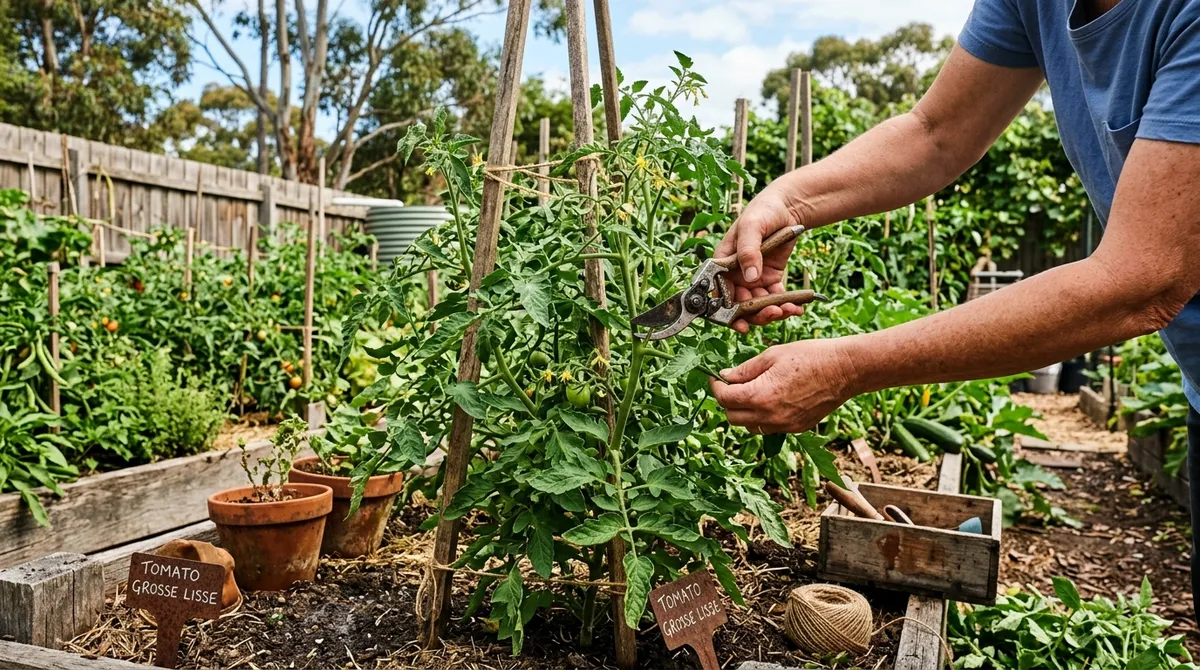
Stake tomatoes at planting time, not later. Pushing a stake in after the plant has grown risks damaging the root system. Use a sturdy 1.8 m stake driven 30 cm into the ground beside each plant.
There are three common support methods:
- Single stake: Tie the main stem to a stake with soft ties as it grows. Simple and effective for most home gardens.
- Tomato cage: A wire cage around each plant supports side branches without tying. Good for bushy determinate varieties like Roma.
- String trellis: Run a horizontal wire above the row and drop strings to each plant. Twist the stem around the string as it grows. This is the method used by most commercial growers and works well for indeterminate types.
Feeding Tomatoes
Tomatoes are heavy feeders, and what they need changes through the season. Feed them right and you get fruit instead of jungle.
- Early (planting to first flowers): the young plant is building leaves and roots, so a little nitrogen helps. Compost and aged manure dug in before planting usually cover this. Go easy. Too much nitrogen now means a big green bush and few tomatoes later.
- Flowering and fruiting: switch to potassium (potash). Potassium drives flowering, fruit set and flavour. Start liquid feeding every one to two weeks once the first flowers appear, using a fertiliser labelled for tomatoes or flowering plants, which is naturally higher in potassium.
Organic feeding options
- Compost and worm castings: the backbone of a well-fed tomato. Dig compost in at planting and top-dress with worm castings through the season for a steady, gentle feed. This is where the homestead loop pays off: your scraps and worm farm feed the bed. See how it all connects in Connections.
- Comfrey tea: comfrey leaves steeped in water make a free, high-potassium liquid feed that is close to ideal for fruiting tomatoes.
- Blood and bone: a slow-release organic source of nitrogen and phosphorus, best worked into the soil before planting rather than during fruiting.
If your plants are dark green and leafy but not setting fruit, you have too much nitrogen. Cut the nitrogen and switch to a potassium feed.
Growing Tomatoes in Pots and Containers
Tomatoes grow well in pots, which makes them a great crop for balconies, courtyards and renters. The key is a big enough pot and the right variety.
- Pot size: use a minimum 40 cm (about 40 litre) pot for a full-size tomato, larger if you can. Small pots dry out fast and starve the roots. Dwarf and bush types can take a 30 cm pot.
- Best container varieties: choose compact, determinate or dwarf types. Tumbling Tom is bred for hanging baskets, Patio and Roma do well in pots, and Tommy Toe is a productive cherry for a large tub. Avoid tall indeterminate beefsteaks unless you have a very big container and a strong stake.
- Watering: containers dry out quickly. Water daily in summer, ideally in the morning, and never let the mix dry out completely or you invite blossom end rot.
- Feeding: potting mix runs out of nutrients fast, so feed potted tomatoes more often than garden ones, every week once they are flowering, with a potassium-rich liquid feed.
Watering
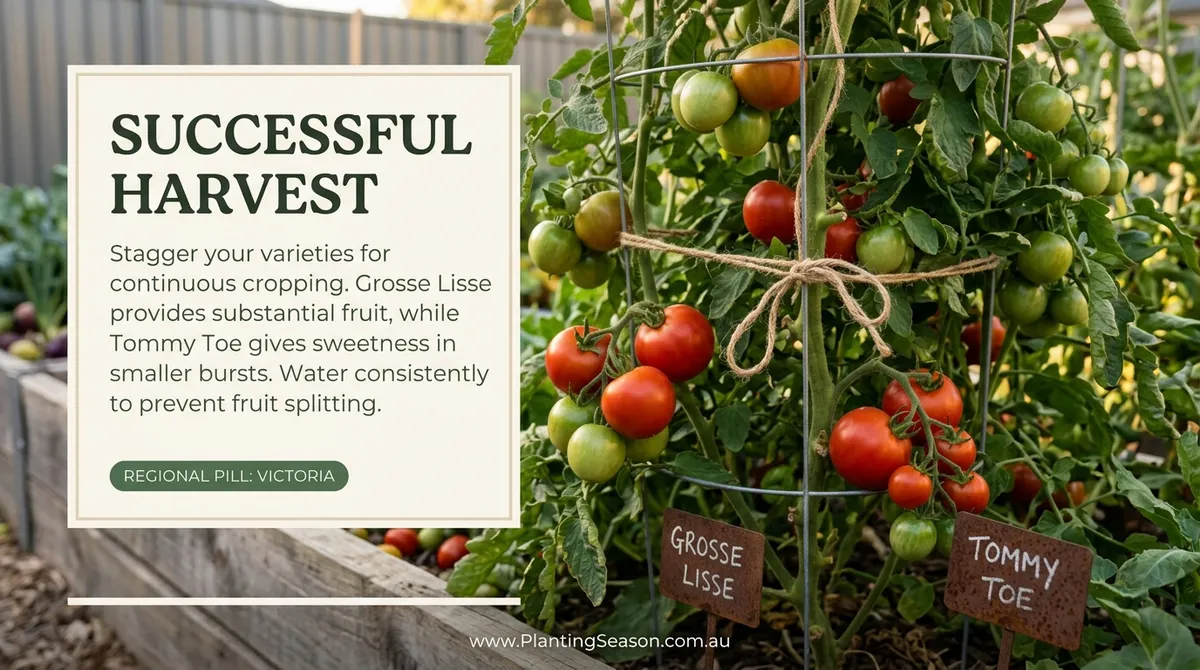
Water deeply and consistently. Tomatoes need even moisture throughout the growing season. Irregular watering is the number one cause of blossom end rot and fruit splitting.
Water at the base of the plant, not overhead. Wet foliage encourages fungal diseases. A drip system or soaker hose is ideal. In hot weather, established plants may need watering every day or every second day. Mulch heavily to reduce water loss.
Common Problems
Blossom end rot
A dark, sunken patch on the bottom of the fruit. This is caused by calcium deficiency in the developing fruit, almost always triggered by inconsistent watering rather than a lack of calcium in the soil. Fix it by watering regularly and deeply, and mulching to maintain even soil moisture. Adding lime or gypsum before planting can also help.
Fruit fly
A serious pest in South East Queensland, Northern NSW, and tropical regions. Female flies lay eggs inside ripening fruit, and the larvae destroy it from the inside. Use exclusion bags or fine mesh netting over individual trusses. Protein bait traps can reduce fly numbers. Pick up and dispose of all fallen fruit promptly.
Leaf curl
Tomato leaves often curl upward in hot weather or after heavy pruning. This is usually a stress response and not a disease. The plant will recover on its own as conditions improve. Severe curling with yellowing, stunting, or distorted new growth may indicate tomato yellow leaf curl virus, which is spread by whitefly. Remove and destroy affected plants.
Blight (early and late)
Early blight shows as brown spots with concentric rings on lower leaves, spreading upward. Late blight is faster and more destructive, with dark greasy patches on leaves and fruit in cool, wet weather. Both are fungal. Remove affected leaves immediately, improve air circulation, avoid overhead watering, and mulch to stop soil splashing onto leaves. Rotate your tomato spot each year and never compost blight-affected plants.
Fruit cracking
Splits in the skin, usually after rain or a heavy watering following a dry spell. The fruit swells faster than the skin can stretch. The fix is even, consistent watering and a good layer of mulch to buffer the soil moisture. Pick fruit promptly once it starts to colour, especially before forecast rain.
Flowers but no fruit (not setting in heat)
Tomatoes drop their flowers when it is too hot, typically above about 32 degrees Celsius in the day or warm nights above 24 degrees. Pollen becomes sterile and the flowers fall without setting. Provide afternoon shade cloth in heatwaves, keep water up, and choose heat-tolerant varieties for hot regions. Cooler weather usually brings fruit set back on its own.
Plan Your Varieties in the App
The variety picker above helps you decide. The Planting Season app helps you grow it. When you add a tomato to your garden you can choose your variety from the in-app dropdown, and the app tracks it from sowing through to harvest with reminders tuned to your region. Grow a cherry for the kids, a paste type for sauce and a beefsteak for sandwiches, and keep them all on one plan.
Frequently Asked Questions
When should I plant tomatoes in Australia?
Planting time depends on your region. In cool-temperate areas (Melbourne, Hobart, Canberra), transplant seedlings outdoors from mid-October to December. In subtropical regions (Brisbane, Northern NSW), plant from August to March. Tropical gardeners (Darwin, Far North QLD) can plant through the dry season from April to August.
How long do tomatoes take to grow?
Most tomato varieties take 8 to 12 weeks from transplanting to first harvest. Cherry types like Tommy Toe are fastest at around 8 weeks. Large beefsteak varieties like Mortgage Lifter need 10 to 12 weeks. Add 6 to 8 weeks if starting from seed indoors.
Why are my tomato leaves curling?
Leaf curl in tomatoes is usually caused by heat stress, inconsistent watering, or heavy pruning. It is rarely a serious problem and the plant often recovers on its own. Severe curling with yellowing or distorted new growth may indicate a virus, in which case remove the affected plant.
How do I prevent blossom end rot?
Blossom end rot is caused by calcium deficiency, almost always triggered by inconsistent watering rather than a lack of calcium in the soil. Water deeply and regularly, mulch to maintain even soil moisture, and avoid letting plants dry out between waterings. Adding lime or gypsum to the soil before planting can also help.
What is the sweetest tomato to grow?
Cherry tomatoes are the sweetest. Sungold is the variety most gardeners name as the sweetest of all, followed by Sweet 100, Sweet Million, Tommy Toe and Yellow Pear. If sweetness is your goal, grow a cherry type and pick the fruit fully ripe and warm off the vine.
What is the difference between determinate and indeterminate tomatoes?
Determinate (bush) tomatoes grow to a set size and ripen most of their fruit in a concentrated flush, which is ideal for sauce and bottling and for pots. Indeterminate (vine) tomatoes keep growing and fruiting all season, need staking and pruning of side shoots, and give you a steady pick over months. Roma is determinate; Grosse Lisse, Black Russian and most heirlooms are indeterminate.
What is the best tomato for pots?
Choose a compact, determinate or dwarf variety for containers. Tumbling Tom is bred for hanging baskets, Patio and Roma do well in pots, and Tommy Toe is a productive cherry for a large tub. Use at least a 40 cm pot for a full-size plant, water daily in summer, and feed weekly once it is flowering.
How often should I feed tomatoes?
Feed every one to two weeks once the first flowers appear, using a potassium-rich liquid fertiliser. Potted tomatoes need feeding more often, about weekly, because potting mix runs out of nutrients faster than garden soil. Ease off nitrogen once flowering starts so the plant puts its energy into fruit.
See also: Tomato in the Plant Library and How to Grow Strawberries
Plant profile
The tomato profile has sowing times for your region, companion plants and common pests.