How to Grow Spring Onions in Australia
Updated June 2026
One of the easiest vegetables you can grow, producing fresh harvests in as little as 8 weeks
Spring onions are the vegetable every gardener should have growing at all times. They take up almost no space, grow in any season across most of Australia, and produce a harvest within weeks of sowing. You can tuck them between other plants, grow them in a pot on a balcony, or fill an entire raised bed. They are forgiving, fast, and endlessly useful in the kitchen.
The mild onion flavour of a freshly picked spring onion is sharper and more complex than anything from a supermarket bunch. The white base has a gentle bite. The green tops are grassy and bright. You use both parts, and you can start harvesting leaves well before the whole plant is ready to pull.
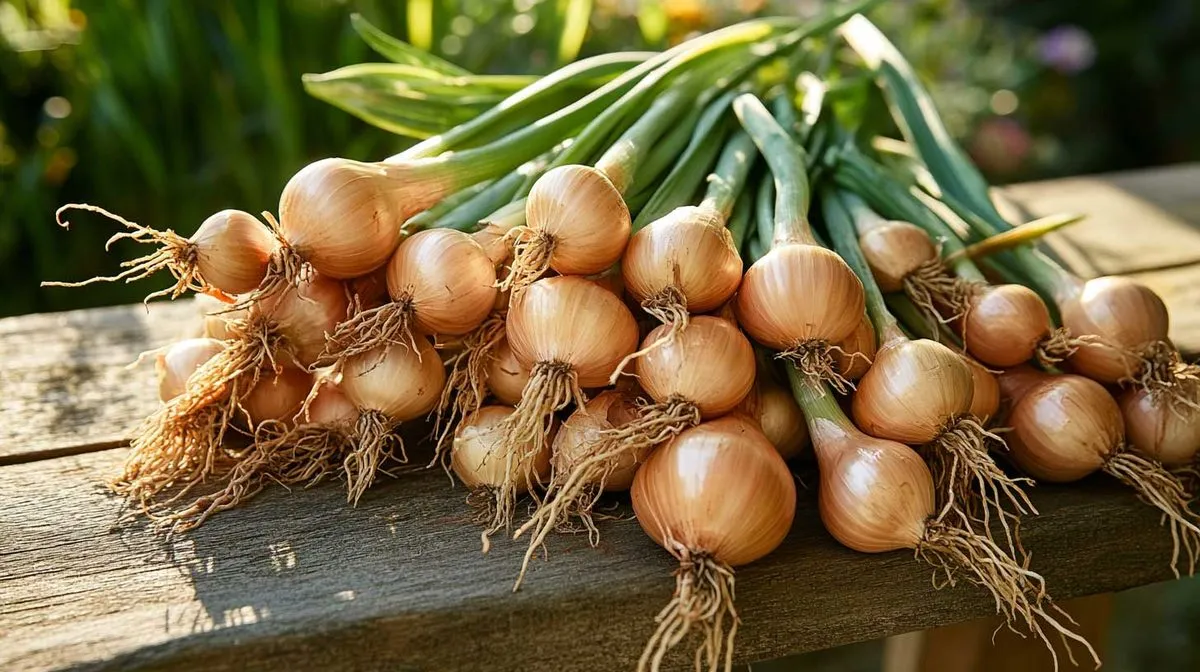
Spring onions go by several names in Australia. You might hear them called scallions, shallots (though true shallots are a different plant), or green onions. They all refer to the same thing: a young onion harvested before it forms a large bulb.
🌱 Plant profile: Spring Onion, with sowing times for your region, companion plants and common pests.
Why Spring Onions Belong in Every Garden
There are good reasons spring onions show up in almost every beginner gardening guide. They are quick, low maintenance, and productive. A single 30 cm pot can keep a household supplied with fresh spring onions for months if you use the cut-and-come-again technique.
- Fast to harvest. Ready in 8 to 12 weeks from seed, or 4 to 6 weeks from seedlings.
- Year-round growing. Spring onions tolerate mild frost and handle summer heat with a bit of shade and water.
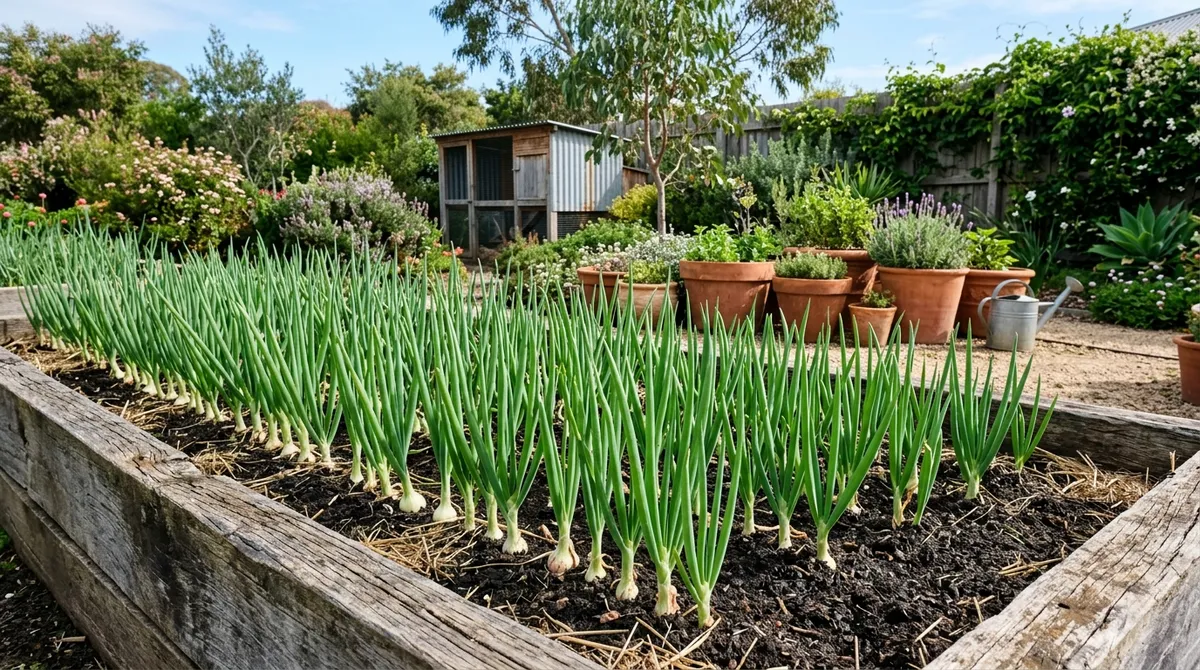
- Small footprint. You can grow them 2 to 3 cm apart in rows or clusters. They take up less room than almost any other vegetable.
- Cut-and-come-again. Snip the green tops and they regrow. You get multiple harvests from one sowing.
- Pest resistant. Few pests bother spring onions. Their onion scent actually deters some common garden insects.
Best Spring Onion Varieties for Australia
Straight Leaf
The standard spring onion variety sold in most Australian nurseries and seed catalogues. Produces long, straight green tops with a clean white base. Reliable in all climates and all seasons. This is the one to start with if you have never grown spring onions before.
White Lisbon
An heirloom variety with a mild flavour and quick growth. White Lisbon handles cold weather well and is a good pick for autumn and winter sowing in southern states. Slightly thinner stems than Straight Leaf but very tender when young.
Ishikura Long White
A Japanese bunching onion that produces tall, thick stems without forming a bulb. The long white shaft makes it popular in Asian cooking. Slower to bolt in warm weather than other varieties. Grows to 40 cm tall with the right conditions.
Red Beard
A red-skinned spring onion with a slightly stronger flavour. The red colour fades during cooking but looks striking in salads and garnishes. Grows well in cooler climates. Less common in nurseries but available through specialist seed suppliers.
When to Plant Spring Onions in Australia
Spring onions can be sown in every month of the year in most Australian climates. That makes them one of the few truly year-round vegetables.
By Season and Region
- Cool and temperate climates (Melbourne, Adelaide, Hobart, Canberra, Sydney): Sow year-round. Growth slows in the coldest weeks of winter but plants survive frost down to about minus 5 degrees Celsius. Summer sowings may bolt faster in extended heatwaves.
- Subtropical (Brisbane, Northern NSW): Sow year-round. Growth is fastest in the cooler months from March to September. In summer, provide afternoon shade and keep the soil moist to prevent bolting.
- Tropical (Darwin, Cairns, Townsville): Sow from March to August during the dry season. Spring onions struggle in the wet season with high humidity, heavy rain, and fungal problems.
- Arid/Semi-arid (inland areas): Sow from February to October. Avoid the hottest summer months when soil temperatures exceed 35 degrees Celsius. Mulch heavily and water consistently.
Soil Preparation
Spring onions are not fussy about soil, but they grow faster and taste better in ground that has been properly prepared.
- Soil type. Loose, well-drained soil with plenty of organic matter. Heavy clay holds too much moisture around the shallow roots and can cause rot. Sandy soil drains too fast and needs regular watering and feeding. Loam is ideal.
- pH. Between 6.0 and 7.0. Spring onions tolerate a wider range but grow best in slightly acidic to neutral soil. Add lime if your soil is below 5.5.
- Preparation. Dig in a bucket of compost per square metre and a handful of blood and bone. Rake the surface smooth. Spring onion seeds are tiny and need a fine, even seedbed to germinate well.
- Raised beds and containers. Use a premium potting mix or a 50/50 blend of compost and garden soil. Ensure drainage holes are clear.
Sowing Spring Onion Seeds
You can grow spring onions from seed, seedlings, or even the root ends of shop-bought bunches. Seed is the cheapest and most common method.
Direct sowing
- Create shallow furrows about 1 cm deep and 15 cm apart. Use the edge of a ruler or a stick pressed into the soil.
- Scatter seeds thinly along the furrow. Aim for a seed every 1 to 2 cm. Spring onion seeds are small and black. Sowing too thickly is easy, so take your time.
- Cover lightly with fine soil or seed-raising mix. Press down gently with the flat of your hand.
- Water with a gentle spray. A heavy jet will wash the seeds out of the furrow. Use a watering can with a fine rose or a hose on mist setting.
- Keep the soil moist until germination, which takes 7 to 14 days depending on soil temperature. In cooler weather, germination can take up to 3 weeks.
Thinning
Once seedlings are about 5 cm tall, thin them to 2 to 3 cm apart. You can eat the thinnings. They are tiny but perfectly edible as micro spring onions in salads.
Growing from shop-bought spring onions
Save the root ends (the bottom 3 to 4 cm with roots attached) from a bunch of spring onions. Plant them 2 cm deep in soil or potting mix with the cut end facing up. Water well. New green shoots will appear within a week. This is a quick way to get a few extra plants without buying seeds, but the regrowth is usually thinner and less vigorous than seed-grown plants.
Growing Spring Onions in Containers
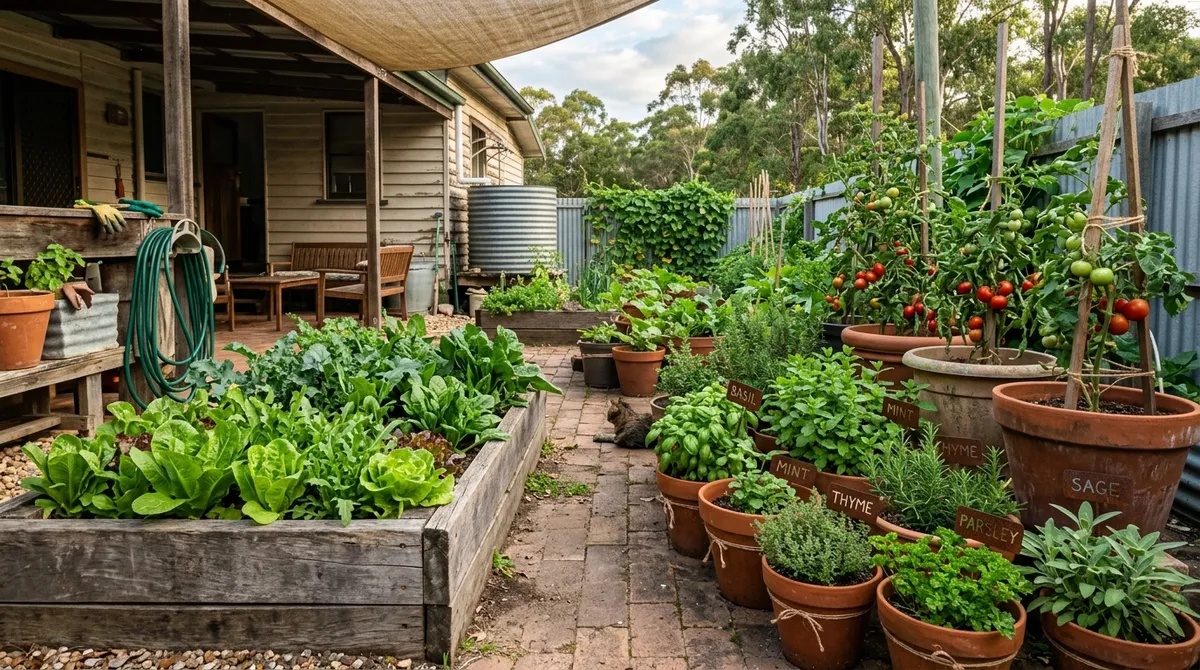
Spring onions are one of the best vegetables for container growing. They have shallow roots, compact growth, and do not need much space. If you only have a balcony, a windowsill, or a small patio, spring onions should be at the top of your list.
Container requirements
- Depth: At least 15 cm. Deeper pots (20 to 25 cm) produce longer white stems.
- Width: A 30 cm diameter pot comfortably holds 15 to 20 spring onions.
- Drainage: Essential. Make sure the pot has drainage holes. Sitting in waterlogged soil causes root rot fast.
- Material: Any pot material works. Terracotta dries out faster (more watering needed). Plastic retains moisture longer. Fabric pots provide excellent drainage and airflow.
Potting mix
Use a quality potting mix with slow-release fertiliser. Avoid garden soil in pots because it compacts and drains poorly. Top up with a 2 cm layer of compost every 6 to 8 weeks to keep the soil fertile.
Watering containers
Pots dry out faster than garden beds, especially in summer. Check daily and water when the top 2 cm of soil is dry. Spring onions in pots that dry out completely become tough and bitter. Consistent moisture is the single most important factor for good container-grown spring onions.
The Cut-and-Come-Again Method
This is the technique that makes spring onions so valuable for small spaces. Instead of pulling the whole plant, you cut the green tops and let them regrow.
- Wait until the plant is at least 20 cm tall. You need enough leaf growth to sustain regrowth after cutting.
- Cut the green tops with scissors or a sharp knife about 3 cm above the soil surface. Leave the white base and roots in the ground.
- Water and feed immediately after cutting. A half-strength liquid fertiliser (seaweed or fish emulsion) gives the plant a boost.
- New growth appears within a few days. You can harvest again in 2 to 3 weeks.
- Repeat 3 to 4 times. After that, the plant becomes less vigorous and the regrowth is thinner. Pull the old plants, add compost, and sow fresh seed.
This method works especially well in containers where space is limited. A single pot can produce spring onion greens for 3 to 4 months with regular cutting and feeding.
Succession Sowing for Continuous Harvests
The key to always having spring onions is to sow new batches before the current ones are finished. This is called succession sowing, and spring onions are the perfect crop for it.
- Sow every 3 to 4 weeks. Mark it on your calendar or set a reminder. Small sowings are fine. A 30 cm row produces plenty for a household.
- Stagger your plantings. While you are harvesting one batch, the next batch is growing, and another batch is just germinating. You always have spring onions at the ready.
- Label each sowing with the date. This helps you track how long each batch takes in different seasons and adjust your timing.
Watering, Feeding, and Mulching
Watering
Spring onions need consistent moisture. They have shallow roots that sit in the top 10 to 15 cm of soil, so they feel drought quickly. Water deeply every 2 to 3 days in warm weather, and once a week in cooler months. The soil should stay evenly moist but not waterlogged.
Feeding
Spring onions are light feeders compared to fruiting vegetables, but they still benefit from regular nutrition. Apply a liquid fertiliser (seaweed extract or fish emulsion) every 2 to 3 weeks. Avoid high-nitrogen fertilisers late in the growing cycle because they can make the stems soft and watery.
Mulching
A thin layer of sugar cane mulch or straw (2 to 3 cm) helps keep the soil moist and cool. Keep mulch away from the base of the plants to prevent rot. In summer, mulch is especially important for slowing evaporation and keeping root temperatures down.
Companion Planting
Spring onions are excellent companion plants. Their mild onion scent helps deter aphids, carrot fly, and some other pests.
- Carrots: A classic pairing. Spring onions deter carrot fly, and carrots deter onion fly. Interplant rows of each.
- Lettuce: Spring onions fit neatly between lettuce plants and are harvested on a similar timeline.
- Tomatoes: Plant spring onions around the base of tomato plants to make use of otherwise wasted space.
- Brassicas (cabbage, broccoli, kale): Spring onions help repel cabbage moth and aphids.
- Avoid: Beans and peas. Alliums (the onion family) can inhibit the growth of legumes.
Common Pests and Problems
Onion thrips
Tiny insects that feed on the leaves, causing silvery streaks and distorted growth. They are most active in hot, dry weather. Spray with neem oil or insecticidal soap. Keeping plants well watered reduces thrip damage because thrips prefer stressed, dry plants.
Downy mildew
A fungal disease that causes yellow patches on the leaves, followed by a fuzzy grey-purple growth underneath. It thrives in cool, damp conditions. Improve air circulation by spacing plants properly. Avoid overhead watering in the evening. Remove and destroy affected plants.
Bolting (going to seed)
Spring onions bolt when they experience temperature stress. A sudden cold snap followed by warmth, or prolonged heat, triggers the plant to produce a flower stalk. Once a spring onion bolts, the stem becomes tough and hollow. Pull bolted plants and sow fresh seed. To reduce bolting, keep watering consistent and avoid transplant shock.
Root rot
Caused by overwatering or poor drainage. The base of the plant turns soft and slimy. Pull affected plants and improve drainage before replanting. In pots, make sure drainage holes are clear and do not leave saucers full of water.
Harvesting
Spring onions are ready to harvest when the green tops are about 20 to 30 cm tall and the base is the thickness of a pencil. You have two harvesting methods.
Whole plant harvest
Grip the base of the plant near the soil and pull gently. If the soil is loose, the whole plant comes out easily. If the soil is compacted, loosen it with a fork first. Wash off any soil and trim the root end. Use the entire plant, white base and green tops.
Cut-and-come-again harvest
Snip the green tops 3 cm above the base. The plant regrows and you harvest again in 2 to 3 weeks. This method extends the life of each planting by months.
Storage
Freshly harvested spring onions keep for about a week in the fridge, wrapped in a damp paper towel inside a plastic bag. They do not freeze well. The best storage method is to leave them in the ground and pick as needed. A living plant stays fresh longer than anything in a fridge.
Using Spring Onions in the Kitchen
Spring onions are one of the most versatile ingredients in the kitchen. Both the white base and the green tops are edible, but they have different uses.
- White base: Has a stronger onion flavour. Slice thinly and add to stir-fries, soups, and dumplings. Cook it like you would a regular onion, just faster.
- Green tops: Milder and grassy. Use raw as a garnish on everything from baked potatoes to noodle bowls. Stir through scrambled eggs in the last 30 seconds of cooking. Blend into salad dressings.
- Grilled whole: Brush with oil, sprinkle with salt, and grill on a barbecue for 2 to 3 minutes until charred. The sweetness intensifies with the heat.
- Spring onion pancakes: A classic use. Fold chopped green tops into a simple dough of flour, water, and salt, then pan-fry until crispy.
Frequently Asked Questions
How long do spring onions take to grow?
Spring onions are ready to harvest in 8 to 12 weeks from seed. You can start picking individual leaves earlier using the cut-and-come-again method, snipping green tops from about 6 weeks after sowing. Growing from seedlings or bunching sets reduces the wait to 4 to 6 weeks.
Can you grow spring onions all year round in Australia?
Yes. Spring onions tolerate a wide range of temperatures and grow through every season in most Australian climates. They handle light frost and cope with heat if given afternoon shade and consistent watering. Sow a new batch every 3 to 4 weeks for a continuous supply.
Do spring onions grow back after cutting?
Yes. If you cut the green tops about 3 cm above the base, they will regrow. You can harvest the same plant 3 to 4 times before it becomes tough or goes to seed. This cut-and-come-again method works best in well-fed, well-watered soil.
Can you grow spring onions in pots?
Spring onions are one of the best vegetables for containers. Use a pot at least 15 cm deep with good drainage. A 30 cm pot can hold 15 to 20 spring onions. Use quality potting mix, water regularly, and feed with liquid fertiliser every 2 weeks.
See also: Spring Onion in the Plant Library
Plant profile
The spring onion profile has sowing times for your region, companion plants and common pests.