Spring Vegetable Garden Australia: What to Plant in September and October
Updated June 2026
The transition season that sets up your summer harvest
Spring is the busiest and most exciting time in the vegetable garden. Winter crops are finishing, warm-season favourites are going in, and the garden transforms from survival mode to production mode in the space of a few weeks.
The challenge is timing. Plant warm-season crops too early and a late frost kills them. Plant too late and they do not have enough growing season to produce before autumn. Getting spring right means understanding your local frost risk and working with it rather than gambling against it.
🌱 Plants in this guide: Lettuce, Beans (bush), Sweet Corn, Carrot, Radish and Zucchini. Each plant profile has sowing times for your region, companion plants and common pests.
Spring Planting by Region
Tropical (Darwin, Cairns, Townsville)
Spring (September to November) is the tail end of the dry season and the start of build-up season. This is when tropical gardens wind down from their most productive period. By October, temperatures and humidity are climbing and many cool-season crops become impossible.
Plant now: watermelon, pumpkin, sweet potato, snake beans, kangkong, okra, luffa, and tropical herbs like lemongrass and Thai basil. The wet season crops go in from October onward.
Subtropical (Brisbane, Gold Coast, Sunshine Coast)
Frost is rare in coastal SEQ. Spring planting can start early, often from August. By September, warm-season crops are safe to plant outdoors.
Plant in September: tomatoes, capsicum, cucumbers, zucchini, beans, corn, eggplant, sweet potato, pumpkin, basil.
Continue planting: lettuce, spring onions, carrots (last sowing before summer heat).
Temperate warm (Sydney, Perth)
Last frost is typically August in coastal areas. September is safe for most warm-season crops, but inland areas may need to wait until October.
Plant in September: tomatoes (seedlings), cucumbers, zucchini, beans, corn, basil, chilli.
Plant in October: capsicum, eggplant, watermelon, pumpkin, sweet corn.
Temperate cool (Melbourne, Adelaide, Geelong)
Last frost is typically mid to late October in Melbourne and Adelaide. Early spring is still winter territory for warm-season crops. Start seedlings indoors in September and transplant after the last frost.
Plant in September (indoors): tomatoes, capsicum, eggplant, chilli seedlings in pots on a warm windowsill or heated mat.
Plant in October (outdoors after frost): beans, corn, zucchini, cucumbers, basil.
Plant in November: capsicum, eggplant, watermelon, pumpkin, sweet potato.
Cool climate (Hobart, Canberra, Blue Mountains)
Last frost can be as late as November. Spring is a patient game. Focus on cool-season crops in September and October, and plant warm-season crops from November onward.
Plant in September: peas, broad beans, lettuce, spinach, beetroot, carrots, rocket.
Plant in November: tomatoes, beans, corn, cucumbers, zucchini, basil, capsicum.
Managing Frost Risk
Late frosts in September and October catch many gardeners off guard, especially in Melbourne, Canberra, and inland areas of NSW. A single frost can kill tomato seedlings, basil, capsicum, and other warm-season crops overnight.
Protection methods
- Frost cloth. Drape over stakes or a frame before sunset. Remove in the morning. Commercial frost cloth provides 2 to 4 degrees of protection.
- Cloches. Cut-off plastic bottles or milk cartons placed over individual seedlings. Simple and effective for small plantings.
- Wall planting. Plant against a north-facing brick or stone wall. The wall absorbs heat during the day and radiates it at night, creating a microclimate 2 to 3 degrees warmer than the open garden.
- Delay planting. The cheapest and most reliable frost protection is patience. Wait until the risk has genuinely passed. A tomato planted in November in Melbourne will still produce well before autumn.
Starting Seeds Indoors
The smart spring strategy in frost-prone areas is to start seeds indoors while it is still cold outside. Sow tomatoes, capsicum, eggplant, and chilli in pots or trays on a warm windowsill 6 to 8 weeks before your planned outdoor planting date.
By the time the last frost passes, your seedlings are already 15 to 20 cm tall and ready to go in the ground. This gives them a significant head start compared to direct sowing or buying nursery seedlings on planting day.
Succession Planting in Spring
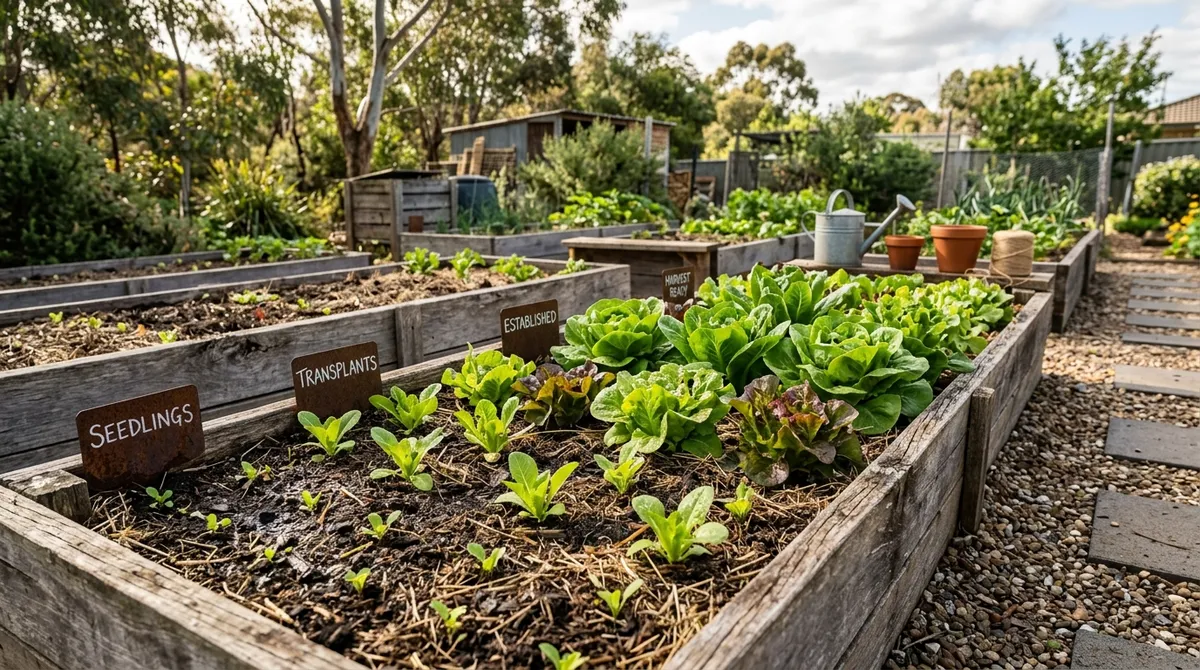
Succession planting is the practice of sowing small batches of the same crop every 2 to 3 weeks. It spreads the harvest over a longer period instead of giving you a glut followed by nothing.
These crops respond well to succession planting in spring:
- Lettuce. Sow every 2 weeks from September to November. Heat-tolerant varieties for the later sowings.
- Beans. Sow every 3 weeks from October to January.
- Corn. Sow every 2 to 3 weeks from October to December for staggered cob harvests.
- Carrots. Sow every 3 weeks from September to November.
- Radish. Sow every 2 weeks. They are ready in 4 to 6 weeks and fill gaps between larger crops.
Preparing Beds for Warm-Season Crops
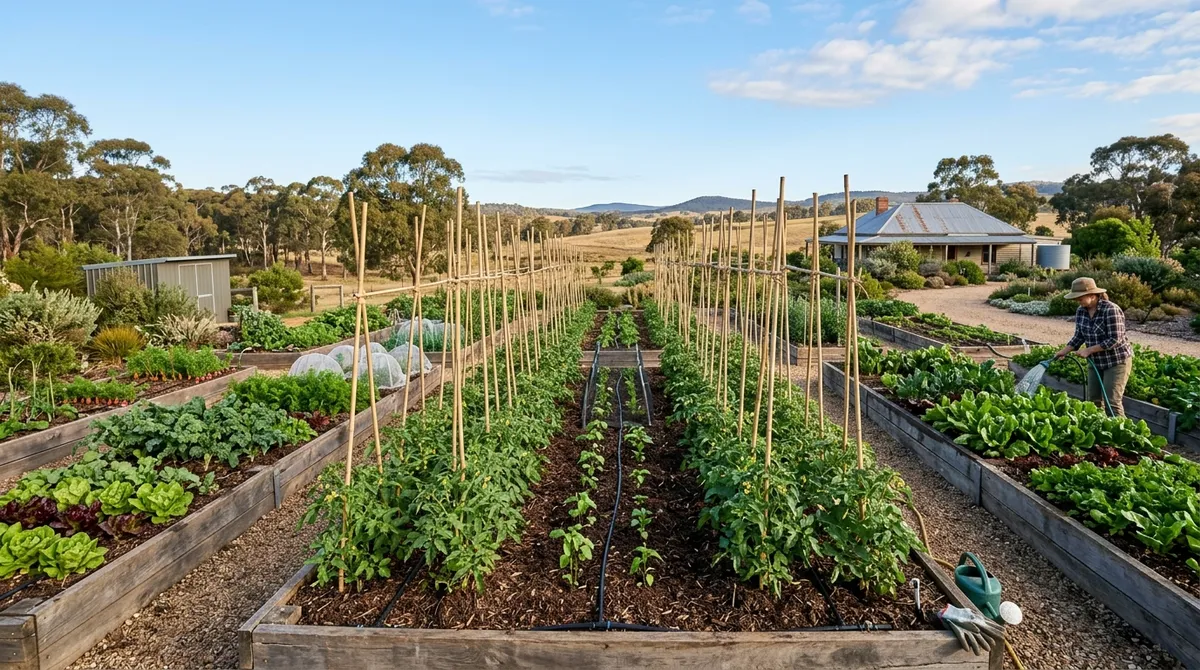
Spring is the time to prepare beds that will carry your summer crops. Here is what to do:
- Remove spent winter crops. Pull out finished brassicas, broad beans, and peas. Compost the green material.
- Add compost and aged manure. Spread a 5 to 10 cm layer over each bed and fork it into the top 15 cm. Warm-season crops are heavy feeders and need rich soil.
- Top up mulch. Apply fresh mulch around transplants (not over direct-sown seeds). Sugar cane, straw, or lucerne are all good choices.
- Check irrigation. Warm-season crops need reliable water. Check drippers, repair leaks, and ensure your watering system is ready before the heat arrives.
- Install stakes and supports. Put in tomato stakes, bean frames, and cucumber trellises before planting. It is much easier to set these up in an empty bed than around growing plants.
The Top 10 Vegetables to Plant in Spring
- Tomatoes. The star of the spring garden. Start seedlings indoors or buy transplants. Plant after the last frost in full sun.
- Cucumbers. Direct sow after frost risk passes. They grow fast and produce heavily through summer.
- Beans. Climbing and bush varieties. Direct sow when soil temperature reaches 18 degrees.
- Zucchini. Incredibly productive. Two plants feed a family. Direct sow or transplant in October.
- Capsicum. Slower to produce than tomatoes. Start early or buy established seedlings.
- Basil. The herb that defines summer cooking. Plant after frost with tomatoes.
- Corn. Sow in blocks (not rows) for pollination. Direct sow from October.
- Lettuce. Continue sowing heat-tolerant varieties through spring for summer salads.
- Carrots. Sow now for summer harvest. They take 10 to 14 weeks.
- Pumpkin. Space-hungry but rewarding. Direct sow from October in a sunny spot with room to spread.
Frequently Asked Questions
What vegetables should I plant in spring in Australia?
Spring is the time to plant warm-season crops like tomatoes, capsicum, cucumbers, zucchini, beans, corn, eggplant, and pumpkin. You can also continue planting cool-season crops like lettuce, carrots, and beetroot in early spring before the heat arrives. Exact timing depends on your region and last frost date.
When can I plant tomatoes in spring?
In frost-free areas like coastal NSW, Queensland, and Perth, plant tomato seedlings from August onwards. In Melbourne, Adelaide, and inland areas, wait until mid to late October after the last frost risk has passed. In cold climates like Hobart and Canberra, November is safest.
What is succession planting and why does it matter in spring?
Succession planting means sowing small batches of the same crop every 2 to 3 weeks instead of one large batch. In spring, this extends your harvest across weeks or months instead of everything ripening at once. It works especially well for lettuce, beans, corn, and root vegetables.
How do I protect spring seedlings from frost?
Cover seedlings with frost cloth, old bedsheets, or plastic cloches in the late afternoon before a frost event. Remove covers in the morning. Planting against a north-facing wall provides radiant heat. Avoid planting frost-sensitive crops like tomatoes and basil too early in frost-prone areas.
Is it too late to plant cool-season vegetables in spring?
Early spring (September) is still fine for many cool-season crops in temperate and cool climates. Lettuce, peas, radish, carrots, and beetroot will all produce a harvest before summer heat arrives. By mid-October in warm areas, the window for cool-season crops is closing.
Plant profiles
Each profile has sowing times for your region, companion plants and common pests.