Winter Vegetables to Plant in Australia
Updated June 2026
15 crops that thrive in the cold, with growing notes for every Australian climate zone.
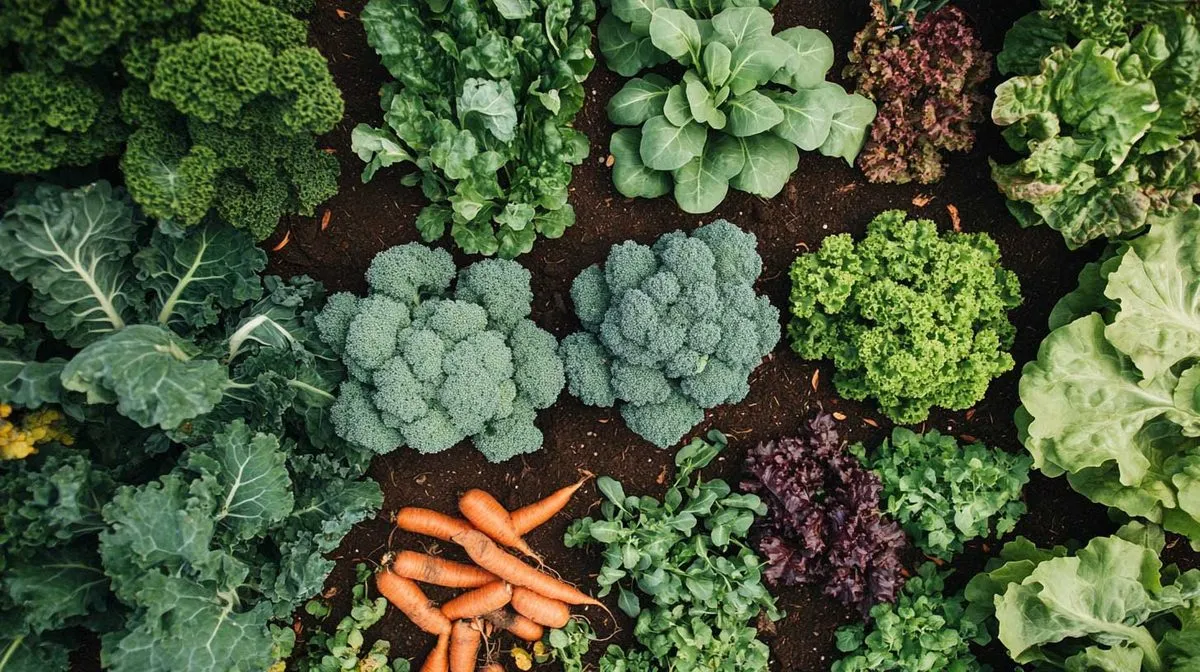
Winter is one of the most productive seasons in the Australian vegetable garden. Cooler temperatures, fewer pests, and reliable rainfall make it ideal for a huge range of crops. Many of the vegetables on this list actually grow better in cold weather. They bolt in summer heat and turn bitter, but in winter they produce sweet, tender harvests for months on end.
The key is knowing what to plant, when to plant it, and how your local climate affects the timing. A winter garden in Brisbane looks very different from one in Hobart. This guide covers the 15 best winter vegetables for Australian gardens, with practical growing details for subtropical, warm-temperate, and cool-temperate regions.
🌱 Plants in this guide: Broad Beans, Broccoli, Cabbage, Cauliflower, Carrot, Garlic, Kale, Leek and 7 more, all listed under Plant profiles at the end of this guide. Each plant profile has sowing times for your region, companion plants and common pests.
Why Winter Is Prime Planting Season in Australia
The biggest myth in Australian gardening is that winter means the garden shuts down. The opposite is true for most of the country. Here's why winter planting works so well:
- Pest pressure drops dramatically. Aphids, fruit fly, caterpillars, and whitefly populations crash in the cold. Your crops grow with far less damage than they would in summer.
- Water requirements are lower. Cooler temperatures mean less evaporation, and most regions receive good winter rainfall. You'll spend less time watering.
- Cool-season crops taste better. Frost converts starches to sugars in many vegetables. Kale, carrots, parsnips, and brassicas all develop sweeter flavour after cold nights.
- Weeds slow down. Weed germination drops in winter, so your crops face less competition.
- Longer harvest windows. Without summer heat to trigger bolting, crops like lettuce, spinach, and coriander keep producing for weeks longer than they would in warm weather.
The 15 Best Winter Vegetables for Australian Gardens
Every vegetable below includes spacing, days to harvest, and sun requirements. These are practical numbers for home gardens, sourced from Australian growing conditions (not US or UK data).
1. Broad Beans (Fava Beans)
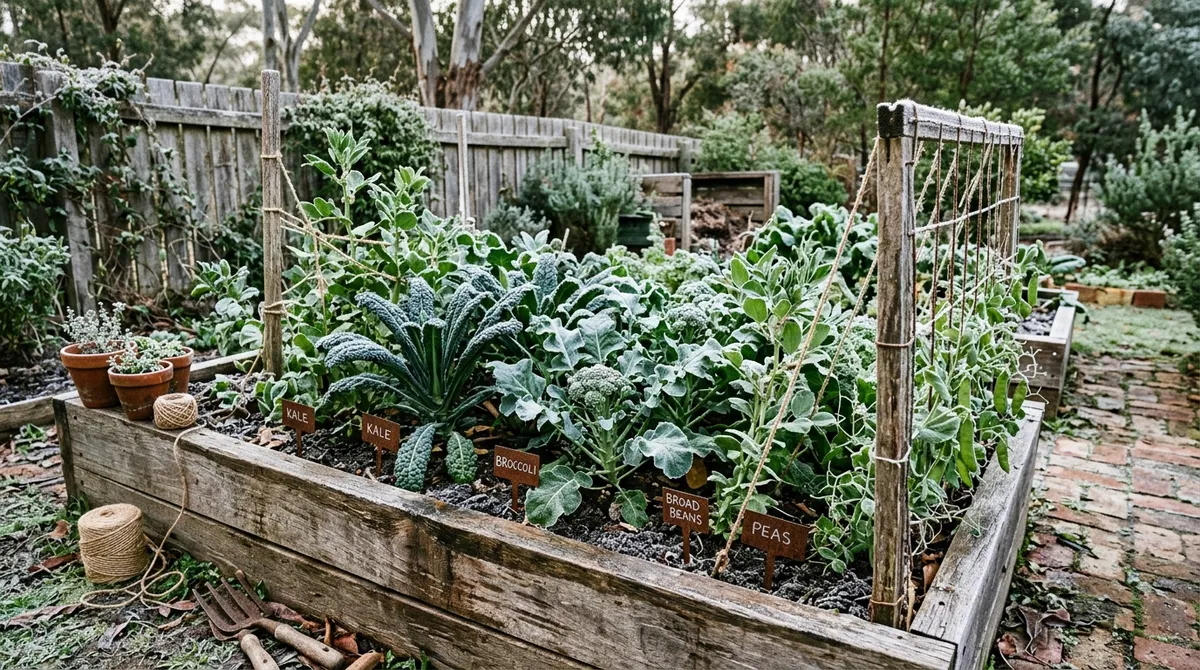
The backbone of any winter garden. Broad beans are frost hardy to -5°C, fix nitrogen in the soil for the crops that follow, and produce heavily over a long season. Sow seeds directly into the garden bed. They don't transplant well. Stake taller varieties once they reach 40 cm. Pinch out the growing tips when pods start forming to discourage black aphid.
2. Broccoli
Transplant seedlings rather than direct sowing for the most reliable results. Broccoli needs rich soil with plenty of compost and consistent moisture. Harvest the central head while the buds are still tight, then keep the plant in the ground. Side shoots will keep producing smaller heads for weeks. Broccoli is a heavy feeder, so apply liquid fertiliser every two to three weeks.
3. Cabbage
A reliable winter producer across all Australian climate zones. Choose mini varieties like Sugarloaf for small gardens. Transplant seedlings into well-composted soil and water deeply at the base (not overhead) to reduce the risk of fungal disease. Cabbage is frost hardy and handles temperatures down to -3°C once established. Rotate your brassica beds each year to prevent clubroot.
4. Cauliflower
The fussiest brassica, but worth the effort. Cauliflower needs consistent moisture, rich soil, and steady temperatures. Any stress (drought, transplant shock, wild temperature swings) causes the heads to button. Blanch white varieties by folding the outer leaves over the developing curd to keep it white. Purple and green varieties are more forgiving and don't need blanching.
5. Carrots
Direct sow carrot seed into loose, stone-free soil. Carrots don't transplant. Sow thinly and cover with a fine layer of vermiculite or seed-raising mix. Keep the soil surface moist until germination, which takes 14-21 days in winter. Winter-grown carrots are noticeably sweeter than summer ones because cold temperatures trigger sugar production in the roots.
6. Garlic
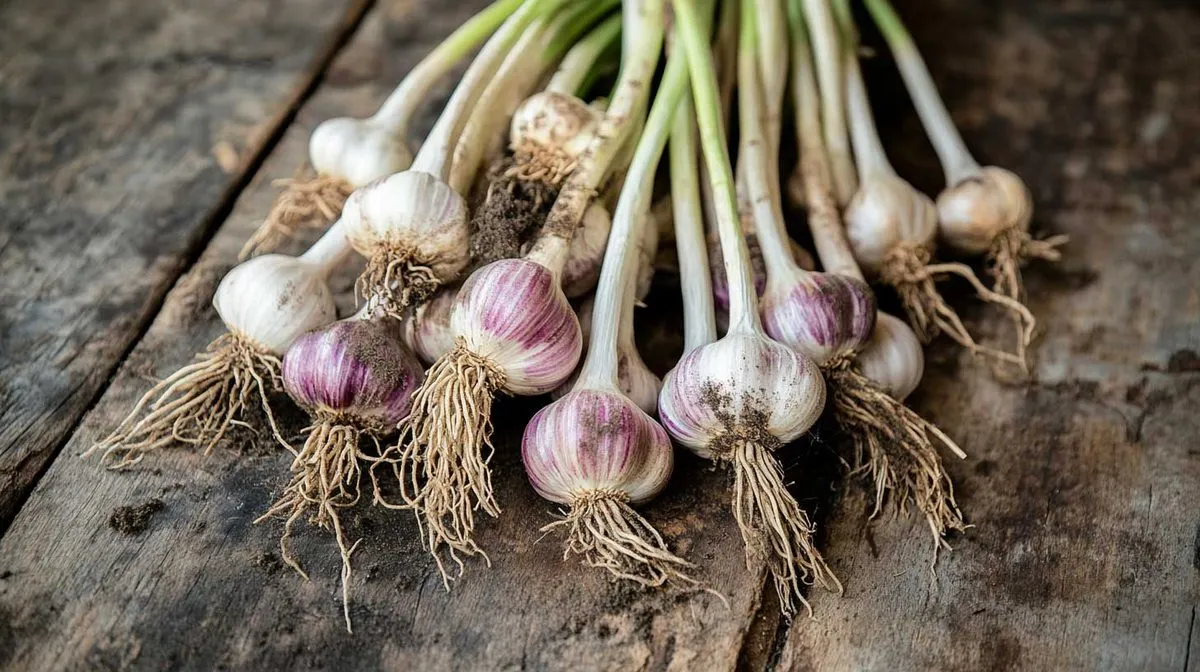
Garlic is traditionally planted in autumn (around Easter in most of Australia), but early winter planting still works in subtropical and warm-temperate regions. Plant individual cloves point-up, 5 cm deep. Garlic needs a period of cold to form bulbs properly, which is why winter planting works. Avoid watering in the last month before harvest. Harvest when the bottom three or four leaves have browned.
7. Kale
One of the hardiest vegetables you can grow. Kale handles frost, heat, neglect, and poor soil better than almost any other leafy green. Tuscan kale (cavolo nero) is the most popular variety in Australian gardens. Harvest outer leaves and the plant keeps producing from the centre. Kale tastes sweeter after a frost, so don't be in a hurry to harvest when the cold hits.
8. Leeks
Leeks are slow growers but incredibly low maintenance once established. Transplant seedlings into holes 15 cm deep (don't fill the hole, just water in). This blanches the stems naturally. Leeks tolerate heavy frost and can stay in the ground until you need them. They take up very little horizontal space, making them excellent for small gardens and raised beds.
9. Lettuce
Winter lettuce is sweet, crisp, and incredibly slow to bolt compared to summer plantings. Sow seeds every two to three weeks for a continuous supply. Butterhead and cos varieties do best in winter. Loose-leaf types are the fastest to harvest. Lettuce has shallow roots, so it grows well in containers and raised beds. In frost-prone areas, protect young seedlings with a cloche or frost cloth.
10. Onions
Winter is the main onion-growing season in most of Australia. Plant seedlings or sets (small bulbs) in well-drained soil. Choose the right day-length variety for your latitude: short-day types for Queensland and northern NSW, intermediate for Sydney and Perth, long-day for Melbourne and further south. Onions need consistent moisture while the tops are green, then dry conditions as they mature.
11. Peas
Peas grow fast, taste brilliant, and fix nitrogen in the soil. Snow peas, sugar snap peas, and shelling peas are all winter crops. Direct sow seeds into the garden bed. Provide a trellis, fence, or simple stick framework for climbing varieties. Dwarf varieties don't need support. Pick pods regularly to keep the plants producing. Peas handle light frost but heavy frost will damage flowers and developing pods.
12. Silverbeet (Swiss Chard)
Silverbeet is the workhorse of the Australian winter garden. It produces reliably in every climate zone, handles frost and heat, and keeps going for months with cut-and-come-again harvesting. Rainbow chard adds colour to winter beds. Pick outer leaves from the base and the plant regenerates from the centre. Silverbeet handles part shade better than most vegetables, making it useful for shaded winter gardens.
13. Spinach
True spinach (not silverbeet, which Australians sometimes call spinach) is a dedicated cool-season crop. It bolts almost immediately in warm weather but thrives through winter. English spinach has a richer, deeper flavour than silverbeet and is packed with iron. Sow direct or transplant seedlings. Keep the soil consistently moist. Spinach grows well in containers and window boxes.
14. Radish
The fastest vegetable in the winter garden. Some radish varieties go from seed to plate in under 30 days. Sow seeds directly every two weeks for a continuous supply. Radish grows in almost any soil and handles cold weather without complaint. It's the perfect crop for impatient gardeners, kids' gardens, and filling gaps between slower-growing crops. Try daikon (Japanese radish) for a larger, milder winter root vegetable.
15. Turnips
Turnips are underrated in Australian gardens. They grow quickly, produce both edible roots and nutritious greens, and handle frost well. Baby turnips harvested at golf-ball size are tender and sweet with none of the bitterness that puts people off. Sow direct and thin seedlings to the correct spacing once they're a few centimetres tall. Turnip greens are excellent steamed or added to stir-fries.
Winter vegetables by region: June, July and August
The 15 crops above are the best all-rounders, but the winter sowing list is longer and it changes a lot from region to region. This table comes straight from our regional planting calendars, the same data the Planting Season app uses. The middle column lists the vegetables you can sow in every month of June, July and August; the last column counts every vegetable with at least one winter sowing month. In the tropical north, June to August falls in the dry season, which is the main vegetable season there.
| Region and month pages | Sow right through winter | Vegetables with a winter sowing month |
|---|---|---|
| South East Queensland June · July · August | Peas, Snow Peas, Lettuce, Silverbeet, Kale, Bok Choy, Carrot, Beetroot, Radish, Potato, Broccolini, Collards, Daikon, Endive and 15 more | 61 |
| Northern Rivers NSW June · July · August | Peas, Snow Peas, Broad Beans, Lettuce, Silverbeet, Kale, Bok Choy, Carrot, Beetroot, Radish, Potato, Broccolini, Collards, Daikon and 17 more | 51 |
| Sydney & Coastal NSW June · July · August | Peas, Snow Peas, Broad Beans, Lettuce, Silverbeet, Kale, Bok Choy, Carrot, Beetroot, Radish, Leek, Broccolini, Collards, Daikon and 19 more | 56 |
| Melbourne & Victoria June · July · August | Peas, Snow Peas, Broad Beans, Lettuce, Spinach, Silverbeet, Kale, Bok Choy, Carrot, Radish, Onion, Leek, Chicory, Collards and 20 more | 52 |
| Adelaide & SA June · July · August | Peas, Snow Peas, Broad Beans, Lettuce, Spinach, Silverbeet, Kale, Bok Choy, Cabbage, Carrot, Beetroot, Radish, Onion, Collards and 19 more | 58 |
| Perth & WA June · July · August | Peas, Snow Peas, Broad Beans, Lettuce, Spinach, Silverbeet, Kale, Bok Choy, Broccoli, Cabbage, Cauliflower, Carrot, Beetroot, Radish and 23 more | 67 |
| Tasmania June · July · August | Rhubarb | 23 |
| Canberra & ACT June · July · August | Peas, Broad Beans, Fennel, Good King Henry, Rhubarb, Sorrel | 19 |
| North Queensland June · July · August | Tomato, Capsicum, Chilli, Eggplant, Zucchini, Cucumber, Pumpkin, Sweet Corn, Beans (bush), Peas, Snow Peas, Lettuce, Spinach, Silverbeet and 30 more | 62 |
| Darwin & Top End June · July · August | Chilli, Eggplant, Zucchini, Cucumber, Sweet Corn, Beans (bush), Peas, Snow Peas, Lettuce, Spinach, Silverbeet, Kale, Bok Choy, Cabbage and 26 more | 61 |
For any other month, see what vegetables to plant now in every region.
Frost Considerations by Region
Frost is the single biggest factor that separates winter gardening across Australia. Knowing your frost risk shapes what you plant and when.
| Region | Frost Risk | Winter Planting Notes |
|---|---|---|
| Tropical (Darwin, Cairns, Townsville) | No frost | Dry season is prime growing time. Plant the full list plus warm-season holdovers. Water is the main challenge, not cold. |
| Subtropical (SEQ, Northern Rivers) | Rare to light inland frost | Mild winters mean almost everything grows well. Frost cloth for inland gardens on the coldest nights is enough protection. |
| Warm temperate (Sydney, Perth, Adelaide) | Light to moderate frost | Coastal areas are mostly frost-free. Inland and elevated areas get regular frost. Protect tender seedlings with cloches. |
| Cool temperate (Melbourne, Hobart, Canberra) | Regular hard frost | Focus on frost-hardy crops: broad beans, peas, garlic, kale, silverbeet. Use cold frames and row covers to extend the range. |
Subtropical Winter Gardens (SEQ and Northern Rivers)
Gardeners in southeast Queensland and the Northern Rivers region of NSW have a huge advantage in winter. Frost is rare on the coast and only occasional inland. Daytime temperatures sit between 18-24°C through most of winter, which is the ideal range for cool-season vegetables.
Every crop on the list above grows well in subtropical winter gardens. You can also push the boundaries and keep warm-season crops going: tomatoes, capsicum, and beans will often produce right through winter in frost-free coastal spots. The limiting factor is shorter days and cooler nights slowing growth, not cold damage.
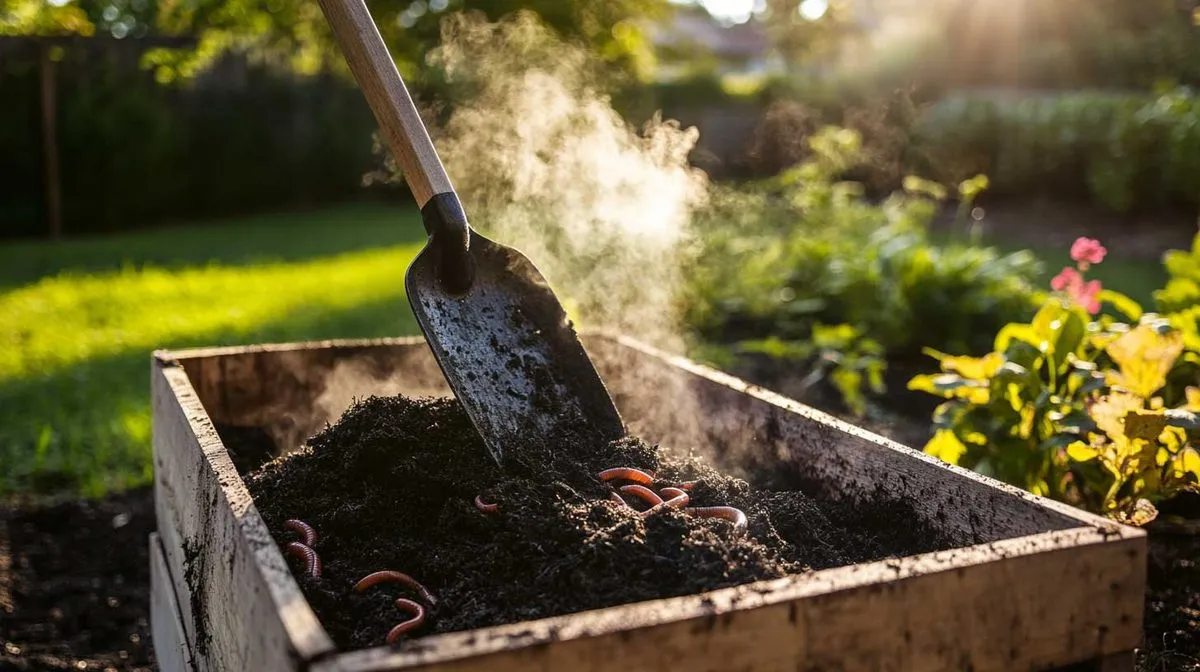
The biggest challenge for subtropical winter gardeners is actually soil quality. Summer's heavy rain leaches nutrients, so winter beds need a solid top-up of compost and organic matter before planting. Apply 5-10 cm of quality compost and fork it through the top 20 cm of soil.
Cool-Climate Winter Gardens (Melbourne, Hobart, Canberra)
Winter gardening in southern Australia requires more planning, but it's far from impossible. The key is choosing frost-hardy varieties and using season-extending techniques.
Best performers in cool-climate winters: Broad beans, peas, garlic, onions, leeks, kale, silverbeet, spinach, and carrots. These crops handle regular frost once established. Kale and silverbeet will produce right through the coldest months without protection.
With protection (cloche or cold frame): Lettuce, broccoli, cauliflower, cabbage, radish, and turnips. These crops handle light frost but benefit from cover during hard freezes. A simple hoop house made from PVC pipe and clear plastic costs under $30 and extends your growing season by weeks.
Timing is critical in cool-climate regions. Most winter crops should be planted in autumn (March to May) so they establish before the coldest weather arrives. Mid-winter planting is limited to fast growers: radish, lettuce, and Asian greens like pak choi and mizuna.
Soil Preparation for Winter Planting
Good soil preparation makes the difference between a productive winter garden and a struggling one. Winter crops are heavy feeders, and cold soil slows nutrient uptake. Give your plants every advantage by preparing beds properly.
- Clear spent summer crops. Remove old tomato, zucchini, and cucumber plants. Compost anything that looks healthy. Bin anything with signs of disease.
- Add compost. Spread 5-10 cm of quality compost across the bed and fork it through the top 20 cm of soil. This improves drainage in clay soils and water retention in sandy soils.
- Check soil pH. Most winter vegetables prefer a pH between 6.0 and 7.0. Brassicas (broccoli, cabbage, cauliflower, kale) prefer slightly alkaline soil around 6.5-7.0. If your soil is acidic, add a handful of garden lime per square metre.
- Apply a balanced fertiliser. Use pelletised organic fertiliser or aged chicken manure at the rate recommended on the pack. Work it into the top 10 cm of soil.
- Mulch after planting. Apply 5-8 cm of sugar cane mulch, pea straw, or lucerne hay around (not against) the stems of transplants. Mulch insulates root zones, retains moisture, and suppresses winter weeds.
Frequently Asked Questions
What vegetables can I plant in winter in Australia?
The best winter vegetables to plant in Australia include broad beans, broccoli, cabbage, cauliflower, carrots, garlic, kale, leeks, lettuce, onions, peas, silverbeet, spinach, radish, and turnips. All of these crops prefer cool weather and produce well through the winter months in most Australian climate zones.
Is it too cold to plant vegetables in winter?
Winter is actually one of the best planting seasons in Australia. Many vegetables grow better in cool weather because they bolt (go to seed) in summer heat. In subtropical regions like SEQ, winter is mild enough to grow almost anything. In cool-climate regions like Melbourne and Hobart, frost-hardy crops like broad beans, peas, garlic, kale, and silverbeet thrive right through winter.
What vegetables grow in winter in Melbourne?
Melbourne's cool winters are ideal for broad beans, peas, garlic, onions, leeks, kale, silverbeet, spinach, carrots, turnips, radish, and broccoli. Frost-hardy leafy greens like kale actually taste sweeter after a frost. Use cloches or cold frames to extend the range of crops you can grow through Melbourne's coldest months.
Can I grow vegetables in winter in Queensland?
Winter is prime growing season in Queensland. Frost is rare in most of the state, so you can grow a wider range of vegetables than southern gardeners. Broccoli, cauliflower, cabbage, lettuce, peas, carrots, beetroot, and leafy greens all perform brilliantly in Queensland's mild winters. You can even keep warm-season crops like tomatoes and capsicum going in frost-free coastal areas.
How do I prepare my garden bed for winter planting?
Add a 5-10 cm layer of quality compost and fork it through the top 20 cm of soil. Winter crops are heavy feeders, so mix in some aged manure or a balanced organic fertiliser. Check your soil pH (most winter vegetables prefer 6.0 to 7.0). Apply a thick layer of mulch after planting to insulate roots and retain moisture. Avoid walking on wet winter soil as it compacts easily.
Plant profiles
Each profile has sowing times for your region, companion plants and common pests.