Permaculture Principles for Home Gardens
Updated June 2026
Design your backyard to work with nature, not against it
Permaculture was invented in Australia. Bill Mollison and David Holmgren developed the concept in Tasmania in the 1970s as a way to design agricultural systems that mimic natural ecosystems. The word is a blend of "permanent" and "agriculture" (and later, "permanent culture").
The core idea is simple: design gardens and landscapes that are productive, self-sustaining, and low-maintenance by working with natural patterns rather than fighting them. You do not need a farm to practise permaculture. The principles work on a suburban quarter-acre block, a courtyard, or even a balcony.
The 12 Permaculture Principles (Simplified)
David Holmgren's 12 principles provide a framework for designing any garden. Here is what each one means in practical terms for a home gardener:
1. Observe and interact
Spend time watching your property before changing anything. Where does the sun hit? Where does water pool after rain? Which areas are windy? Where do you walk most often? A full year of observation tells you more than any garden book. The best permaculture designs come from understanding what your specific site does naturally.
2. Catch and store energy
Capture resources when they are abundant and store them for when they are not. In practical terms: install a rainwater tank, build soil organic matter to hold moisture, plant deciduous fruit trees that let winter sun through to warm your house, and preserve surplus harvests through fermenting, drying, and freezing.
3. Obtain a yield
Your garden should produce something useful. Every plant should earn its place. A shade tree can also be a fruit tree. A hedge can be a berry hedge. A ground cover can be a herb. Permaculture gardens are productive gardens.
4. Apply self-regulation and accept feedback
If pests are eating your brassicas every year, that is feedback. Maybe the garden needs more biodiversity to attract predators. If a plant keeps dying in a particular spot, stop fighting it and plant something that suits those conditions. Let the garden tell you what works.
5. Use and value renewable resources
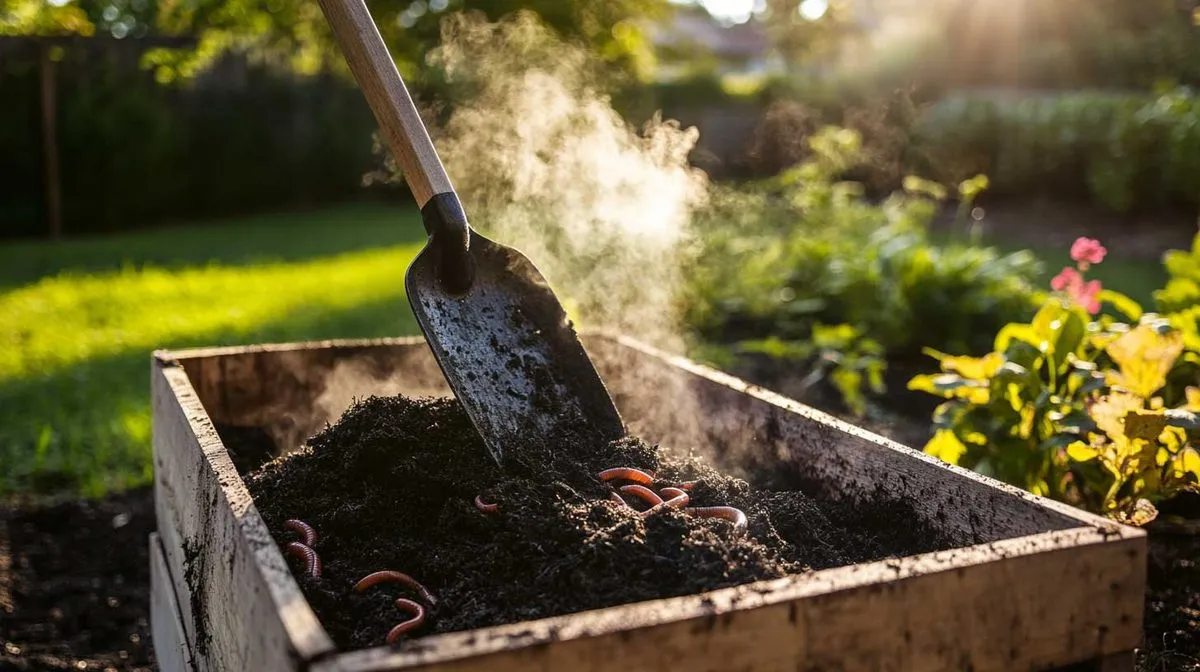
Prefer mulch from your own garden over bought products. Compost your kitchen scraps. Use saved seed instead of buying new each season. Let chickens turn over garden beds. Reduce reliance on external inputs over time.
6. Produce no waste
Every output from one part of your garden becomes an input for another. Kitchen scraps become compost. Prunings become mulch. Grass clippings feed the vegetable bed. Fallen fruit feeds the worm farm. Design the garden so that nothing leaves the property as waste.
7. Design from patterns to details
Start with the big picture (where to put trees, beds, paths, and water) before worrying about which variety of tomato to plant. Get the overall layout right first. The details fill in over time.
8. Integrate rather than segregate
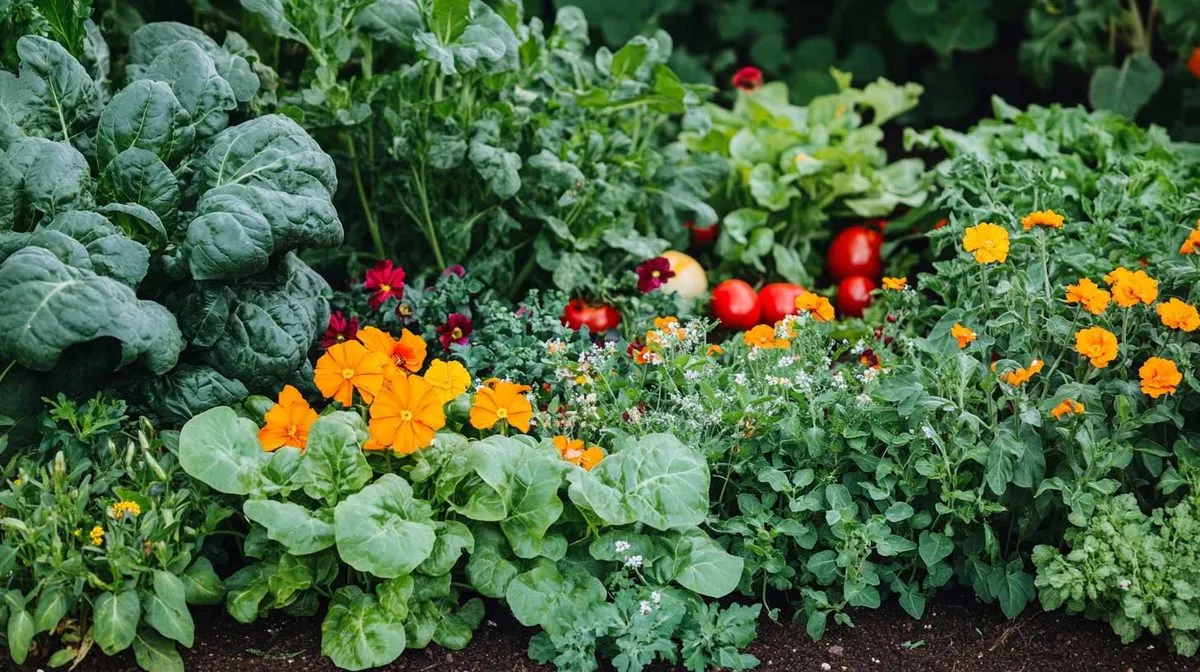
Mix plants together rather than growing them in isolated blocks. Companion planting, polycultures, and guilds are all expressions of this principle. A diverse garden has fewer pest problems and better soil than a monoculture.
9. Use small and slow solutions
Start with one garden bed, one fruit tree, or one compost bin. Expand as you learn. Small systems are easier to manage, cheaper to set up, and more forgiving of mistakes. A suburban permaculture garden develops over 5 to 10 years, not one weekend.
10. Use and value diversity
Plant many different species. A garden with 50 different plants is more resilient than one with 5. Diversity reduces pest outbreaks, spreads harvest times across the year, and creates habitat for beneficial insects, birds, and lizards.
11. Use edges and value the marginal
Edges between different environments (sun and shade, wet and dry, garden and lawn) are the most productive zones. A pond edge, a garden border, a fence line, or the drip line of a tree are all places where extra planting can go. Curved edges create more productive space than straight lines.
12. Creatively use and respond to change
Gardens change. Seasons change. Climate changes. A permaculture garden adapts. If a drought kills the lawn, replace it with a food garden. If a tree grows and shades a bed, change what you grow there. Work with change rather than resisting it.
Zone Planning for a Suburban Block
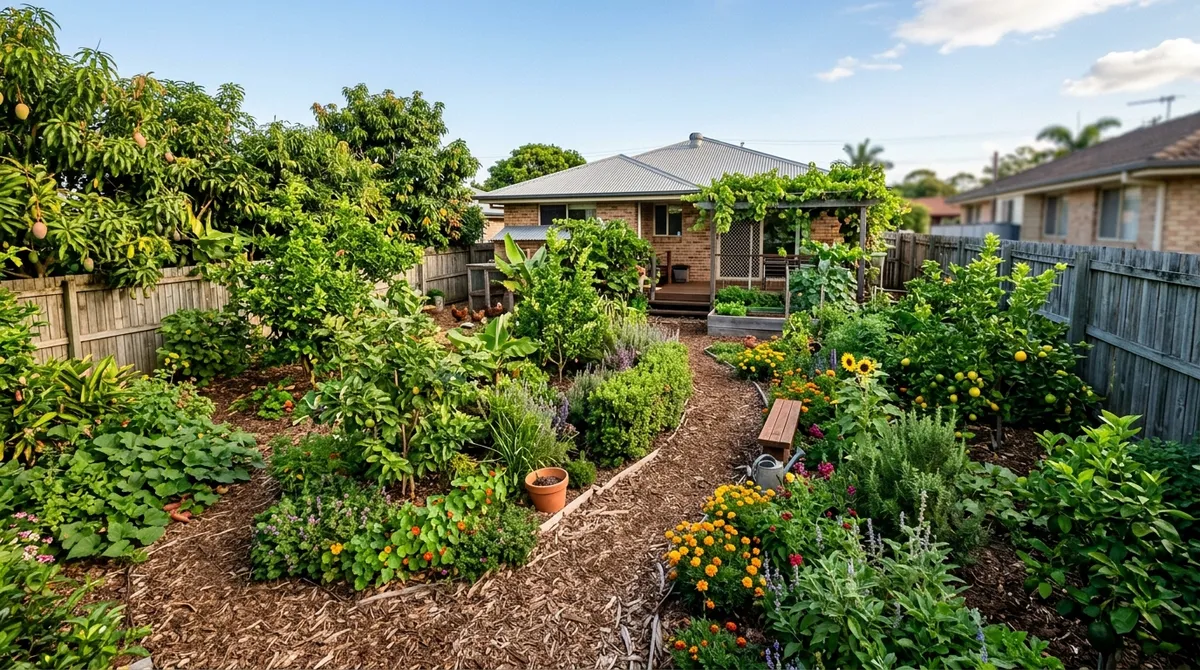
Permaculture uses a zone system to organise a property based on how often each area needs attention. The zones run from 0 (your house) to 5 (wild nature). On a suburban block, you will typically use zones 0 to 3.
Zone 0: The house
Your kitchen, cooking, food storage, and indoor herb pots. This is where you spend the most time. Design the kitchen to make processing homegrown food easy.
Zone 1: Just outside the back door
The area you visit every day. This is where your most frequently harvested crops go: herbs, salad greens, spring onions, chillies, cherry tomatoes, and a compact compost bin. Keep it close to the kitchen so you actually use what you grow. This zone gets the most water, the most attention, and the most fertile soil.
Zone 2: Main vegetable garden and fruit trees
The main productive area, visited several times a week. This is where your raised beds, main compost system, larger fruit trees, and berry bushes go. It needs reliable water (drip irrigation is ideal) and good soil that you build over time.
Zone 3: Occasional crops and less-demanding plants
The far corners of the yard that you visit weekly or less. Plant low-maintenance crops here: sweet potatoes, pumpkins, perennial herbs, nut trees, and self-seeding annual flowers. This zone works well for Jerusalem artichokes, comfrey, and other vigorous plants that need little attention.
Food Forests
A food forest is a garden designed to mimic the layers of a natural forest using edible plants. It is the most productive and lowest-maintenance garden design possible once established. The trade-off is that it takes 3 to 5 years to reach full production.
The seven layers
- Canopy. Full-size fruit or nut trees (avocado, mango, macadamia, pecan).
- Understorey. Smaller fruit trees (citrus, fig, mulberry).
- Shrub. Berry bushes (blueberries, raspberries, currants).
- Herbaceous. Perennial herbs and vegetables (comfrey, oregano, lemongrass, asparagus).
- Ground cover. Low-growing plants that cover bare soil (sweet potato, strawberries, nasturtium).
- Root. Underground crops (ginger, turmeric, yacon).
- Climbers. Vines that use trees as support (passionfruit, grapes, kiwi fruit).
A full seven-layer food forest needs space (at least 5 x 5 metres for a small one). On a smaller block, you can create a mini food forest with just three or four layers around a single fruit tree.
Guild Planting
A guild is a group of plants grown together because they support each other. The classic example is an apple tree guild, but you can build guilds around any fruit tree or large perennial.
A simple fruit tree guild
- Central tree. A fruit tree (lemon, apple, stone fruit).
- Nitrogen fixers. Plants that pull nitrogen from the air and fix it in the soil (clover, beans, pigeon pea). Grow these around the drip line.
- Dynamic accumulators. Deep-rooted plants that mine minerals from the subsoil and make them available near the surface (comfrey, dandelion, yarrow). Chop and drop their leaves as mulch.
- Pest repellers. Aromatic herbs that confuse or deter pests (basil, garlic chives, tansy, marigold).
- Ground covers. Low plants that suppress weeds and retain moisture (strawberries, nasturtium, sweet potato).
- Pollinator attractors. Flowering plants that bring in bees and beneficial insects (borage, lavender, cosmos).
A guild is planted all at once around a new tree or gradually added around an existing one. Over time, the guild becomes self-maintaining. The nitrogen fixers feed the tree, the ground covers suppress weeds, and the pest repellers reduce spray needs.
Water Harvesting
Water is the most valuable resource in an Australian garden. Permaculture design prioritises capturing every drop that falls on your property.
- Rainwater tanks. Connect tanks to your roof downpipes. A 50-square-metre roof collects about 1,000 litres for every 20 mm of rain. Even a small 1,000-litre tank makes a difference.
- Swales. Shallow ditches dug on contour across a slope. They capture runoff and allow it to soak into the soil rather than leaving the property. Plant fruit trees on the downhill side of swales where the soil stays moist longest.
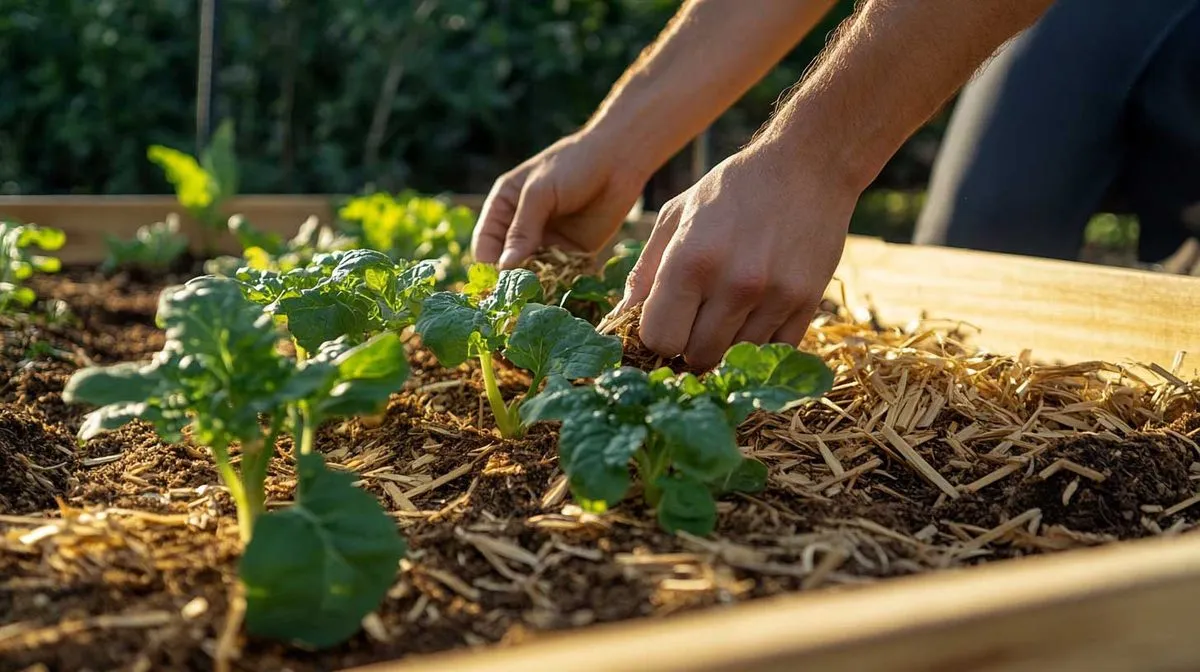
- Mulch. A thick mulch layer is a water storage system. It reduces evaporation by up to 70% and keeps soil cool so roots stay active in summer.
- Greywater. Redirect laundry and shower water to fruit trees (check your local council regulations). A household produces 100 to 200 litres of greywater per day, which is enough to keep several fruit trees alive through drought.
How to Start Small
The biggest mistake new permaculture gardeners make is trying to do everything at once. You do not need to rip out your lawn and install swales on day one. Here is a practical starting order:
- Year one. Observe your property through all seasons. Start a compost system. Plant one fruit tree with a simple guild underneath. Convert one section of lawn to a vegetable bed.
- Year two. Add a rainwater tank. Expand the vegetable garden. Plant a second fruit tree. Start saving seed from your best performers.
- Year three. Add berry bushes and perennial herbs. Build soil with mulch and compost. Start a small food forest area if space allows.
- Year four and beyond. Fine-tune. Replace high-maintenance plants with low-maintenance alternatives. Expand what works and remove what does not.
Frequently Asked Questions
What is permaculture gardening?
Permaculture is a design system for creating productive, self-sustaining gardens that work with natural processes rather than against them. It uses principles like stacking functions (every plant serves multiple purposes), building soil health, harvesting water, and designing in zones based on how often you visit each area.
Can I do permaculture in a small backyard?
Yes. Permaculture principles scale down to any size, even balconies and courtyards. A small backyard can include a food-producing garden bed, a small fruit tree guild, a compost system, and water harvesting from the roof. Start with one element and build from there.
What is a food forest?
A food forest is a garden designed to mimic the structure of a natural forest using edible plants. It has layers: tall canopy trees, smaller understorey trees, shrubs, herbaceous plants, ground covers, root crops, and climbers. Each layer produces food while the whole system builds soil and supports biodiversity.
What is guild planting?
A guild is a group of plants grown together because they support each other. A classic fruit tree guild includes a fruit tree at the centre, nitrogen-fixing plants, dynamic accumulators that mine nutrients from deep soil, pest-repelling herbs, and ground covers that suppress weeds and retain moisture.
How do I start permaculture at home?
Start by observing your property for a full season. Note where sun falls, where water flows, and which areas you visit most. Then pick one small project: a compost system, a herb spiral, or a single fruit tree guild. Build soil health, capture water, and expand gradually rather than trying to redesign everything at once.