How to Grow Mulberries in Australia
Updated June 2026
More fruit growing help: Backyard Fruit Trees in Australia, with the best fruit for each region and when to plant it.
Staining solutions, pruning, and variety picks for every region
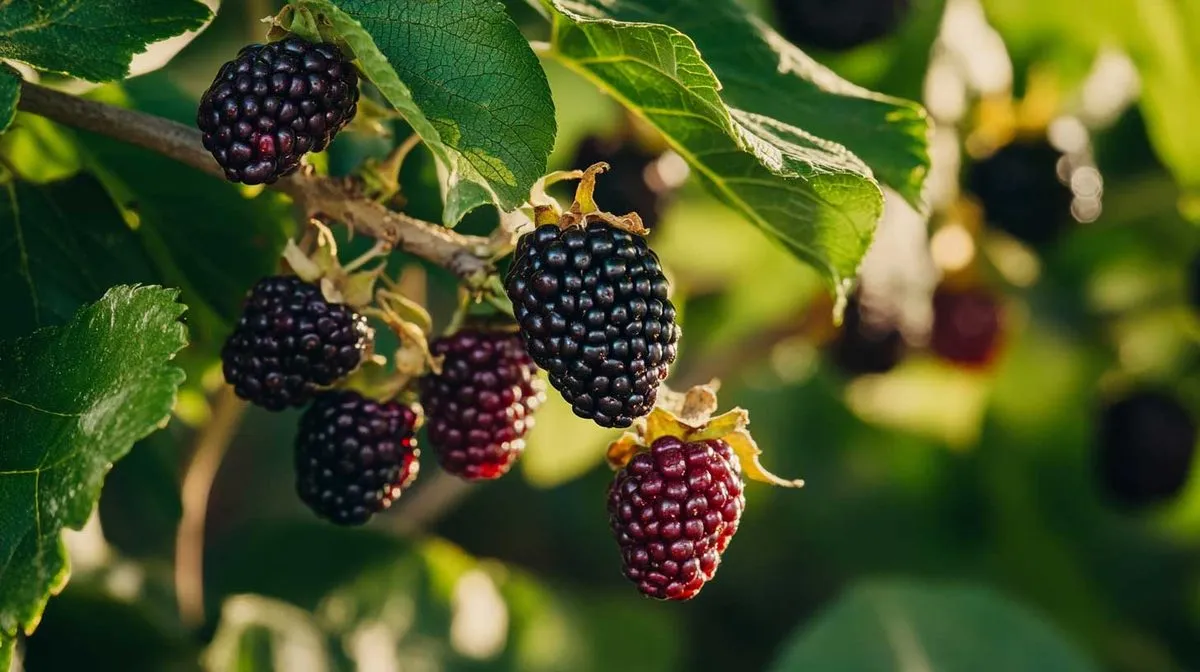
Mulberries are one of the most generous fruit trees you can grow. They produce masses of sweet, juicy berries with almost zero effort. The trees are tough, drought-tolerant, fast-growing, and largely pest-free. The only real challenge is the staining: mulberry juice stains everything it touches.
This guide covers the best mulberry varieties for Australian gardens, practical staining solutions, pruning approaches, and planting information.
What it looks like as it grows


🌱 Plant profile: Mulberry, with sowing times for your region, companion plants and common pests.
When to Plant in Your Region
Black English
The classic mulberry with large, dark berries and rich, sweet-tart flavour. Very productive. Deciduous tree that grows 8 to 10 metres if unpruned. The most common variety in Australian gardens.
White Shahtoot
Long, pale berries with an extremely sweet, honey-like flavour and no tartness. Less staining than dark varieties. Popular with kids. Slightly smaller tree than Black English.
Red Shahtoot
Red-purple berries with a sweet flavour similar to White Shahtoot but with more depth. A good compromise between sweetness and mulberry richness. Moderate staining.
Hicks Fancy
Large, dark berries on a moderately sized tree. Excellent flavour with good balance of sweet and tart. Reliable producer and good disease resistance. Well-suited to warm-temperate regions.
Dwarf Black
Compact variety that stays under 3 metres with pruning. Full-flavoured dark berries on a small tree. Perfect for smaller gardens and container growing. Sometimes sold as Dwarf Mulberry.
Managing the Staining
Mulberry juice stains hands, clothes, paths, and anything under the tree a deep purple. Here are practical ways to deal with it:
- Location matters: Plant away from paths, driveways, clotheslines, and outdoor furniture. Under a mulberry tree is not the place for a white patio.
- Harvest regularly: Pick fruit before it falls. Spread a tarp under the tree and shake branches gently to collect ripe berries.
- Stain removal: Lemon juice or white vinegar removes fresh mulberry stains from hands. For fabric, apply stain remover immediately before the juice sets.
- White varieties: White Shahtoot produces minimal staining and is the best choice for areas near paths or patios.
Pruning
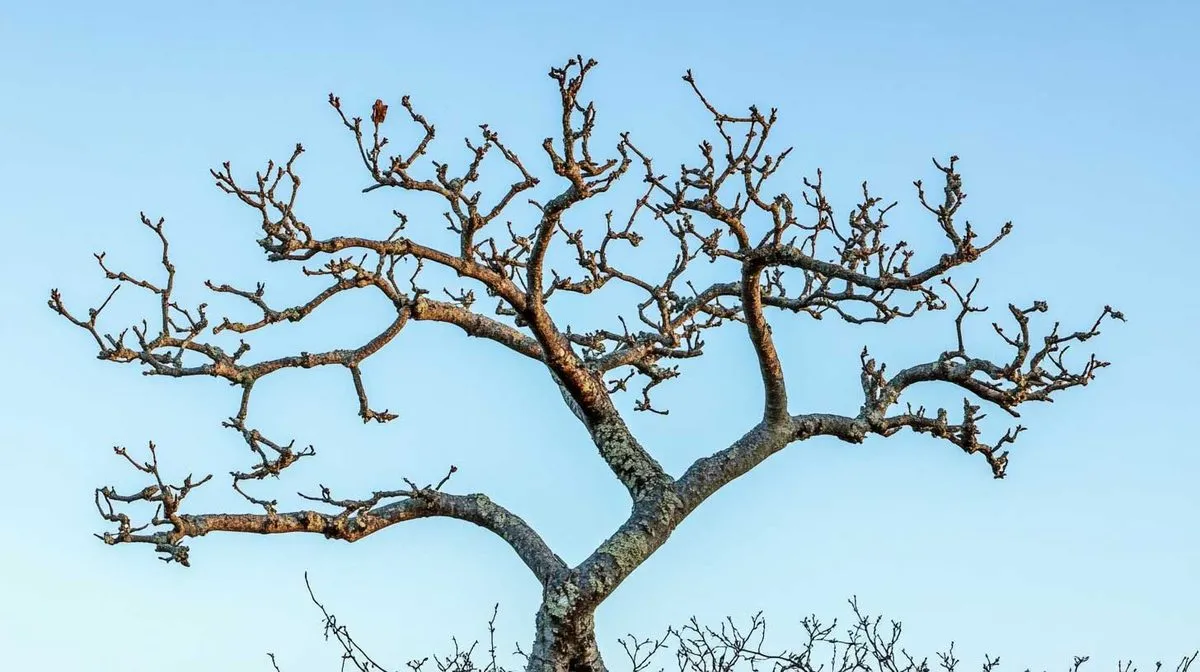
Mulberries grow fast and can become very large trees without pruning. Regular pruning keeps them manageable and productive.
- Prune in winter while the tree is dormant (June to August)
- Mulberries fruit on new growth, so pruning stimulates more fruiting wood
- Cut back the canopy by one-third to one-half each winter for a compact tree
- Remove dead, crossing, and inward-growing branches
- Mulberries handle hard pruning well. Even pollarding (cutting all branches back to stubs) works, though you lose one season of fruit.
Common Problems
Birds
Birds love mulberries but the trees are usually so productive that there is plenty to share. If you want to protect some of the crop, net individual branches rather than trying to net the whole tree.
Popcorn disease
A fungus that causes berries to swell and become white and puffy. Remove and dispose of affected fruit. Clean up fallen berries to reduce reinfection. More common in humid climates.
Aggressive roots
Mulberry roots are vigorous and can damage paths and pipes. Plant at least 5 metres from buildings, fences, and paved areas. Dwarf varieties have less aggressive root systems.
Frequently Asked Questions
When should I plant a mulberry tree?
Plant bare-rooted mulberry trees in winter (June to August) while dormant. Container-grown trees can be planted any time but establish best in autumn or spring. Mulberries grow in all Australian mainland climates.
How long do mulberry trees take to produce fruit?
Mulberry trees grow fast and can produce fruit in their second year after planting. Full production takes 3 to 4 years. Dwarf varieties often fruit in their first year.
Do mulberries stain?
Yes. Dark mulberry varieties (Black English, Hicks Fancy) stain everything they touch a deep purple. Plant away from paths and patios. White Shahtoot produces minimal staining and is the best choice for areas near high-traffic zones.
How big do mulberry trees get?
Full-sized mulberry trees (Black English) grow 8 to 10 metres tall and wide if unpruned. Annual winter pruning keeps them at 3 to 4 metres. Dwarf Black stays under 3 metres naturally and suits smaller gardens.
See also: Mulberries in the Plant Library
Plant profile
The mulberry profile has sowing times for your region, companion plants and common pests.