How to Grow Grapes in Your Backyard
Updated June 2026
More fruit growing help: Backyard Fruit Trees in Australia, with the best fruit for each region and when to plant it.
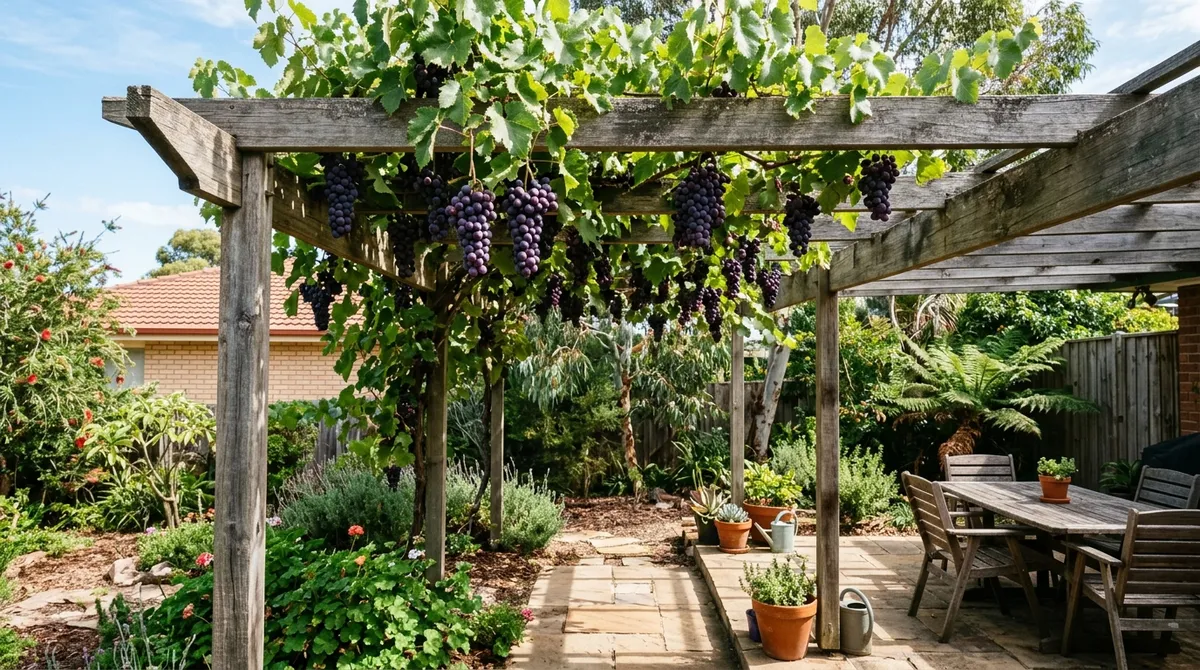
A single vine on a pergola can produce 10 to 15 kg of fruit and shade your outdoor area
Grape vines are one of the most rewarding plants you can grow in a backyard. A single vine trained over a pergola or along a fence produces shade in summer, bunches of fruit in autumn, and a bare framework in winter that lets the sun through when you need it most. It is a plant that works with the seasons.
Grapes grow well across most of Australia. The country's commercial wine industry proves how suited the climate is. Backyard grapes are simpler than commercial growing because you are not chasing specific sugar levels or tannin profiles. You just want sweet, ripe fruit you can eat fresh, dry into sultanas, or share with neighbours.
🌱 Plant profile: Grape, with sowing times for your region, companion plants and common pests.
Table Grapes vs Wine Grapes
The first decision is whether you want grapes for eating fresh (table grapes) or for making wine. Most backyard growers choose table grapes because they are sweeter, have thinner skins, and are bred to taste good straight off the vine.
Table grapes
Bred for eating fresh. Larger berries, thinner skins, sweeter flavour, and often seedless. Varieties like Thompson Seedless, Flame Seedless, and Menindee Seedless are the most popular for backyards. They ripen between January and April depending on the variety and climate.
Wine grapes
Smaller berries with thicker skins and higher acidity. Varieties like Shiraz, Cabernet Sauvignon, and Chardonnay are grown commercially but can be grown at home too. They are edible fresh but are not as pleasant to eat as table grapes. Growing wine grapes only makes sense if you plan to make wine or juice.
Dual-purpose grapes
Some varieties work for both eating and wine. Muscat Hamburg is a popular dual-purpose grape with a distinctive perfumed flavour. It makes a decent table grape and a fragrant dessert wine. It is also one of the easiest varieties to grow in Australian backyards.
Best Grape Varieties for Australian Backyards
Table Grapes
Thompson Seedless (Sultana)
The classic green seedless grape. Sweet, thin-skinned, and very productive. This is the variety used commercially for sultanas and dried fruit. Ripens mid-season (February to March). Grows well in all temperate and warm climates. Needs hot summers for the best flavour. The most widely grown table grape in Australia.
Flame Seedless
Red seedless grapes with a crisp, sweet-tart flavour. Compact bunches, medium-sized berries. Ripens early (January to February). A strong grower that handles heat well. Good for Perth, Adelaide, Sydney, and inland areas. One of the best-tasting seedless varieties available.
Menindee Seedless
An Australian-bred seedless variety developed in the Sunraysia region. Large, pale green berries with a mild, sweet flavour. Very productive and early ripening. Grows well in hot, dry climates. Less suited to humid coastal areas where fungal disease can be a problem.
Muscat Hamburg
A seeded black grape with an intense, perfumed flavour that is hard to match. Dual-purpose (eating and wine). Vigorous grower that covers a pergola quickly. Ripens mid to late season (March to April). Widely adapted and easy to grow. The seeds are a minor trade-off for the exceptional flavour.
Ruby Seedless
Dark red seedless grapes with a rich, sweet flavour. Medium-sized berries in large, loose bunches. Ripens late (March to April). Stores well on the vine and in the fridge. A good choice for extending the harvest season when paired with an early variety like Flame Seedless.
Wine Grapes (for backyard winemakers)
Shiraz
Australia's signature wine grape. Dark, thick-skinned berries with rich flavour. Handles hot, dry conditions well. Produces reliably in most temperate and warm climates. A vigorous vine that needs firm pruning to stay manageable on a backyard trellis.
Pinot Noir
A cool-climate wine grape suited to Melbourne, Hobart, Adelaide Hills, and highland areas. Thin-skinned and susceptible to fungal disease in humid conditions. More challenging than Shiraz but rewarding for those in the right climate. Produces lighter, more delicate wine.
Pergola and Trellis Setup
Grape vines need a support structure. This is not optional. Without support, the vine grows along the ground, fruit rots, and disease takes hold. The two most common backyard structures are pergolas and wire trellises.
Pergola
A pergola is the classic backyard grape structure. The vine grows up a post and spreads across the top, creating a canopy of leaves and hanging fruit. A pergola gives you shade in summer and lets light through in winter when the vine drops its leaves.
- Size: At least 3 x 3 metres for one vine. A single vigorous vine can cover 5 x 5 metres or more.
- Height: 2.4 to 2.7 metres. You need to walk under it and reach the fruit without a ladder.
- Materials: Treated timber or steel posts. The crossbeams need to support the weight of the vine, fruit, and occasional wind load. Heavy-duty is better. A mature vine with fruit can weigh several hundred kilograms.
- Spacing: Run wire or timber slats across the top at 30 to 40 cm intervals for the vine to grip.
Wire trellis
A wire trellis is a simpler, cheaper option that works well along a fence line or the side of a house. It consists of posts with horizontal wires strung between them.
- Posts: Treated timber or steel, 2 metres tall, spaced 3 to 4 metres apart.
- Wires: Run 3 horizontal wires at 60 cm, 120 cm, and 180 cm above ground. Use heavy-gauge galvanised wire (3 to 4 mm) with straining bolts at each end to keep the wires taut.
- Vine spacing: One vine per 3 metres of trellis. Each vine is trained along the wires.
Planting
When to plant
Plant grape vines in winter (June to August) while they are dormant. Bare-rooted vines are available from nurseries and online suppliers during this period. Potted vines can be planted year-round but establish best when planted in winter or early spring.
Site selection
- Full sun. Grapes need at least 8 hours of direct sun daily to ripen fruit properly. A north-facing position is ideal in southern Australia.
- Good drainage. Grape roots rot in waterlogged soil. Raised beds or sloped sites work well in areas with heavy clay.
- Air circulation. Good airflow around the vine reduces fungal disease. Avoid enclosed corners where air is still.
- Heat. Grapes love heat. A position against a north or west-facing brick wall reflects warmth and helps ripen fruit. This is especially important in cooler climates.
Planting steps
- Dig a hole 40 cm wide and 40 cm deep.
- Mix the removed soil with a bucket of compost and a handful of blood and bone.
- Place the vine at the same depth it was in the pot or nursery. Do not bury the graft union if the vine is grafted (look for a bulge near the base of the stem).
- Backfill with the amended soil and firm down.
- Water deeply and mulch with straw or sugar cane, keeping mulch 10 cm from the trunk.
- Install a stake or guide wire from the vine to the trellis or pergola so you can start training the main stem upward immediately.
Training the Vine
Training is the process of guiding the vine's growth along your chosen structure. This happens in the first 2 to 3 years and determines the shape of the vine for its entire life.
Year 1: Establishing the trunk
Select the strongest shoot and train it upward along a stake or wire to the top of the trellis or pergola. Remove all other shoots. Tie the main shoot loosely every 30 cm as it grows. The goal is a straight, strong trunk.
Year 2: Forming the framework
When the main trunk reaches the top of the structure, allow 2 to 4 lateral shoots to grow outward along the wires or pergola beams. These become the permanent arms (cordons) of the vine. Remove all other shoots. By the end of year 2, you should have a trunk with 2 to 4 arms spreading in different directions.
Year 3: First fruit
Short side shoots (laterals) grow from the arms. These produce flower clusters that become bunches of grapes. Allow a small crop in the third year but remove half the bunches so the vine does not exhaust itself. Full crops come from year 4 onward.
Pruning
Pruning is the most important annual task for grape vines. Without pruning, the vine becomes a tangled mess of old wood that produces small, poor-quality fruit buried deep in the canopy. Grapes fruit on new wood that grows from last season's canes. Pruning controls where that new growth happens.
When to prune
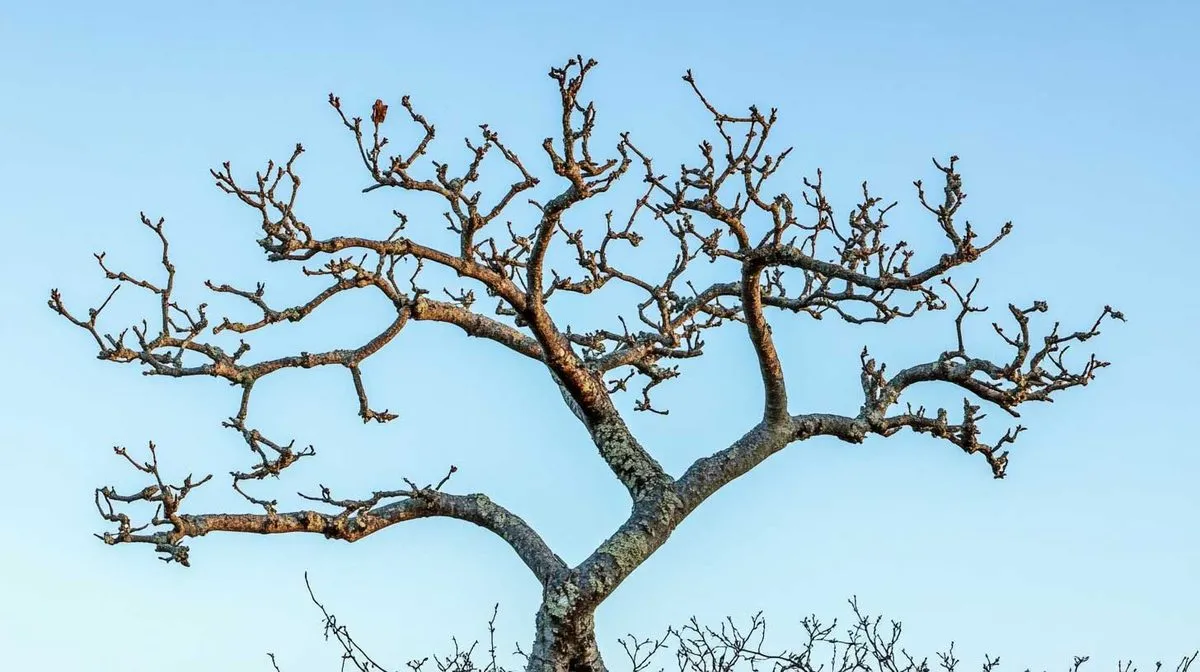
Prune in winter (June to August) while the vine is completely dormant and leafless. The earlier in winter the better. Late pruning (after buds start to swell in August) causes the cut ends to bleed sap, which wastes the vine's energy reserves.
Spur pruning (the most common backyard method)
- Identify last season's growth. It is smooth-barked and lighter in colour than the older wood.
- Cut each of last season's canes back to a short spur with 2 buds. Each spur will produce 2 new shoots in spring, each carrying 1 to 3 bunches of grapes.
- Space spurs 15 to 20 cm apart along the permanent arms. Remove any extra canes between the spurs.
- Remove all dead, damaged, and thin wood. Keep the framework clean and open.
Summer pruning
In December and January, remove excess leafy growth that shades the fruit. Grapes need sun on the bunches to ripen and colour properly. Pinch out the growing tips of shoots once they extend 30 cm past the last bunch. Remove any shoots that have no fruit. This redirects the vine's energy into the grapes rather than leaf production.
Watering
Established grape vines are drought-tolerant once their deep root system develops (after 3 to 4 years). Young vines need regular watering.
- Year 1 and 2: Water deeply once or twice a week. Soak the soil around the root zone to encourage deep root growth.
- Established vines: Water deeply every 1 to 2 weeks in hot weather. Reduce watering as fruit approaches ripeness (January to March). Too much water during ripening dilutes the sugar and flavour.
- Drip irrigation: Ideal for grapes. Place a dripper line along the base of the vine. Overhead watering wets the foliage and promotes fungal disease.
Feeding
- Late winter (July): Apply aged compost or well-rotted manure around the base of the vine after pruning. This feeds the soil as the vine comes out of dormancy.
- Early spring (September): Apply a balanced organic fertiliser (blood and bone or pelletised chicken manure). Water in well.
- After fruit set (November): A light feed of potassium sulphate helps improve fruit quality and sweetness. Avoid high-nitrogen fertiliser from fruit set onward because it promotes leaf growth at the expense of fruit.
Netting for Bird Protection
Birds will take every grape on your vine if you do not protect them. Netting is essential from the moment berries start to colour (veraison), usually in December or January.
- Use wildlife-safe netting with a mesh size of 5 mm or smaller. Many states and councils now require this to prevent bird and wildlife entanglement.
- On a trellis: Drape netting over the entire trellis and secure it at the base with clips or pegs.
- On a pergola: This is harder. You can either net individual bunches with small drawstring bags (available from garden suppliers) or build a lightweight frame below the pergola to drape netting over.
- Timing: Put netting up at veraison and remove it after the last bunches are picked. Do not leave it up year-round because it interferes with pruning and reduces pollination.
Pests and Diseases
Powdery mildew
A white, powdery coating on leaves and fruit. The most common grape disease in Australia. Thrives in warm, dry conditions with poor air circulation. Spray with potassium bicarbonate, sulphur, or milk spray (1 part milk to 9 parts water) every 2 weeks from bud burst through to veraison. Prune to open up the canopy and improve airflow.
Downy mildew
Yellow spots on the upper leaf surface with a fuzzy white growth underneath. Thrives in wet, humid conditions. More common in coastal and subtropical areas. Spray with copper-based fungicide as a preventative from bud burst. Remove and destroy affected leaves.
Grape vine moth
Caterpillars feed on flowers and young fruit, sometimes webbing leaves together. Hand-pick caterpillars. Spray with Bacillus thuringiensis (Bt) if infestations are heavy. Bt is a biological control that targets caterpillars and is safe for bees and other beneficial insects.
Birds
Covered in the netting section above. Without netting, your harvest goes to the birds.
Phylloxera
A root-feeding insect that devastated grape vines globally in the 1800s. Still present in parts of Victoria. If you are in a phylloxera zone, plant grafted vines on resistant rootstock. Check with your local nursery or the relevant state agricultural department.
Varieties by Climate
Hot and dry (Adelaide, Mildura, inland NSW, Riverland)
Thompson Seedless, Menindee Seedless, Flame Seedless, Muscat Hamburg, Shiraz. These areas produce the best table grapes in Australia. Hot summers with low humidity mean fewer disease problems and sweeter fruit.
Temperate (Melbourne, Sydney, Perth, Canberra)
All table grape varieties grow well. Flame Seedless and Ruby Seedless are reliable. Wine grape growers can try Shiraz, Cabernet Sauvignon, and Chardonnay. Coastal humidity increases disease risk, so choose resistant varieties and maintain good airflow.
Cool (Hobart, Adelaide Hills, Blue Mountains, highlands)
Pinot Noir and Chardonnay for wine. For table grapes, try Muscat Hamburg (it handles cooler conditions) or Black Hamburg. The shorter, cooler growing season means later ripening. Choose early-ripening varieties to ensure fruit matures before autumn.
Subtropical (Brisbane, Northern NSW)
Challenging due to high humidity. Isabella and Chambourcin handle humid conditions better than European varieties. Fungal disease management is critical. Grow on an open trellis with maximum air circulation.
Harvesting
Grapes are ready to harvest when the berries are fully coloured, sweet to taste, and come away from the bunch easily. The best way to check is to eat one. If it tastes sweet and the seeds (if present) are brown, the bunch is ready.
- Cut whole bunches from the vine with sharp secateurs. Do not pull because you can damage the vine.
- Harvest in the morning when the fruit is cool. Grapes picked in afternoon heat are softer and do not store as well.
- Leave bunches on the vine if they are not quite sweet enough. Grapes do not ripen further after picking (unlike bananas or tomatoes). What you pick is what you get.
- Storage: Fresh grapes keep 1 to 2 weeks in the fridge in a loosely covered container. They freeze well for smoothies and cooking. You can also dry them into sultanas or raisins using a food dehydrator or by sun-drying on a mesh rack.
Frequently Asked Questions
How long does it take for a grape vine to produce fruit?
A grape vine produces its first small crop in the second or third year after planting. Full production starts from year 4 or 5. A well-maintained vine can produce 5 to 15 kg of fruit per year and remain productive for 30 years or more.
Do grape vines need a trellis?
Yes. Grape vines are climbing plants that need a support structure. A trellis, pergola, fence, or wire system keeps the vine off the ground, improves air circulation, allows sunlight to reach the fruit, and makes harvesting and pruning much easier. Without support, the vine sprawls on the ground and produces poor-quality fruit.
When do you prune grape vines in Australia?
Prune grape vines in winter (June to August) while they are fully dormant and leafless. The main pruning method for most backyard grapes is spur pruning. Cut last season's growth back to 2-bud spurs on the main framework. Late pruning (after bud swell) can cause excessive sap bleeding and weaken the vine.
Can you grow grapes in tropical Australia?
Grapes can be grown in tropical areas but it is challenging. The lack of a cold winter means the vine does not go fully dormant, and high humidity increases fungal disease risk. Tropical varieties like Isabella and some muscadine types handle the conditions better than European varieties. Most commercial and backyard grape growing in Australia happens in temperate and Mediterranean climates.
See also: Grape in the Plant Library
Plant profile
The grape profile has sowing times for your region, companion plants and common pests.