How to Grow a Mango Tree in Australia: From Seed or Grafted
Updated October 2026
More fruit growing help: Backyard Fruit Trees in Australia, with the best fruit for each region and when to plant it.
Tropical climate requirements, pruning for size, and variety picks
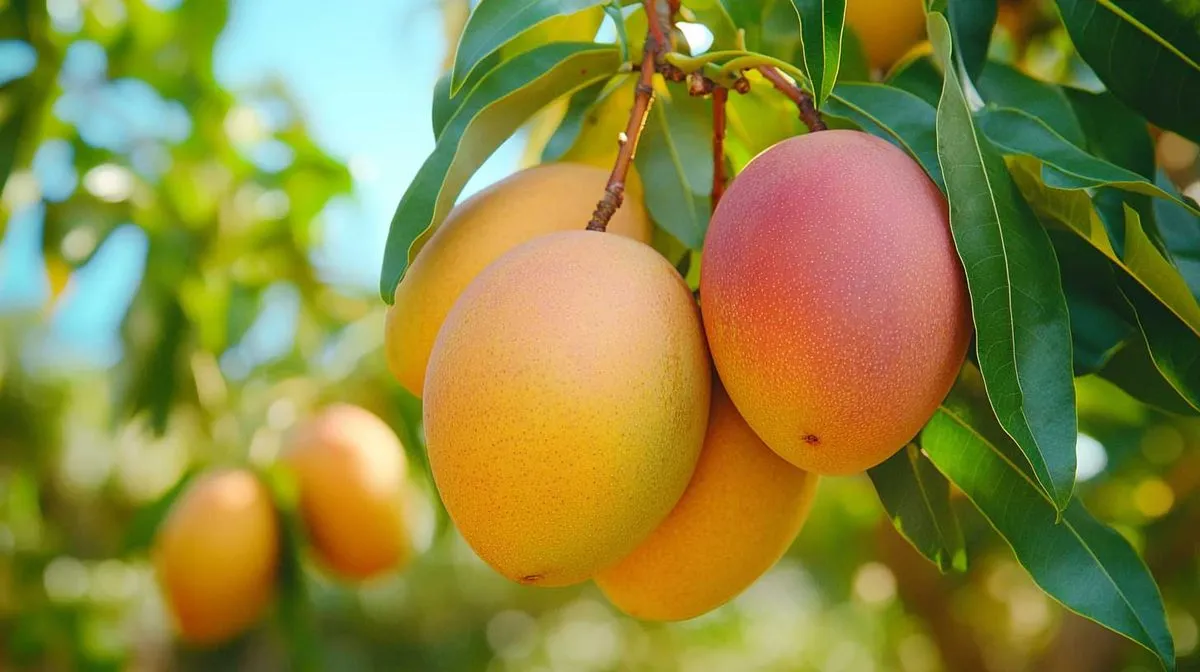
Mangoes are the quintessential tropical fruit tree. In the right climate, a single tree can produce hundreds of fruit each season. Growing a mango tree is a long-term investment: they take a few years to start bearing, but then produce reliably for decades.
This guide covers the best varieties for Australian home gardens, climate requirements, how to keep trees at a manageable size, and regional planting information.
🌱 Plant profile: Mango, with sowing times for your region, companion plants and common pests.
When to Plant a Mango Tree in Your Region
Mangoes are planted in the warm, wet months so young trees can establish before the dry season. These are the planting months for each region from our data, and most of southern Australia is too cold for a mango tree outdoors. Each region links to its full vegetable planting calendar, and the Mango plant page has spacing, companions and care notes for your region.
| Region | Plant trees and seeds | Local note |
|---|---|---|
| South East Queensland | September to March | |
| Northern Rivers NSW | September to March | |
| Sydney & Coastal NSW | October to January | Marginal tropical; select Sydney-adapted varieties; fruit set unreliable; prefer warm microclimates. |
| Melbourne & Victoria | Not recommended outdoors | Requires tropical warmth and 200+ frost-free days. Melbourne winter lethal. Only viable in protected north-facing microclimate with thermal mass (brick wall, very rare). |
| Adelaide & SA | Not recommended outdoors | Not suited to Adelaide. Mango needs tropical heat and humidity and does not cope with the temperature extremes. |
| Perth & WA | Not recommended outdoors | Not in our Perth calendar. Mango needs tropical heat and humidity; only the warmest Perth microclimates can carry a tree. |
| Tasmania | Not recommended outdoors | Unsuitable. Tropical tree killed by frost. Not viable in Tasmania. |
| Canberra & ACT | Not recommended outdoors | Mango unsuitable for Canberra: tropical fruit; frost kills young trees; requires sustained warmth. Not viable. |
| North Queensland | September to March | Wet season Sep to Mar. Mango is tropical heartland crop; fruit season Nov to Apr. Sow spring for establishment. |
| Darwin & Top End | September to March | Wet season Sep to Mar. Mango is tropical heartland crop; fruit season Nov to Apr. Sow spring for establishment. |
Best Mango Varieties for Australia
Kensington Pride (KP/Bowen)
The iconic Australian mango. Sweet, aromatic flesh with a classic mango flavour. Medium to large fruit. The most commonly grown variety in home gardens across northern Australia. Reliable cropper once established.
R2E2
Very large fruit (up to 700g) with firm, sweet flesh and a small seed. Bright red and green skin. Excellent eating quality and stores well. Grows well in all mango-suitable climates.
Nam Doc Mai
Thai variety with elongated, pale-green fruit. Exceptional flavour, virtually no fibre, and a thin seed. Can be eaten green (tart) or ripe (honey-sweet). A favourite for home growers who want something different.
Palmer
Large fruit with mild, sweet flesh and very little fibre. Late-season variety that extends the harvest. Good disease resistance. A reliable choice for humid coastal regions.
Honey Gold
Australian-bred variety with rich, honey-sweet flavour and golden flesh. Medium-sized fruit on a moderately vigorous tree. Becoming increasingly popular in home gardens for its outstanding flavour.
How to Plant a Mango Tree From Seed
Growing a mango tree from seed is cheap and satisfying, and a seedling makes a handsome tree, but it is the slow road to fruit. Seedling trees take 5 to 8 years to bear and may not produce fruit true to the parent, while a grafted tree usually fruits in 3 to 5 years. Plant a seed for the fun of it or as a long-term experiment, and buy a grafted tree if fruit is the goal.
- Start with a fresh seed. Take the stone from a ripe mango, clean off the flesh and plant it soon after you have eaten the fruit.
- Open the husk. The hard, hairy stone is a husk around the true seed. Carefully cut along its edge with secateurs and lift out the kernel inside, which looks like a large, pale bean. Taking it out of the husk helps it sprout sooner.
- Plant it shallow. Plant the kernel in a pot of free-draining seed-raising or potting mix and cover it with a thin layer of mix.
- Keep it warm and moist. Our plant data gives a germination temperature of 24 to 34°C and about 14 days to sprout in that warmth. Keep the mix damp but not soggy, and sow in the warm months, between September and March.
- Grow it on. Keep the seedling in a warm, bright spot, pot it up as it grows, and plant it out in spring or early summer once it is sturdy, into deep, well-drained soil in full sun with no frost.
Seed or grafted tree?
A grafted tree is a known variety joined onto a vigorous rootstock. It fruits years sooner than a seedling and gives you the fruit you chose, which is why we recommend grafted trees for anyone who wants mangoes to eat. Look for the varieties described above as grafted trees at a fruit tree nursery, and keep the seedling as a shade tree or a project.
Planting and Caring for a Young Mango Tree
Plant a mango tree, grafted or seedling, in the warmest, sunniest spot in the garden, in deep, well-drained soil that never stays wet and well away from frost pockets. Water young trees regularly while they establish. Once a tree is mature, ease back on watering, especially in the months before flowering, because a dry spell helps trigger blooms and a drier flowering period helps fruit set.
Feed with a balanced fruit tree fertiliser through the warm growing flush, and ease off nitrogen before flowering so the tree puts its energy into flowers rather than leaves. Mulch the root zone, keeping the mulch clear of the trunk, and shelter young trees from cold in their first winters.
Growing a Mango Tree in a Pot
Only dwarf varieties suit a pot, and our plant data calls for a container at least 60 cm across. A potted mango still needs full sun, warmth and a free-draining mix, and it needs more frequent watering and feeding than a tree in the ground. In marginal areas a pot has one advantage: you can move it to the warmest spot in the garden and shelter it from cold. Prune after fruiting to keep the canopy compact.
Climate Requirements
Mangoes need a tropical or warm subtropical climate. They require:
- Warm, frost-free conditions year-round. Even a light frost can kill a young tree.
- A distinct dry season to trigger flowering. Consistent year-round rain can prevent fruit set.
- Hot summers for fruit development and ripening.
In Australia, mangoes grow well from Darwin across the Top End, through North Queensland, and down the coast to about Bundaberg. They can fruit in warm, sheltered spots in South East Queensland and northern NSW, but are marginal in cooler areas.
Pruning for Size
Unpruned mango trees grow 10 to 15 metres tall, which makes harvesting difficult. Regular pruning keeps trees at 3 to 4 metres tall and within reach.
- Prune immediately after harvest (while it is still warm enough for regrowth)
- Remove the top third of the canopy to maintain a manageable height
- Open up the centre for light and air circulation
- Remove dead, crossing, and downward-growing branches
- Seal large cuts with pruning paste to prevent disease entry
Hard pruning every 2 to 3 years is better than light annual pruning for size control. The tree will miss one season of fruit after a hard prune but will produce well the following year on new wood.
Harvesting Mangoes
Our plant data allows about three years for a grafted tree to give its first real crop. The fruit ripens from November to February in most mango-growing areas, and through to April in North Queensland and the Top End. Pick when the shoulders fill out, the colour develops and a fruity aroma rises near the stem. Cut the fruit with a short stalk attached to avoid sap burn, then ripen it on the bench. Once fully ripe, mangoes keep for 2 to 3 days in the fridge, and chunks freeze well for smoothies.
Common Problems
Anthracnose
Black spots on leaves, flowers, and fruit. The most common mango disease in humid climates. Spray with copper-based fungicide at flowering and during wet weather. Good air circulation (via pruning) reduces severity.
Fruit fly
Queensland fruit fly is the biggest pest for mango growers. Use protein bait traps from October onwards. Cover developing fruit with exclusion bags. Pick up all fallen fruit daily.
Mango seed weevil
Larvae develop inside the seed, causing premature fruit drop. Collect and destroy all fallen fruit. No spray is effective once the weevil is inside the fruit.
Poor fruit set
Wet weather during flowering washes pollen away and encourages anthracnose on flower panicles. There is little you can do about rain timing, but copper sprays during flowering help protect against disease.
Frequently Asked Questions
Can I grow a mango tree in Melbourne or Sydney?
Mangoes are unlikely to fruit reliably south of about Bundaberg or Coffs Harbour. They need consistent warmth, frost-free conditions, and a dry period to trigger flowering. In cooler climates, they may survive as an ornamental tree but rarely produce fruit.
How long do mango trees take to produce fruit?
Grafted mango trees typically produce their first fruit in 3 to 5 years. Seedling-grown trees take 5 to 8 years and may not produce fruit true to the parent variety. Always buy grafted trees for reliable fruit.
How do I keep a mango tree small?
Prune immediately after harvest, removing the top third of the canopy. This keeps the tree at 3 to 4 metres tall and within easy picking height. Hard pruning every 2 to 3 years is more effective than light annual pruning.
What is the best mango variety for home gardens?
Kensington Pride is the most popular and reliable. For exceptional flavour with less fibre, try Nam Doc Mai or Honey Gold. R2E2 produces the largest fruit. Choose based on your taste preference and climate.
How do you plant a mango seed?
Clean the flesh off the stone from a ripe mango, carefully open the hard husk and take out the kernel inside. Plant the kernel just below the surface of a pot of free-draining mix and keep it warm and damp. At 24 to 34°C it should sprout in about two weeks. Grow it on in a warm, bright spot and plant it out in spring or early summer.
Will a mango tree grown from seed produce fruit?
It can, but slowly. Seedling trees take 5 to 8 years to fruit, and the fruit may not match the mango the seed came from. Grafted trees fruit in 3 to 5 years and give a known variety, so buy a grafted tree if fruit is the main goal.
When is the best time to plant a mango tree?
In the warm, wet months. South East Queensland, the Northern Rivers, North Queensland and Darwin plant from September to March, and Sydney from October to January in a warm microclimate. Melbourne, Adelaide, Perth, Tasmania and Canberra are not mango country outdoors.
Can I grow a mango tree in a pot?
Only dwarf varieties, in a pot at least 60 cm across, with free-draining mix, full sun and regular water and feed. A pot lets you shelter the tree from cold in marginal areas, and pruning after fruiting keeps it compact.
See also: Mangoes in the Plant Library
Plant profile
The mango profile has sowing times for your region, companion plants and common pests.