Lemon Tree Problems: Curling Leaves, Yellow Leaves and Pests
Updated November 2026
A symptom chart for lemon trees in Australia, with what to do this week
Curling leaves, yellow leaves, black film and lumpy branches are the problems that bring most gardeners to a lemon tree. This chart matches each symptom to its likely cause and gives you a job for this week. Each cause links to its own page with photos and the full treatment steps. Where a spray is needed, use a registered product, following the label.
What to Do This Week: Five Quick Checks
- Look at the newest leaves. Trails, curling and a sticky shine point to insects. Even colour changes point to feeding or water.
- Turn a few leaves over and look along the stems for bumps, clusters of insects, ants or a black film.
- Check the branches for lumps, holes or sawdust, and for twigs that have died back.
- Push a finger into the soil or mix. If it is soggy, stop watering. If it is dry 5 cm down, water deeply.
- Check the date of your last feed against the feeding and pruning calendar, and feed only in a feeding month for your region.
Photo Guide to the Common Culprits
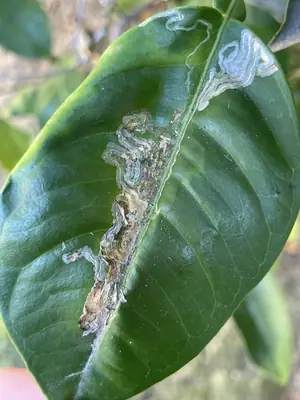
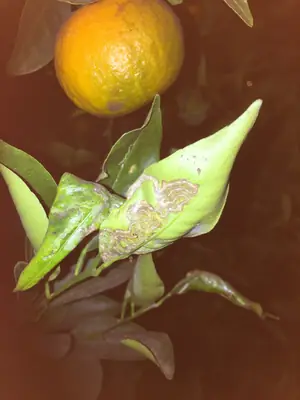
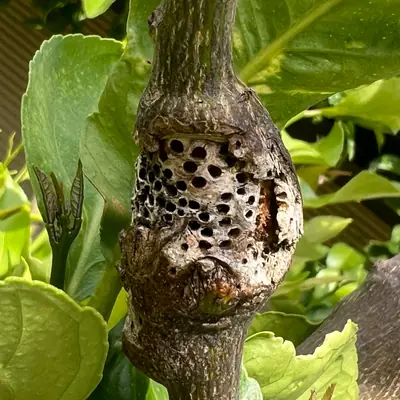
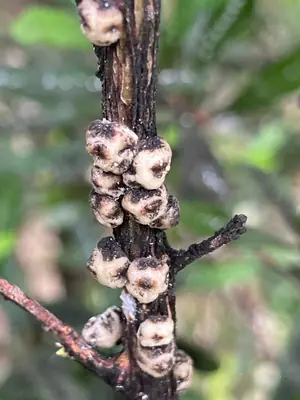
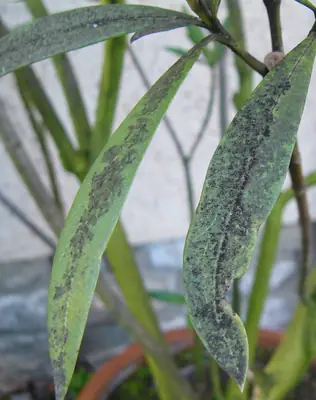
Photo credits and identification notes are on each linked page.
Leaf Problems: Curling and Yellow Leaves
| What you see | Likely cause | What to do this week | Read more |
|---|---|---|---|
| New leaves curl or twist and carry silvery, winding trails | Citrus leaf miner. The larvae tunnel between the leaf surfaces on soft new growth, mostly from October to April. | Pick off and bin the worst leaves, or squash the larvae by pressing along each trail. An established tree usually keeps cropping. Do not prune in autumn, which only brings more soft growth. If a young tree is badly hit, protect the next flush with a registered horticultural oil, following the label. | Leaf miner |
| Leaves curl or cup, with a sticky shine, ants on the trunk or clusters of tiny insects on the shoot tips | Sap-sucking insects such as aphids, whitefly, mealybug or scale. | Hose clusters off, wipe light infestations with a damp cloth, and stop ants reaching the canopy with a sticky barrier around the trunk. For heavier infestations use a registered product, following the label. | Aphids, whitefly, mealybug, scale |
| Leaves curl inwards, droop or look dull in hot or windy weather, and the soil is dry | Water stress. Lemons have shallow roots and wilt quickly when the root zone dries, and pots dry out fastest. | Water deeply, then top up the mulch, keeping it 15 cm clear of the trunk. Check pots every day in summer. | Watering guide, mulching guide |
| New leaves are narrow, twisted or strap-like and no insects are present | Spray drift from a weedkiller used nearby. | Nothing needs spraying. Keep the tree watered and fed, and the growth usually recovers over the following flushes. Keep weedkiller away from the canopy and the root zone. | Fertilising guide |
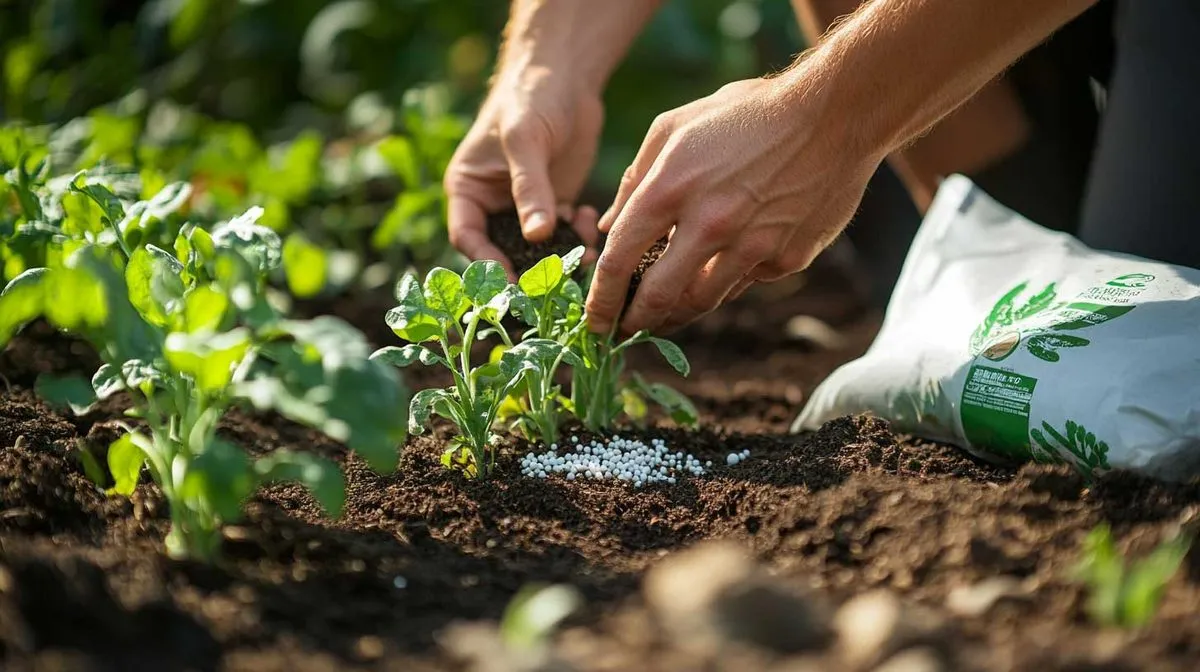
| Leaves turn evenly pale yellow, older leaves first | Hunger, usually a shortage of nitrogen after feeds have been missed. | If it is a feeding month for your region, feed with a complete citrus fertiliser that includes trace elements, at the label rate, and water it in. | Feeding calendar, fertilising guide |
| New leaves turn yellow between green veins | A shortage of trace elements such as iron or zinc, which the roots cannot take up in waterlogged or very alkaline soil. | Use a citrus fertiliser that includes trace elements, and fix the drainage if the soil stays wet. Do not add more water. | Yellow leaves guide |
| Older leaves yellow at the edges and between the veins, leaving a green wedge at the base | A shortage of magnesium. | Use a citrus fertiliser that lists magnesium, or a magnesium product used to its label, and water it in. | Yellow leaves guide |
| Leaves go dull yellow and drop, the soil is soggy or the pot sits in a saucer of water | Waterlogged roots from overwatering or poor drainage. | Stop watering until the top 3 to 5 cm of mix or soil feels dry. Tip out saucers and clear the drainage holes. In heavy clay, plan to replant on a mound. | Citrus in pots, watering guide |
| Leaves brown or drop after a cold night | Frost damage. | Leave the damaged growth on until spring shows where the live wood ends, then cut back to healthy wood. Cover young trees with frost cloth next winter. | Frost dates, pruning guide |
Stem and Branch Problems
| What you see | Likely cause | What to do this week | Read more |
|---|---|---|---|
| Lumpy, woody swellings on young branches, often with small round exit holes | Citrus gall wasp. | Cut out galled stems between April and June, then seal the off-cuts in a strong bag and leave them in the sun for a month, freeze them for 24 hours, burn them where allowed or bury them deeply. Never put galls in the green waste bin. | Citrus gall wasp |
| Small brown, grey or white bumps on stems and along leaf veins that do not brush off | Scale insects. | Rub off light infestations with an old toothbrush. For more, use a registered horticultural oil in mild weather under 30 degrees, covering all surfaces, and repeat 2 to 3 weeks later, following the label. | Scale |
| A black, sooty film over leaves, stems and fruit | Sooty mould growing on the honeydew that scale, aphids, whitefly or mealybug drip. | The film wipes off, so treat the insect first, then hose or wipe the leaves. Keep ants off the trunk with a sticky barrier, because ants protect the insects. | Sooty mould, scale |
Fruit Problems
| What you see | Likely cause | What to do this week | Read more |
|---|---|---|---|
| Raised, corky, scabby spots on fruit and leaves | Citrus scab, which is worst after wet weather on soft new growth. | Prune out dead wood and open the canopy, and pick off badly affected fruit and leaves. The fruit is still edible. For a heavy outbreak use a registered product, following the label. | Citrus scab |
| Small, hard, gritty brown specks on fruit and leaves | Melanose, a fungal disease that spreads from dead twigs in wet weather. | Cut out dead wood and thin shaded inner twigs so the canopy dries quickly. Clear fallen twigs and leaves from under the tree. | Melanose |
| Dry, woody patches or spongy segments inside the fruit, or shield-shaped bugs on the tree | Stink bugs or bronze orange bugs, which pierce the fruit. | Check the tree in the morning when the bugs are sluggish, and handpick them into soapy water. Wear eye protection and gloves, because the bugs squirt an irritating fluid. | Stink bugs, bronze orange bug |
| Fruit splits | Uneven watering, usually a heavy soak after a dry spell. | Water steadily and keep a thick mulch over the root zone, so the soil moisture does not swing. | Watering guide |
| Plenty of blossom but little fruit, or small fruit dropping in spring | A spring fruit drop is normal, because the tree sheds more than it can carry. A heavy drop with yellow leaves points to feeding, water or too little sun. | Water steadily and feed on schedule. Make sure the tree gets at least 6 hours of direct sun and has not been pruned hard. | How to grow lemons |
Pest and Nutrient Pages
The Australian causes each have a page: citrus leaf miner, citrus gall wasp, scale, sooty mould, stink bugs, bronze orange bug, citrus scab and melanose. For nutrient problems start with our yellow leaves guide and fertilising guide.
Frequently Asked Questions
Why are the leaves curling on my lemon tree?
Look at the new growth first. Silvery winding trails inside curled young leaves mean citrus leaf miner, which is the most common cause. Curling with a sticky shine, ants or clusters of insects points to aphids, whitefly, mealybug or scale. Curling in hot, windy or dry weather usually means water stress.
Why are my lemon tree leaves turning yellow?
The pattern matters. Even pale yellowing of older leaves is usually a nitrogen shortage, yellow between green veins on new leaves points to trace elements such as iron or zinc, and a green wedge at the base of yellow older leaves suggests magnesium. Dull yellowing with a soggy soil or pot means the roots are too wet.
Will citrus leaf miner kill my lemon tree?
Rarely. The damage looks alarming but is mostly cosmetic on established trees. Young trees can be set back, so protect their new flushes and avoid pruning in autumn, when the pest is most active.
How do I get rid of citrus gall wasp?
Cut out the galls between April and June, well before the wasps emerge in spring, and dispose of the off-cuts in a sealed bag left in the sun, in the freezer, by burning or by deep burial. Never use the green waste bin.
Why does my lemon tree have black leaves?
A black film is sooty mould growing on honeydew dripped by sap-sucking insects. It wipes off and does not infect the tree, so the fix is to control the scale, aphids, whitefly or mealybug, and keep ants off the trunk.
See also: how to grow lemons, citrus in pots and the pest and disease guide.
Sources: our own pest pages, which cite Agriculture Victoria for the gall wasp timing, and the NSW Department of Primary Industries citrus pages.