Whitefly: identify, prevent, control
Updated June 2026
Worst in warm weather and under glass, peaking spring through autumn, September to April.
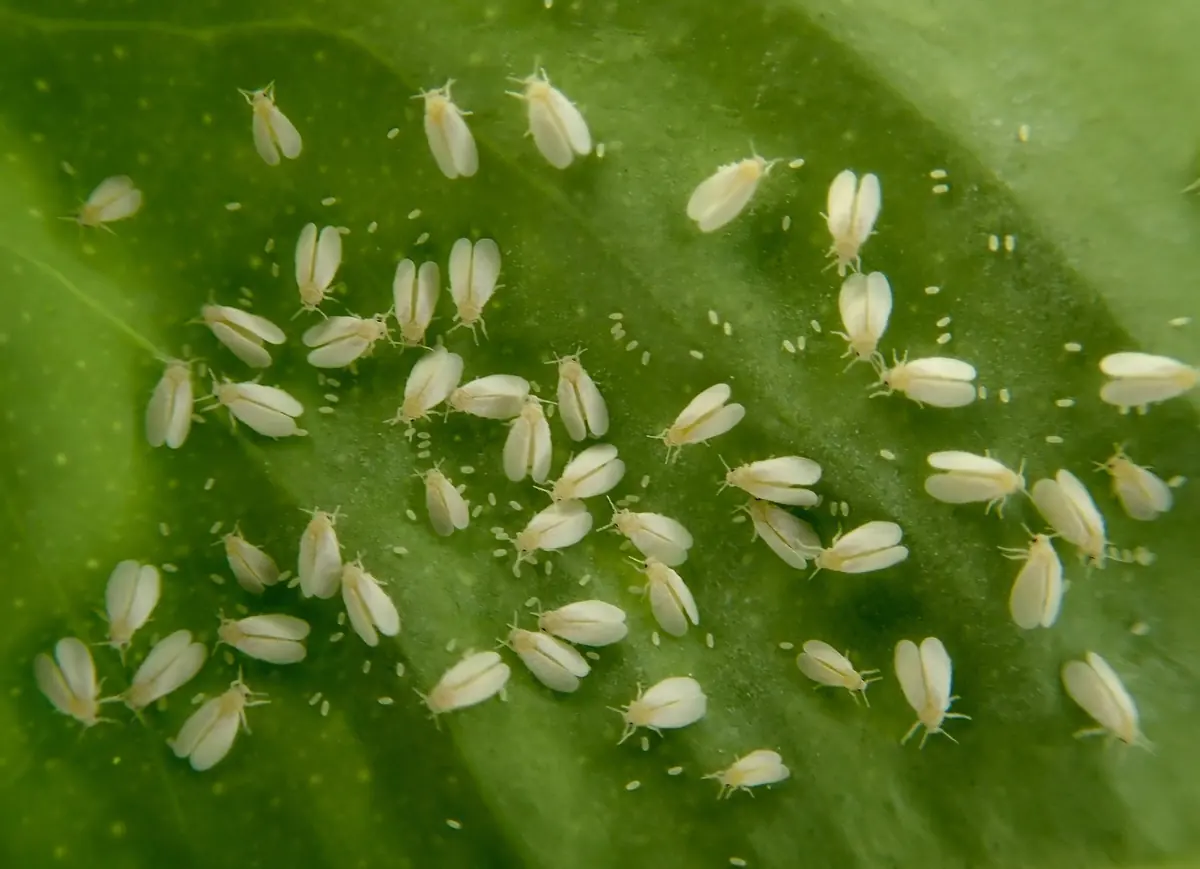
Whiteflies are tiny white sap-sucking insects that rise in a cloud when disturbed. They cluster on leaf undersides of tomatoes, beans and brassicas, weaken plants, spread viruses and coat leaves in honeydew and sooty mould.
How to identify it
- Clouds of tiny white insects flying up when you brush the plant
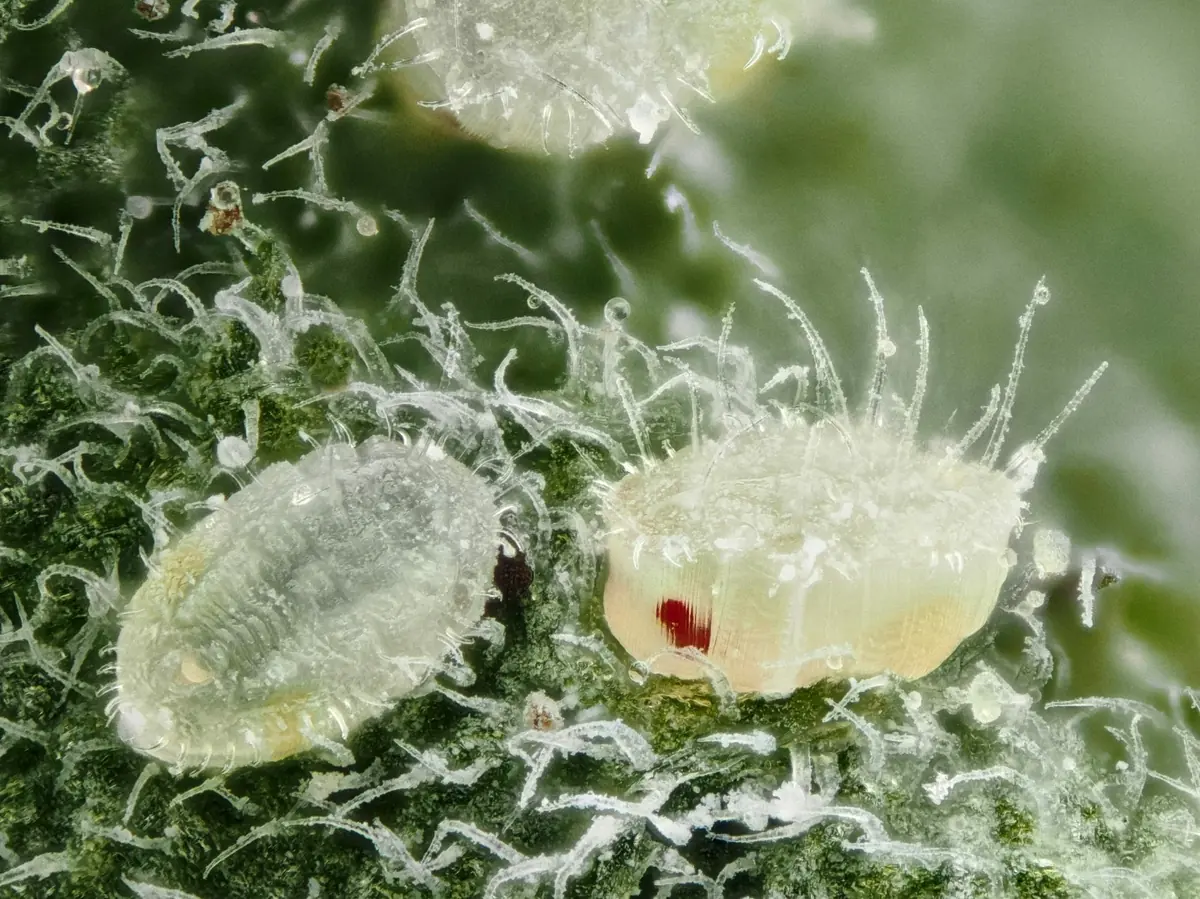
- Tiny white insects and pale scale-like nymphs on leaf undersides
- Yellowing, weakened leaves and stunted growth
- Sticky honeydew and black sooty mould on lower leaves
How to prevent it
- Inspect and isolate new seedlings, a common way whitefly arrives
- Avoid heavy nitrogen feeding that fuels the soft growth they prefer
- Hang yellow sticky traps early to monitor and catch adults
- Encourage lacewings and tiny parasitic wasps by keeping flowering plants nearby
Organic control, step by step
- Vacuum or hose adults off in the cool of the morning when they are sluggish
- Spray eco-oil or soap spray onto leaf undersides where they gather
- Repeat sprays every 5 to 7 days to catch newly hatched nymphs
- Use eco-neem for heavier infestations to disrupt breeding
- Hang yellow sticky traps among plants to trap flying adults
- Remove and bin badly infested lower leaves
Plants it attacks
Track it in the app. The free Planting Season planner lists the pests and diseases to watch for on every plant in your garden, tuned to your region.