Sooty mould: identify, prevent, control
Updated June 2026
Follows sap-sucking pest activity, worst through the warm months, October to April.
Sooty mould is a black fungus that grows on the sticky honeydew dropped by aphids, scale, whitefly and mealybugs. It does not infect the plant directly but coats leaves and blocks light, so the real fix is controlling the sap-sucking pests producing the honeydew.
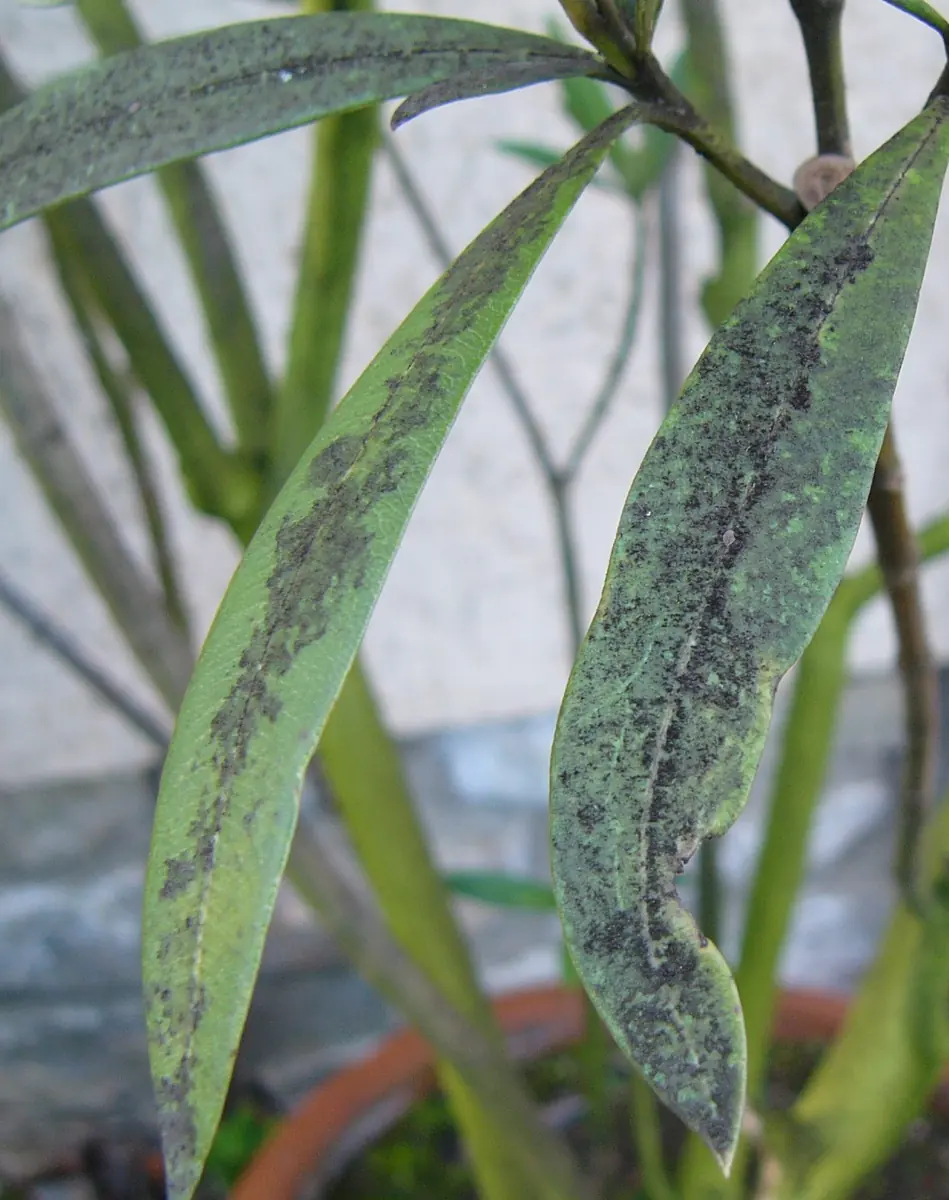
How to identify it
- A black sooty coating on leaves, stems and fruit
- The film wiping off to reveal healthy green tissue underneath
- Sticky honeydew on and below affected leaves
- Sap-sucking pests like scale, aphids or whitefly present above the mould
How to prevent it
- Control the sap-sucking pests producing the honeydew, the root cause
- Keep ants off plants with a sticky barrier, since ants farm honeydew producers
- Inspect plants regularly to catch scale, aphids and whitefly early
- Prune for good airflow and light
Organic control, step by step
- Treat the underlying pest with eco-oil, soap spray or eco-neem, which stops new honeydew
- Wipe or hose the mould off leaves once the pests are under control
- Spray eco-oil to both smother pests and help loosen the mould
- Control ants with a barrier band so predators can manage the pests
- Prune out heavily coated and shaded growth
- Expect the mould to weather away over time once the honeydew stops
Plants it attacks
Track it in the app. The free Planting Season planner lists the pests and diseases to watch for on every plant in your garden, tuned to your region.