Aphids: identify, prevent, control
Updated June 2026
Worst in spring and early summer flushes of new growth, September to December, with a second autumn peak.
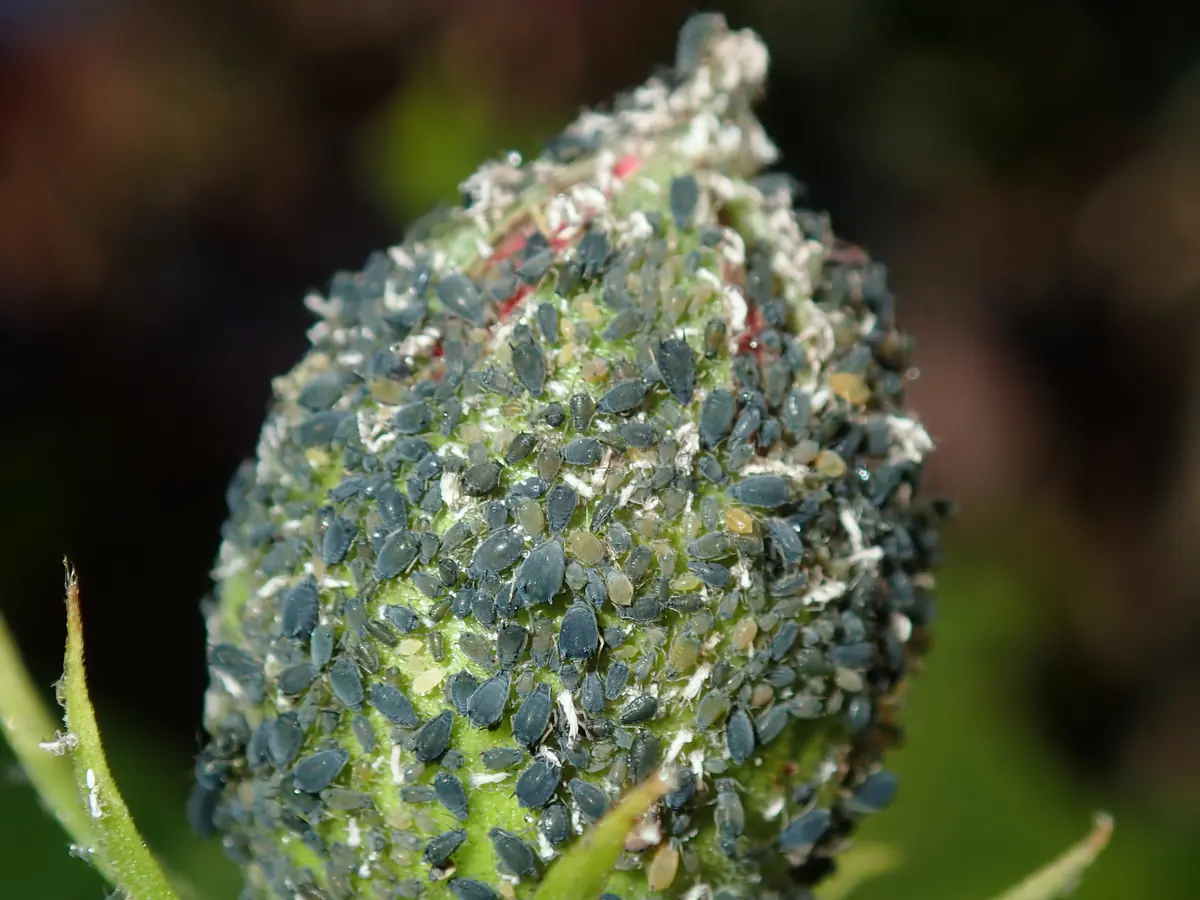
Aphids are small sap-sucking insects that cluster on soft new growth and the undersides of leaves. They breed fast in warm weather and spread plant viruses, so we treat them early before colonies explode across a bed.
How to identify it
- Tiny green, black, grey or pink insects clustered on new shoots and leaf undersides
- Curled, distorted or yellowing young leaves
- Sticky honeydew on leaves below, often followed by black sooty mould
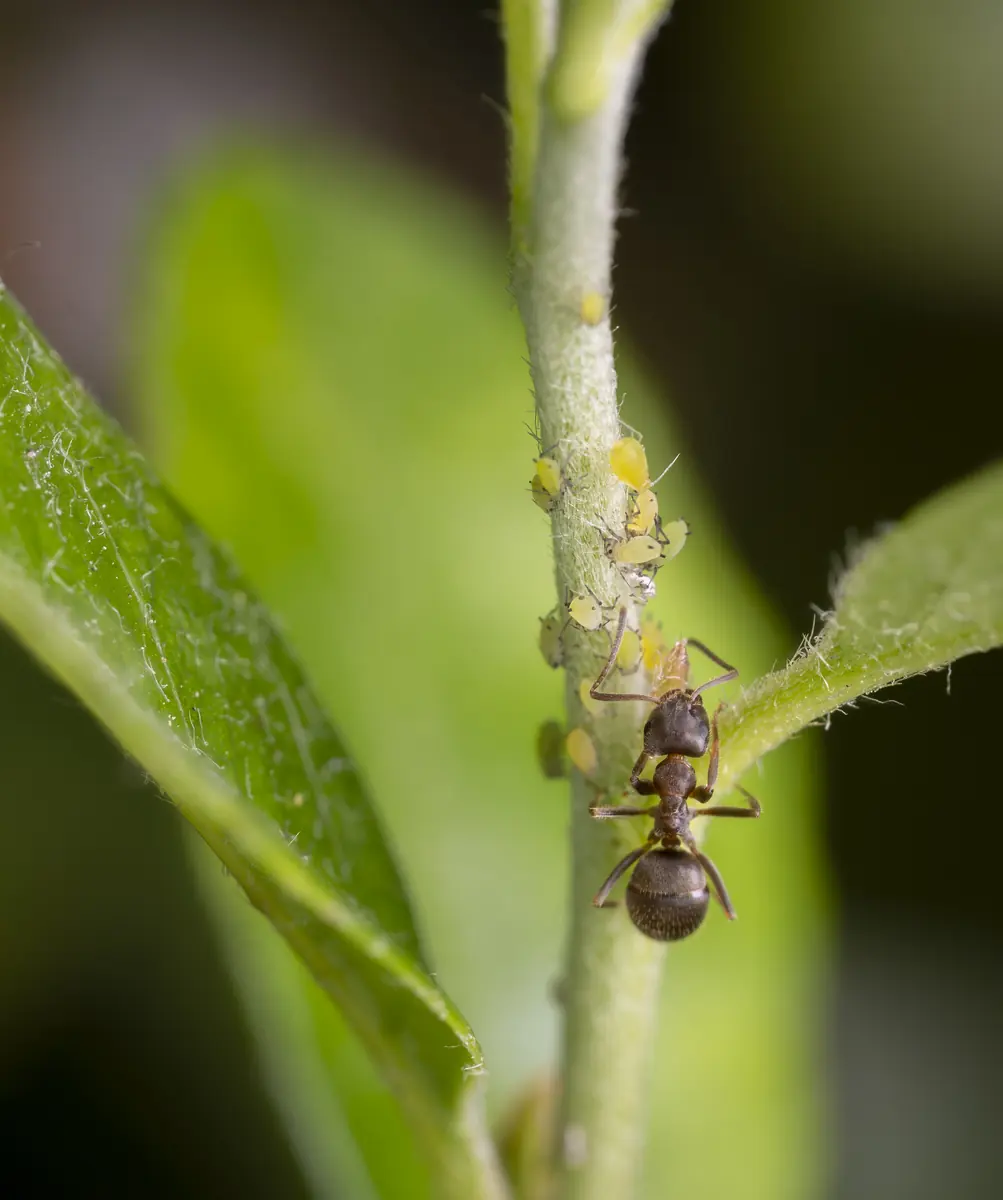
- Ants running up and down stems, farming the aphids for honeydew
- Winged adults appear once a colony gets crowded
Swollen tan aphids that no longer move are mummies left by parasitic wasps, which means help has arrived. See them, with the ladybird and lacewing larvae that eat aphids, in our Good Bugs vs Bad Bugs photo guide.
How to prevent it
- Avoid heavy nitrogen feeding, which pushes soft sappy growth aphids love
- Encourage ladybirds, lacewings and hoverflies by planting alyssum, dill and yarrow nearby
- Inspect new seedlings before planting so you do not bring infestations in
- Keep plants well watered, as drought-stressed plants attract more aphids
Organic control, step by step
- Squash small colonies by hand or blast them off with a sharp jet of water
- Spray eco-oil or a registered potassium soap, used to the label, directly onto colonies, covering leaf undersides. We give no kitchen soap recipe, because kitchen mixes are not registered, so their dose, crop safety and withholding period are untested
- For heavier infestations choose a product whose label lists your crop and aphids, and keep to its rate and its withholding period before harvest
- Pyrethrum knocks down severe outbreaks fast, but spray at dusk to spare bees
- Release or attract ladybirds and lacewings, which each eat dozens of aphids a day
- Control ants with a barrier band, since ants protect aphids from predators
Plants it attacks
LettuceWatercressEndiveBroccoliBroccoliniCapsicumZucchiniSquashCucumberBeans (bush)EdamameTurnipSwedeBasilThai BasilMarjoramStrawberryCherryBlackberryZinniaCosmosSweet PeaDahliaSnapdragonEchinaceaChilliPeasSnow PeasOkraGai LanDillAmaranthMalabar SpinachCeleryFennelKohlrabiBrussels SproutsSnake BeansBitter MelonLuffaPotatoTaroDaikonParsnipLemon VerbenaShiso (Perilla)ChamomileTamarilloSunflowerGlobe ArtichokeRadicchioChicoryFlorence FennelViolaCornflowerHibiscusCulinary RoseElderflowerPepinoQuinoaScarlet Runner Bean
Track it in the app. The free Planting Season planner lists the pests and diseases to watch for on every plant in your garden, tuned to your region.