Stink bugs: identify, prevent, control
Updated October 2026
Active from spring to autumn, with spined citrus bug worst on inland southern citrus and fruit-spotting bugs worst in coastal Queensland and northern New South Wales.
Several different bugs end up being called stink bugs or citrus bugs in Australian gardens, and they all feed by piercing fruit, nuts or shoots with a long beak. This page covers spined citrus bug, the fruit-spotting bugs, the native lychee stink bug and green vegetable bug, with a link to bronze orange bug. The damage looks different on each crop, but the cure always starts with knowing which bug you have.
How to identify it
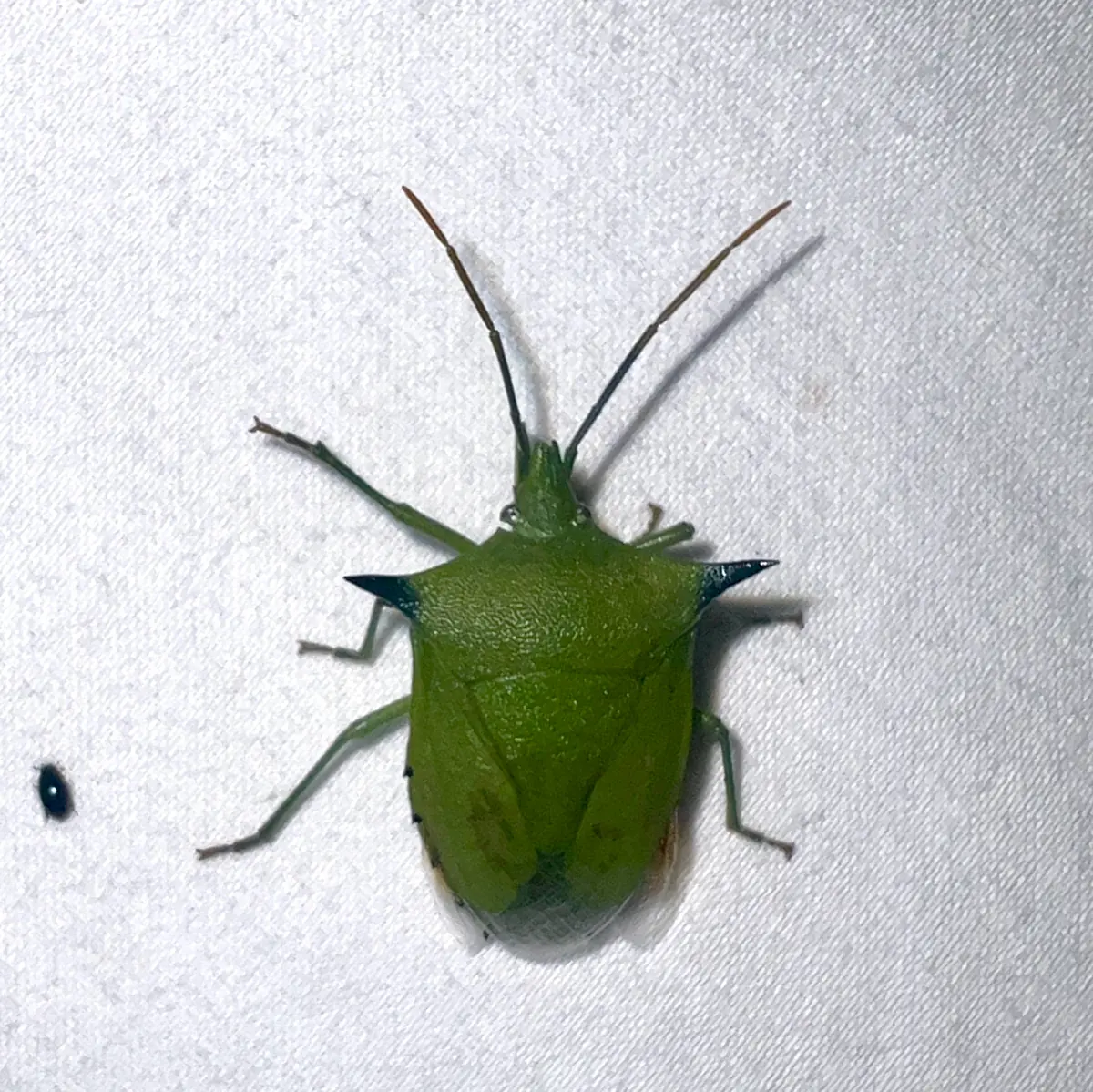
- Spined citrus bug is a bright green shield-shaped bug about 2 cm long with a sharp spine on each shoulder; it feeds on lemons and mandarins, causing gum spots on the skin, dry brown segments inside and early fruit drop.
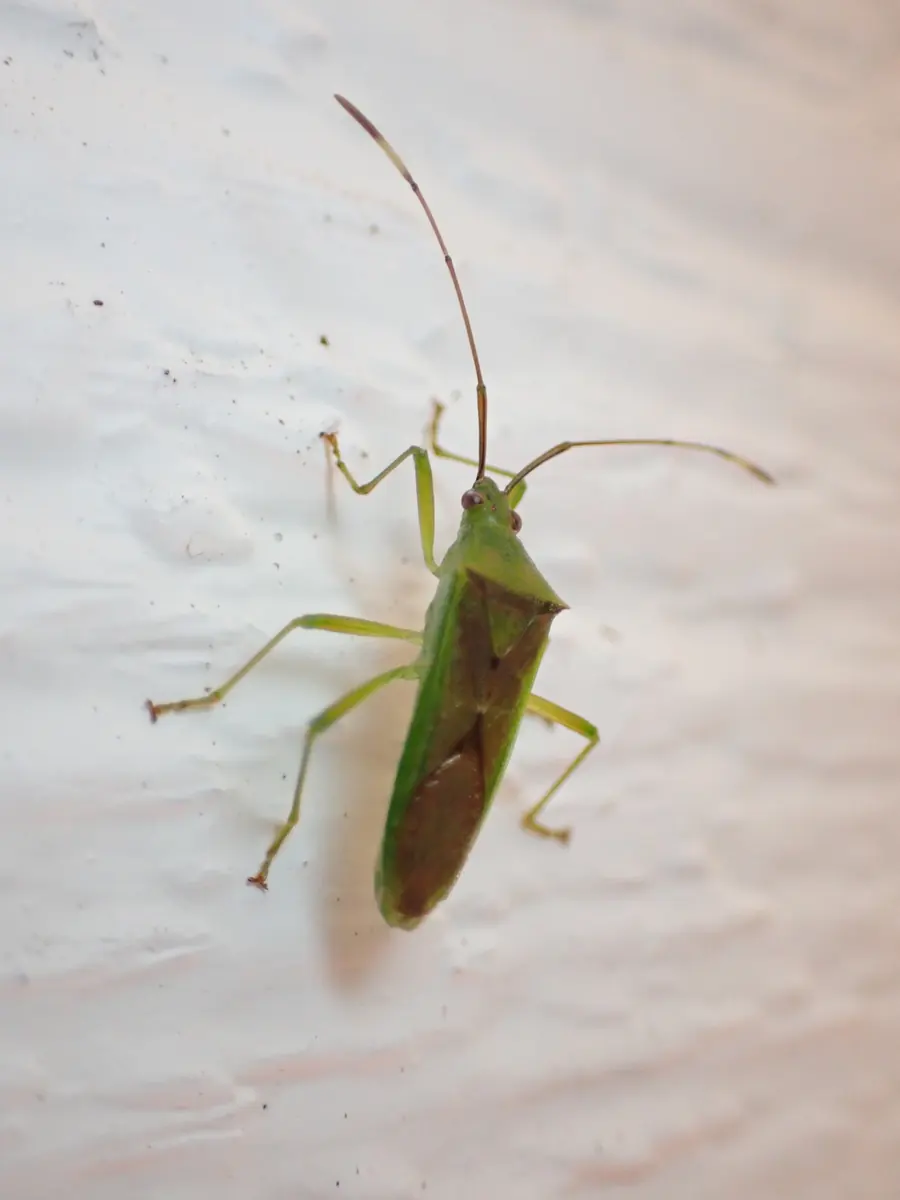
- Fruit-spotting bugs, including the banana-spotting bug, are slender green to brown bugs about 15 mm long with long legs that drop or fly when disturbed; their nymphs have a black, flattened second-last antenna segment.
- On avocados, fruit-spotting bugs leave small dark spots that crack and turn into hard brown lumps in the flesh, and on macadamias, lychees and longans they cause young fruit and nuts to fall.
- The native lychee stink bug is a large, flat, rounded green bug with pink legs and bronze edges, and females guard their egg clusters on the leaves.
- Green vegetable bug is a plain green shield bug about 13 to 15 mm long whose young nymphs are black with white and orange spots; it feeds on many fruits, nuts and vegetables.
- All of these bugs give off a sharp smell when handled, and a cut through damaged fruit often shows small dark pinpricks or dry, discoloured tissue under the skin.
What it is often confused with
Bronze orange bug
Bronze orange bug is larger, bronze to black as an adult and squirts a caustic liquid; it mainly wilts citrus shoots rather than marking the fruit. It has its own page.
Fruit fly
Fruit fly stings leave a tiny hole that soon becomes a soft, rotten patch with maggots inside. Bug feeding leaves hard, dry, discoloured spots without larvae.
When and where it is worst
Spined citrus bug is native but became a citrus pest in the late 1980s, and it is worst in inland southern districts such as the Riverina, Sunraysia and the Riverland, as well as backyards in Victoria and South Australia. Fruit-spotting bugs live in coastal and sub-coastal Queensland and northern New South Wales, from the Atherton Tableland to the Northern Rivers, and attack avocados, macadamias, lychees, longans, guavas, mangoes and many other tree crops. The native lychee stink bug occurs in eastern Australia on native trees in the lychee family and moves onto lychee and longan.
Most of these bugs overwinter as adults and become active as the weather warms in spring. Fruit-spotting bugs have three or four generations a year, so damage builds from fruit set through summer. Spined citrus bug feeds from spring, when young fruit sets, into autumn. Finger limes are attacked by the same citrus bugs as other citrus, and curry leaf, which belongs to the citrus family, can host citrus-feeding bugs on its shoots.
Plants it attacks
These plants in our library list it as a problem to watch for.
How to prevent it
- Check trees weekly from flowering through to harvest, looking under leaves and on fruit in the cool of the morning when bugs move slowly.
- Pick up and cut open young fallen fruit or nuts; dark spots or pinpricks inside are the earliest sign of fruit-spotting bug.
- Squash or remove egg rafts you find on leaves before they hatch.
- On small trees, exclusion netting or fruit bags put on after fruit set keep larger bugs off the crop.
- Keep flowering plants nearby to support assassin bugs, spiders and the tiny wasps that parasitise bug eggs.
Organic control, step by step
- Hand-pick adults and nymphs into a bucket of soapy water, wearing gloves and eye protection, and knock bugs off higher branches onto a sheet early in the morning.
- Destroy egg clusters, but leave any that have turned black, because those have usually been parasitised and will release more of the beneficial wasps.
- Spray young nymphs with a potassium soap or a horticultural oil while they are small, as large adults are hard to kill this way.
- Natural pyrethrin sprays can knock down nymphs and adults; spray in the evening to protect bees, only where the label lists the bug and crop.
Conventional control
- Natural pyrethrins, sometimes combined with paraffin or plant oil, are the usual home garden option for sap-sucking bugs; check the label lists your crop and bug.
- Commercial orchards use other insecticides for fruit-spotting bugs under APVMA registration or permit; these are not home garden products.
- Read the label, check the crop is listed and keep to the withholding period before you pick fruit or nuts.
Frequently asked questions
What is eating holes in my avocados and leaving hard lumps?
In coastal Queensland and northern NSW the most likely cause is fruit-spotting bug. The bug's saliva breaks down the flesh under each feeding spot, which later shows as a hard, dark lump. Damage tends to appear in hot spots on trees close to bushland.
Why are my young macadamia nuts falling off?
Some nut drop is natural, but fruit-spotting bugs and green vegetable bug both cause early nut fall. Crack a few fallen green nuts; brown or dark spots on the kernel point to bug feeding.
Is the pink-legged bug on my lychee harmful?
That is most likely the native lychee stink bug. It feeds on lychee and longan as well as native trees in the same family, and the females are notable for guarding their eggs. In most backyards it is a minor pest, so hand removal is usually enough.
Are these bugs dangerous to handle?
They do not bite people, but they release a strong-smelling defensive fluid. Bronze orange bug in particular can sting the eyes and stain skin, so wear gloves and eye protection when collecting bugs.
Related problems
Sources: NSW DPI, Spined citrus bug (Primefact 217); Business Queensland, Fruit-spotting bug; QLD DAF, Lychee pest and disease field guide; Wikipedia, Lyramorpha rosea (lychee stink bug). Identification and control follow these sources. Always read the product label before use.