Scale: identify, prevent, control
Updated June 2026
Numbers build through the warm months, October to April, with crawlers most active in spring.
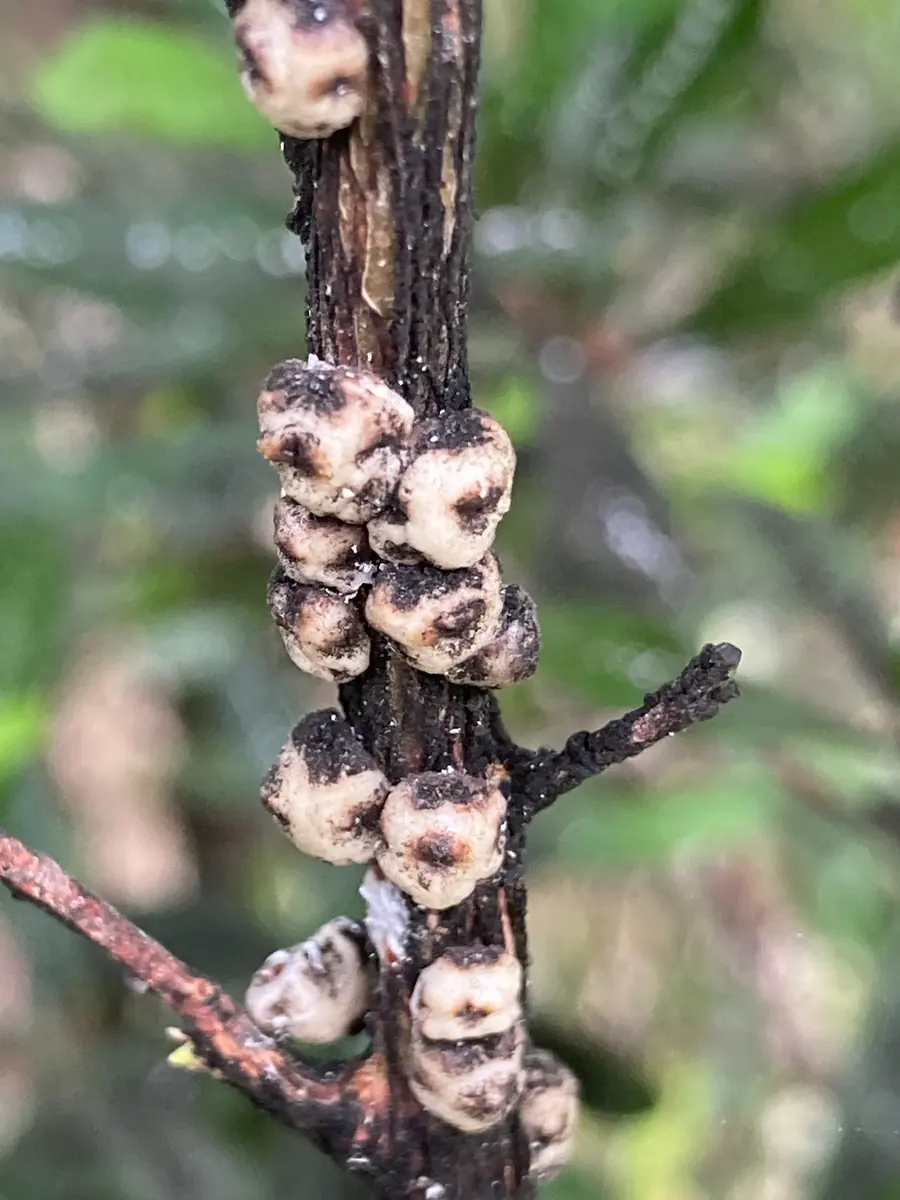
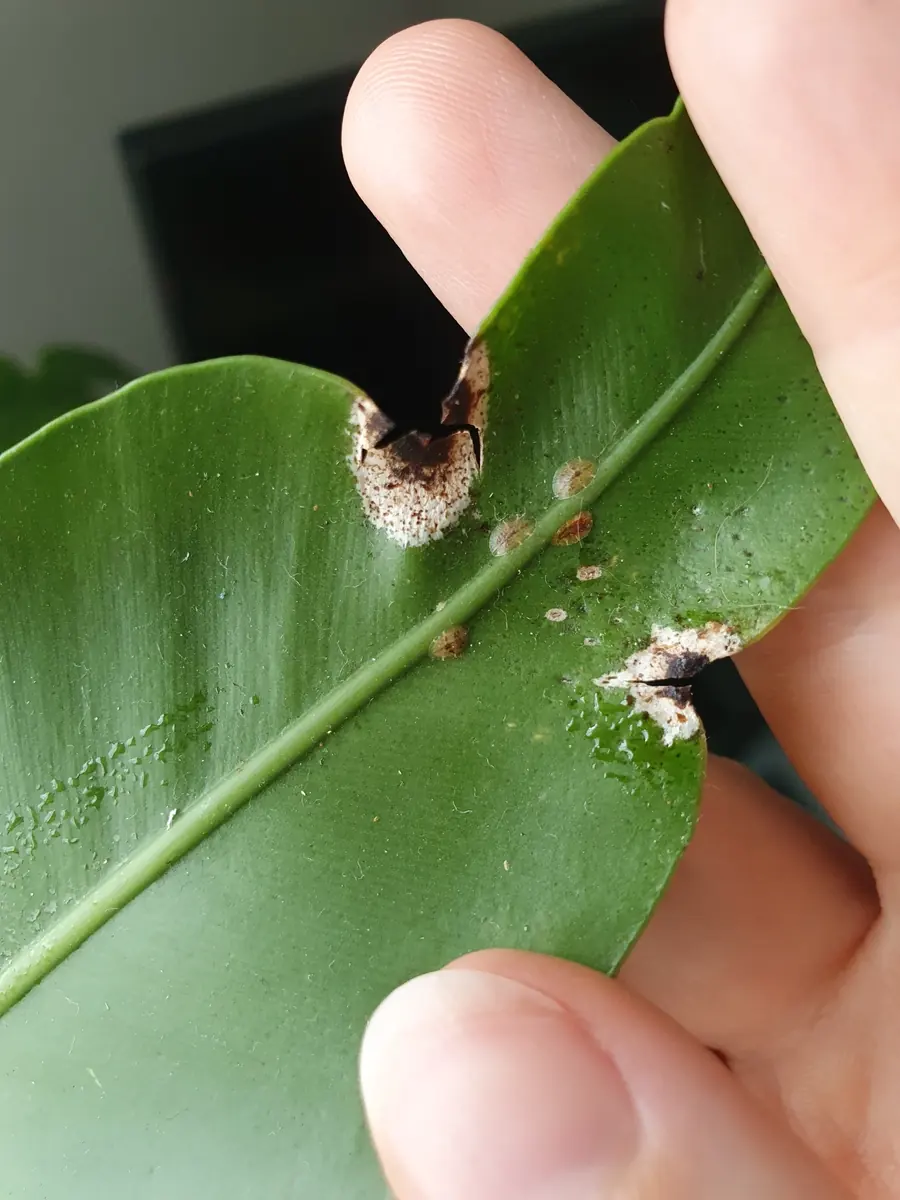
Scale are sap-sucking insects that hide under a waxy or shell-like cover stuck fast to stems and leaves. They weaken citrus and many fruiting plants and drip honeydew that feeds black sooty mould, so heavy infestations look grimy and grow poorly.
How to identify it
- Small brown, grey or white bumps along stems and leaf veins that do not brush off easily
- Sticky honeydew and black sooty mould on leaves below
- Yellowing leaves and dieback on heavily infested branches
- Ants travelling up the trunk to harvest honeydew
How to prevent it
- Inspect new plants carefully before bringing them home
- Prune to open up congested growth so air and predators reach inner branches
- Avoid over-fertilising with nitrogen, which fuels soft growth scale prefer
- Keep ants off plants with a sticky barrier so predators can do their job
Organic control, step by step
- Rub off light infestations by hand or with an old toothbrush
- Spray eco-oil or white oil to smother scale, coating stems and leaf undersides thoroughly
- Repeat the oil spray after 2 to 3 weeks to catch newly hatched crawlers
- Spray oil only in mild weather under 30 degrees to avoid leaf burn
- Protect and encourage natural predators like ladybirds and tiny parasitic wasps
- Prune out and bin badly infested branches
Plants it attacks
Lemon TreeLime TreeBlueberryPeachApplePearNectarineKiwifruitDragon FruitCurry LeafBay LaurelMangoMandarinStar FruitLemon MyrtleAloe Vera
Track it in the app. The free Planting Season planner lists the pests and diseases to watch for on every plant in your garden, tuned to your region.