Citrus gall wasp: identify, prevent, control
Updated October 2026
Galls show from late summer and are easiest to see in winter; adults emerge in spring, from late August in Queensland to mid October through mid December in the south.
Citrus gall wasp is a tiny native wasp whose larvae live inside the green stems of citrus, making the tree grow lumpy, woody galls around them. Its natural host is the native finger lime, but it has spread from coastal Queensland and northern NSW into Adelaide, Melbourne, the Riverland, Sunraysia and suburban Perth. A few galls do little harm, but heavily galled trees lose vigour, fruit gets smaller and branches can die back.
Bruchophagus fellis
How to identify it
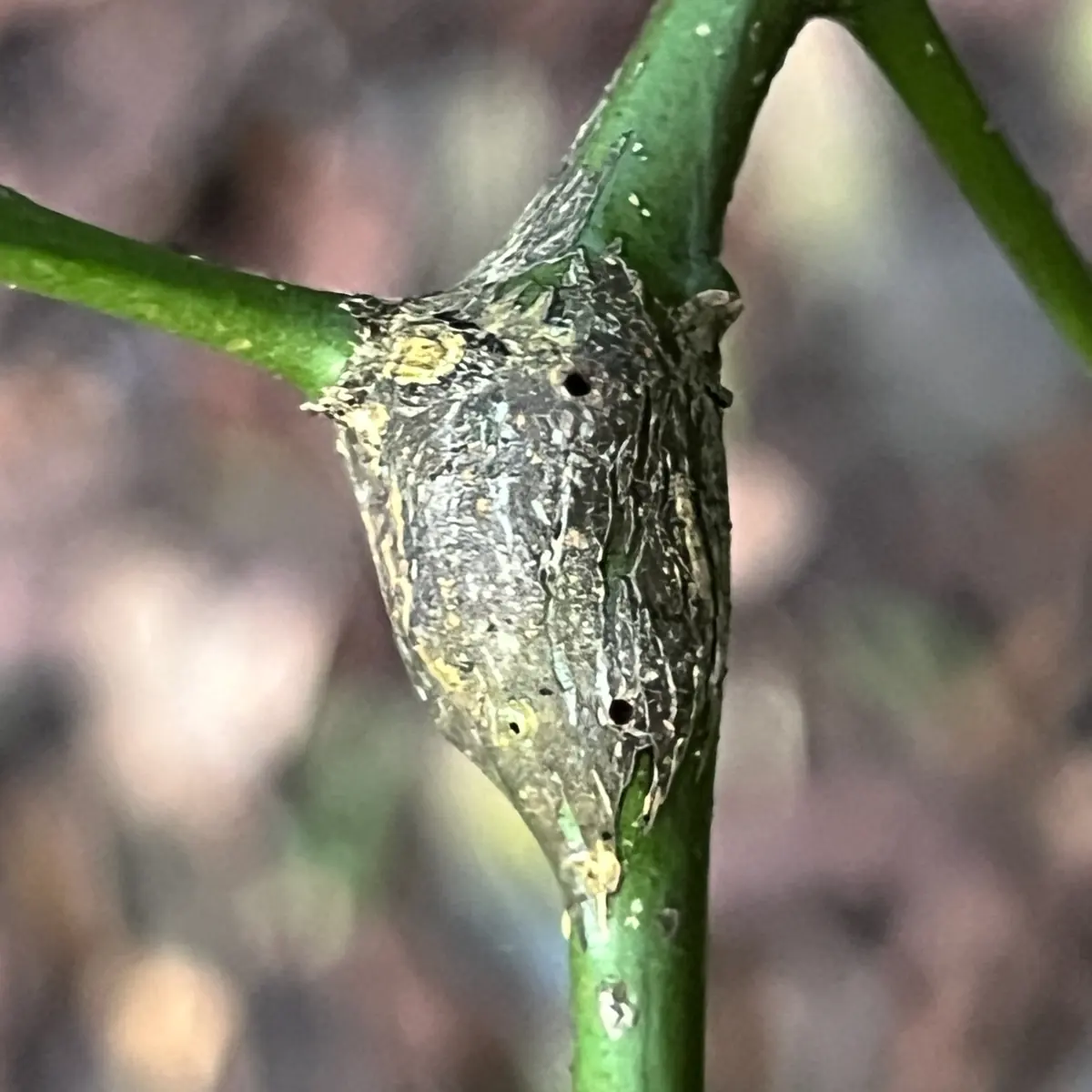
- The first thing most people notice is a smooth, swollen section of a young green stem, often on a shoot growing out at right angles from a branch.
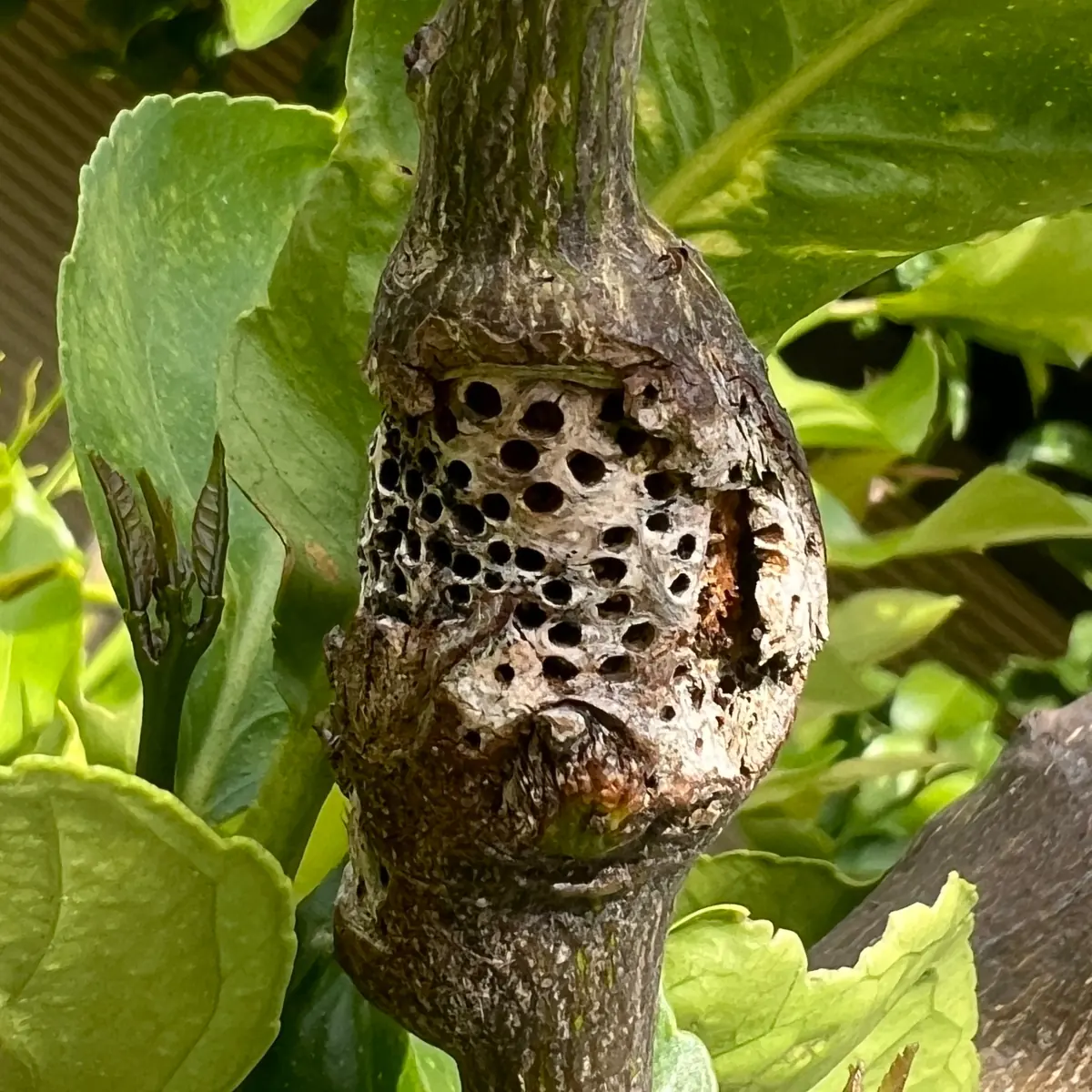
- Over autumn and winter the swelling hardens into a knobbly, woody gall that can be several centimetres long and much thicker than the stem either side.
- In spring the adult wasps chew their way out, leaving a gall peppered with small round exit holes, so an old gall looks like a piece of brown sponge.
- The adult wasps are shiny black and under 3 mm long, so you rarely see them, and they only live a few days.
- Heavily infested trees have many galls, especially low in the canopy near the skirt, with thin new growth, smaller fruit and dead twigs beyond older galls.
What it is often confused with
Borers
Borers tunnel into wood and leave sawdust or webbed frass at a hole, while gall wasp makes a solid swelling with no sawdust. A gall wasp gall only has many tiny exit holes after the adults leave in spring.
Scale
Heavy scale can make a stem look lumpy, but the bumps are separate insects you can lift off with a fingernail. A gall is part of the stem itself and cannot be scraped away.
When and where it is worst
Gall wasp is native to the coast around the Queensland and New South Wales border and is common in South East Queensland and northern NSW. It is now well established in southern citrus areas and cities, including Adelaide, Melbourne, the Riverina, the Riverland and Sunraysia, and has been found in Perth. Lemons and grapefruit are hit hardest, and finger limes are its natural host, but limes, mandarins, oranges, cumquats, tangelos, blood oranges and pomelos can all be attacked.
There is one generation a year. In the south the adults emerge between mid October and mid December, with most out from late October to mid November, and in Queensland they can appear from late August. Females lay eggs under the bark of soft spring growth on the day they emerge, the larvae feed inside the stem for nine to ten months, and galls become visible from about December and keep growing through autumn and winter. Most wasps stay on the tree they came from, so one infested tree tends to get worse each year.
Plants it attacks
These plants in our library list it as a problem to watch for.
How to prevent it
- Check any new citrus tree for small swellings on the stems before you buy it, because infested nursery trees are the main way the wasp moves long distances.
- Walk around your citrus from autumn onwards and look for light green shoots growing at right angles from branches, which is where new galls often start.
- Avoid heavy nitrogen feeding in late winter and spring, because a big soft flush of growth is exactly what egg-laying females look for.
- Remove rootstock suckers below the graft, which are often galled and act as a reservoir.
- Talk to neighbours with citrus, because the wasp moves across fences and area-wide clean-up works far better than one tree at a time.
Organic control, step by step
- Cut out galled stems between April and June, while the larvae are still well inside, and at least a month before the wasps are due to emerge in spring.
- For galls on thick branches you want to keep, shave the top off one side of the gall with secateurs, a sharp knife or a potato peeler in mid to late winter; this exposes and kills the larvae without removing the branch.
- Treat every off-cut before it leaves your yard: seal it in a strong plastic bag and leave it in the sun for a month, freeze it for at least 24 hours, burn it where that is allowed, or bury it more than half a metre deep.
- Never put galls in the green waste bin or on a verge collection, because wasps can still emerge from cut galls and spread to new suburbs.
- Where only a few galls remain close to emergence, a band of sticky trapping paste painted over them can catch wasps as they chew out.
Conventional control
- We could not find any insecticide registered for home garden use against citrus gall wasp in Australia, so pruning and careful disposal are the main tools.
- Commercial orchards use soil-applied systemic insecticides through irrigation under strict label conditions; these are not home garden products and they also kill the small parasitic wasps that attack gall wasp.
- If a product you are considering mentions citrus gall wasp, read the label, check citrus is listed for that use and keep to the withholding period before you pick fruit.
Frequently asked questions
When is the best time to cut out citrus gall wasp galls?
Agriculture Victoria recommends pruning galls from April to June. That is late enough that the galls are easy to see and early enough that the wasps are still months from emerging. Pruning later in winter tends to trigger a soft spring flush that the new wasps lay into.
Can I put the galls in my green bin?
No. Adult wasps can still emerge from cut galls, so green waste and verge collections just spread them. Bag and bake the galls in the sun for a month, freeze them for a day, burn them where allowed or bury them deeply.
Will citrus gall wasp kill my lemon tree?
A few galls rarely kill a tree, but a heavy infestation left for several years weakens it, shrinks the crop and causes branch dieback.
Do I have to report citrus gall wasp?
No. It is a native insect that is already widespread, and in South Australia, for example, it is not a declared pest. You only need to manage it on your own trees, ideally together with neighbours.
Related problems
Sources: NSW DPI, Citrus gall wasp in Southern Australia; Agriculture Victoria, Citrus gall wasp; PIRSA, Citrus gall wasp. Identification and control follow these sources. Always read the product label before use.