Borers: identify, prevent, control
Updated October 2026
Larvae feed inside wood all year, with fresh sawdust and webbing most obvious from late spring to autumn.
Borers are the larvae of moths and beetles that tunnel into the stems, branches or trunks of trees and shrubs. This page covers the native fruit tree borer on stone fruit, the introduced currant borer on blackcurrants and redcurrants, and the longicorn beetles and jackfruit borer caterpillars that attack jackfruit and other tropical trees. They all do their damage out of sight, so the trick is learning to read the signs on the outside.
How to identify it
- Fruit tree borer shows first as a patch of chewed sawdust bound up with silk webbing on the trunk or in the fork of main branches, covering a hole where the caterpillar shelters by day and chews the bark around it at night.
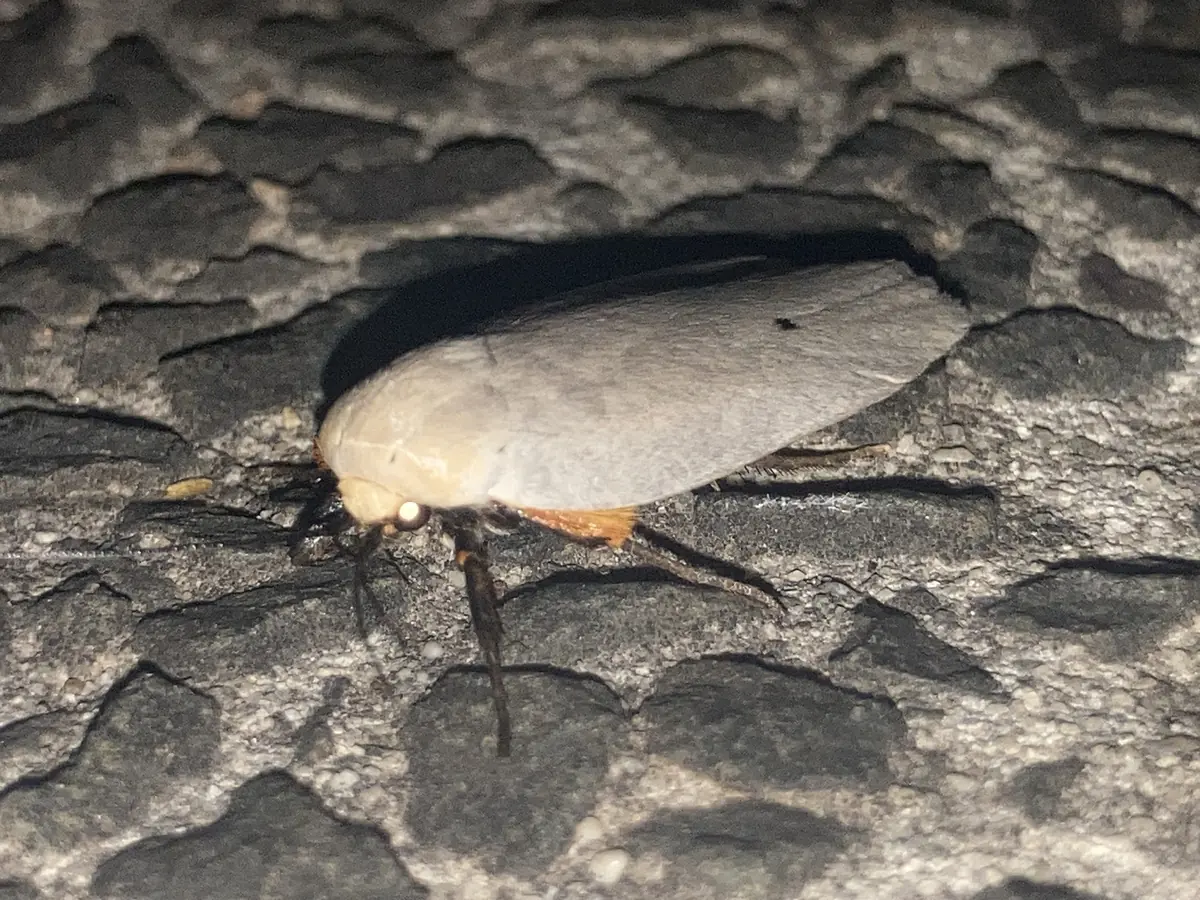
- The fruit tree borer moth is cream to white with an orange and black abdomen, about 2 cm long with a single small black dot on each forewing, and the larva is cream with a dark head.
- Currant borer leaves no sawdust outside; instead, shoots of blackcurrants and redcurrants wilt or fail to leaf up, and when you cut them the pith is hollowed out and stained black.
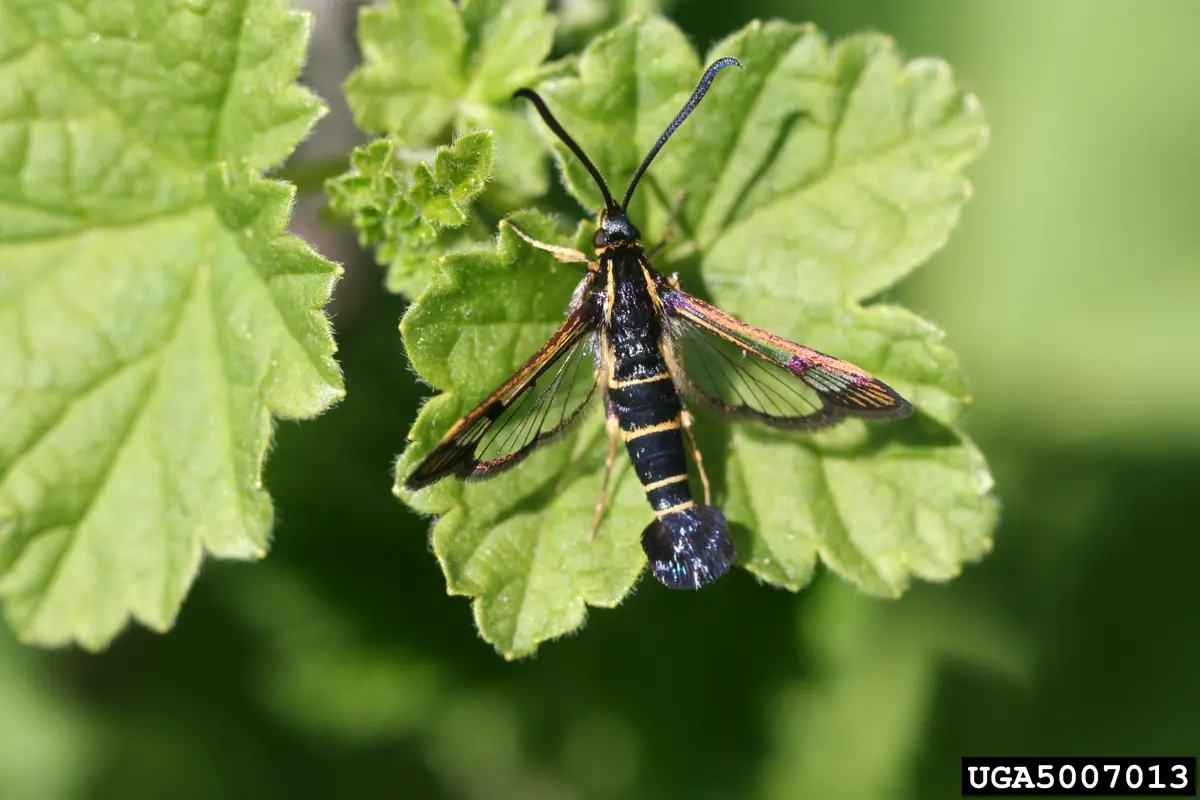
- The currant borer adult is a small clearwing moth that looks like a wasp, with a dark blue-black body and thin yellow bands.
- Longicorn beetle larvae are cream grubs with a darker head that tunnel under the bark and into the wood; look for frass at the base of the tree, oozing sap, oval exit holes and dying limbs.
- On jackfruit, the caterpillars of the jackfruit borer moth tunnel into young shoots and into the fruit, so shoot tips wilt and fruit shows holes with frass.

What it is often confused with
Bacterial canker
Bacterial canker oozes gum from sunken dead bark with no tunnel. Borer gum or sap comes with a hole and sawdust or frass.
Citrus gall wasp
Gall wasp makes a solid woody swelling on citrus stems with tiny exit holes in spring and no sawdust.
When and where it is worst
Fruit tree borer is a native moth found along the east coast and in south-eastern Australia, and it readily attacks peaches, apricots, nectarines, plums and many ornamental and native trees. Currant borer was introduced from Europe and is found in New South Wales, the ACT, Victoria, South Australia and Tasmania wherever currants and gooseberries are grown. Longicorn borers occur across Australia, and they and the jackfruit borer moth are a problem on jackfruit and other tropical trees in Queensland and the Northern Territory.
Fruit tree borer moths fly in late spring and summer and lay eggs on the bark; the caterpillars tunnel and feed through autumn and winter, which is when fresh webbing is easiest to spot. Currant borer moths fly in summer, the larvae spend autumn and winter in the stems, and wilting shows in spring. Longicorns prefer trees stressed by drought, old wounds or dying limbs, and jackfruit borer is active in the warm wet season when trees are flushing and fruiting.
Plants it attacks
These plants in our library list it as a problem to watch for.
How to prevent it
- Keep trees well watered and mulched through dry spells, because stressed trees attract borers, especially longicorns.
- Avoid wounding trunks with mowers and whipper snippers, and prune off dead or damaged branches cleanly.
- Check trunks and branch forks of stone fruit every few weeks from spring to autumn for fresh sawdust and webbing.
- Buy currant plants and cuttings from clean stock, and look for hollow, black-centred pith when you take cuttings.
- On jackfruit, remove and destroy wilted shoot tips and damaged fruit promptly so caterpillars cannot complete their development.
Organic control, step by step
- For fruit tree borer, scrape away the webbing and sawdust, find the hole, and push a length of fine wire into the tunnel to kill the caterpillar; repeat for every patch you find.
- For currant borer, cut affected stems back to clean, white pith in winter and bin or burn the cuttings, then prune out a few of the oldest stems each year to keep the bush renewing.
- For longicorns, cut out dying limbs well below the damage, probe active holes with wire and keep the tree vigorous.
- Encourage birds, which take many exposed larvae, and do not use broad-spectrum sprays that kill the small wasps that parasitise borer eggs.
- Beneficial nematode products labelled for borers can be injected into tunnels where available.
Conventional control
- We could not find a home garden insecticide registered in Australia for fruit tree borer, currant borer or longicorn borers; physical removal is the main method.
- Commercial growers may use registered products sprayed into exposed feeding sites under label directions; these are not home garden products.
- If you use any insecticide on a fruiting plant, read the label, check the crop is listed and keep to the withholding period before you pick fruit.
Frequently asked questions
What is the sawdust and webbing on my peach tree trunk?
That is the classic sign of fruit tree borer, a native moth caterpillar. Scrape off the webbing, find the hole and kill the caterpillar with a wire probe.
Why are my blackcurrant stems dying in spring?
Currant borer is a common cause. Cut a dying stem and look for a hollow centre with black staining; if you find it, prune back to clean wood and remove the old stems.
Can borers kill a tree?
Yes. Fruit tree borer can ringbark a branch or a young trunk, and longicorns can kill stressed limbs. Catching them early and keeping trees healthy prevents most losses.
What is boring into my jackfruit?
In Queensland and the Northern Territory the main culprits are the jackfruit borer moth, whose caterpillars tunnel into shoots and fruit, and longicorn beetle larvae in branches and trunks. Remove damaged shoots and fruit and keep the tree well watered.
Related problems
Sources: NSW DPI via Tree Fruit, Fruit tree borer; Business Queensland, Longicorn borers; Butterfly House (Australian Lepidoptera), Glyphodes caesalis, jackfruit borer; Butterfly House (Australian Lepidoptera), Synanthedon tipuliformis, currant borer. Identification and control follow these sources. Always read the product label before use.