Bacterial canker: identify, prevent, control
Updated October 2026
Infection happens in cool, wet, windy weather from autumn leaf fall through winter; dead buds and gumming show in spring.
Bacterial canker, often called gummosis, is caused by bacteria that enter stone fruit trees through leaf scars, pruning cuts and other wounds in autumn and winter. It kills buds, makes sunken gum-oozing cankers on branches and trunks, and can kill young trees. Cherries and apricots are the most susceptible, with peaches, nectarines and plums also affected.
Pseudomonas syringae pv. syringae

How to identify it
- In spring some buds fail to open, and the bark just behind them is brown, sunken and damp.
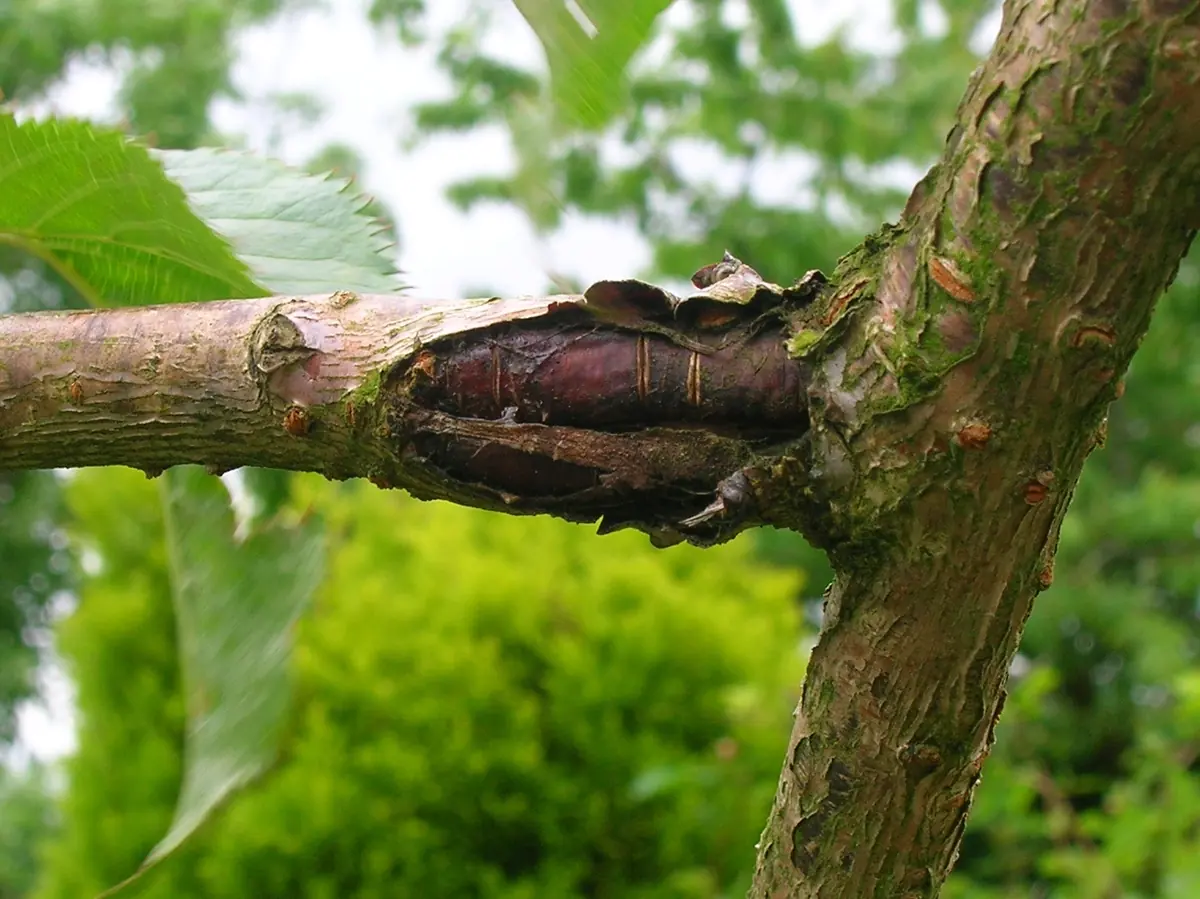
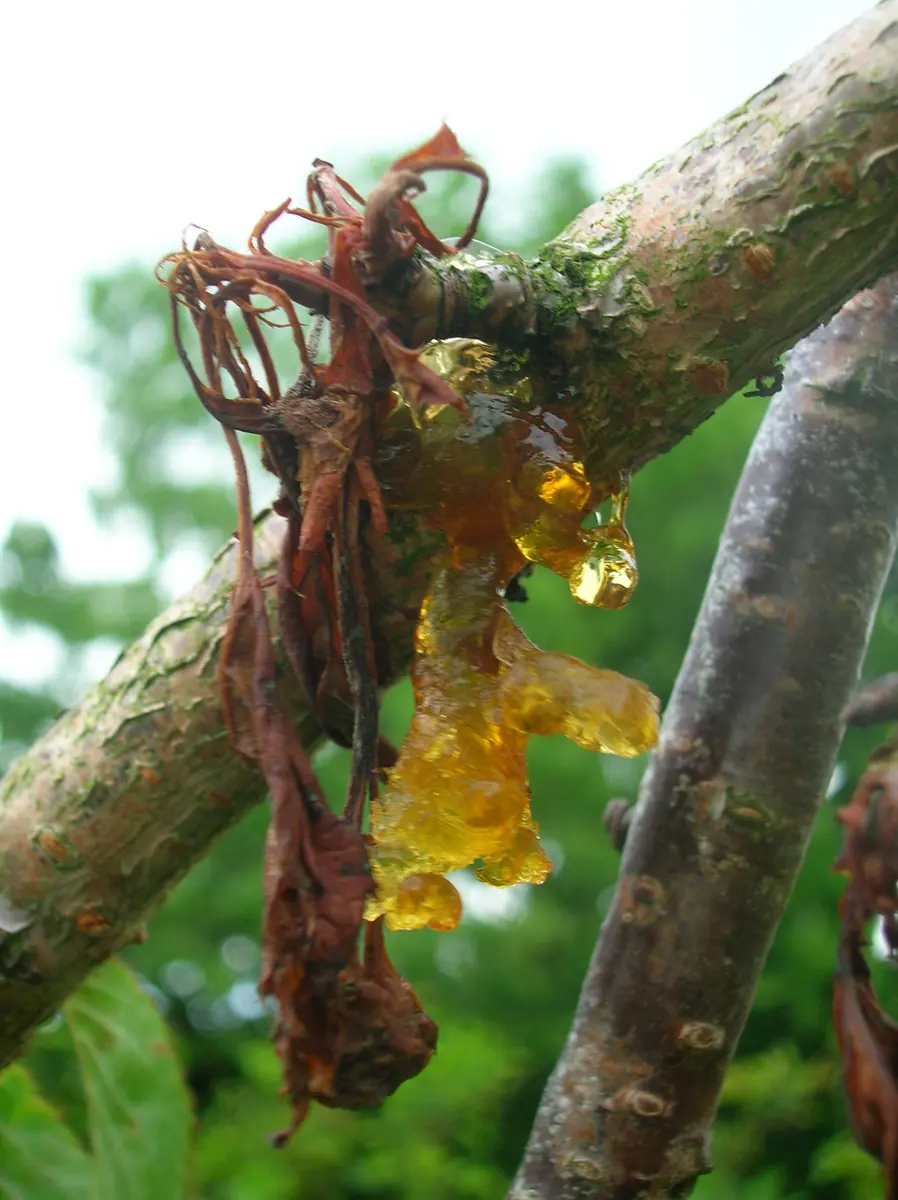
- Branches and trunks develop sunken patches of dead bark that ooze sticky amber gum, often around pruning cuts, crotches and old wounds.
- Peel back the bark at the edge of a canker and the tissue underneath is orange-brown and may smell sour.
- Leaves beyond a girdling canker wilt and die and may stay hanging on the branch, and soft new shoots can die back from the tips.
- On leaves, small water-soaked spots turn brown and drop out, leaving holes, and fruit can show sunken dark spots, sometimes with gum pockets underneath.

What it is often confused with
Shot hole
Shot hole is a fungus that also leaves round holes in leaves, but the spots have reddish rims and the disease does not kill large branches. Look for sunken, gumming cankers on wood to confirm bacterial canker.
Borers
Borers also cause gum, but you will find a hole with sawdust or webbed frass. Bacterial canker gum comes from sunken dead bark with no tunnel.
Silver leaf
Silver leaf gives a silvery sheen to the leaves and brown staining in the wood, with little gum. Bacterial canker causes heavy gumming and dead buds.
When and where it is worst
Bacterial canker occurs in all stone fruit districts but is worst in cool, wet regions with windy autumns and winters, such as Tasmania, southern Victoria, the Adelaide Hills, the Central Tablelands of New South Wales and around Canberra. Cherries and apricots are the most susceptible; peaches, nectarines and plums are susceptible too.
The bacteria live on the surface of healthy trees and enter through wounds. Wet, windy weather in autumn and early winter, before and during leaf fall, is the main danger period, because fresh leaf scars and storm damage give easy entry. Cankers are active through winter and the damage shows as dead buds and fresh gumming in spring. Hail, frost injury and animals chewing bark also open the way.
Plants it affects
These plants in our library list it as a problem to watch for.
How to prevent it
- Prune stone fruit after harvest in summer or close to bud burst, never in late autumn and winter when cankers are active.
- Prune healthy trees first and infected trees last, and disinfect secateurs often with a 1 in 10 household bleach solution.
- Avoid heavy nitrogen in mid to late summer, which pushes soft late growth that is easily infected.
- Protect trunks and young trees from wounds by rabbits, hares, wallabies, whipper snippers and mowers, and paint trunks with white acrylic paint to prevent sunburn splits.
- Avoid overhead irrigation and, where you can, shelter young trees from wind-driven rain.
- In gardens with a history of the disease, choose peaches, nectarines and plums over cherries and apricots.
Organic control, step by step
- Cut out small cankers when the tree is not actively growing them, either soon after harvest or at early bud swell, cutting at least 150 mm below the visible edge.
- Seal large pruning cuts and wounds with white acrylic paint or a tree wound dressing.
- Spray copper at the start of leaf fall in autumn and again when most leaves have fallen, and repeat after storms that strip leaves or damage bark.
- Remove young trees that are badly infected, because they rarely recover and keep spreading bacteria.
Conventional control
- Copper fungicides (copper hydroxide or copper oxychloride) are the main home garden option; spray at early and late leaf fall, and at bud swell in spring if the label allows.
- Antibiotic sprays are not registered for home gardens in Australia, and no product cures existing cankers.
- Read the label, check stone fruit is listed and keep to the withholding period before you pick fruit.
Frequently asked questions
Why is my cherry tree oozing gum?
Bacterial canker is a common cause on cherries, especially if gum oozes from sunken dead bark and some buds failed to open. Borers, frost damage and physical injury can also cause gum, so check for sawdust holes and wounds.
When should I prune my apricot or cherry?
Prune soon after harvest in summer, or close to bud burst, in dry weather. Winter pruning is risky because cankers are active and cuts heal slowly.
Is kiwifruit bacterial canker (Psa) the same disease?
No. Psa is a separate kiwifruit disease caused by a different bacterium, Pseudomonas syringae pv. actinidiae. Psa has been found in Victoria, where Agriculture Victoria considers it established, and it is a declared quarantine pest in Western Australia. If your kiwifruit vine has cankers with red-brown ooze, leaf spots with yellow haloes or sudden cane dieback, report it to the Exotic Plant Pest Hotline on 1800 084 881.
Can bacterial canker be cured?
Existing cankers cannot be cured with sprays. You manage the disease by cutting out cankers, preventing new wounds and protecting leaf scars with copper in autumn.
Related problems
Sources: NSW DPI, Bacterial canker of stone fruit; Department of Agriculture, Fisheries and Forestry, Pseudomonas syringae pv. actinidiae pest risk analysis; Agriculture Victoria, Bacterial canker of kiwifruit (Psa). Identification and control follow these sources. Always read the product label before use.