Peach leaf curl: identify, prevent, control
Updated October 2026
Infection happens at bud swell and bud burst in cool, wet late winter and early spring; curled leaves appear about a month after flowering.
Peach leaf curl, often called curly leaf, is a fungal disease of peaches and nectarines. It infects the leaves as they emerge from the bud, making them thick, puckered and red, and badly affected trees lose their first leaves, set less fruit and weaken over time. The key fact is that nothing works once you see the curl; protection has to go on before the buds burst.
Taphrina deformans
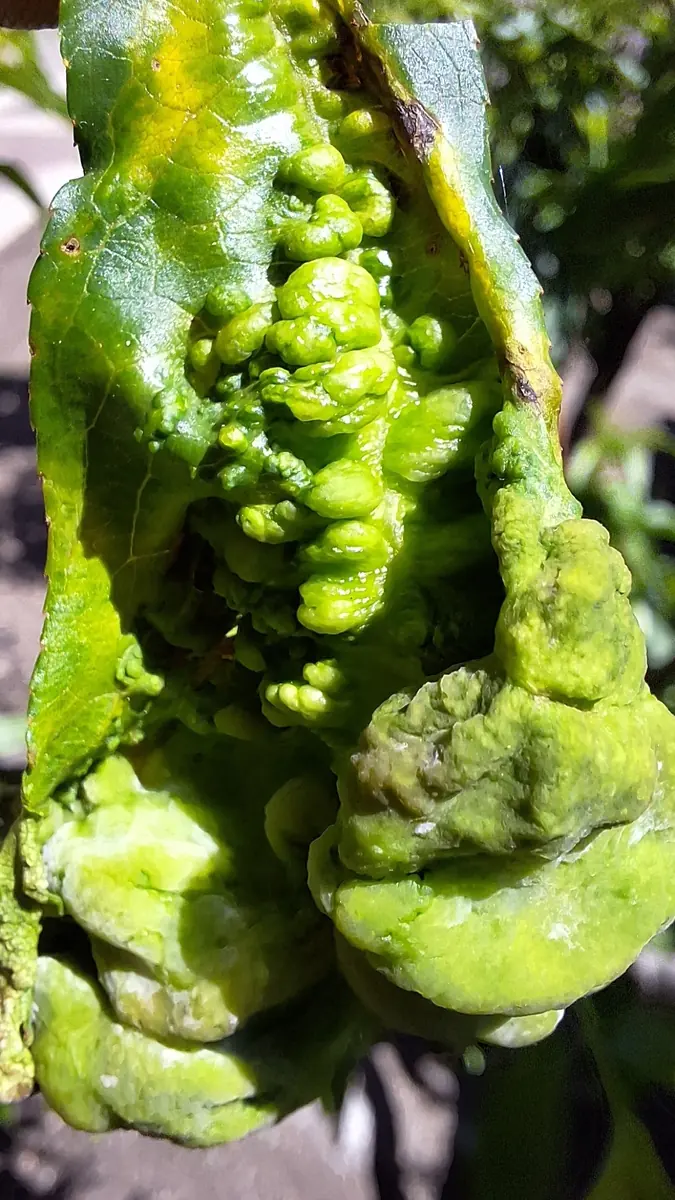
How to identify it
- About a month after flowering, young leaves become thickened, puckered and curled, with patches that are pale green, pink or bright red.
- Later the curled patches develop a whitish, powdery bloom as the fungus produces spores on the surface.
- Infected leaves then turn yellow or brown and fall, and the tree pushes out a second set of leaves, which costs it energy and fruit.
- Whole shoots can be infected, becoming swollen, stunted, pale and sometimes gummy, and young trees are most at risk.
- A few fruit can show raised, reddened, wrinkled patches on the skin.
What it is often confused with
Aphids
Aphids also curl peach leaves, but the leaves stay thin, you will find the insects inside the curl, and there is no red, thickened blistering.
Powdery mildew
Powdery mildew is a white powder on otherwise normal or slightly distorted leaves and fruit later in spring. Leaf curl causes thick, red blisters first.
When and where it is worst
Curly leaf is common wherever peaches and nectarines meet a cool, wet spring, including Melbourne, the Adelaide Hills, Tasmania, Canberra, the tablelands and coast of New South Wales and Perth in wet years. It is much less of a problem in warm, dry inland districts and in the tropics, where low-chill peaches are grown. Peaches and nectarines are the hosts on our site.
The fungus spends summer and winter as spores sitting on the bark and around the buds. When buds swell in late winter and early spring, usually July to September depending on your region and variety, rain washes spores onto the emerging leaves. Cool, moist weather from blossom to shuck fall followed by warm, humid weather that makes trees grow fast gives the worst outbreaks. Once leaves have expanded and the weather warms they are no longer infected.
Plants it affects
These plants in our library list it as a problem to watch for.
How to prevent it
- Watch your trees from mid winter and note when the buds start to swell, because that is your spray window.
- Apply a protective spray at early bud swell, covering every twig and the ends of the limbs where coverage is often missed.
- In gardens where curl is severe, a second spray at leaf fall in autumn adds extra protection.
- Keep trees vigorous with good watering, mulch and feeding in spring so they can replace lost leaves.
- On small trees, a rain cover over the tree from bud swell until leaves expand can keep spores off the new leaves.
Organic control, step by step
- Spray copper (copper hydroxide or copper oxychloride) or lime sulphur at early bud swell, before any green tip shows, wetting the whole tree thoroughly.
- If buds have already started to open, do not spray copper or lime sulphur, as it can burn the soft growth and gives little control.
- Once curled leaves appear, pick off and bin the worst ones on small trees, then water, mulch and feed so the tree pushes healthy replacement leaves.
- Thin fruit more heavily than usual on badly affected trees to reduce the strain on them.
Conventional control
- Copper fungicides and lime sulphur are the standard home garden products for leaf curl and must be applied at early bud swell; one thorough, correctly timed spray is usually enough.
- Some home garden fungicides with other actives are also labelled for leaf curl; check the label lists peaches or nectarines and leaf curl and follow its timing.
- Read the label, check the crop is listed and keep to the withholding period before you pick fruit.
Frequently asked questions
Can I spray now that my peach leaves have curled?
No. Once you can see the curl, the infection happened weeks earlier and sprays will not fix it. Help the tree grow new leaves and mark your calendar to spray at bud swell next winter.
When exactly is bud swell?
It is when the winter buds plump up and the scales start to loosen, just before you see any pink or green. In most southern gardens this is in July or August, earlier in warm areas and later in cold ones.
Does leaf curl kill peach trees?
One bad year rarely kills a tree, but years of heavy infection without control weaken it, cause shoot dieback and reduce crops. Young trees are at more risk.
Why is it called curly leaf?
Gardeners in Australia often call it curly leaf because of the way the leaves pucker and roll. It is the same disease as peach leaf curl.
Related problems
Sources: NSW DPI, Peach leaf curl; Agriculture Victoria, Peach leaf curl. Identification and control follow these sources. Always read the product label before use.