Powdery mildew: identify, prevent, control
Updated June 2026
Worst in late summer and autumn with warm days and humid nights, January to April.
Powdery mildew is a fungal disease that coats leaves in a white powdery film, common on cucurbits, peas and many other crops. It thrives in warm days with cool humid nights and poor air flow, and while it rarely kills plants outright it cuts yields and shortens the season.
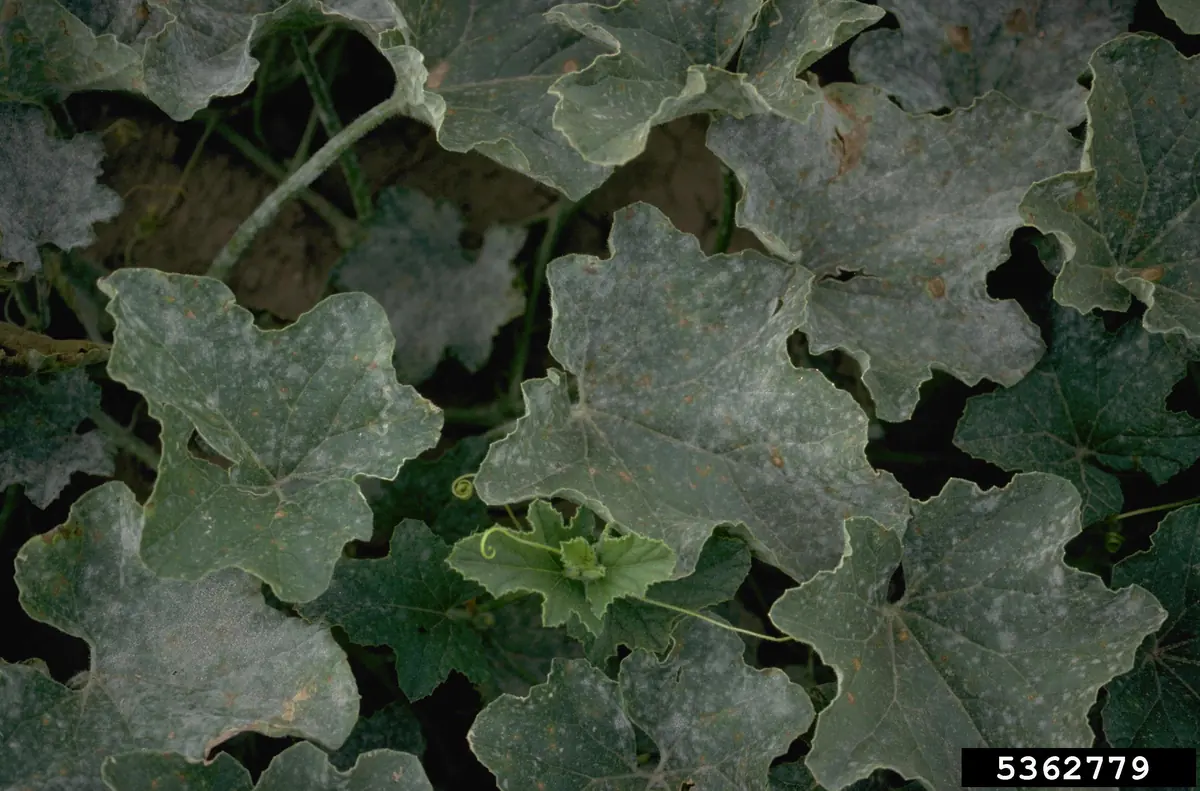
How to identify it
- White powdery patches on the upper surface of leaves, spreading to cover them
- Yellowing and browning of leaves as the disease advances
- Distorted, stunted new growth in bad cases
- Worst on older, shaded and crowded leaves first
How to prevent it
- Space plants well and prune for good air movement
- Water at the base in the morning and keep foliage dry
- Grow mildew-resistant varieties of cucurbits, peas and pumpkins where available
- Avoid heavy nitrogen feeding that produces dense soft growth
Organic control, step by step
- Remove and bin the worst-affected leaves at the first sign
- Spray a milk solution of 1 part milk to 9 parts water weekly in dry weather
- Spray potassium bicarbonate or eco-fungicide, covering both leaf surfaces, every 7 to 14 days
- Use a wettable sulphur spray on susceptible crops, but only under 28 degrees and not on sulphur-sensitive plants
- Clear away infected crop debris at the end of the season
- Improve airflow by thinning crowded plantings
Plants it attacks
ZucchiniSquashCucumberBeans (bush)EdamameSwedeCorianderRosemaryMarjoramStrawberryGrapeAppleMarigoldCalendulaBorageZinniaCosmosSweet PeaDahliaEchinaceaPumpkinPeasSnow PeasDillWatermelonRockmelonBitter MelonChokoLuffaParsnipSageMangoTamarilloJerusalem ArtichokeRambutanLemon BalmViolaCornflowerCulinary Rose
Track it in the app. The free Planting Season planner lists the pests and diseases to watch for on every plant in your garden, tuned to your region.